Nov 1, 2017 | News
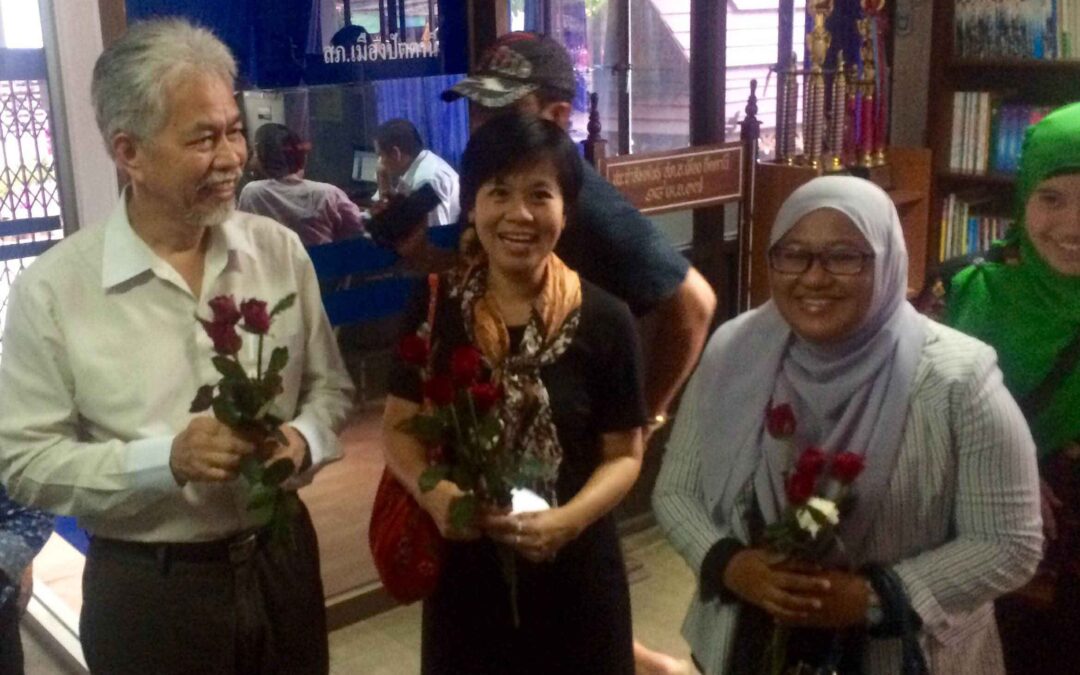
The ICJ welcomes the Pattani Provincial Prosecutor’s decision to end the criminal prosecution of three prominent human rights defenders who raised allegations of torture in Thailand’s restive deep South: Ms Pornpen Khongkachonkiet, Mr Somchai Homlaor, and Ms Anchana Heemmina.
On 24 October 2017, the Region 9 Senior Expert Public Prosecutor, on behalf of the Pattani Provincial Prosecutor, informed the Superintendent of the Muang District Pattani Police Station of the decision to end the prosecution of the three defenders for criminal defamation and violation of the Computer Crime Act.
The ICJ has previously expressed concern that the prosecutions were unwarranted and abusive and were aimed at chilling the exercise of critical human rights work in Thailand.
“While we welcome the decision to end these prosecutions, they have already caused a tremendous amount of damage to complainants of serious human rights violations like torture and ill-treatment, civil society, and the local community in the deep South that must now be repaired,” said Kingsley Abbott, the ICJ’s Senior International Legal Adviser for Southeast Asia.
“An important first step would be to pass legislation which criminalizes torture and ill-treatment and provides meaningful protections for those who wish to come forward with allegations of violations,” he added.
On 28 February 2017, the UN Office of the High Commissioner for Human Rights announced that it had been informed that the Thai National Legislative Assembly (NLA) would not enact legislation then under consideration criminalizing torture and enforced disappearance, the Draft Prevention and Suppression of Torture and Enforced Disappearance Act (Draft Act).
The following day, an NLA official speaking to BBC Thai confirmed that the Draft Act would be “returned [to the Thai Cabinet] for more consultations… with Interior officials, police authorities, the national security sector, military authorities and prosecutors.”
The Draft Act remains with the Thai Cabinet.
“It is long past time for Thailand to make good on its repeated commitments on the international stage to pass this essential piece of legislation in accordance with its international human rights obligations,” added Abbott.
Contact
Kingsley Abbott, Senior International Legal Adviser, ICJ Asia Pacific Regional Office, t: +66 94 470 1345, e: kingsley.abbott(a)icj.org
Background
On 10 February 2016, three Thai organizations, the Cross Cultural Foundation (CrCF), Duay Jai Group (Hearty Support Group), and the Patani Human Rights Organization (HAP), issued a report that documented 54 cases of alleged torture and ill-treatment by the Thai security forces in the deep South since 2004.
In response, the Internal Security Operations Command (ISOC) Region 4 (Forward Command) – created to resolve the situation in the deep South – made complaints of criminal defamation against the three co-editors, Pornpen Khongkachonkiet (Director of the CrCF), Somchai Homlaor (Senior legal advisor to CrCF and Hearty Support Group), and Anchana Heemmina (founder and Director of the Hearty Support Group).
On 26 July 2016, the Thai police charged the three defenders with criminal defamation by means of publication under Article 326 and 328 of the Penal Code, and importing false information to a computer system under Article 14 (1) of the Computer-Related Crime Act B.E. 2550 (2007).
On 7 March 2017, the ISOC 4 Forward Command announced its intention to drop the complaints at a press conference in Bangkok.
Thailand is a State party to the International Covenant on Civil and Political Rights (ICCPR), the Convention against Torture and other Cruel, Inhuman or Degrading Treatment or Punishment (CAT) and has signed, but not yet ratified, the International Convention for the Protection of All Persons from Enforced Disappearance (ICPPED).
Further reading on these criminal proceedings
Thailand: ICJ welcomes dropping of complaints against human rights defenders but calls for investigation into torture
Thailand: stop use of defamation charges against human rights defenders seeking accountability for torture
Thailand: immediately withdraw criminal complaints against human rights defenders
Further reading on the Draft Prevention and Suppression of Torture and Enforced Disappearance Act
Thailand: ICJ commemorates international day in support of victims of enforced disappearances
Thailand: pass legislation criminalizing enforced disappearance, torture without further delay
Thailand-News-Pressreleases-humanrightsdefenders-2017-THAI (full press release in Thai, pdf)
Oct 18, 2017 | News, Publications, Reports, Thematic reports
Cambodia is “weaponizing” the law and relying on judges and prosecutors who lack independence to silence dissent and dismantle democracy, says the ICJ in a report released today.
The release of the report Achieving Justice for Gross Human Rights Violations in Cambodia follows Monday’s unanimous decision of the National Assembly, attended only by law-makers from the ruling Cambodian People’s Party (CPP), to amend four election laws which would redistribute parliamentary seats held by the opposition Cambodia National Rescue Party (CNRP) to several minor parties in the event of the CNRP’s dissolution.
A Senior Cambodian CPP law-maker, Cheam Yeap, was reported as saying that the amendments were made “especially for the treasonous acts of the president of the CNRP, Kem Sokha, who committed treason in a red-handed crime.”
“These amendments are the latest in a long line of instances where the Government has shamelessly passed or amended laws with the specific purpose of legally harassing perceived opponents or weakening representative democracy within the country,” said Kingsley Abbott, Senior International Legal Adviser at the ICJ’s regional office in Bangkok.
Also of concern is that the Government is increasingly defending its actions by claiming it is merely applying the rule of law.
In a statement released by the Permanent Mission of Cambodia to the United Nations in Geneva on Monday, the Government claimed that “Prosecuting and punishing offenders by legitimate authorities, for the interest of justice, should not be read as a menace to democracy and human rights, but rather as an enforcement of the rules of law…upholding the rules of law means holding perpetrators accountable for their conducts”.
“The ‘rule of law’ is not only about passing and implementing laws, but rather ensuring they are drafted and applied in accordance with international human rights law and without discrimination, including discrimination based on political or other opinion,” added Abbott.
The ICJ’s report, which is being released against the backdrop of a rapidly deteriorating human rights situation, records that the “single largest problem facing the Cambodian justice system is the lack of independent and impartial judges and prosecutors,” which includes “an endemic system of political interference in high-profile cases and an equally entrenched system of corruption in all others”.
Contact
Kingsley Abbott, Senior International Legal Adviser, ICJ Asia Pacific Regional Office, t: +66 94 470 1345, e: kingsley.abbott(a)icj.org
Alex Conte, ICJ Global Redress and Accountability Initiative, t: +41 79 957 2733; e: alex.conte(a)icj.org
Background
On 3 September 2017, the leader of the CNRP, Kem Sokha, was arrested in a raid at his home and taken away by more than 100 policemen.
On 5 September 2017, the Phnom Penh Municipal Court formally charged Kem Sokha under Article 443 of the Cambodian Penal Code for alleged ‘collusion’ with foreign actors to “cause chaos” in Cambodia, otherwise known as treason.
On 6 October 2017, the Ministry of Interior filed a request to the Supreme Court to seek the dissolution of the CNRP pursuant to the Law on Political Parties, which was amended twice in 2017, and allows for the Supreme Court to dissolve political parties in certain circumstances including if one of the leadership is convicted of a crime.
The amendments to the four election laws would also mean that at the district and commune levels, in places where the CPP received the next highest number of votes, vacant seats would be redistributed to the CPP.
Download
Cambodia-GRA Baseline Study-Publications-Reports-Thematic reports-2017-ENG (full report in PDF)
Live Media Event
Watch the media event on the Human rights and democracy crisis in Cambodia live from the Foreign Correspondents’ Club of Thailand in Bangkok on FORUM-ASIA’s Facebook page
It starts at 10.00 Bangkok time (05:00 CET and 03:00 GMT).
Read also
Cambodia and the Rule of Law: UN Statement
Cambodia: UN Human Rights Council urged to address unfolding human rights crisis
Oct 10, 2017 | Multimedia items, News, Video clips
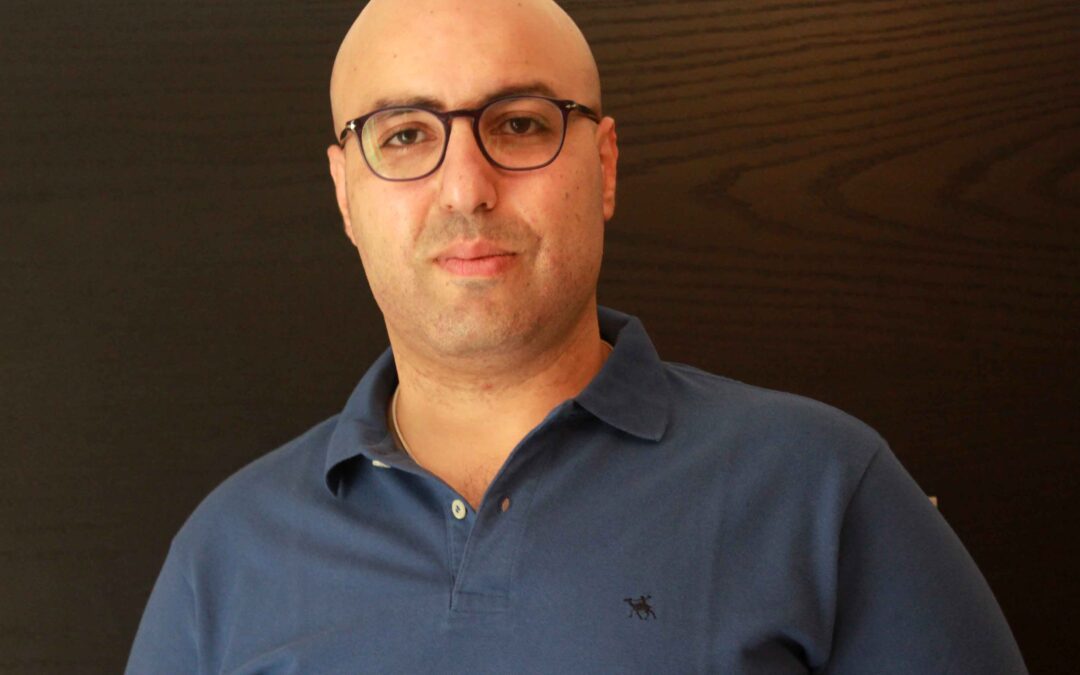
Selected by a jury of 10 global human rights organizations, including the ICJ, Mohamed Zaree is a devoted human rights activist and legal scholar whose work focuses on human rights advocacy around freedom of expression and association.
Mohamed Zaree is also known for his role as the Egypt Country Director of the Cairo Institute for Human Rights Studies (CIHRS), which works throughout the Arabic speaking world.
He assumed this role after government pressure on CIHRS prompted them to relocate their headquarters to Tunis in 2014.
The Egyptian government has been escalating its pressure on the human rights movement.
Human rights NGOs and defenders are confronted with a growing wave of threats, harassment, and intimidation, legal and otherwise.
Despite this, Mohamed Zaree is leading CIHRS’ research, human rights education, and national advocacy initiatives in Egypt and is shaping the media debate on human rights issues.
During this critical period for civil society, he is also leading the Forum of Independent Egyptian Human Rights NGOs, a network aiming to unify human rights groups in advocacy.
Zaree’s initiatives have helped NGOs to develop common approaches to human rights issues in Egypt.
Within the context of the renewed crackdown on Egyptian human rights organizations, he has become a leading figure in Egypt’s human rights movement.
He is currently facing investigation under the “Foreign Funding Case” and is at high risk of prosecution and life imprisonment. The “Foreign Funding Case” highly restricts NGO activities.
Despite this, Mohammed Zaree continues to engage the authorities in dialogue wherever possible, arguing that respect for human rights will increase stability in Egypt.
He has been under a travel ban since May 2016 but remains present and active in Egypt and represents CIHRS inside the country.
“Mohamed Zaree is a leading voice for justice in Egypt. Honoring him with the Martin Ennals Award is a recognition of the courageous and tireless work done by Egyptian human rights defenders, individuals and NGOs, in their fight against all forms of intimidation, harassment and repression waged by the Egyptian military and government against them,” said Said Benarbia, Director of the ICJ Middle East and North Africa Programme.
FreeThe5KH (Cambodia) and Karla Avelar, the two other finalists, received Martin Ennals Prizes.
FreeThe5KH are five Human Rights Defenders who were recently released after 427 days of pre-trial detention.
They are awaiting trial and are banned from travel.
There were widespread international calls for their unconditional release, and a stop to judicial harassment of human rights defenders in Cambodia.
This comes in the context of an increasingly severe crackdown on civil society and the political opposition in Cambodia.
Karla Avelar, a transgender woman in El Salvador, founded the country’s first organization of transgender women – COMCAVIS TRANS.
She grew up on the streets, suffering discrimination, violence, sexual exploitation, rape, and attempted murder.
She works to change national legislation and the authorities’ practices, by publicizing violations suffered by LGBTI people.
Her advocacy helped prompt the authorities to segregate LGBTI prisoners for their own safety, and provide HIV treatment.
Background
The “Nobel Prize of Human Rights”, the Martin Ennals Award for Human Rights Defenders (MEA) is a unique collaboration among ten of the world’s leading human rights organizations to give protection to human rights defenders worldwide.
Strongly supported by the City of Geneva, the award is given to Human Rights Defenders who have shown deep commitment and face great personal risk.
Its aim is to provide protection through international recognition.
The Jury is composed of the following NGOs: ICJ, Amnesty International, Human Rights Watch, Human Rights First, Int’l Federation for Human Rights, World Organisation Against Torture, Front Line Defenders, EWDE Germany, International Service for Human Rights, and HURIDOCS.
Contact:
Michael Khambatta, Director, Martin Ennals Foundation, t: +41 79 474 8208, e: khambatta(a)martinennalsaward.org
Olivier van Bogaert, Director, ICJ Media and Communications, and ICJ Representative on the MEA Jury, t: +41 22 979 38 08, e: olivier.vanbogaert(a)icj.org
The Award will be presented by the United Nations Deputy High Commissioner for Human Rights at 18.15 on 10 October at the University of Geneva. The ceremony can be watched live on Martin Ennals Award Facebook page
Watch the movie on Mohammed Zaree
Sep 27, 2017 | Advocacy, Non-legal submissions
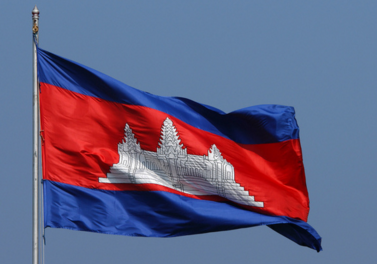
The ICJ today highlighted a sharp deterioration in the situation for human rights and the rule of law, in a statement to the UN Human Rights Council in Geneva.
The statement was delivered during the interactive dialogue with the Special Rapporteur on the situation of human rights in Cambodia, and read as follows:
“The International Commission of Jurists (ICJ) welcomes the report of the Special Rapporteur (UN Doc A/HRC/36/61) and strongly supports the renewal of her mandate.
Monitoring and action by the international community has seldom been more important for Cambodia since the Paris Peace Accords were signed in 1991.
Civil society, independent media and the political opposition are under sustained attack in what appears to be a carefully orchestrated effort to silence dissenting voices in the lead up to national elections in July 2018. Vague legal provisions in for instance the Law on Associations and Non-Governmental Organizations (LANGO) and the Law on Political Parties, are being weaponized to this end.
Human rights defenders and others, including the “ADHOC 4”, Ny Chakrya, Tep Vanny, Hun Vannak, Doem Kundy, and the President of the opposition party, Kem Sokha, face criminal charges with all the hallmarks of being politically motivated.
Prosecutors and judges lack independence and impartiality, and investigations routinely fall short of international standards, as in the case of the killing of political commentator Kem Ley.
Seeking to justify its actions, Cambodia frequently invokes the principle of the rule of law.
The ICJ, a global organisation of judges and lawyers, has worked for the rule of law for more than sixty years. The rule of law does not simply mean that laws exist and are enforced, but requires among other things: equal application of the law without discrimination, including due to political or other opinion, and ensuring that laws are only adopted and applied consistent with international human rights law.
What is happening in Cambodia today has nothing to do with the rule of law.
The ICJ would therefore ask the Special Rapporteur what further recommendations she has towards seeing the rule of law, as properly understood, truly reign in Cambodia.”
The Human Rights Council is expected to adopt a new resolution on Cambodia later this week. The ICJ and other non-governmental organisations have called for it to include additional monitoring and additional opportunities to discussion the situation at the Human Rights Council, before national elections scheduled for July 2018.
Sep 22, 2017 | Advocacy, Non-legal submissions
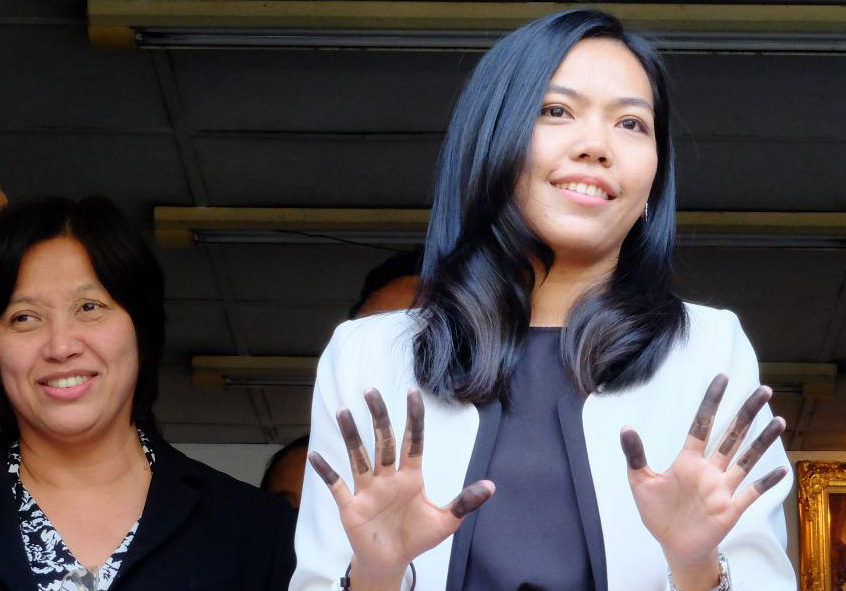
Addressing the UN Human Rights Council, the ICJ today urged Thailand to end criminal proceedings against lawyer Sirikan “June” Charoensiri, that are based on her professional activities as a human rights defender and lawyer.
The statement came during general debate at the Human Rights Council on, among other things, the report compiling cases of individual complaints that have been raised by the Special Procedures (independent experts) appointed by the Council. The statement read as follows:
“Among the many cases covered by the Communications Report of Special Procedures (A/HRC/36/25) is that of Thailand lawyer and human rights defender, Sirikan “June” Charoensiri. She was charged with sedition and other offences for actions taken, in her professional role, to protect human rights. With other lawyers, she had observed and provided legal assistance to participants in a peaceful protest.
In April, four Special Rapporteurs sent a joint communication (AL THA 2/2017) to Thailand about her case, and the related issues of restrictions on fundamental freedoms put in place following the military coup of May 2014, and prosecution of civilians in military courts.
Thailand’s response to the communication (No.52101/483) attempts to justify the charges against her by, among other things, appearing to associate her with the persons to which she and her colleagues were providing legal aid.
Principle 18 of the UN Basic Principles on the Role of Lawyers states that, “lawyers shall not be identified with their clients or their clients’ causes as a result of discharging their functions.”
The International Commission of Jurists considers that the case against Ms Charoensiri is incompatible with these and other international human rights standards. The ICJ calls upon Thailand ensure the legal proceedings against Ms Charoensiri are ended, and that measures are taken to end and prevent similar cases against other human rights defenders in the country.”
Exercising its right of reply to the statement, the delegation of Thailand, while appearing to accept that Ms Charoensiri is a human rights defender and lawyer, asserted that she had not been charged in her capacity as a lawyer or human rights defender, but due to the possibility that she was a principal or co-perpetrator of an offence, which the delegation said was based on unspecified information from the Royal Thai Police. The delegation affirmed that the Thai government attaches high priority to the protection of human rights defenders, and referred to several initiatives the delegation said were currently being prepared in this regard.
More detail from ICJ about the case is available by clicking here.
Details of the Special Procedures’ action on the case is available in the database of communications, by clicking here.