Jun 1, 2021 | Advocacy, News
Thailand’s laws and practices governing the rights of land users may result in unnecessary and disproportionate restrictions on various economic, social, and cultural rights, particularly for forest dwellers and indigenous communities, the ICJ said during discussions last week with members of Thai civil society as well as government authorities.
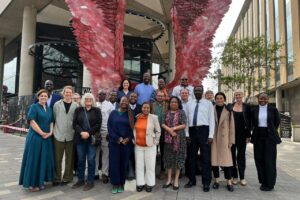
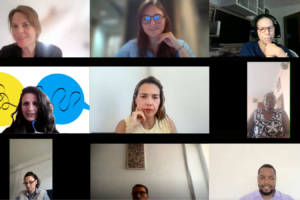
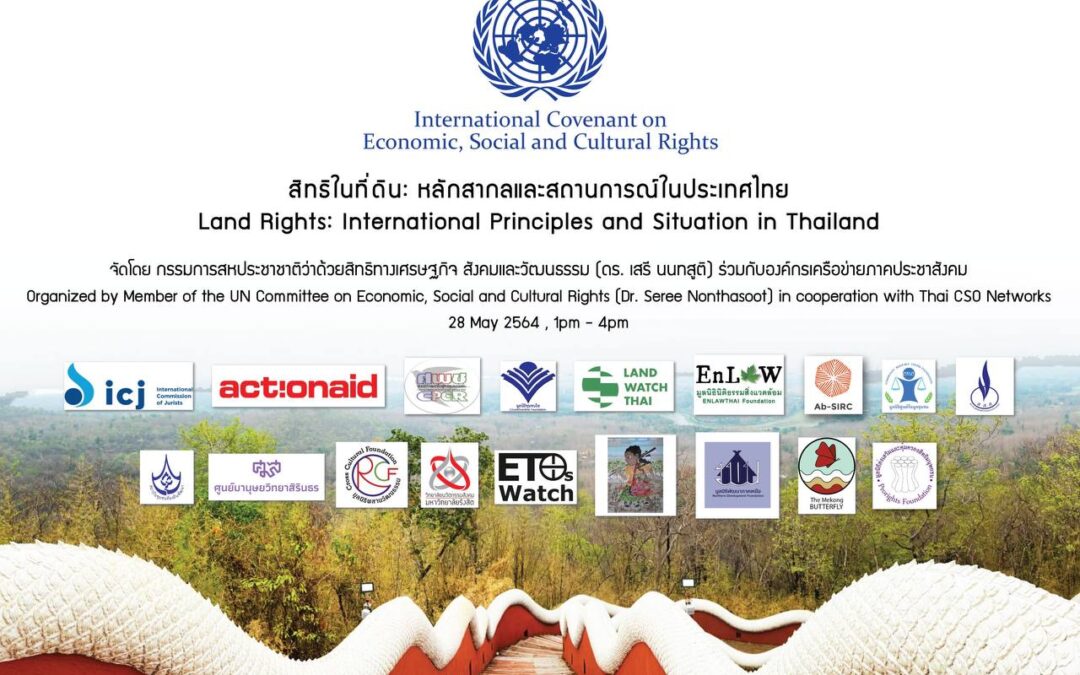
On 28 May 2021, the ICJ co-hosted a discussion on international human rights law and standards on land rights in Thailand, with 70 members of civil society organizations, human rights lawyers, and academics in attendance. On 4 June 2021, the ICJ spoke at a discussion on the same topic, organized by Thailand’s Ministry of Justice, bringing together 80 governmental officials from several Ministries.
“Thailand’s land regulatory laws do not adequately protect the rights of indigenous people to access their ancestral lands and natural resources and to conduct cultural practices,” said Sanhawan Srisod, ICJ Legal Advisor. “We hope the Thai government will improve its general policies for land use and tenure, especially for indigenous peoples and forest dwellers, in line with its obligations under international law.”
Dr. Seree Nonthasoot, member of the UN Committee on Economic, Social and Cultural Rights (CESCR) from Thailand, spoke at both discussions to introduce participants to the International Covenant on Economic, Social and Cultural Rights (ICESCR) to which Thailand is a party and the role of the CESCR. The CESCR is a body of independent experts from across the world established by ICESCR and tasked with providing authoritative interpretations of ICESCR in its body of jurisprudence.
“The CESCR recommended [that] Thailand […] effectively remove all obstacles to enjoyment of traditional individual and communal rights by ethnic minorities in their ancestral lands […] and ensure that forced evictions are only used as a measure of last resort. These should be addressed without any further delay,” said Dr. Seree Nonthasoot.
Specific issues highlighted by participants in the discussions included:
- Prosecution and Eviction: The use of laws ostensibly designed to counter climate change and forest conservation policies and legislatures, such as the Forest Act, the National Reserved Forests Act and the National Park Act, to prosecute forest dwellers and indigenous communities for trespassing and forcibly evict them from the land belonging to national reserved forests and national parks;
- Participation and Consultation: The inadequate participatory mechanisms and consultations with people affected by land-related policies and practices, in particular the increasing use of online mechanisms as the main platforms for consultation in Thailand, despite the low rate of access to the internet among affected communities;
- Judicial Recognition: The lack of explicit judicial recognition of historical and other indigenous forms of evidence and knowledge in order to establish validity of territorial claims;
- Impact of Tourism: The impact of tourism development projects on communities’ economic, social and cultural rights in land-related contexts, including on their traditional landownership and livelihood practices;
- Compensation and Assessment: The impact of large-scale land acquisitions in areas that had already been occupied or used, without carrying out adequate impact assessments and with inadequate compensation.
Sanhawan Srisod introduced participants to the CESCR’s draft General Comment No. 26, which is open for public comment until 27 July 2021. If a revised General Comment is adopted by the CESCR, it will provide an authoritative interpretation of States’ ICESCR obligations relating to land.
At the meeting’s conclusion, participants discussed advocacy strategies to strengthen Thailand’s legal frameworks once the draft General Comment is adopted by the CESCR.
Further reading
The Human Rights Consequences of the Eastern Economic Corridor and Special Economic Zones in Thailand
Thai Companies in Southeast Asia: Access to Justice for Extraterritorial Human Rights Harms
Joint submissions by ICJ and its partners to the Universal Periodic Review (UPR)
May 9, 2021 | News
Southeast Asian governments must diminish the misuse of lawsuits to harass and silence civil society, so-called SLAPP suites, said more than 70 international experts, judges, public prosecutors, lawyers, members of civil society organizations, academics, and members of executive and State institutions from Indonesia, Malaysia, the Philippines, and Thailand at a discussion convened by the ICJ and partners on 7 and 8 May.
The participants at the regional dialogue on “The Role of Administration of Judicial Authorities and Legislators in the Fight against Strategic Lawsuits Against Public Participation (SLAPPs) in Southeast Asia” addressed the proliferation of SLAPP suits, which SLAPP suits are undertaken with the principal objective of curtailing or deterring public criticism or opposition to certain activities by the entity initiating the legal action. SLAPP lawsuits typically have a “chilling effect” on the exercise of freedom of expression and other human rights and fundamental freedoms, including freedom of opinion and expression (article 19 of the International Covenant on Civil and Political Rights); freedom of peaceful assembly (article 21); and the right to take part in the conduct of public affairs (article 25).
Irene Khan, Special Rapporteur on the promotion and protection of freedom of opinion and expression, stated that it is necessary to bring exiting laws in compliance with international law and standards, including with the principles of legality, proportionate, necessity, legitimate purpose, and non-discrimination, and called for defamation laws to be decriminalized.
Prof. Surya Deva, Vice-Chairperson, the Working Group on the issue of human rights and transnational corporations and other business enterprises, referred to several anti-SLAPP provisions that, in his view, are inadequate, including section 161/1 and 165/2 of Thailand’s Criminal Procedure Code. He pointed out that while the legal reform needed, States also need to train relevant stakeholders who will make use of these. Internal or soft guidance can also be a helpful guideline on how to exercise discretion, and more resources should be allocated to raise awareness.
Several participants, while noting their duties to protect rights to access to justice and the power imbalance between the parties in SLAPP lawsuits, called for a robust legal frameworks and policies that prevent the filing SLAPPs in the first place and allow relevant authorities to identify, call out and dismiss them as soon as they are filed.
In the jurisdictions where such mechanisms exist, participants highlighted the need to address certain gaps to allow authorities to promptly and effectively exercise their power, and the importance of guidelines that can guide the relevant authorities on how to handle and proceed with SLAPPs in a coordinated effort to raise awareness among justice sector actors on this topic.
In the absence of a specific Anti-SLAPP legislation, participants also shared their experience using existing tools in their domestic laws as a basis in combating SLAPPs, including several provisions of the constitutions, other early dismissal mechanism provided in procedural laws, provisions under international laws, and encouraged their peers to think out of the box.
Reforming individual causes of action that commonly form the basis of SLAPPs, such as defamation, to ensure their compliance with international law and standards were also discussed by participants as another approach that the governments should consider, in combination with other measures.
Remedies for persons negatively affected by SLAPP lawsuits were encouraged.
The Workshop was conducted in collaboration with Business & Human Rights Resource Centre (BHRRC); Philippine Judicial Academy; the Supreme Court of the Republic of the Philippines; Lembaga Kajian dan Advokasi Independensi Peradilan (Indonesian Institute for Independent Judiciary or LeiP); Human Rights Commission of Malaysia (SUHAKAM) and AmerBON Advocates.
The speakers at the workshop were: representatives of all partner organizations; Nikhil Dutta, Global Programs Legal Advisor of the International Center for Not-for-Profit Law (ICNL); Joel Hernández García, Inter-American Commission on Human Rights’ Rapporteur on the Rights of Human Rights Defenders and Justice Operators; Irene Khan, Special Rapporteur on the promotion and protection of freedom of opinion and expression; and Prof. Surya Deva, Vice-Chairperson, the Working Group on the issue of human rights and transnational corporations and other business enterprises.

Apr 21, 2021 | News
Journalists and media workers face an increasingly repressive legal landscape amidst the COVID-19 pandemic in Cambodia, Thailand and Vietnam, as outlined by the ICJ in a submission to the Office of the United Nations High Commissioner for Human Rights (OHCHR).
“Laws in Cambodia, Thailand and Vietnam that do not comply with human rights law and standards have served to shrink the civic space in which the media operate,” said Sam Zarifi, ICJ’s Secretary General. “This stands to undermine the media’s crucial work in performing their investigative functions and their capacity to impart information to the public.”
The ICJ highlighted in particular how new laws have been enacted in response to the COVID-19 pandemic that aim at or can be used by State authorities to control information about the pandemic. These laws contain provisions incompatible with human rights law and standards as their vague language makes them prone to abuses. In addition, some prescribe excessive sanctions, including severe criminal penalties, which are incompatible with the principles of necessity and proportionality.
The ICJ also underscored how the authorities in the three States continued abusing existing non-human rights compliant laws to arbitrarily restrict information and expression during the pandemic, by targeting journalists and social media users.
Although the ICJ recognizes the necessity to combat the spread of false information online to protect public health during the uncertainty of a pandemic, this objective can and must be carried out using the least intrusive means, rather than unnecessary and disproportionate measures like arrests, detentions, criminal prosecutions and onerous fines.
The submission called for the OHCHR to continue engaging with the relevant authorities in these three countries to better safeguard in law and practice the safety and work of journalists and media workers, and the right to health and right to freedom of expression and information.
This submission is aimed at providing the OHCHR information for a report it is preparing for the UN Human Rights Council pursuant to its Resolution 45/18 on the safety of journalists.
Download
The full submission is available in English here. (PDF)
Contact
Osama Motiwala, ICJ Asia-Pacific Communications Officer, e: osama.motiwala(a)icj.org
See also
ICJ, ‘Southeast Asia: ICJ launches report on increasing restrictions on online speech’, 11 December 2019
ICJ, ‘New ICJ global report shows that the right to health must be central to State responses to COVID-19’, 1 September 2020
ICJ, ‘Vietnam: authorities must act to safeguard rights online and end harassment of those expressing themselves – ICJ new report’, 9 December 2020
Apr 2, 2021 | News
The Thai authorities’ adoption of a draft law to regulate non-profit groups would strike a severe blow to human rights in Thailand, several international organizations said today. The bill is the latest effort by the Thai government to pass repressive legislation to muzzle civil society groups and non-governmental organizations (NGOs).
The “Draft Act on the Operations of Not-for-Profit Organizations” contains provisions that would have a deeply damaging impact on those joining together to advocate for human rights in the country, in violation of their right to freedom of association and other rights. The Thai government provided a perfunctory and inadequate consultation process for the bill. Because of fundamental problems in the draft law, the authorities should withdraw the draft entirely and ensure that any future law regulating NGOs strictly adheres to international human rights law and standards, the organizations said.
“This draft law poses an existential threat to both established human rights organizations and grassroots community groups alike. If enacted, this law would strike a severe blow to human rights by giving the government the arbitrary power to ban groups and criminalize individuals it doesn’t like,” said Maria Chin Abdullah, member of ASEAN Parliamentarians for Human Rights (APHR) and a Malaysian Member of Parliament (MP).
“This draft blatantly breaches Thailand’s own constitution and its human rights obligations. A thriving, independent and free civil society is an essential component of a rights-respecting, open society. The authorities should withdraw this deeply flawed draft and go back to the drawing board,” said Brad Adams, Director of Human Rights Watch’s Asia Division.
Arbitrary and vaguely-defined powers
According to the Draft Act (in Section 3), the government would have wide discretion as to which organizations will be exempted from the application of the law.
The Draft Act (in Section 4) also uses an overbroad definition of not-for-profit organizations (NPO), which has left it open to abusive and arbitrary application by the authorities.
The broad terms of the Draft Act would allow unequal treatment of certain disfavoured groups and carry dire consequences for associations critical of the government, with little scope to legally challenge government decisions. Groups as varied as academic institutions, community groups, sports associations, art galleries and ad hoc disaster relief collectives could be deemed to be NPOs and therefore be subject to the law’s mandatory registration requirement and potential criminal prosecution. The vague and overbroad definition of ‘not-for-profit organizations’ amounts to a violation of the “legality” principle, which requires any restriction to freedom of association and other fundamental freedoms be clearly “prescribed by law”.
Registered and unregistered groups alike must be allowed to function freely and be able to enjoy the right to freedom of association on equal terms. In order to enable individuals to exercise their right to freedom of association, States need to provide a simple, accessible, non-burdensome and non-discriminatory notification process for organizations to obtain their registration and must not require the authorities’ prior authorization.
“The draft law’s broad terms could be applied against virtually any group, no matter how small or informal,” said David Diaz-Jogeix, Senior Director of Programmes at ARTICLE 19. “If passed in its current form, the draft law will likely cause entire sectors of Thai civil society to collapse or take their activities underground.”
Excessive punishments
“Those found in breach of this law’s many faulty provisions risk lengthy prison sentences. Targetted NGOs could have their very existence extinguished at the whim of governmental authorities – enabling the silencing of critical and independent voices in Thailand,” said Ian Seiderman, Legal and Policy Director at the International Commission of Jurists (ICJ).
By making the registration of an NPO mandatory (in Section 5) and rendering any unregistered group illegal, the Draft Act would violate the right to freedom of association and severely impede the work of groups that defend and promote human rights.
Notably, under the proposed law (in Section 10), anyone found to belong to an unregistered association that operates within Thailand could be jailed for up to five years, fined up to 100,000 THB (approx. 3,200 USD), or both. This would effectively criminalize people solely for their peaceful exercise of the right to freedom of association.
“Paranoia” of foreign funding
“Around the world, bogus claims regarding foreign funding for NGOs are constantly used by repressive governments to distract from their own human rights record and to stigmatize and fuel paranoia regarding those who speak truth to power – often simply because they are critical of the government,” said Shamini Darshni Kaliemuthu, FORUM-ASIA’s Executive Director. “Now Thailand seems to want to follow suit, adding itself to an unwelcome list of rights-abusing governments trying to control or severely limit NGO funding.”
The Draft Act (in Section 6) places discriminatory restrictions on organizations that receive foreign funding. Authorities have the sole discretion to determine which activities may be carried out using funds from foreign or international sources, leaving ample room for abuse.
Moreover, the Draft Act states as a rationale for enacting the law: “several [NPOs] accepted money [from foreign sources], and used them to fund activities that may affect the relationship between the Kingdom of Thailand and its neighboring countries, or public order within the Kingdom.” This justification stigmatizes organizations that use foreign funding by equating their objectives to those of “foreign agents”. The government has failed to recognize the legitimate work carried out by organizations and their contribution to the rule of law and development of the country, merely because they are funded by foreign sources.
Privacy invaded and censorship on expression
“In addition to the ongoing criminalization of online expression in Thailand, the Draft Act gives sweeping, unchecked and discretionary administrative powers to the authorities to further obstruct the work of human rights organizations,” said Emerlynne Gil, Amnesty International’s Deputy Regional Director for Research.
The Draft Act not only confers the power to the authorities to closely scrutinize organizations, it also contains provisions to subject NPOs’ offices and members to invasive surveillance and searches without judicial oversight. The Draft Act (in Section 6) allows the authorities to enter civil society organizations’ offices and make copies of their electronic communications traffic data without prior notice or a court warrant. This is a serious threat to the right to privacy and to freely express the ideas and opinions of its members.
Without prior notice or a valid warrant, this arbitrary power clearly violates domestic and international standards on due process of law.
“In going down this route, Thailand stands to poison the space for civil society. The passage of this law would severely undercut Thailand’s claims to be a rights-respecting country with a flourishing civil society,” said David Kode, Advocacy and Campaigns Lead at CIVICUS.
Contact
Ian Seiderman, ICJ Legal and Policy Director, ian.seiderman(a)icj.org, +41 229793800
Download
The statement with additional background information and list of organizations in English and Thai.
Submissions
Amnesty International
Article 19
Human Rights Watch
International Commission of Jurists – English and Thai
Mar 31, 2021 | News
Today, the ICJ submitted recommendations to Thailand’s Office of the Council of State concerning the Draft Act on the Operation of Not-for-Profit Organizations B.E. … (‘Draft Act’), which is scheduled for public consultation between 12 and 31 March 2021.
The ICJ urged that the Draft Act be repealed in its entirety or substantially revised in order to ensure compliance with Thailand’s international legal obligations.
The ICJ is concerned that the law, if adopted, would pose onerous and unwarranted obstacles to many civil society organizations in Thailand, including human rights NGOs, in carrying out their work. In its submission, the ICJ underscores the imprecise and overbroad language of the draft law, which would allow for abusive and arbitrary application by the Thai authorities on “Not-for-Profit Organizations” (NPOs). In particular, it provides for discriminatory restrictions on organizations that receive foreign funding.
“It is well-established in international law and standards that any registration of NPOs should be voluntary and that no law should outlaw or delegitimize activities in defence of human rights on account of the origin of funding,” said Ian Seiderman, ICJ’s Legal and Policy Director.
Violators of the Draft Act would risk having their registration revoked. The Draft Act also imposes liability of criminal punishment on those who operate without registration with imprisonment not exceeding five years or fined not exceeding 100,000 THB (approx. 3,200 USD), or both.
“In cases of registration revocation, the legal recourse available for NPOs to challenge such decisions involves lengthy and burdensome administrative and judicial proceedings, which would normally take years to reach a conclusion. Proceedings of this kind will be untenable for some organizations and will deal a fatal blow to the essential work of many human rights defenders,” said Ian Seiderman.
The Draft Act also provides sweeping powers to government authorities to monitor activities, search and seize electronic data of NPOs without any court warrant, in violation of the rights to privacy.
Background
Thailand is a State party to the International Covenant on Civil and Political Rights (ICCPR), which requires States to respect and protect, inter alia, the right to freedom of association, expression, peaceful assembly, the right to take part in the conduct of public affairs, the right to privacy and the right to an effective remedy. Thailand may impose limitations on NPOs only in narrow circumstances and subject to strict conditions as set out in the ICCPR.
On 23 February 2021, Thai Cabinet approved in principle the Office of the Council of State’s proposal to enact a law aims to provide oversight on NPOs’ operations.
The draft law is currently under consideration of the Council of State for legal review. Public consultation is currently carried out by the Office, only via their online platform. Members of the public were expected to have registered any concerns about the Draft Act through the website of the Office, by post or by email, between 12 to 31 March 2021 – a considerably tight period of time.
The draft law will then be resubmitted to the Cabinet, then presented to the Parliament.
Download
Recommendations in English and Thai (PDF)