Sep 16, 2015 | Advocacy, Non-legal submissions
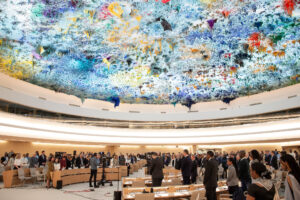
The ICJ today delivered an oral statement at the UN Human Rights Council, in the interactive dialogue with the Working Group on Mercenaries on its report on private military and security companies.
The full statement may be downloaded in PDF format here: UN-Advocacy-HRC30-OralStatement-WGMercenaries-2015
Sep 15, 2015 | Events, News
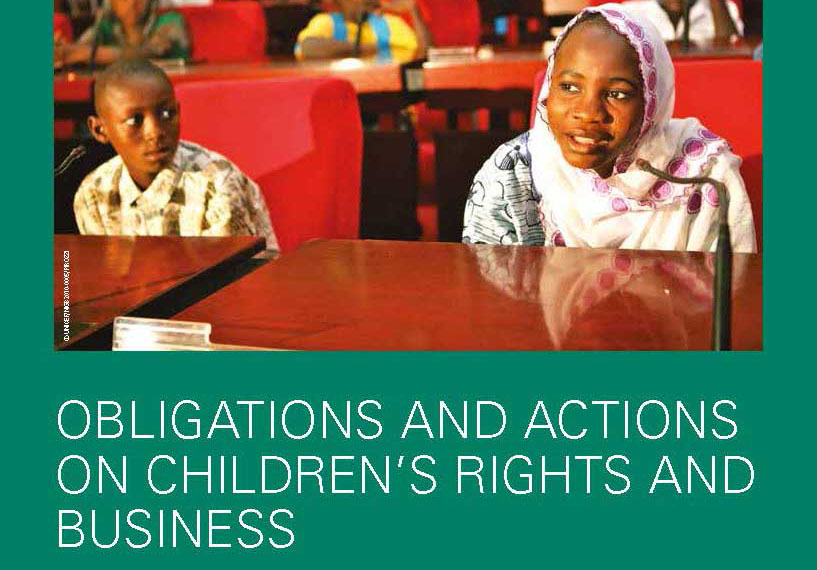
Organized by UNICEF and the ICJ, this side event takes place on Thursday 17 September 2015, from 12:00-14:00, Room XXVII, Palais des Nations, Geneva.
More than ever before, business enterprises have an impact on children’s lives.
Children are consumers of businesses’ products and services, workers in their factories and fields, family members of their employees, and residents of the communities that host their operations.
Some of these interactions can benefit children. Companies have, for instance, created new technologies that enrich children’s education, enhance medical care, and connect families around the world.
Yet at the same time, businesses can also have detrimental impacts.
Companies can make and sell unhealthy and unsafe goods to children, pollute the environments in which children live and play, and expose them to serious dangers including in the workplace.
As children are still growing and developing, they are especially vulnerable to negative business impacts and can be severely and permanently affected by infringements of their rights.
Child consumers can be more easily convinced to buy and use inappropriate or unsuitable products, and children are much more susceptible than adults to the harmful physical effects of toxic chemicals, manual labour and poor diets.
Young workers can never fully make up for time spent out of education, and missed opportunities are rarely restored.
Many of these impacts remain unnoticed, and businesses rarely involve or seek the input of children on decisions that will profoundly affect them.
Children may not understand that their rights are in jeopardy, and, even when they do, often face tremendous challenges in making their voices heard.
All too frequently, child victims lack the confidence, resources and legal authority to demand accountability from those who violate their rights.
For these reasons, it is imperative that governments take action to protect and promote children’s rights in the context of business operations.
In February 2013, the UN Committee on the Rights of the Child adopted General Comment 16 on State obligations regarding the impact of the business sector on children’s rights to assist States to ensure that businesses respect children’s rights as envisioned in the Convention on the Rights of the Child.
The ICJ and UNICEF, at the request of the Committee, have elaborated a Guide to offer to States practical examples and best practices on how to protect and ensure the realization of the rights of the child in the context of business operations.

Sep 15, 2015 | Advocacy, Non-legal submissions
The ICJ today made an oral statement at the UN Human Rights Council, welcoming the presentation of UN Basic Principles and Guidelines on the right to challenge detention, and a report on forced labour and slavery in supply chains.
The statement was made during an Interactive Dialogue with the Working Group on Arbitrary Detention and the Special Rapporteur on contemporary forms of slavery.
The ICJ said that the implementation of the Basic Principles and Guidelines would help prevent governments from depriving people of liberty solely for exercising freedoms of opinion and expression; peaceful assembly and association; thought, conscience and religion; or on the basis of discrimination. Such violations are often achieved by circumventing or suspending essential legal procedural protections such as habeas corpus.
The ICJ noted that the right to challenge detention is also a key safeguard against incommunicado or secret detention, enforced disappearance, and torture and other cruel, inhuman or degrading treatment.
The ICJ welcomed the attention the Working Group has given to the challenging contexts of counter-terrorism and armed conflicts, where such concerns are particularly acute.
The ICJ also welcomed the report of the Special Rapporteur on contemporary forms of slavery, addressing the issue of modern slavery and forced labour in supply chains, and the Rapporteur’s emphasis on the right to an effective remedy. In addition to the international legal and policy frameworks and continuing efforts by States and businesses outlined in the report, the ICJ noted that UN treaty-bodies have produced useful guidance and recommendations, such as the General Comment adopted by the Committee on the Rights of the Child in 2013, on State obligations regarding the impact of the business sector on children’s rights.
The full statement may be downloaded in PDF format here: UN-Advocacy-Oral statementWGADandSRslavery-2015
Earlier in the week, the ICJ published a legal commentary on certain aspects of the Principles and Guidelines, related to situations of armed conflict. The commentary is available here.
Sep 14, 2015 | Events, News
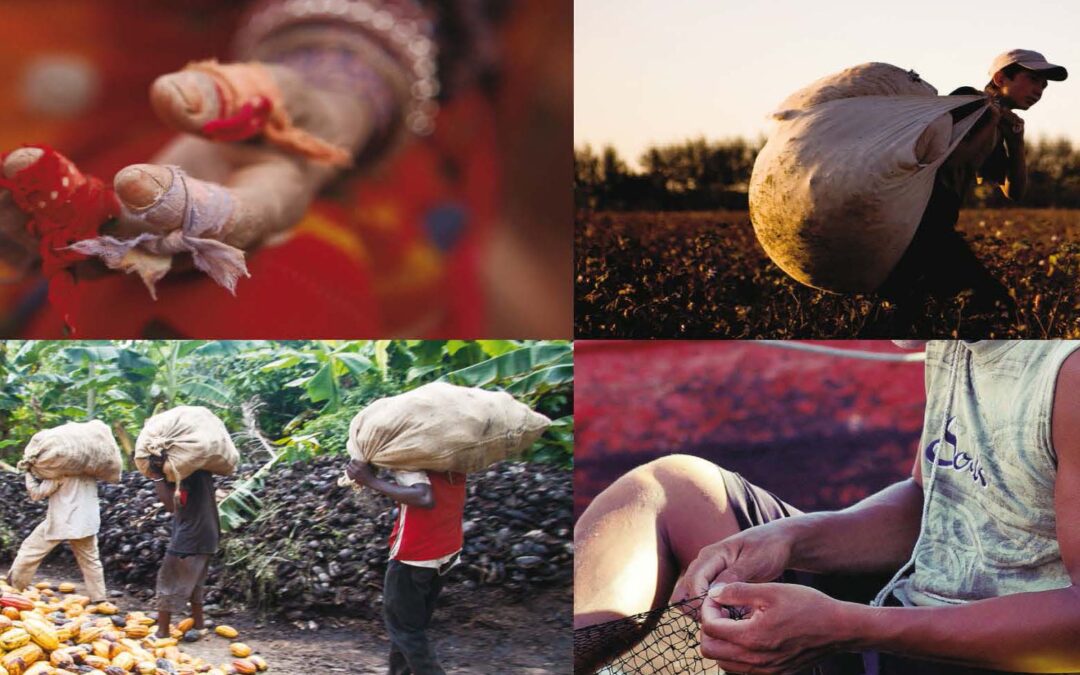
This side event will be held on Wednesday 16 September 2015, 12h00 – 14h00, at the Palais des Nations, Conference Room XXI, in Geneva.
It will assess the most effective strategies and recommend concrete measures for States, businesses and other stakeholders to prevent and eradicate contemporary forms of slavery from supply chains and to provide assistance and redress to victims.
It will also identify key challenges and opportunities in addressing slavery and slavery-like practices in supply chains, including in terms of the legal standards, policy measures, institutional framework, and implementation.
The speakers will also discuss opportunities for contemporary forms of slavery eradication within the 2030 Agenda for Sustainable Development framework.
Universal-HRCEnding contemporary forms of slavery in supply chains-Event-Agenda-2015-ENG (full agenda, in PDF)