Jul 7, 2015 | Advocacy
The ICJ and 15 other NGOs participating in the first session of the OEIWG to elaborate a treaty on business and human rights highlighted that in principle all conduct by all types of business enterprises, whether local or transnational, shall be addressed in the legally binding instrument.
The footnote in the preamble should not be interpreted as limiting in any way the scope of possible discussions in the Open Ended Intergovernmental Working Group (OEIWG) or any analysis or recommendations that may be reported back to the Council on a future treaty.
Business enterprises that do not have any or any significant transnational operations no doubt are capable of and in many instances have been responsible for human rights abuses no less serious in scale or severity than those of transnational businesses.
The people whose human rights are abused directly or indirectly by businesses are unlikely to distinguish whether the business enterprise that causes them harm has transnational ownership or operations; nor are affected people likely to excuse abuses they suffer from a “local” business simply because the entity lacks a transnational element.
From the point of view of those whose human rights are affected by business activities, the key consideration is not the formal character of the business entity, but instead the their practical access to effective remedy and reparation for the harm they have suffered.
If a treaty is going to take the view and needs of those adversely affected by business activity as a central concern, it must address all business enterprises that can potentially carry out abuses and not only on those with transnational links.
The statement can be downloaded here: Joint Oral Statement on Scope v.2
Jul 1, 2015 | Advocacy
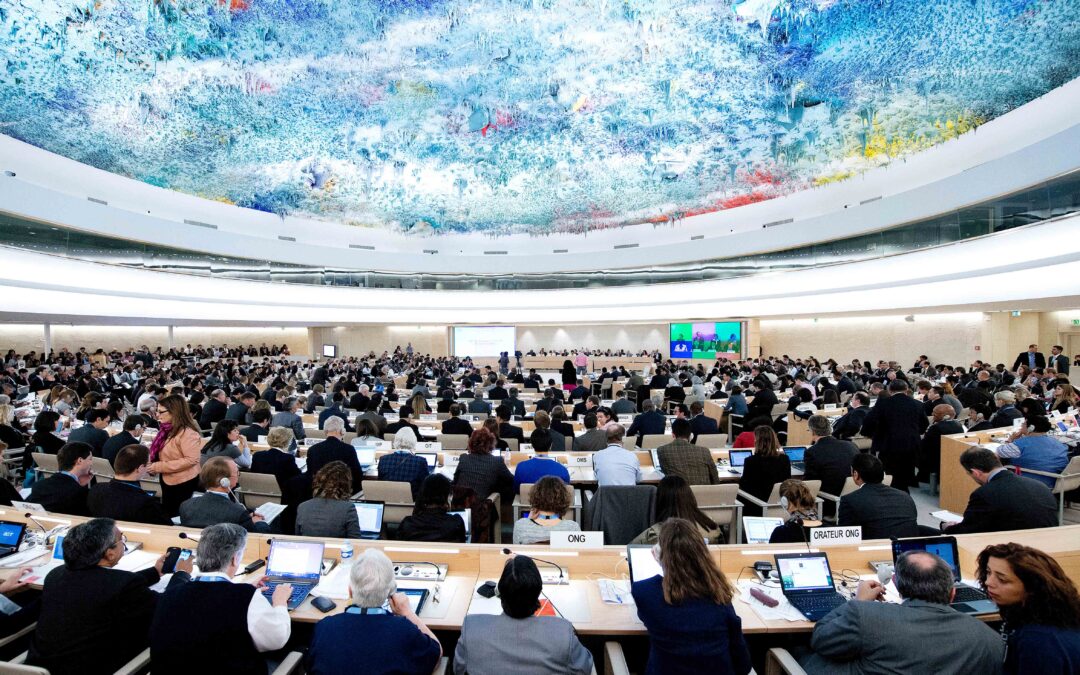
Joint statement by the ICJ and Amnesty International after a group of States, led by Egypt, proposed a resolution on “protection of the family” at the ongoing 29th regular session of the UN Human Rights Council.
Bangladesh, Belarus, China, Cote d’Ivoire, Egypt, El Salvador, Mauritania, Morocco, Qatar, the Russian Federation, Saudi Arabia and Tunisia have submitted a seemingly innocuous draft resolution (A/HRC/29/L.25) that, in fact, underhandedly seeks to divert the Council from its institutional mandate focused on the effective promotion and protection of the human rights of the individuals towards protecting the purported rights of a social institution, namely, “the family”.
The full statement can be downloaded here: Universal-ICJ+AI statement on protection of the family-Advocacy-2015-ENG (in PDF)
Jun 18, 2015 | News
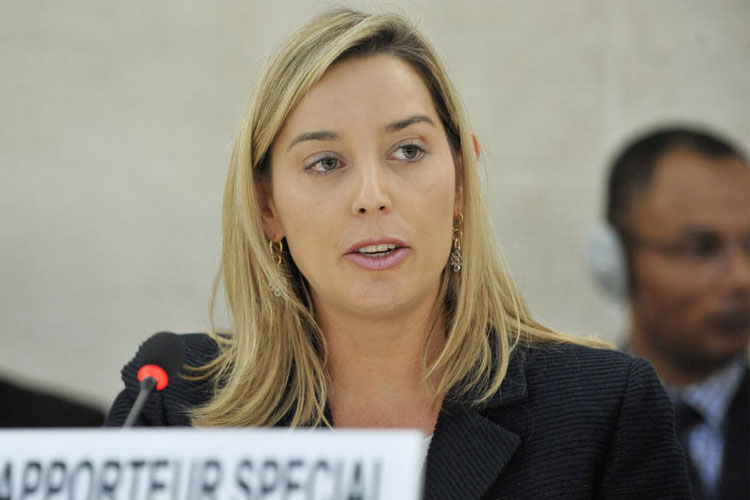
Mrs Gabriela Knaul (Brazil) today participated in an Interactive Dialogue with the Human Rights Council. Topics included children in the justice system, her visits to Qatar, United Arab Emirates, Tunisia and Portugal, and the need more generally for better implementation of relevant UN standards.
Mrs Knaul’s appearance before the Human Rights Council will be her last before her term in the mandate comes to an end in the coming months.
Her successor as UN Special Rapporteur on the independence of judges & lawyers is to be appointed at the end of the Council session, on 3 July 2015.
Following an initial presentation by the Special Rapporteur, the concerned countries responded, followed by discussion by other states, and civil society.

Jun 17, 2015 | Events, News
Head of ICJ’s Centre for the Independence of Judges & Lawyers, Matt Pollard, today moderated a side event on “Securing the independence and effectiveness of the Judiciary: European initiatives and perspectives in global context” at the UN Human Rights Council.
At the event, representatives of the Council of Europe highlighted the work of the European Commission for the Efficiency of Justice (CEPEJ) and the Consultative Council of European Judges (CCJE). The UN Special Rapporteur on the Independence of Judges and Lawyers, Ms Gabriela Knaul (from Brazil) reflected on the global relevance of European initiatives and institutions during her six years in the mandate.
Matt Pollard discussed the impact of Council of Europe standards and jurisprudence, both within Europe and in terms of global influence, from the perspective of civil society, as well as highlighting that standards and jurisprudence developed in other regions also present a rich source that European institutions should do more to draw on in their own work.
The interactive Panel discussion included extensive questions and comments from state delegations and civil society representatives in attendance at the event.
Panelists:
Mr. Georg Stawa, President of the European Commission for the Efficiency of Justice, Council of Europe
Mr. Bart van Lierop, President of the Consultative Council of European Judges
Mrs. Gabriela Knaul, UN Special Rapporteur on the Independence of Judges and Lawyers
Mr. Matt Pollard, Centre for the Independence of Judges and Lawyers, International Commission of Jurists (moderator)
This side event was organised by the Permanent Delegation of the Council of Europe to the UN Office in Geneva, with the co-sponsorship of Australia, Botswana, Hungary, Mexico as the main sponsors of the resolution on the independence of judges and lawyers