
Nepal: suspend promotion of new police chief
Probe, don’t promote, alleged human rights abuser Kuber Singh Rana, Human Rights Watch and the ICJ said today.

Probe, don’t promote, alleged human rights abuser Kuber Singh Rana, Human Rights Watch and the ICJ said today.

The ICJ, AI and HRW express their concern that the human rights situation in Nepal remains precarious and that accountability for wartime abuses is being put further and further out of reach.
During the Human Rights Council’s 19th session in Geneva, on 27 February to 23 March 2012, the ICJ – in a joint statement with Amnesty International (AI) and Human Rights Watch (HRW) – made an oral statement in the General Debate under item 2 of the Council agenda (concerning reports of the Office of the High Commissioner of Human Rights – OHCHR). On the even of the departure of the OHCHR from Nepal, the ICJ, AI and HRW expressed their concern that the human rights situation in Nepal remains precarious and that accountability for wartime abuses is being put further and further out of reach.
Nepal-joint statement Human Rights Council-non-legal submission-2012 (full text in English, PDF)

 During the 19th session of the Human Rights Council, a plenary Panel discussion was convened on discrimination and violence based on sexual orientation and gender identity – the first of its kind.
In a joint oral statement with Human Rights Watch and Amnesty International, the ICJ welcomed the study by the Office of the High Commissioner for Human Rights and addressed concerns about the serious mischaracterization of international human rights law by some delegations at the Human Rights Council.
oral statement-analysis brief-2012 (full text in English, PDF)
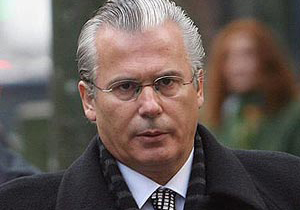
The ICJ and other human rights groups call on the Supreme Court of Spain to act in accordance with international law standards on the independence of the judiciary and accountability for international crimes. Judge Garzón is accused of criminal malfeasance for authorizing investigations into the alleged disappearance, torture and execution of more than 110.000 persons during the Spanish Civil War and the subsequent Franco’s regime. The trial against Judge Garzón will begin on 24 January 2012.
Spain-trial judge Garzón-press release-2012 (full text in English, PDF)
Spain-trial judge Garzón-press release-2012-SPA (full text in Spanish, PDF)

Since 2009, the UN High Commissioner for Human Rights has called for the strengthening and increased funding for the UN treaty bodies.
The UN treaty bodies are the monitoring mechanisms established under the universal treaties on international human rights.
To date, however, this strengthening process has inadequately addressed the need to strengthen, streamline and coordinate the Individual Communications procedures of the treaty bodies.
A coalition of NGOs has therefore issued a joint statement on the strengthening of these procedures, which represent a key aspect of the right of access by all to international justice in the context of human rights. The joint statement includes recommendations to States, the Office of the High Commissioner for Human Rights, and the treaty bodies themselves.
statement strengthening treaty body-analysis brief-2011 (full text in English, PDF)
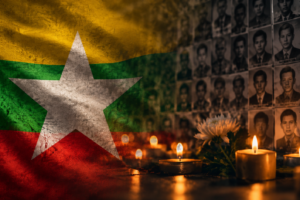 Myanmar: As armed conflict rages and military rule continues, critical measures can be taken towards eventual justice and accountability for victims of Enforced Disappearance
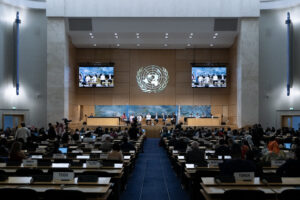 HRC63: ICJ Raises Alarm over Repression in Tunisia and Arbitrary Detention in El Salvador
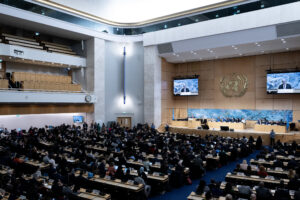 HRC63: ICJ Calls for Protection of Lawyers and Accountability in Myanmar
 More than fifty years on: enforced disappearance, the families who named it, and the reframing of international protection