Aug 19, 2019 | Advocacy, Cases, Legal submissions
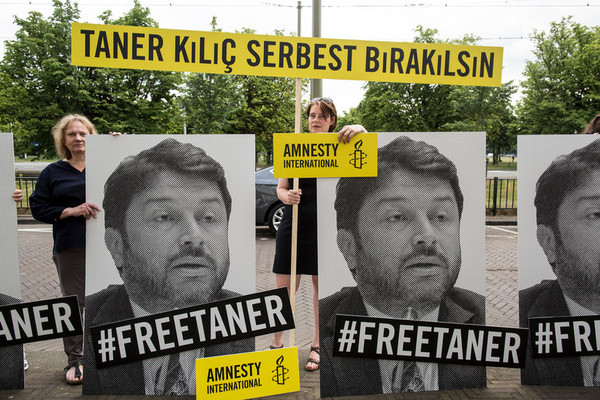
The International Commission of Jurists, the Turkey Human Rights Litigation Support Project and Human Rights Watch have jointly intervened before the European Court of Human Rights in the case of Taner Kiliç, former Chair of the Board of Amnesty International Turkey.
Taner Kiliç is a Turkish human rights defenders. He had been Chair of the Board of Amnesty International Turkey since 2014.
He was arrested on 6 June 2017 on reportedly unsubstantiated charges of “membership of a terrorist organisation” and was released on bail on 15 August 2018 after having spent 14 months in detention.
His case before the European Court of Human Rights challenges the lawfulness of his pre-trial and on remand detention, the violations of his right to judicial review of his detention, and of his freedom of expression and association, considering his arrest linked to his work as leader of a NGO.
As the interveners have written to the Court, this case epitomises some of the most fundamental human rights challenges in Turkey today.
These involve widely documented restrictions on freedom of expression, association, and assembly of human rights defenders (HRDs) and rapidly closing civil society space.
The interveners have submitted observations on:
- the factual context in respect of the situation facing HRDs in Turkey;
- international standards governing obligations towards HRDs of relevance to the Court’s interpretation of the European Convention on Human Rights, including the limits prescribed by Article 18;
- key principles necessary for a rule of law approach to the application of the criminal law, against the legal and practical pattern of excessive resort to criminal law against HRDs in Turkey today.
Turkey-ECtHR-icj&others-Kilic-Advocacy-legal submission-2019-ENG (download the third party intervention)
Photo credit: Amnesty International

Nov 30, 2016 | Advocacy, News, Non-legal submissions
European Union Member States must ensure that a new effort to standardise counterterrorism laws does not undermine fundamental freedoms and the rule of law, a group of international human rights organisations said today.
Amnesty International, the European Network Against Racism (ENAR), European Digital Rights (EDRi), the Fundamental Rights European Experts (FREE) Group, Human Rights Watch (HRW), the International Commission of Jurists (ICJ) and the Open Society Foundations (OSF) are warning that the overly broad language of the new EU Directive on Combating Terrorism could lead to criminalising public protests and other peaceful acts, to the suppression of the exercise of freedom of expression protected under international law, including expression of dissenting political views and to other unjustified limitations on human rights. The directive’s punitive measures also pose the risk of being disproportionately applied and implemented in a manner that discriminates against specific ethnic and religious communities.
The groups call on EU Member States to ensure that implementation of the directive in national law includes additional safeguards to guarantee compliance with regional and international human rights obligations. These safeguards are especially important to ensure that any new laws passed, which will remain in place for years to come, cannot be used abusively by any government, including any that may be tempted to sacrifice human rights and due process in the name of pursuing security.
‘States must effectively address the threat of terrorism. But the EU has rushed to agree a vaguely worded counterterrorism law that endangers fundamental rights and freedoms,’ said Róisín Pillay, Europe Programme Director at the ICJ. ‘Time and again we’ve seen governments adopt abusive counterterrorism laws without assessing their effectiveness, and then implement them in ways that divide and alienate communities. We worry this directive will reinforce this trend and leaves too much leeway for governments to misuse the directive to violate rights.”
The groups also noted that the legislative process for adopting this directive lacked transparency and opportunity for critical debate. There was no impact assessment of the proposal, negotiations moved forward without parliamentary-wide review of the text, and the proposal was rushed through behind closed doors and without any meaningful consultation of civil society.
Despite the inclusion of a general human rights safeguarding clause and repeated caution from our organisations the final text fails to fully protect human rights within the EU:
• The directive repeats the EU’s already overly broad definition of ‘terrorism,’ which permits states to criminalise, as terrorism, public protests or other peaceful acts that they deem ’seriously destabilise the fundamental political, constitutional, economic or social structures of a country or an international organisation.’
• Significantly, the directive requires states to criminalise a series of preparatory acts that may have a minimal or no direct link to a violent act of terrorism, and may never result in one being committed. For example the offences of participating in a terrorist group, travelling or receiving training for terrorist purposed are not adequately defined. Unless these broadly outlined offences are subject to careful drafting and strong safeguards in national law, they are likely to lead to violations of rights, including the right to liberty and freedoms of expression, association, and movement.
• The directive criminalises the public distribution of messages, including messages that ‘glorify’ terrorist acts, if the distribution is intentional and causes a danger that a terrorist offence may be committed. However, such a low threshold likely to lead to abuse if not limited as the UN recommends ‘to incitement that is directly causally responsible for increasing the actual likelihood of an attack’. The directive should have incorporated this language to avoid unjustified interference with freedom of expression.
We welcome the directive’s protection of activities of recognised humanitarian organisations. However we remain concerned that the protection does not expressly extend to all individuals providing medical or other life-saving activities that international humanitarian law (IHL) protects during times of armed conflict.
States should take the directive as an opportunity to reassess their counterterrorism laws, policies and practices and engage with civil society and other stakeholders. We welcome the European Commission’s commitment to formally include civil society organisations in their activities to support transposition of the directive.
Contact:
Roisin Pillay, ICJ Europe Director, at roisin.pillay(a)icj.org or +32 2 734 84 46
eu-press-release-flawed-counterterrorism-directive-2016-eng (download the statement)
Nov 28, 2016 | News
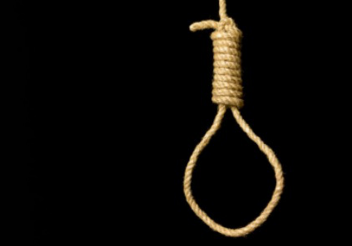
The ICJ, along with a number of other NGOs, issued a joint statement expressing solidarity for the families of executed prisoners in Singapore.
The statement was issued following the execution of a Nigerian national, Chijioke Stephen Obioha, and a Malaysian national, Devendran a/l Supramaniam in Singapore on 18 November 2016.
The full statement can be downloaded here:
singapore-joint-ngo-statement-singapore-executions-news-web-story-2016-eng (PDF)
Oct 4, 2016 | Advocacy, News, Open letters
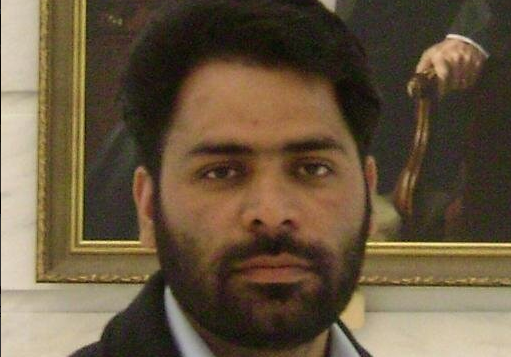
The ICJ, along with Lawyers’ Rights Watch Canada and Human Rights Watch, sent a letter to the Government’s Chief Minister of Jammu and Kashmir expressing concern at the arbitrary detention of Kashmiri human rights defender Khurram Parvez.
The letter can be downloaded here: india-joint-ngo-letter-khurram-parvez-advocacy-open-letters-2016-eng (in PDF)
Sep 16, 2016 | News
Indian authorities have detained a Kashmiri human rights activist after stopping him from traveling to the United Nations Human Rights Council in Geneva, Human Rights Watch and the ICJ said today.
Khurram Parvez was arrested in his home on 15 September 2016, a day after being prevented from leaving the country with a group of rights activists who were traveling to Geneva to raise concerns about the security force crackdown in Jammu and Kashmir.
Human Rights Watch and the ICJ call on authorities to immediately release Parvez and allow him to attend the Human Rights Council session.
“Indian authorities seem to have missed the irony of blocking a rights activist on his way to the UN Human Rights Council,” said Sam Zarifi, Asia Director at the International Commission of Jurists.
“Monitoring and engage
ment by civil society is necessary to prevent human rights violations and ensure accountability. The Government should immediately release Khurram Parvez and begin working with him and other activists to address the difficult issues facing Jammu and Kashmir,” he added.
Parvez, 39 years of age, is chair of the Asian Federation Against Involuntary Disappearances (AFAD) and program coordinator of the Jammu Kashmir Coalition of Civil Society (JKCCS).
He has documented cases of enforced disappearances and investigated unmarked graves in Kashmir.
According to his lawyer, Parvez has been detained by Kashmir police under “preventive detention” provisions of the Code of Criminal Procedure, including section 151 (arrest to prevent the commission of cognizable offense).
The Government’s actions against Parvez violate his right to freedom of movement.
Under international human rights law, any restrictions on freedom of movement for security reasons must have a clear legal basis, be limited to what is necessary and be proportionate to the threat.
This is further supported by article 5 of the UN Declaration on Human Rights Defenders, which states that “[f]or the purpose of promoting and protecting human rights and fundamental freedoms, everyone has the right, individually or in association with others, at the national and international levels… to communicate with nongovernmental or intergovernmental organizations.”
“Instead of trying to silence human rights activists, India should be addressing the serious human rights problems in Jammu and Kashmir and holding perpetrators of abuses to account,” said Meenakshi Ganguly, South Asia Director at Human Rights Watch.
“Preventing open discussion of these issues, whether in India or in Geneva, sends a message to Kashmiris that the government has no interest in addressing their concerns,” she added.
Background
Violent protests broke out in Jammu and Kashmir state after the killing of Hizb-ul-Mujahedin militant Burhan Wani in an armed encounter on 8 July.
Since then, the authorities have placed large parts of the state under curfew restrictions to try to stop protesters who hurl stones at security forces and attack police posts.
Security forces have used unnecessary lethal force to contain the violence, which has resulted in the death of 80 protesters and 2 police officers, and thousands injured.
Some protesters, including children, lost their vision from pellets fired from riot-control guns.
While police have a duty to protect lives and property, under the UN Basic Principles on the Use of Force and Firearms by Law Enforcement Officials, they should use non-violent means as far as possible, only use force when unavoidable and in a proportionate manner, and use lethal force only when absolutely necessary to save lives, Human Rights Watch and International Commission of Jurists said.
The authorities have also attempted to censor news and restrict access to information.
The Government shut down local newspapers for three days, blocked mobile internet services temporarily, and ordered local cable operators to block the transmission of five news channels on television.
India has failed to address longstanding grievances in Jammu and Kashmir.
Numerous expert committees in India have recommended steps to address past human rights violations, including a repeal of the draconian Armed Forces Special Powers Act, but the Indian Government has ignored these recommendations.
Contact:
Sam Zarifi, ICJ Asia-Pacific Regional Director, (Bangkok); t:+66(0) 807819002; e: sam.zarifi@icj.org