Apr 25, 2018 | Events, News, Video clips
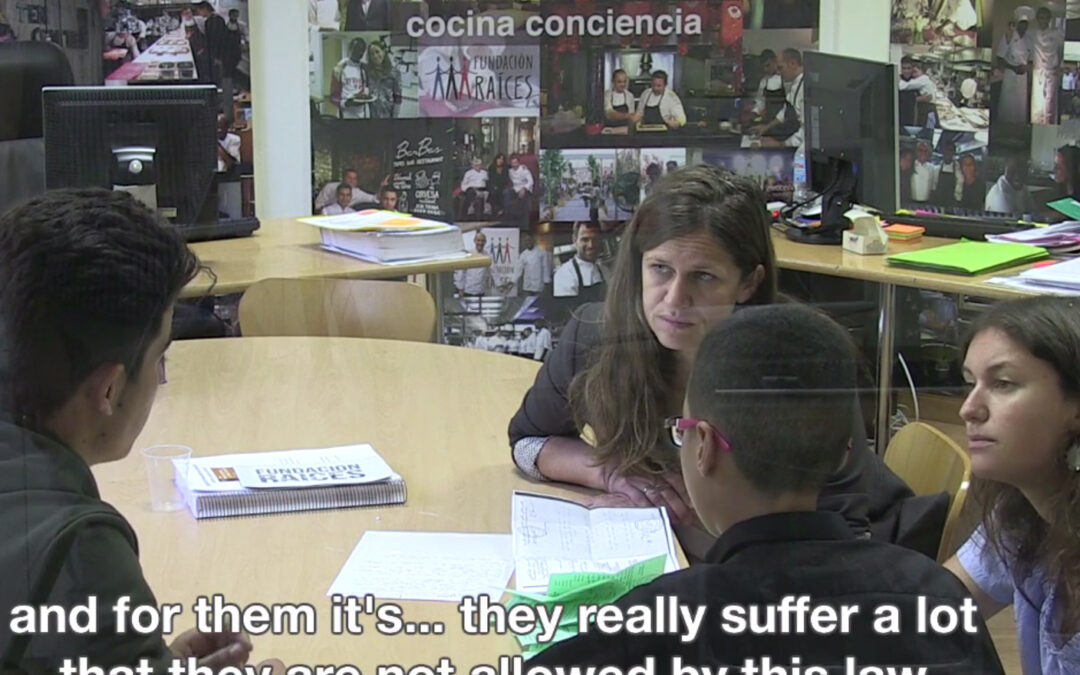
Today, the ICJ-European Institutions held the final event of its EU and OSI funded FAIR project (Fostering Access to justice for Immigrant children’s Rights) in the European Parliament in Brussels. Two videos have also been produced.
This is the closing event of a two-year long project, which aimed at strengthening access to justice for migrant children in the EU.
Migrant children in the EU face violations of their human rights every day.
Lack of access to their families, to information, guardians and legal assistance, lack of access to housing or education, unlawful detention – are few examples of what the children suffer.
The event in the European Parliament was hosted by four political groups and three Members of the EP took part in the panel discussions, on challenges migrant children face in their access to justice and on ways forward and what the EU could do to further advance the rights of some of the most vulnerable people at EU territory.
The panel discussions also included specific cases that national lawyers are dealing with in Italy, Greece, Germany and Ireland on behalf of migrant children.
Julien Makalu, a young engineering student shared his own experience when he arrived to Greece as unaccompanied minor some years ago.
During the FAIR project, the ICJ-European Institutions:
The FAIR project co-funded by the Rights, Equality and Citizenship Programme of the European Union and OSIFE.
Download the flyer and agenda of the event here:
Universal – A2J Migrant Children Flyer – 2018 – ENG (Flyer)
Universal – A2J Migrant Children Agenda – 2018 – ENG (Agenda)
Watch the videos of the FAIR Project and the FAIR Project’s retreat
From 4 to 8 October 2017, 19 lawyers from Bulgaria, Germany, Greece, Italy, Ireland, Malta and Spain met together and with experts to strategize about their cases of access to justice for migrant children and on accessing international human rights mechanisms. The workshop took place on the French border near Geneva, allowing UN treaty bodies experts and members to participate.
Apr 17, 2018 | Advocacy, Cases, Legal submissions, News
The ICJ and other NGOs jointly intervened before the Grand Chamber of the European Court of Human Rights in a case against Spain on the denial of entry of asylum seekers in the enclave of Melilla.
The ICJ, the European Council on Refugees and Exiles, the AIRE Centre, Amnesty International and the Dutch Refugee Council argued that the European Convention on Human Rights prohibits refusal of entry, and/or return of a person to face serious violations of human rights, including of the right to life, the prohibition of torture or inhuman or degrading treatment or punishment, or flagrant denial of justice and of the right to liberty.
They submitted that these refusals of entry are also contrary to the rights set out in the EU Charter of Fundamental Rights (CFR) and the prohibition on non-refoulement found in the 1951 Geneva Convention on the Status of Refugees (Refugee Convention).
The joint interventions presents the argument that, for these prohibitions to be practical and effective and not theoretical and illusory, Contracting Parties must have in place effective systems for identifying people within their jurisdiction who are entitled to benefit from the prohibition on refusing entry.
Spain-ICJ&others-AmicusBrief-ND&NT-ECtHR-GC-legalsubmission-2018 (download the thirty party intervention)
Apr 16, 2018 | Advocacy, News, Non-legal submissions
The ICJ and ECRE have presented today to the United Nations Special Rapporteur on the human rights of migrants a submission on access to justice for migrants in Europe.
The submission is an input for the forthcoming report of the UN Special Rapporteur on access to justice for migrants to the UN General Assembly.
The International Commission of Jurists (ICJ) and the European Council on Refugees and Exiles (ECRE) have provided a brief overview of aspects of access to justice for migrants, with a particular focus on asylum seekers and migrant children, in European countries.
The issues dealt with include:
- obstructions to access to justice in relation to access to the territory;
- the undue use of national security exceptions to weaken access to justice in immigration procedures;
- concerns with access to justice in expulsion and detention procedures;
- specific obstacles to access to justice for asylum seekers, including when appealing the rejection of their claims by first instance asylum authorities before a judicial or administrative appeal body;
- specific obstacles to access to justice for undocumented minors.
ICJECRE-NonLegalSubmission-SRMigrants-Access2JusticeEurope4Migrants-2018-ENG (download the submission)
Apr 9, 2018 | News
Prior to this workshop, on 6 April the ICJ met with the Mon State High Court, including its Chief Justice.
Legal advisers from the ICJ had a constructive discussion with the justices about judicial reform in Myanmar, including the role of lawyers and civil society, as well as jurists, in advancing accountability and access to justice.
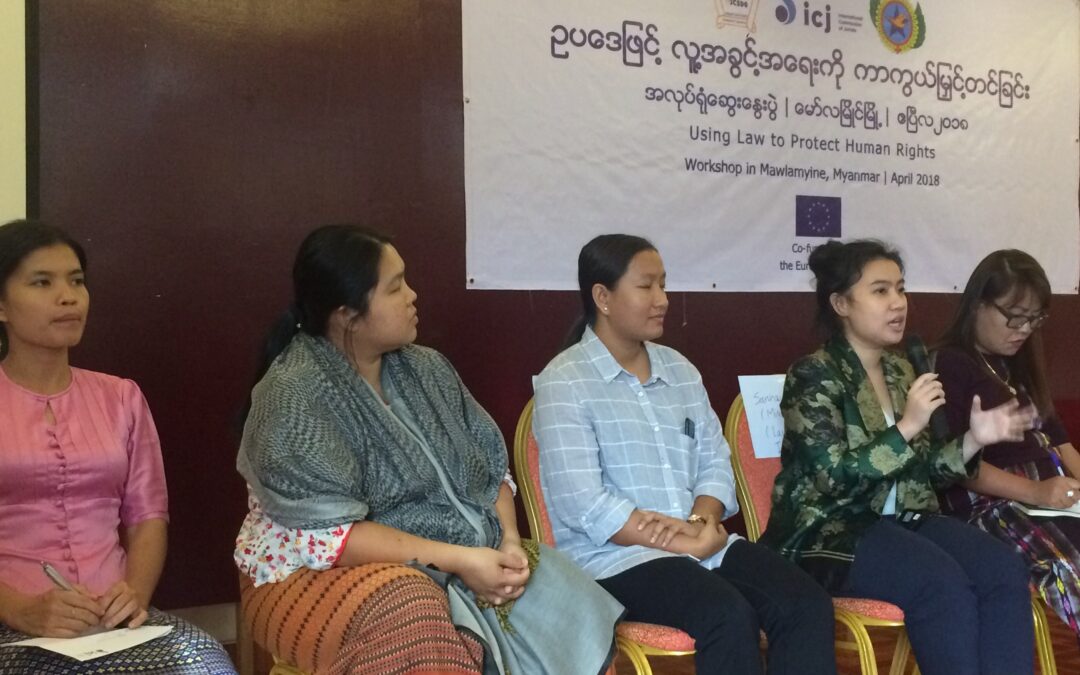
The two-day workshop aimed to identify challenges and opportunities for human rights advocacy using law, and to encourage the building of relationships and networks between lawyers and civil society.
The workshop considered strategic litigation concepts and case studies in the region. It also discussed the landscape of rule of law and justice in Myanmar, particularly the experiences regarding access to justice of some sixty participants from Mon State.
Mar 14, 2018 | News
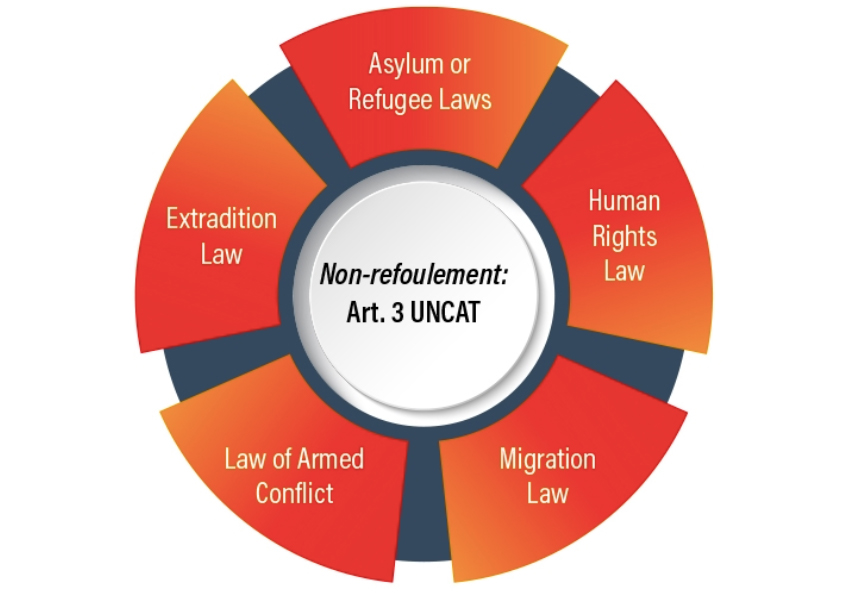
The new CTI tool on non-refoulement covers:
- constitutional and legislative provisions;
- national procedures;
- procedural rights to be guaranteed to those facing deportation or expulsion;
- training; and
- visa and stay arrangements for when return is prohibited.
There is also a section on non- refoulement in the extradition context.
The purpose of this and other CTI Implementation Tools is to inspire other States to take action through exchanges of good practices.
The tool also provides timely and practical information and advice for States in light of the recently released UN Committee against Torture’s General comment on the implementation of Article 3 of the Convention in the context of Article 22.
Some of the laws mentioned in this tool detail the powers that can be exercised by State authorities to remove a person and the constraints on those powers, as well as the relevant administrative and judicial procedures to be followed. National legislation has also detailed the rights of persons within those procedures (photo).
The tool was developed for the CTI by the ICJ with the support of the University of Bristol’s Human Rights Implementation Centre.
CTI’s series of UNCAT Implementation Tools are available here.