Oct 11, 2016 | News
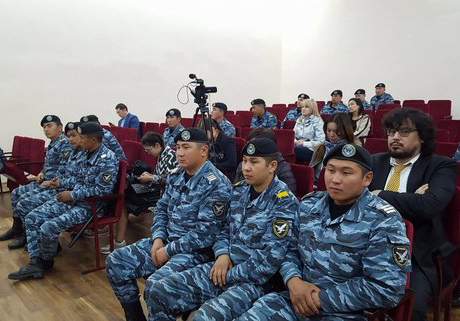
Today, the ICJ observed a hearing in the case of Azimzhan Askarov, a prominent human rights defender in Kyrgyzstan, convicted in 2011 of murder and incitement to ethnic hatred, after an unfair trial, and sentenced to life imprisonment.
Azimzhan Askarov is appealing against his conviction following a decision of the UN Human Rights Committee.
The Chuy Court began the appeal hearing in the case on 4 October, following the findings of the UN Human Rights Committee that Azimzhan Askarov’s arrest, detention and trial violated the International Covenant on Civil and Political Rights (ICCPR), including the prohibition on torture or other ill-treatment, the prohibition on arbitrary detention, and the right to fair trial.
As a result, the Supreme Court ordered a reconsideration of the case earlier this year.
At today’s hearing a witness who was Askarov’s former cellmate confessed that he beat Askarov up in detention, which is the first time that direct testimony about Askarov’s torture or other ill-treatment has been presented to the Court.
Previously such allegations were refuted by the prosecution.
The next hearing is scheduled for 18 October. The ICJ will continue monitoring the case in future hearings.
Contact
Róisín Pillay, e: roisin.pillay(a)icj.org
Dmitry Nurumov, e: dmitry.nurumov(a)icj.org
Background
Azimzhan Askarov, a prominent human rights defender, was convicted of murder and incitement to ethnic hatred and sentenced to life imprisonment in December 2011.
The charges concerned allegations of his participation in a murder of Myktybek Sulayamanov, a police officer, during the 2010 ethnic clashes in the South of Kyrgyzstan.
The ICJ observed the appeal hearing in the case before the Supreme Court on 20 December 2011.
Based on the results of the mission as well as the documents of the case, the ICJ published a detailed report on the arrest, detention and trial of Azimzhan Askarov.
In March 2016, the UN Human Rights Committee issued a decision in regard to Askarov’s complaint and found violations of Articles 7 (freedom from torture), Article 9 (prohibition of arbitrary detention); Article 10 (right to humane treatment in detention), Article 14 (right to a fair trial) of the International Covenant on Civil and Political Rights.
On 12 July 2016, the Supreme Court ordered a further reconsideration of the case on appeal.
The Chuy Regional Court is currently considering the case.
kyrgyzstan-askarov-trial-obs-news-web-story-2016-rus (full story in Russian, PDF)
Oct 10, 2016 | Events, News
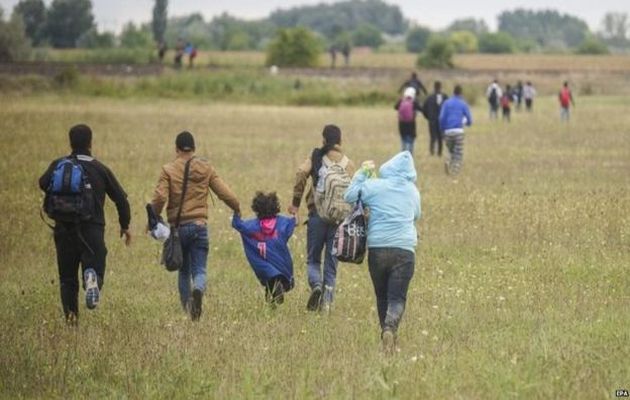
The ICJ, OSCE and Group 484 are holding a training on migration and international human rights law starting on From 10 to 13 October in Zlatibor (Serbia).
The training has been organised by the Organisation for Security and Cooperation in Europe (OSCE) and the Serbian NGO “Group 484” and will be given by the International Commission of Jurists.
It will focus on international protection of migrants and asylum seekers, access to territory and asylum and the principle of non-refoulement, in light of the current migrants and refugee crisis and drawing from the jurisprudence of the European Court of Human Rights, of the UN human rights systems and from EU law.
The training will be centred on the ICJ Practitioners Guide no. 6: Migration and International Human Rights Law.
serbia-jointtrainingmigrationhr-events-2016-eng (download the agenda)

Oct 3, 2016 | News
The government should drop all proceedings against human rights lawyer, Sirikan Charoensiri, including the specious accusation of sedition, which apparently relate to her organization’s representation of 14 student activists peacefully protesting in June 2015, the ICJ and other groups said today.
On 27 September 2016, Sirikan Charoensiri (photo), a lawyer and documentation specialist at Thai Lawyers for Human Rights (TLHR), received a summons from the Thai Police following accusations that she violated Article 12 of the Head of National Council for Peace and Order (NCPO) Order 3/2015, prohibiting the gathering of five or more people for political purposes, and Article 116 of the Thai Criminal Code, a ‘sedition’-type offence.
According to the summons, the accusations are made by an army officer, Lieutenant Colonel Pongsarit Pawangkanan.
Sirikan Charoensiri received the summons, dated 20 September 2016, when she returned to Thailand after attending the 33rd Session of the Human Rights Council in Geneva where she conducted advocacy on the human rights situation in Thailand on behalf of FORUM-ASIA and the ICJ.
Sirikan Charoensiri did not receive an earlier summons, dated 14 September 2016, the police claimed had been sent to her apartment, as she was not home at the time.
Sirikan Charoensiri has already been charged with two offences under the Criminal Code of Thailand: “giving false information regarding a criminal offence” and “refusing to comply with the order of an official” in relation to TLHR’s provision of legal aid to 14 student activists – the new summons appears to relate to the same case.
“The army’s accusation that Sirikan Charoensiri has violated the frequently abused sedition law with its extremely serious penalties and risk of a military trial is indefensible and must be withdrawn immediately,” said Wilder Tayler, Secretary General of the ICJ.
“The fact that the authorities have made these accusations more than one year after TLHR’s clients were charged with sedition in the same case suggest the accusations have been made in retaliation for her high-profile national and international human rights advocacy since the military coup,” he added.
The other groups who signed the statement are: Human Rights Watch, Amnesty International, Asian Forum for Human Rights and Development (FORUM-ASIA), the Observatory for the Protection of Human Rights Defenders (an FIDH–OMCT partnership), Protection International (PI), Lawyers’ Rights Watch Canada (LRWC), Fortify Rights, and the International Service for Human Rights (ISHR).
thailand-sirikan-charoensiri-conviction-news-press-releases-2016-eng (full text in PDF)
thailand-sirikan-charoensiri-conviction-news-press-releases-2016-tha (Thai version, in PDF)
Sep 28, 2016 | News
The conviction of Member of Parliament Tian Chua under the 1948 Sedition Act increases already severe restrictions on freedom of expression in Malaysia, said the ICJ today.
The Malaysian government should drop all charges filed under this law and remove or amend this colonial era law to ensure compliance with international human rights law and standards, the ICJ added.
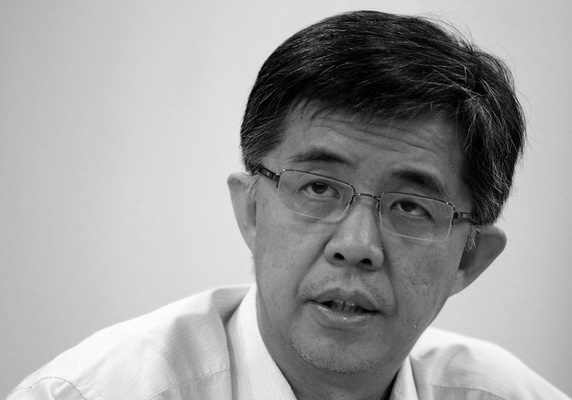
The Sessions Court in Kuala Lumpur convicted Tian Chua (photo) today under Section 4(1)(b) of the 1948 Sedition Act for allegedly uttering “seditious words.”
The allegedly “seditious words” spoken by Tian Chua were calling on Malaysians to “stand up and fight against racism and corruption.”
Tian Chua spoke these words at a public forum on 13 May 2013 at the Kuala Lumpur and Selangor Assembly Hall.
“Prime Minister Najib Razak promised in 2012 to abolish the 1948 Sedition Act, but until now, this promise has not been fulfilled,” said Emerlynne Gil, ICJ’s Senior International Legal Adviser.
“It now appears that the Malaysian government is holding on to this law to silence political opponents and human rights defenders who express critical views about what is happening in the country today,” she added.
Tian Chua received a penalty of three months’ imprisonment plus a fine of RM1,800 (approximately US$435).
Although he will still be entitled to keep his seat as Batu’s representative to the Malaysian Parliament, his conviction sends a clear and dangerous message that politically critical comments or dissenting opinions from anyone, including a Member of Parliament, will not be tolerated by the government, the ICJ says.
Several other people were also charged for sedition for their speeches at the same public forum where Tian Chua spoke: activists Adam Adli, Hishamuddin Md. Rais, Haris Fathillah Mohamed Ibrahim, and Safwan Anang.
All of them have already been convicted in the past few months under the same provision of the Sedition Act.
“By its very terms, the 1948 Sedition Act contemplates restrictions on the exercise of freedom of expression that are grossly overbroad and inconsistent with the basic rule of law and human rights principles,” said Gil.
The lawyers of Tian Chua, Latheefa Koya and N. Surendran, have confirmed that they will be seeking a stay order on the basis that they will be appealing the sentence and conviction.
The ICJ has repeatedly expressed its concerns regarding the restrictive effect the 1948 Sedition Act has on freedom of expression in the country.
The law criminalizes speech and publications considered to have “seditious tendencies”, a term that is very ambiguously and vaguely defined.
Last year, the ICJ expressed alarm over amendments made by the Malaysian Parliament strengthening the law and broadening its scope, making the “promotion” of hatred between religions an offence.
Contact:
Emerlynne Gil, ICJ’s Senior International Legal Adviser for Southeast Asia, t: +66840923575 ; e: emerlynne.gil(a)icj.org
Sep 12, 2016 | News
The Thai junta’s Order today phasing out the prosecution of civilians in military courts is a welcome step but the military government must do much more to comply with its international human rights obligations, said the ICJ today.
Head of the National Council for Peace and Order (NCPO) Order 55/2016, dated 12 September 2016 and issued under Article 44 of the Interim Constitution, phases out the heavily criticized practice of prosecuting civilians before military courts for four categories of offences, including offences against internal security; violation of NCPO orders; possession and use of war weapons; and the highly punitive offence of lese majeste.
The Order only applies to offences committed from the date the Order comes into force – today – and not to past or pending cases.
Since the May 2014 coup, at least 1,811 civilians have been tried in Military Courts, based on information the Judge Advocate General’s Department (JAG) provided to Thai Lawyers For Human Rights (TLHR) in July 2016 and covering the period 22 May 2014 to 31 May 2016.
“Almost 2,000 civilians have faced an unjust process and unfair trials before military tribunals, many of whom were prosecuted simply for exercising their rights to freedom of expression and assembly,” said Sam Zarifi, Asia Director at the ICJ. “All pending cases should be transferred to civilian courts and the convictions of all civilians prosecuted in military courts since the 2014 coup should be set aside.”
Head of the NCPO Order 55/2016 also explicitly affirms that the deeply problematic Head of the NCPO Orders 3/2015 (which replaced nationwide Martial Law on 1 April 2015) and 13/2016 shall remain in force.
These Orders prohibit the gathering of more than five people for political purposes; allow for the detention of civilians in military facilities for up to seven days without charge; and provide appointed “Prevention and Suppression Officers” and their assistants, drawn from the commissioned ranks of the Armed Forces, including the paramilitary Ranger Volunteers, with wide-ranging powers to prevent and suppress 27 categories of crimes including against public peace, liberty and reputation, immigration, human trafficking, narcotics, and weapons. The ICJ considers that these orders are not in accordance with Thailand’s international human rights obligations
“Its now crucial for the military to return responsibility for law enforcement to civilian authorities, and ensure they are properly trained and competent,” Zarifi said. “We hope today’s Order is a step toward returning Thailand to the rule of law and respect for human rights.”
Background
Clause 3 of Head of the NCPO Order 55/2016 notes “As appropriate, the Prime Minister may propose to the National Council for Peace and Order to amend this Order.”
Previously, NCPO Announcements 37/2014, 38/2014 and 50/2014 extended the jurisdiction of Thailand’s military courts to four categories of offences, including offences against internal security, violation of NCPO orders, possession and use of war weapons, and lese majeste.
The prosecution of civilians in military courts is inconsistent with Article 14 of the International Covenant on Civil and Political Rights (ICCPR) – to which Thailand is a State Party – which affirms that everyone has the right to a “fair and public hearing by a competent, independent and impartial tribunal established by law.”
The Principles Governing the Administration of Justice through Military Tribunals sets out principles that apply to state use of military tribunals. Principle 5 states “Military courts should, in principle, have no jurisdiction to try civilians. In all circumstances, the State shall ensure that civilians accused of a criminal offence of any nature are tried by civilian courts.”
Contact:
Sam Zarifi, ICJ Asia Pacific Regional Director (Bangkok), t: +66 807819002; e: sam.zarifi(a)icj.org
Kingsley Abbott, ICJ Senior International Legal Adviser, t: +66 9 4470 1345, e: kingsley.abbott(a)icj.org
Download:
thailand-unofficial-translation-head-of-ncpo-order-55_2559-advocacy-2016-eng (full text of Order in English, PDF)
thailand-ncpo-order-55_2559-news-2016-tha (full text of news in Thai, PDF)
Read also:
Thailand: transfer all civilians to civilian courts
Thailand: end prosecution of civilians in military tribunals