May 11, 2021 | News
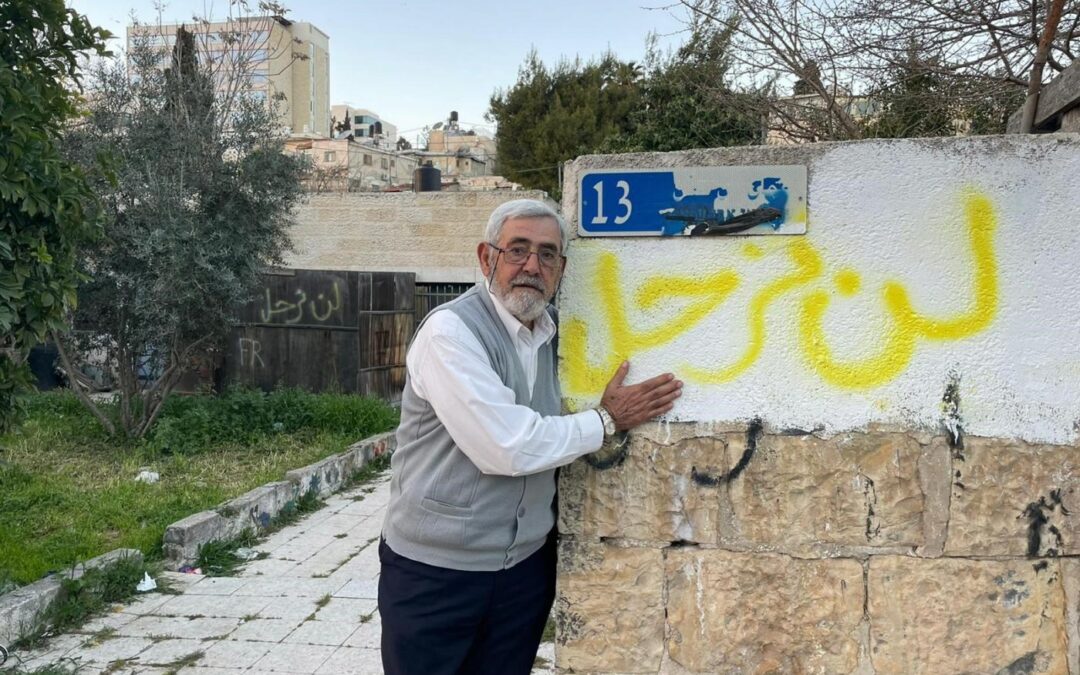
The International Criminal Court (ICC) must immediately investigate the forced eviction of Palestinian families and residents in Sheikh Jarrah and other neighbourhoods in East Jerusalem, as well as any indiscriminate and disproportionate attacks against civilians in the Gaza Strip, the ICJ said today.
The investigation must establish whether any serious violation of international humanitarian law, such as indiscriminate or disproportionate attacks against civilians, the forced deportation of Palestinians and the transfer of Israeli settlers into occupied East Jerusalem, as well as the extensive destruction and appropriation of property, have taken place in Sheikh Jarrah and in Gaza. Following the opening of an investigation by the ICC Office of the Prosecutor, if warranted, Israeli officials should be prosecuted for such crimes to ensure accountability. As confirmed by the ICC Pre-Trial Chamber I, the Court’s territorial jurisdiction “extends to the territories occupied by Israel since 1967, namely Gaza and the West Bank, including East Jerusalem.”
Evictions against Palestinians in Sheikh Jarrah were ordered by the Jerusalem District Court following legal proceedings initiated by Israeli settlers organizations under Israeli law. The Supreme Court was due to rule on 10 May 2021 on challenges against evictions brought by Palestinian families, yet, it decided to postpone the hearing at the request of Israel’s Attorney-General.
“Evictions in Sheikh Jarrah are part of a cynical campaign by the Israeli authorities to purge occupied East Jerusalem from its Palestinian civilian population,” said Said Benarbia, the ICJ MENA Director.
The ICC must also ensure accountability for unlawful attacks targeting civilians and civilian objects in connection to the hostilities between Israel and Palestinian armed groups in Gaza. Since 2007, Israel has imposed a full closure on Gaza, which has resulted in a major humanitarian crisis, and has led to significant escalation of hostilities in 2008-09, 2012 and 2014, where thousands of Palestinians have been killed and injured. On 10 May 2021, Hamas started firing rockets against Israel following a crackdown on Palestinian worshippers in the al Aqsa compound in Jerusalem. In response, Israel has carried out multiple airstrikes in Gaza, which have reportedly caused the death of at least 24 people, including nine children. All parties to the conflict are prohibited from conducting indiscriminate and disproportionate attacks, which may amount to war crimes under the Rome Statute.
“The ICC must ensure that all those responsible for ordering and carrying out these attacks be held criminally accountable,” Benarbia added.
Since April 2021, Palestinians peacefully demonstrating against the evictions in Sheikh Jarrah, a decades-long legal battle, have been subjected to violence by Israeli settlers and Israeli security forces. Earlier this year, the Jerusalem District Court ordered that several Palestinian families be evicted from the neighborhood. According the UN Office of the High Commissioner for Human Rights, “at least 218 Palestinian households in East Jerusalem, including the families in Sheikh Jarrah, have eviction cases filed against them”, and overall “970 people, including 424 children, [are] at risk of displacement.”
As part of the Israeli crackdown on Palestinians, Israeli security forces have also been firing tear gas and employing other less-lethal weapons against people praying at the Al Aqsa mosque in Jerusalem purportedly in crowd-control operations. According to the Palestinian Red Crescent, more than 200 demonstrators have been injured as a result of the use of such less-lethal weapons.
Israeli forces have also been preventing gatherings of Palestinians at Damascus Gate in East Jerusalem during the night hours of the month of Ramadan when many Muslims gather for prayer and breaking of the fast at sunset, and have responded with excessive force to the ensuing demonstrations.
Israel has a duty to respect the right to peaceful assembly and freedom of religion of Palestinians in East Jerusalem. Israel’s use of excessive force against Palestinian demonstrators and the crackdown on Palestinian worshippers violate its obligations under international human rights law
“Israeli authorities must respect and ensure the right of Palestinians to protest and challenge decades of prolonged unlawful occupation and related abusive practices, and immediately end the use of disproportionate and unlawful force to disperse protesters”, Benarbia said.
Contact
Said Benarbia, Director, ICJ Middle East and North Africa Programme, t: +41-22-979-3817; e: said.benarbia(a)icj.org
Asser Khattab, Research and Communications Officer, ICJ Middle East and North Africa Programme, e: asser.khattab(a)icj.org
You can read this press release in Arabic here or download a PDF version of it in English here.
May 7, 2021 | News
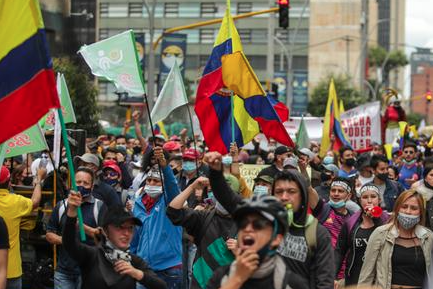
The Colombian Commission of Jurists (CCJ) and the ICJ have called upon national and local authorities to respect the right of peaceful assembly and cease all use of unlawful force against protestors immediately.
Beginning 28 April, thousands of people have taken to the streets in towns and cities throughout Colombia to protest and the social and economic policies of the current national government. As of this writing the protests continue.
The CCJ and the ICJ have expressed their concern about widespread and serious human rights violations committed during the protests.
There are multiples reports from civil society organizations that document incidents where police officials have opened fire with live ammunition against protestors.
Although full and precise figures are unavailable, as of 6 May 2021, according to the Ombudspersons’ Office at least 26 people had lost their lives. In at least 11 cases, police officials were allegedly responsible for the killings.
The NGO Temblores has documented 37 killings and the NGO Indepaz has information of more than 1.200 people injured during the protests. In addition, a number of cases of sexual violence have been reported.
The organizations are especially concerned that there are substantial number of people whose whereabouts are unknown. Complete figures on possible disappeared persons are not available. Even more worrisome, there are substantial differences among the figures provided by different sources.
In this regard, for instance, the Ombudspersons’ Office said that it has received information about the possible disappearance of 145 people. The Ombudspersons’ Office has established the whereabout of 55 people.
For its part, the civil society platform Mesa de Trabajo sobre Desaparición Forzada en Colombia has informed that it has information of 471 potential cases of enforced disappearances. According to the platform, the whereabout of 92 people have been determined.
The violent acts committed in Valle del Cauca are particularly serious. In this region, it has been reported that at least 17 people have died, and an undetermined number of people are seriously wounded.
Similarly, in Cali, some members of human rights organizations and the Office of the United Nations High Commissioner for Human Rights in Colombia alleged that they had been subject to verbal attacks and physical assault when there were verifying the situation of detained people.
The CCJ and the ICJ urge Colombian authorities to acknowledge act to address the allegations of human violations committed during the protests. They must conduct, independent, impartial, prompt, thorough, effective, and transparent investigations in accordance with Colombian law and its obligations under the International Covenant on Civil and Political Rights.
Furthermore, the investigation must take place within the ordinary criminal jurisdiction and under no circumstances should there be resort to military jurisdiction. Under international law and standards, cases that may constitute arbitrary deprivation of life or enforced disappearances cannot be considered to be connected with military duties.
Additionally, there is information that some police officials have been wounded, and at least one was allegedly unlawfully killed. The CCJ and the ICJ condemn these and other violent acts and urge judicial authorities to investigate and sanctions those responsible.
On the other hand, the CCJ and the ICJ recall that the use of force by police officials should must only be deployed in accordance with international standards. In particular, any such action must comply with the UN Basic Principles on the Use of Force and Firearms by Law Enforcement Officials.
These Principles establish that the use of force should be exceptional, necessary and proportional. Especially, authorities should faithfully comply with principle 9 that sets out that lethal force should be not used “except in self-defence or defence of others against the imminent threat of death or serious injury”.
Finally, the CCJ and the ICJ express their great concern about the national government’s decision to involve the military forces for the contention of the violence under the legal figure of “military assistance” (asistencia militar). The decision does not respect the international human rights law standards on the use of force and the right of peaceful assembly.
It should be remembered that military forces are not trained or designed to protect and control civilians during protests or scenarios of disruption of public order.
Therefore, the participation of military forces should be exceptional in situations of necessity, for example to confront immediate extreme violence and temporally limited, as affirmed by international bodies such as the UN Committee on Human rights and the Inter-American Court of Human Rights.
Contacts:
Ana María Rodríguez, Deputy Director of the Colombian Commission of Jurists, anarodriguez(a)coljuristas.org
Rocío Quintero M, Latin American Legal and Policy Adviser, International Commission of Jurists, rocio.quintero(a)icj.org
Mar 15, 2021 | News
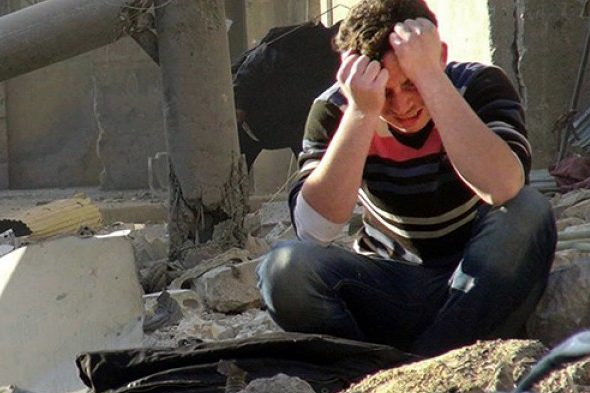
As Syria marks 10 years of a devastating armed conflict, the UN Security Council continues to abdicate its responsibility to address the gross human rights abuses committed by the Syrian government and various other actors in the country, including the use of chemical weapons and the perpetration of other crimes against humanity, likely genocide and war crimes, the International Commission of Jurists (ICJ) said today.
Since a popular uprising began in March 2011, the regime’s unabated repression has driven Syria into a full-scale civil war. Hundreds of thousands have been killed; tens of thousands have been tortured and forcibly disappeared; over 11 million have been forcibly displaced, either internally or to host countries; and tens of thousands continue to to be arbitrarily detained.
Notwithstanding this, Russia and China have vetoed at least 15 Security Council resolutions seeking to address and deter the perpetration of crimes under international law in Syria, including through the establishment of investigations into the use chemical and other weapons, by imposing sanctions over such use, and by referring the Syria situation to the International Criminal Court (ICC).
“The SC’s failure to address the Syrian conflict has been chronic and structural, and so wrong about so much and at the expense of so many”, said Said Benarbia, MENA Programme Director at the ICJ. “The SC’s failure calls into question its very role as a guarantor of peace and security and its relevance in upholding a rule-based order.”
To end impunity and ensure victims’ right to justice and effective remedies, the SC must reform its accountability practices, including by ensuring that decisions on the investigation of crimes under international law, the referral of these crimes to the ICC, and the establishment and operationalization of other forms of accountability be based on the existence of overwhelming evidence of such crimes, rather than political expediency.
In the meantime, individual UN Member States must act to begin filling the accountability gap in Syria, including by supporting United Nations accountability mechanisms, such as the the International, Impartial and Independent Mechanism, and by seeking out, prosecuting and punishing those responsible for the atrocities committed in the country pursuant to the principle of universal jurisdiction, as the recent, first-ever guilty verdict against a former official of the Syrian regime delivered by the Higher Regional Court in Koblenz, Germany, shows.
Contact:
Asser Khattab, Research and Communications Officer, ICJ Middle East and North Africa Programme, asser.khattab@icj.org
Mar 12, 2021 | Advocacy, Non-legal submissions
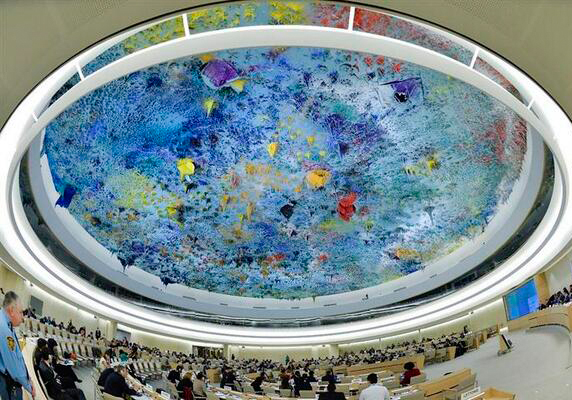
Today, the ICJ delivered a statement to the UN Human Rights Council calling for accountability for crimes against humanity committed in Myanmar during the Interactive Dialogue on the report by the UN Special Rapporteur on the situation of human rights in Myanmar.
The statement reads as follows:
“Madame President,
The International Commission of Jurists (ICJ) welcomes the recent report of the Special Rapporteur on the situation of human rights in Myanmar.
The widespread gross violations of human rights documented in the report – including extrajudicial killings, arbitrary arrests and detention- underscore the need for urgent measures of accountability to redress these and to deter further violations.
ICJ has documented further evidence that the unlawful crackdown against peaceful protestors have continued to worsen leading to more extrajudicial killings. More than 50 people have already been unlawfully killed and several hundreds have been severely injured.
Hundreds of others have been arbitrarily arrested and detained, with some subjected to torture and ill-treatment. As the scale of violations continues to increase in many parts of the country, these attacks have become systematic and widespread, and must be investigated as crimes against humanity.
The ICJ therefore supports the recommendations made by the Special Rapporteur, including for referral of the situation to the ICC.
The ICJ urges the Council to adopt a resolution that would strengthen and support the IIMM’s work to collect and preserve evidence for accountability; and to extend the mandate of the Special Rapporteur, including to ensure the immediate, full and unrestricted monitoring of the situations and prompt and effective implementation of their recommendations.
Thank you.”
Contact:
Massimo Frigo, ICJ UN Representative, e: massimo.frigo(a)icj.org, t: +41797499949
Mar 10, 2021 | Advocacy, Non-legal submissions
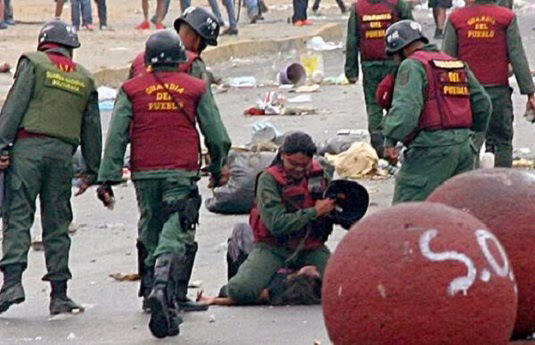
The ICJ delivered a statement today on the occasion of the interactive dialogue on the oral update by the Independent International Fact-Finding Mission on the situation in Venezuela calling for attention to the persistence of widespread serious human rights violations in the country.
The statements reads as follows:
“Madame President,
The International Commission of Jurists (ICJ) welcomes the Independent International Fact-Finding Mission’s oral update on the situation in Venezuela.
The ICJ calls attention to the persistence of widespread serious human rights violations, as reported by the FFM in its 2020’s report, including extrajudicial killings.
Venezuelan authorities have wholly failed to comply with the Mission’s recommendations, including the need for “prompt, effective, thorough, independent, impartial and transparent investigations into the human rights violations and crimes”.
This underscores the deficits in judicial and prosecutorial independence that has undermined fair trial rights.
The ICJ is extremely concerned about attacks on human rights defenders and civil society organizations in Venezuela by the authorities, which include the criminalization of the defence of human rights protected under international human rights law.
Civil society organizations that were targeted in 2020 include “Acción Solidaria”, “Provea”, “Alimenta la Solidaridad” and “CONVITE”, and early this year five members of “Azul Positivo” were arbitrarily detained and continue to be harassed.
The ICJ urges that the Venezuelan authorities ensure their full cooperation with the FFM and immediately cease the attacks on human rights defenders; conduct independent investigations and bring to justice those responsible for serious human violations; and remove obstacles to access to justice for victims.
Thank you.”
Contact:
Massimo Frigo, ICJ UN Representative, e: massimo.frigo(a)icj.org, t: +41797499949