Feb 15, 2019 | News
The International Court of Justice will hold public oral hearings in India v. Pakistan (Jadhav case) from 18 to 21 February 2019. Before they commence, the International Commission of Jurists (ICJ) has published a briefing paper to clarify the key issues and relevant laws raised in the case in a Question and Answer format.
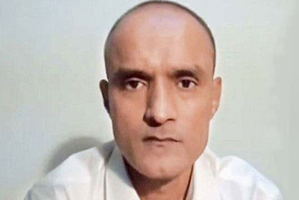
The case concerns Pakistan’s failure to allow for consular access to an Indian national, Kulbhushan Sudhir Jadhav, detained and convicted by a Pakistani military court on charges of “espionage and sabotage activities against Pakistan.”
India has alleged that denial of consular access breaches Pakistan’s obligations under Article 36(1) of the Vienna Convention on Consular Relations (VCCR), to which both States are parties.
Pakistan has argued, among other things, that the VCCR is not applicable to spies or “terrorists” due to the inherent nature of the offences of espionage and terrorism, and that a bilateral agreement on consular access, signed by India and Pakistan in 2008, overrides the obligations under the VCCR.
ICJ’s Q&A discusses the relevant facts and international standards related to the case, including: India’s allegations against Pakistan; Pakistan’s response to the allegations; the applicable laws; and the relief the International Court of Justice can order in such cases.
Contact:
Frederick Rawski (Bangkok), ICJ Asia Pacific Regional Director, e: frederick.rawski(a)icj.org
Reema Omer (London), ICJ International Legal Adviser, South Asia t: +447889565691; e: reema.omer(a)icj.org
Additional information
While the case at issue is limited to denial of consular access under the VCCR, it engages other critical fair trial concerns that arise in military trials in Pakistan.
The International Commission of Jurists has documented how Pakistani military courts are not independent and the proceedings before them fall far short of national and international fair trial standards. Judges of military courts are part of the executive branch of the State and continue to be subjected to military command; the right to appeal to civilian courts is not available; the right to a public hearing is not guaranteed; and a duly reasoned, written judgment, including the essential findings, evidence and legal reasoning, is denied.
The case also underscores one of inherent problems of the death penalty: that fair trial violations that lead to the execution of a person are inherently irreparable.
Download the Q&A:
Pakistan-Jadhav case Q&A-Advocacy-Analysis brief-2019-ENG

Feb 12, 2019 | News
As the trial of twelve Catalan separatist leaders begins before the Spanish Supreme Court today in Madrid, the ICJ warns that their trial on broadly defined offences of rebellion and, possibly, sedition unduly restricts rights of freedom of expression, assembly and association.
“The very broad definition of the offence of rebellion being applied in this case risks unnecessary and disproportionate interference with rights of freedom of expression, association and assembly,” said Róisín Pillay, ICJ Europe and Central Asia regional Director.
The twelve political leaders – including high-ranking Catalan government officials – have been charged in connection with their part in the administration on 1 October 2017 of a referendum on Catalonian independence.
The referendum was conduced despite having been declared illegal by the Constitutional Court.
The voting process during the referendum was partially suppressed by the police, with credible reports of the use of unnecessary and disproportionate force in breach of Spain’s international law obligations.
“Interference with peaceful political expression and protest must be justified as strictly necessary and proportionate under international human rights law. Where peaceful protests or political actions, even if declared unlawul by the authorities, provoke an excessive response by the police, it is solely the police and other state authorities who should be held responsible for the violence,” Pillay said.
“It is crucial that the Supreme Court, in its consideration of these charges, takes full account of Spain’s obligations under international human rights law,” she added.
The ICJ is concerned that prosecutors, and the Supreme Court in admitting the indictment in the case, have ascribed an unduly broad meaning to the offence of “rebellion” under article 472 of the Criminal Code.
According to that article, the offence requires violent insurrection to subvert the constitutional order.
But the referendum organizers are not accused of using or advocating violence.
Rather, they are being tried on the basis that they should have foreseen the risk of intervention and the use of force by the police.
It is therefore alleged that the defendants were criminally responsible for the violence that ensued from their decision to carry on with the referendum, despite it being declared illegal.
Although the Supreme Court has held that the use of force by Spanish law enforcement authorities during the repression of the referendum of 1 October 2017 was “legitimate and, as such proportionate”, international observers have concluded that such use of force was excessive and disproportionate.
In accordance with international human rights law, the mere fact that the use of force is considered to be legal under national law, does not of itself mean that it can be considered to be necessary and proportionate.
The Supreme Court has further already accepted that, if the facts alleged by prosecutors are proven, they could amount to the offence of sedition, which is committed by those that that rise up publicly and in a tumultous way, by force or by unlawful means, to impede the implementation of laws or of authorities’ orders.
“Vague, broadly defined offences of sedition or rebellion risk violation of the principle of legality, as well as arbitrary and disproportionate interference with human rights,” said Róisín Pillay.
“In a highly sensitive and politicised case such as that of the Catalonian referendum, they would set a dangerous precedent for the targeting of peaceful independence movements and political dissent, not only in Spain but internationally,” she added.
Several of the accused have already been held in pre-trial detention for lengthy periods, further exacerbating the severity of the interference with rights to freedom of expression, association and assembly, and casting doubt on the proportionality of the response.
Contact
Róisín Pillay, Director, ICJ Europe Programme, t: +32 476 974263 ; e: roisin.pillay(a)icj.org
Background
The 12 people on trial in connection with the October 2017 referendum include Oriol Junqueras (photo), former Catalan vice-president; Carme Forcadell, former Catalan parliament speaker; eight former ministers in the Catalan government – Jordi Turull, Raül Romeva, Joaquim Forn, Santi Vila, Meritxel Borràs, Dolors Bassa, Josep Rull, Carles Mundó -; Jordi Sànchez the former leader of the Catalan National Assembly (ANC); and Jordi Cuixart, former head of the independence organisation Òmnium Cultural.
The trial, which begins on 12 February in the Supreme Court in Madrid, is expected to last for several months.
Spain has obligations to protect freedom of expression, including political expression, under Article 10 of the European Convention on Human Rights (ECHR) and Article 19 of the International Covenant on Civil and Political Rights (ICCPR); and freedom of peaceful assembly and association under Article 11 ECHR and Article 21 and 22 ICCPR.
The Human Rights Committee in its General Comment on freedom of expression has affirmed that: “extreme care must be taken by States parties to ensure relating to national security, whether described as official secrets or sedition laws or otherwise, are crafted and applied in a manner that conforms to the strict requirements of paragraph 3 of article 19 ICCPR, which requires that restrictions on freedom of expression be provided for by law and must be necessary for a legitimate purpose, such as national security or public order .) Rights to participate in public life are protected under Article 25 ICCPR.

Feb 5, 2019 | News
The ICJ expressed its grave concern today at the arrest, detention and criminal charges brought against Maurice Kamto, leader of the opposition party Cameroon Renaissance Movement (CRM), and other CRM activists.
The ICJ called for the immediate release of Maurice Kamto, who is also former Commissioner of the ICJ.
The arrest of Maurice Kamto, on 28 January, came following the violent breakup by the security forces of opposition demonstrations on 26 January.
Maurice Kamto is said to face charges of sedition, insurrection and inciting violence.
There are reports that he and other arrested persons have begun a hunger strike.
The ICJ is concerned that Maurice Kamto and other opposition leaders may be prosecuted for the exercise of rights protected under international law, including the rights to freedom of expression, association, assembly and political participation
The ICJ called on the Cameroon authorities to fully safeguard the human rights of Maurice Kamto and the other detainees, including the rights to liberty, fair trial, and freedom from ill-treatment, guaranteed under Cameroonian and international law.
Contact:
Arnold Tsunga, ICJ Africa Director; t: +27716405926, or +254 746 608 859 ; e: arnold.tsunga(a)icj.org
Solomon Ebobrah, Senior Legal Adviser, ICJ Africa Regional Programme, t: +234 8034927549 ; e: solomon.ebobrah(a)icj.org
Feb 4, 2019 | News
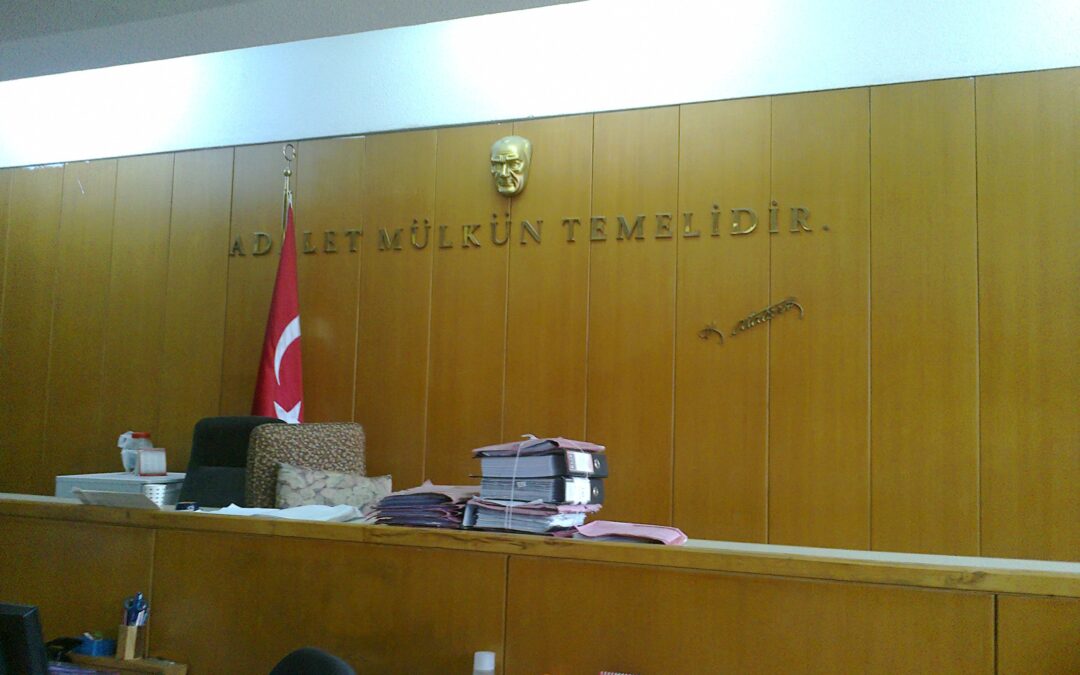
The ICJ is concerned that the dismissal of 17 judges and prosecutors by Turkey’s Council of Judges and Prosecutors on 10 January, for alleged membership of or connections with the “Fetullahist Terrorist Organisation” (FETÖ) did not respect their right to a fair trial.
The decision by the Council of Judges and Prosecutors (CJP) is particularly problematic because it lacks any reasoning on the individual situation of each judge and prosecutor.
The ICJ points out that international law provides that judges may be dismissed only through a fair hearing before an independent authority. The lack of individual reasoning in dismissal decisions strikes at the heart of the right to a fair hearing.
Furthermore, the ICJ recalls its conclusions in the 2018 report Justice Suspended that, within the current constitutional framework, the Council of Judges and Prosecutors (CJP) is not provided with the guarantees necessary to ensure its institutional independence.
Despite the state of emergency having been lifted since last July 2018, extraordinary powers given to the Council of Judges and Prosecutors to dismiss judges and prosecutors during the State of Emergency were extended for 3 years by Law no. 7145. It is unacceptable in a State governed by the rule of law that judges and prosecutors – whatever charges may be against them – be dismissed without respect for the right to a fair procedure, in disregard of international standards.
Considering that the Council of State has not delivered a single decision about dismissed judges and prosecutors during the state of emergency, in more than two years now, it seems likely that it would take at least two years before the recent decision of the CJP is reviewed by an independent judicial authority. Until then, absent further action by the CJP, the reasons for the dismissals will not be known by the purged judges and prosecutors, or by the general public.
The ICJ calls on the CJP to revoke its order and re-examine the cases under the ordinary dismissal procedures and on the Turkish Government and Parliament to modify the constitutional rules on the CJP to ensure its full independence.
Finally, the ICJ expresses concern at the conviction of the former head of the judges’ organisation YARSAV, Mr Murat Arslan, for alleged membership of FETÖ. There are credible reports of violations of the right to a fair trial in the proceedings, including four changes of judges during the proceedings, often without reasons given and without re-examination of witnesses, significant limitations to the defence access to evidence before trial and use of witnesses with undisclosed identity. The ICJ considers that these allegations of violations of the right to a fair trial should be thoroughly re-examined in appeal before an independent court and in full respect of Mr Arslan’s fair trial rights.
Background
On 10 January, the Council of Judges and Prosecutors made use for the first time of special powers to dismiss judges and prosecutors without complying with the ordinary procedure, invoking extraordinary powers enacted by Law No 7145 of 31.07.2018. This legislation inserted into ordinary law several powers that had previously existed under the state of emergency legislation.
One of the amendments made by Law No 7145 of 31.07.2018 was to the Decree Law No 375 dated 1989. A Temporary Article (Article 35) was added to the Decree. On the basis of this article, the General Assembly of the Constitutional Court, the Presidency Councils of Court of Appeal, the Council of State, the General Assembly of the Council of Judges and Prosecutors, a Commission set up by the Ministry of National Security, and the Presidency of the Court of Audit, were each authorised to take dismissal decisions for public officials/judges and prosecutors under their mandate for three years from the date of the endorsement of the law No 7145.
Based on this amendment, on 10 January 2019 the Council of Judges and Prosecutors took its first decision (Decision No. 2019/1) by dismissing 17 judges and prosecutors (6 Public prosecutors, 3 Members of Administrative Court, 7 judges of of Tax Court) based on the allegation of membership to FETÖ.
International law and standards provide that disciplinary proceedings should be conducted by an independent authority or a court with all the guarantees of a fair trial and provide the judge with the right to challenge the decision and sanction. Disciplinary sanctions should be proportionate.
The UN Basic Principles on the independence of the judiciary set out international standards for discipline, suspension and removal of judges, including in order to ensure impartiality and independence of courts and tribunals as required by international law (including the International Covenant on Civil and Political Rights and the European Convention on Human Rights). The Basic Principles state that a:
“charge or complaint made against a judge in his/her judicial and professional capacity shall be processed expeditiously and fairly under an appropriate procedure. The judge shall have the right to a fair hearing. The examination of the matter at its initial stage shall be kept confidential, unless otherwise requested by the judge. …
The Consultative Council of European Judges (CCJE) adds that “a Head of State, Minister of Justice or any other representative of political authorities cannot take part in the disciplinary body.”
Contact
Massimo Frigo, ICJ Senior Legal Adviser for the Europe and Central Asia Programme, t: +41 22 979 3805, e: massimo.frigo(a)icj.org
Jan 14, 2019 | News
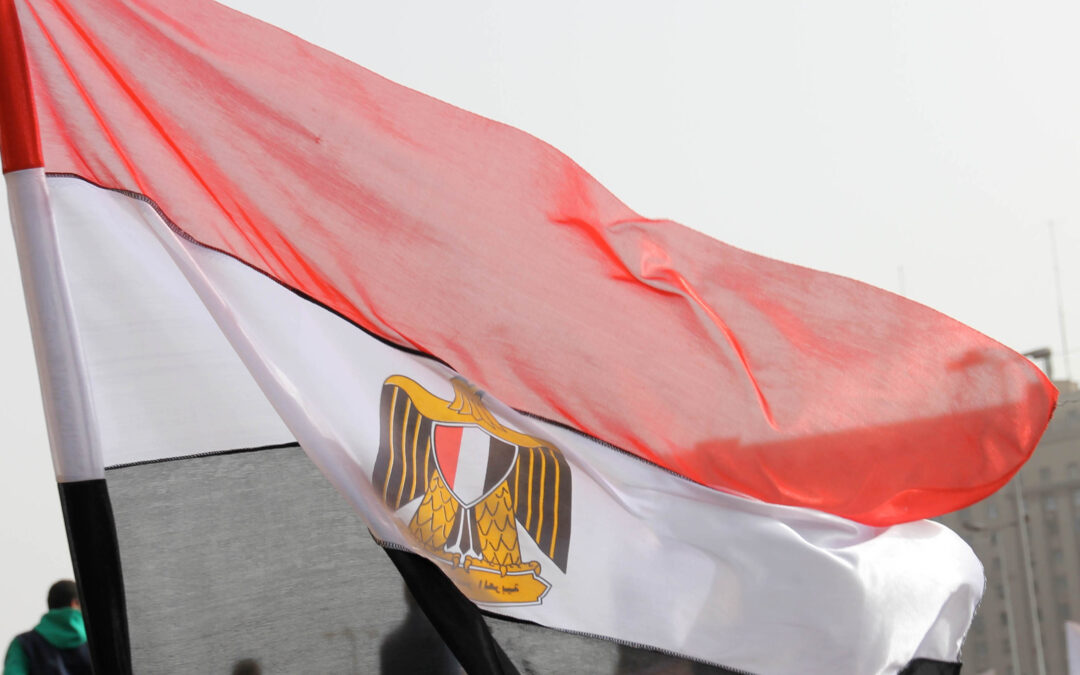
Today the ICJ condemned the conviction of prominent Egyptian political activist Ahmed Douma and called for his immediate removal from solitary confinement and release from prison.
Ahmed Douma, political activist and founding member of the now banned 6 April pro-democracy movement established in 2008, was convicted by the South Cairo Criminal Court on Wednesday 9 January 2019.
The conviction, resulting in a sentence of 15 years in a maximum security prison and a six million Egyptian pounds (US$335,000) fine, followed a re-trial on charges under the Penal Code and Law No. 10 of 1914 on Illegal Assembly including using force and violence against military and police officers, disrupting traffic, participating in an illegal assembly for such purposes, burning the Egyptian Scientific Institute, vandalizing public property, and possessing Molotov Cocktails and rocks to vandalize public property.
The charges relate to his involvement in a three-week sit-in protest outside the Cairo Cabinet Offices in November and December 2011 against the Supreme Council of the Armed Forces’ decision to appoint Kamal Al Ganzouri as Prime Minister, and calling for a civilian government during the post-revolution transition period. The protest erupted in clashes between military forces and protestors on 16 December 2011, which lead to the death of 18 protestors by live ammunition, injury of more than 1900 others and property damage. Douma and 268 others were charged with all offences without distinction.
Ahmed Douma has been held in solitary confinement since late 2013 in connection with his conviction in another case.
Before handing down the sentence, Judge Mohamed Shereen Fahmy stated the country was “plagued by the intellectually defeated and the socially […] lost in the maze of life, seeking a position through which they can establish themselves as national symbols, liars, deceivers, and accomplices, […] who one would expect to be the homeland’s protectors, but in reality, they are its worst foes.”
“The harsh sentence is a clear message to all political activists that any political activity or dissent will not be tolerated under Egypt’s military dictatorship,” said Said Benarbia, Director of ICJ’s MENA Programme. “Judge Fahmy’s statement demonstrates he was never independent and impartial, but was implementing the political will of the al-Sisi led government. The Egyptian regime’s politicization of the judiciary means those with opposing views are unlikely to have a fair trial.”
On 22 December 2013, a Cairo Misdemeanor Court convicted Ahmed Douma in another case, along with two other political activists and founding members of the 6 April movement, Ahmed Maher and Mohamed Adel, for “illegally organizing a protest” under Law No. 107 of 2013 on the Right to Public Meetings, Processions and Peaceful Demonstrations. They were sentenced to three years’ imprisonment and fined 50,000 Egyptian pounds (US$7,239) each.
Since that conviction, Douma has been detained in solitary confinement, with minimal time outside his cell each day. Prolonged solitary confinement is prohibited under international law.
“The Egyptian Authorities are subjecting a political activist to severe ill-treatment in reprisal for his participation and his role in the pro-democracy uprisings of January 2011 and as a warning to others to take heed of what will happen should you dare to express your views. Ahmed Douma’s solitary confinement for more than five years is a breach of Egypt’s obligations under international law,” said Said Benarbia.
Contact:
Said Benarbia, Director of the ICJ Middle East and North Africa Programme, t: +41-22-979-3817; e: said.benarbia(a)icj.org
Egypt-Release Ahmed Douma-News-Web Story-2019-ENG Full press release (English, PDF)
Egypt-Release Ahmed Douma-News-Web Story-2019-ARA Full press release (Arabic, PDF)