Sep 12, 2016 | News
The Thai junta’s Order today phasing out the prosecution of civilians in military courts is a welcome step but the military government must do much more to comply with its international human rights obligations, said the ICJ today.
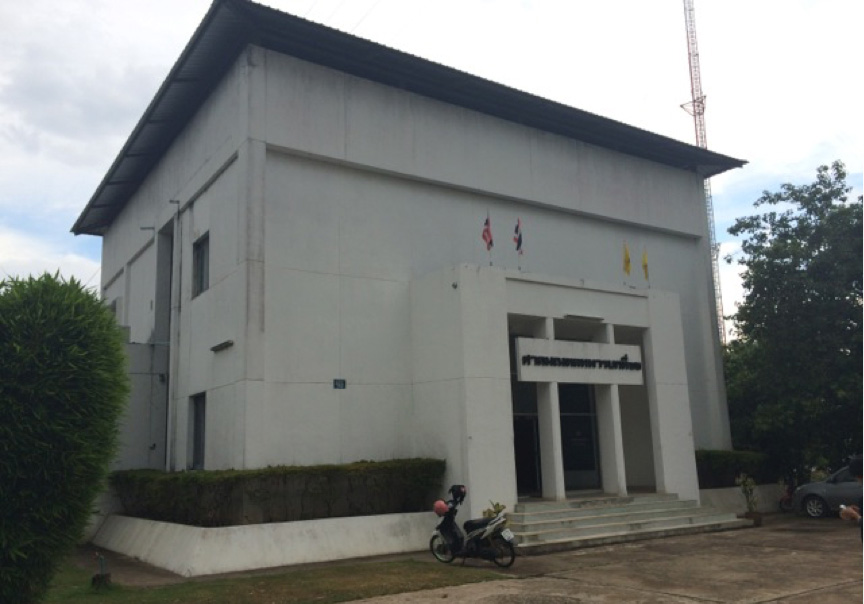
Head of the National Council for Peace and Order (NCPO) Order 55/2016, dated 12 September 2016 and issued under Article 44 of the Interim Constitution, phases out the heavily criticized practice of prosecuting civilians before military courts for four categories of offences, including offences against internal security; violation of NCPO orders; possession and use of war weapons; and the highly punitive offence of lese majeste.
The Order only applies to offences committed from the date the Order comes into force – today – and not to past or pending cases.
Since the May 2014 coup, at least 1,811 civilians have been tried in Military Courts, based on information the Judge Advocate General’s Department (JAG) provided to Thai Lawyers For Human Rights (TLHR) in July 2016 and covering the period 22 May 2014 to 31 May 2016.
“Almost 2,000 civilians have faced an unjust process and unfair trials before military tribunals, many of whom were prosecuted simply for exercising their rights to freedom of expression and assembly,” said Sam Zarifi, Asia Director at the ICJ. “All pending cases should be transferred to civilian courts and the convictions of all civilians prosecuted in military courts since the 2014 coup should be set aside.”
Head of the NCPO Order 55/2016 also explicitly affirms that the deeply problematic Head of the NCPO Orders 3/2015 (which replaced nationwide Martial Law on 1 April 2015) and 13/2016 shall remain in force.
These Orders prohibit the gathering of more than five people for political purposes; allow for the detention of civilians in military facilities for up to seven days without charge; and provide appointed “Prevention and Suppression Officers” and their assistants, drawn from the commissioned ranks of the Armed Forces, including the paramilitary Ranger Volunteers, with wide-ranging powers to prevent and suppress 27 categories of crimes including against public peace, liberty and reputation, immigration, human trafficking, narcotics, and weapons. The ICJ considers that these orders are not in accordance with Thailand’s international human rights obligations
“Its now crucial for the military to return responsibility for law enforcement to civilian authorities, and ensure they are properly trained and competent,” Zarifi said. “We hope today’s Order is a step toward returning Thailand to the rule of law and respect for human rights.”
Background
Clause 3 of Head of the NCPO Order 55/2016 notes “As appropriate, the Prime Minister may propose to the National Council for Peace and Order to amend this Order.”
Previously, NCPO Announcements 37/2014, 38/2014 and 50/2014 extended the jurisdiction of Thailand’s military courts to four categories of offences, including offences against internal security, violation of NCPO orders, possession and use of war weapons, and lese majeste.
The prosecution of civilians in military courts is inconsistent with Article 14 of the International Covenant on Civil and Political Rights (ICCPR) – to which Thailand is a State Party – which affirms that everyone has the right to a “fair and public hearing by a competent, independent and impartial tribunal established by law.”
The Principles Governing the Administration of Justice through Military Tribunals sets out principles that apply to state use of military tribunals. Principle 5 states “Military courts should, in principle, have no jurisdiction to try civilians. In all circumstances, the State shall ensure that civilians accused of a criminal offence of any nature are tried by civilian courts.”
Contact:
Sam Zarifi, ICJ Asia Pacific Regional Director (Bangkok), t: +66 807819002; e: sam.zarifi(a)icj.org
Kingsley Abbott, ICJ Senior International Legal Adviser, t: +66 9 4470 1345, e: kingsley.abbott(a)icj.org
Download:
thailand-unofficial-translation-head-of-ncpo-order-55_2559-advocacy-2016-eng (full text of Order in English, PDF)
thailand-ncpo-order-55_2559-news-2016-tha (full text of news in Thai, PDF)
Read also:
Thailand: transfer all civilians to civilian courts
Thailand: end prosecution of civilians in military tribunals
Aug 29, 2016 | News
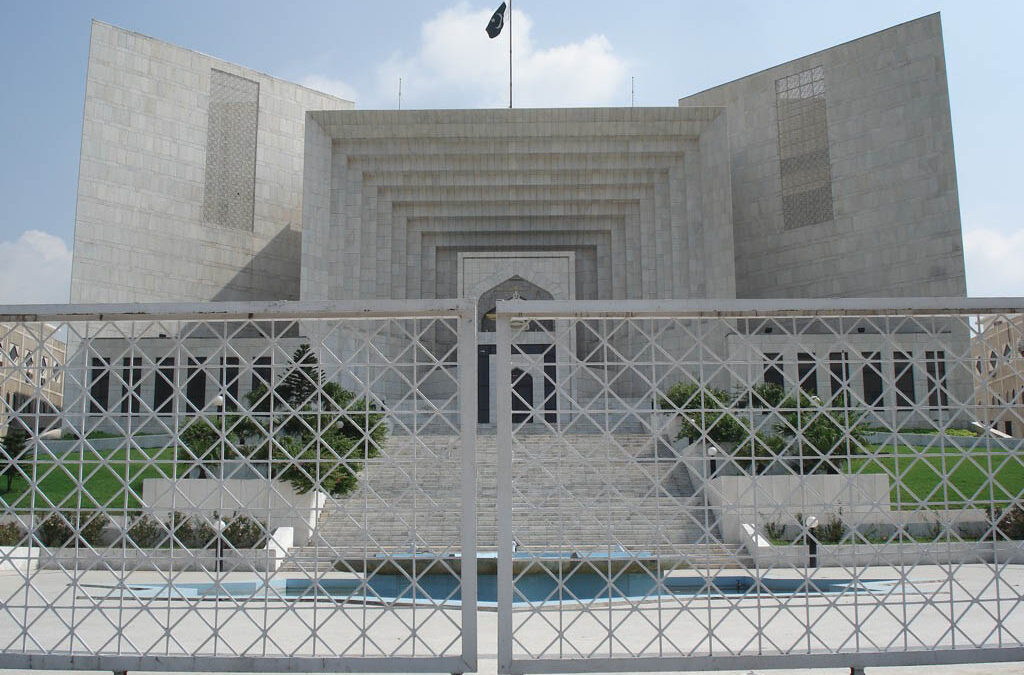
Pakistan’s Supreme Court’s rejection of petitions by families of 16 people sentenced to death who complained of unfair trials in the country’s military courts seriously set back respect for human rights and the rule of law, the ICJ said today.
“The Supreme Court failed to use an important opportunity to show that human rights protect all people, including those who are accused of terrorist acts or other heinous crimes,” said Sam Zarifi, ICJ’s Asia Director. “Pakistan’s very serious problem with terrorism can only be addressed with more respect for human rights and the rule of law, not less, and certainly not through deeply flawed military tribunals that provide neither justice nor truth.”
Families of sixteen civilians sentenced to death by military courts in secret proceedings challenged their convictions and sentences in the Supreme Court on fair trial grounds. In its 182-page judgment, a five-member bench Supreme Court headed by Chief Justice Anwar Zaheer Jamali held the petitioners had failed to prove the military violated their constitutional right to a fair trial. At convicts are now at imminent risk of execution.
The ICJ is calling on the government of Pakistan to desist from executing these or other convicts, and to reinstate a moratorium on the death penalty it held from 2008 to 2014.
“Trial of civilian suspects in military courts is anathema to human rights and international standards are clear that military courts should only have jurisdiction over military officers for military offences,” said Zarifi. “Pakistan’s military tribunals in particular offer nothing like a fair trial and should be immediately dismantled.”
As highlighted by the ICJ in a briefing paper released in June, proceedings before Pakistani military courts fall well short of national and international standards requiring fair trials before independent and impartial courts: judges are part of the executive branch of the State and continue to be subjected to military command; the right to appeal to civilian courts is not available; the right to a public hearing is not guaranteed; and a duly reasoned, written judgment, including the essential findings, evidence and legal reasoning, is denied. In addition, the procedures of military courts, the selection of cases to be referred to them, the location and timing of trial, and details about the alleged offences are kept secret.
“The ICJ supports the pursuit of justice for all victims of terrorism in Pakistan,” added Zarifi. “However, justice will not be done by subverting the foundational pillar of justice: the right to a fair trial for all suspects –regardless of how serious the offence.”
Since January 2015, when Pakistan empowered military courts to try civilians for terrorism-related offences, 11 military courts have been constituted to hear cases related to terrorism.
These 11 military courts have thus far concluded the trials of 128 people, finding the defendants guilty in 104 cases. A hundred people have been sentenced to death and four have been given life sentences. At least 12 people have been hanged after trials that are grossly unfair.
The ICJ has called on the Pakistan government to roll back the system of “military injustice”, and ensure that all terrorism suspects are guaranteed basic fair trial protections.
The ICJ has also urged that Pakistan reinstate a moratorium on executions with a view to abolishing the death penalty in law and practice, reflecting the call of an overwhelming majority of States in repeated UN General Assembly resolutions. The ICJ considers the death penalty to constitute a denial of the right to life and a from of cruel, inhuman and degrading punishment.
Contact:
Sam Zarifi, ICJ Asia Pacific Regional Director (Bangkok), t: +66 807819002; e: sam.zarifi(a)icj.org
Reema Omer, ICJ International Legal Adviser for Pakistan (Lahore), t: +923214968434; e: reema.omer(a)icj.org
Additional information
In January 2015, Pakistan empowered military courts to try civilians for terrorism-related offences as part of its 20-point “National Action Plan”, adopted by the Government following the horrific attack on the Army Public School in Peshawar.
The expansion of military jurisdiction over civilians was accomplished through the 21st Amendment to Pakistan’s Constitution and amendments to the Army Act, 1952. These amendments allow military courts to try offences related to “terrorism” committed by those who claim to, or are known to, belong to a terrorist organization “using the name of religion or a sect”.
Both amendments are set to expire on 6 January 2017 pursuant to a “sunset clause”, after which they will cease to be in effect, although there is a risk that they could be renewed.
In August 2015, the Pakistani Supreme Court upheld the constitutionality of the 21st amendment and the trial of civilians by military courts for terrorism-related offences.
Aug 12, 2016 | News
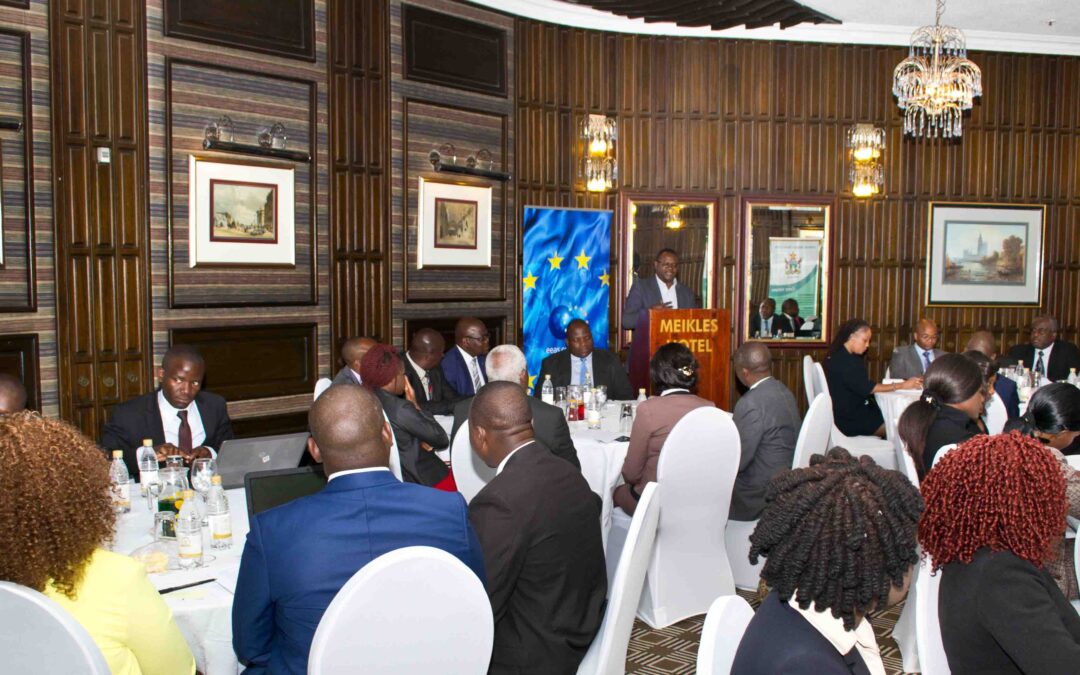
The ICJ and the Judicial Service Commission of Zimbabwe (JSC) today held a one-day workshop in Harare to review the Magistrate Court Civil Rules.
Mr Chikwana, Deputy Secretary of the Judicial Service Commission of Zimbabwe, provided the opening remarks to the meeting.
He stated that the purpose of the review was to reconcile the procedural requirements in the courts with the provisions of the new constitution of Zimbabwe (2013).
Mr Chikwana mentioned that one of the objectives of the revisions was to create uniformity in the Rules of the different courts and in so doing make court processes simpler and more accessible to the general public.
Arnold Tsunga, ICJ’s Director for Africa, said that the whole idea behind the in-country activities carried out by the ICJ was to strengthen justice administration in Zimbabwe.
The workshop commenced with a presentation on an Overview of the current rules and feedback on input from Stakeholders by Justice Uchena.
Thereafter the delegates were assigned to groups to discuss the 34 Orders within the Rules of the Magistrate’s Court. After the 45-minute discussions, the groups presented their feedback.
The meeting was attended by judicial officers from the Constitutional Court, High Court and Magistrate Court; members of the legal profession, academia and civil society organizations.
Other notable attendees at the workshop include the Deputy Attorney General Nelson Dias and Mr Edward Mapara from the Law Society. There were 23 female and 24 male delegates at the workshop.
Jul 30, 2016 | News
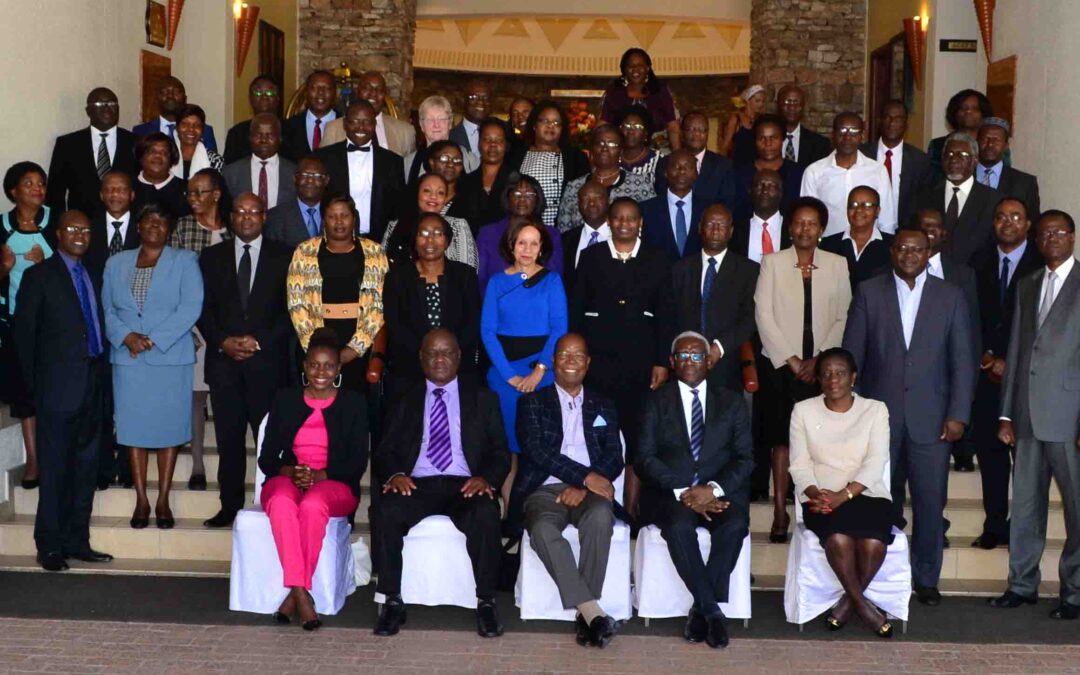
The ICJ and the Judicial Service Commission of Zimbabwe, held a two-day Judicial Symposium for the end of the Second Term, at the Elephant Hills Hotel, Victoria Falls.
The subjects for discussion chosen by the judges reflect areas where judges felt the need for enlightenment.
In his opening remarks, the Deputy Chief Justice Malaba said that the purpose of this Symposium was to provide an opportunity for the judges to discuss and share ideas on the subjects chosen at the recreational environment.
The Symposium would serve to equip every judge with skills to feel confident in presiding over and disposing of cases fairly and expeditiously.
The former Chief Justice of South Africa Sandile Ngcobo delivered the keynote address which focused on Continued Judicial Education. Chief Justice Ngcobo stated that it was the collective responsibility of the judiciary to ensure it is sufficiently equipped to meet the demands of society and for the efficient dispensation of justice.
This would be achieved through continued judicial education.
Chief Justice Ngcobo was of the view that the importance of Continued Judicial Education lay beyond improving quality of justice but for the qualification of justice
Jul 27, 2016 | News
Thailand’s government should immediately stop allowing criminal defamation laws to be used to harass victims and human rights defenders who seek justice for alleged incidents of torture, the ICJ said today.
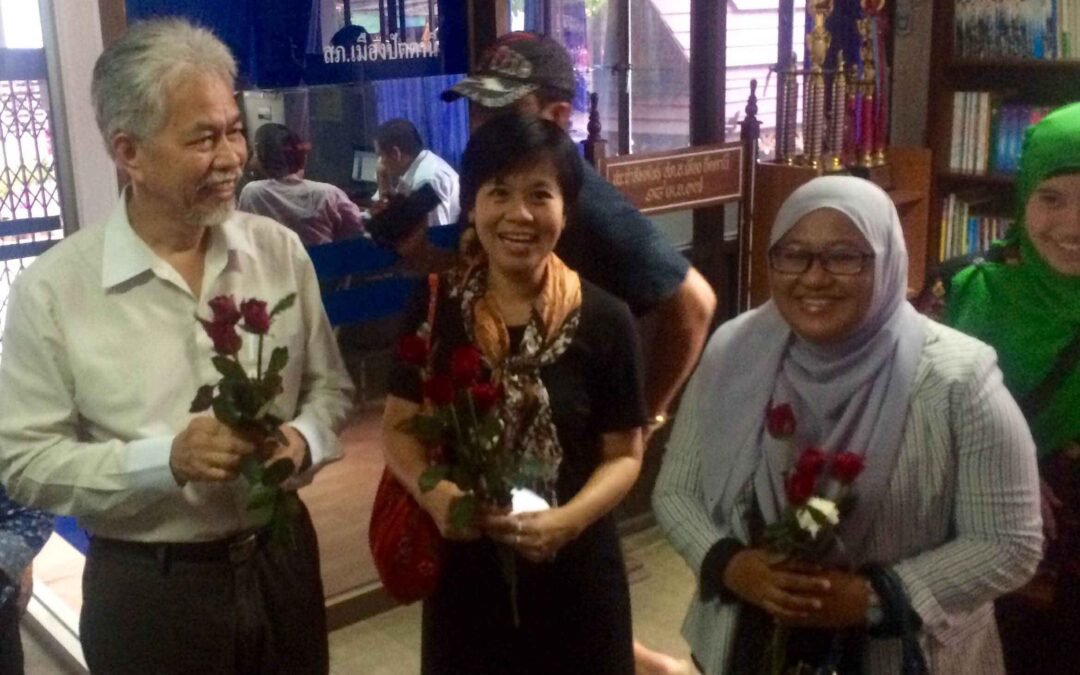
Yesterday, the government charged three human rights defenders (Pornpen Khongkachonkiet, Somchai Homloar and Anchana Heemina, photo) under the criminal defamation provisions of the Penal Code and the Computer Crime Act, for publication of a report that documented 54 cases of alleged torture and other ill-treatment by the Thai authorities in the country’s restive deep South since 2004.
“Thailand must repeal or revise its vague and broad criminal defamation laws to prevent them from being used to silence human rights defenders and journalists working on important public interest issues,” said Wilder Tayler, the ICJ’s Secretary General.
“The imposition of harsh penalties such as imprisonment or large fines under these laws has a chilling effect on the exercise of freedom of expression – a right which is enshrined in treaties to which Thailand is a party and bound to uphold,” he added.
Also yesterday, the government used the same provisions to charge Naritsarawan Kaewnopparat, the niece of an army conscript who was killed after being severely punished by soldiers on a military base.
Although the Thai government has formally acknowledged that the death was caused by torture and compensated the family, none of the perpetrators have been held accountable for the death of Private Wichian Puaksom and have only faced military disciplinary sanctions of 30 days of detention or less, the ICJ reminds.
The case against Ms Kaewnopparat was brought by a military officer who alleges she accused him of being involved in her uncle’s death in the context of the family’s efforts to seek justice.
Last month, Thailand informed the Human Rights Council during its Universal Periodic Review that the Cabinet was considering a draft Act on Prevention and Suppression of Torture and Enforced Disappearance.
It was reported that the Cabinet approved the draft law on 24 May 2016 and would forward it for approval to the National Legislative Assembly.
At the conclusion of the review, Thailand also adopted several recommendations to protect human rights defenders and investigate reported cases of intimidation, harassment and attacks against them.
“Prosecuting people who seek justice for alleged torture goes against the spirit of the proposed legislation,” Tayler said.
“Thai authorities have an obligation to investigate and ensure justice for incidents of torture, but instead they are harassing and intimidating those responsible for exposing these horrendous acts.”
On 17 December 2015, Thailand joined 127 other states at the UN General Assembly in adopting a UN Resolution on human rights defenders.
The Resolution calls upon states to refrain from intimidation or reprisals against human rights defenders.
Contact:
Sam Zarifi, ICJ Asia Pacific Regional Director (Bangkok), t: +66 807819002; e: sam.zarifi(a)icj.org
Thailand-HRDs defamation charges-News-Press releases-2016-ENG (full text of press release in English, PDF)
Thailand-HRDs defamation charges-News-Press releases-2016-THA (full text of press release in Thai, PDF)