Oct 27, 2020 | News
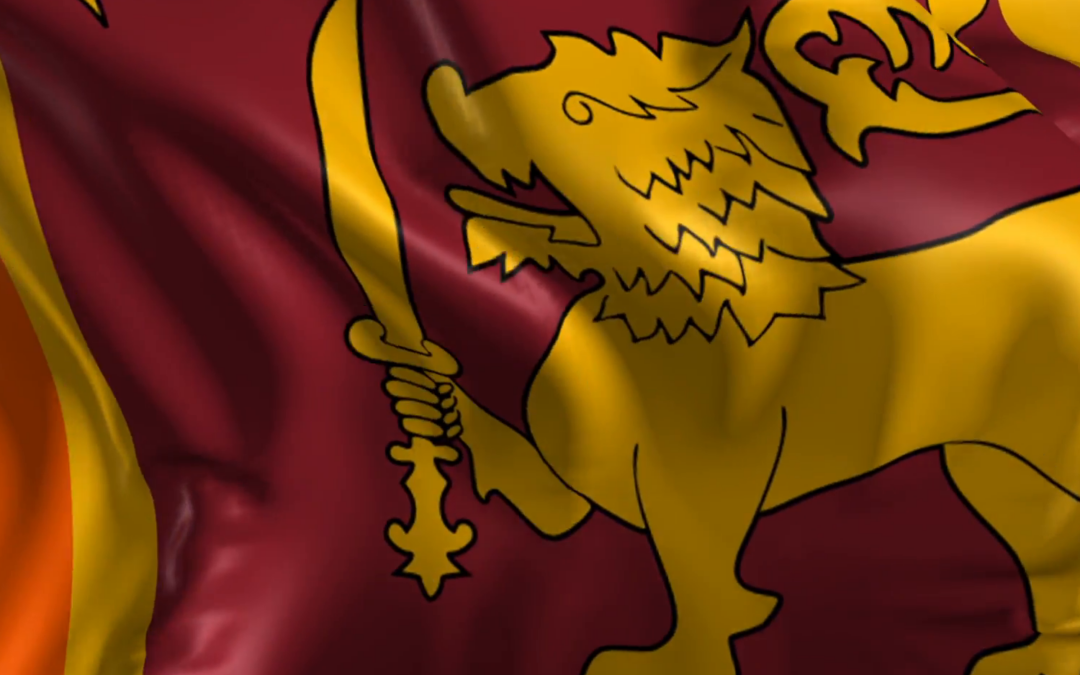
The ICJ today condemned the adoption of amendments to the Sri Lankan Constitution, which serve to expand the powers of the President, while encroaching on the powers of the parliament and courts.
The 20th Amendment to the Constitution was passed into law on 22 October, with 156 of the 225 parliamentarians voting in favour of the amendment, after a mere two-day debate, overruling the Opposition’s request for at least four days of deliberation.
The ICJ noted that the Amendment undoes most of the reforms brought about by the 19th Amendment adopted only in 2015. Critically, it introduces judicial appointment procedures which are incompatible with principles of the justice by reintroducing the Parliamentary Council, consisting only of political actors.
That body serves to merely advise the President, regarding appointments to the judiciary and other key public institutions.
The 20th amendment gives the President sole and unfettered discretion to appoint all judges of the superior courts. Under international standards, appointments to the judiciary should not be vested solely with the executive.
Given the gravity of the constitutional changes, the ICJ expressed regret that the Government had suspended Standing Order 50 (2), which requires every bill to be referred to the relevant Sectoral Oversight Committee for consideration prior to being debated in parliament.
“It is appalling that Constitutional amendments with such far reaching consequences on the constitutional governance of the country were rushed through in such haste, especially at a time Sri Lanka battles with its largest COVID-19 outbreak to date,” said Ian Seiderman, ICJ’s Legal and Policy Director.
The ICJ welcomes the alteration made to some of the problematic provisions of the 20th Amendment Bill during Committee Stage, particularly in relation to presidential immunity and the time period within which the president can dissolve Parliament.
The ICJ nonetheless is particularly concerned with the decision of the Minister of Justice to introduce entirely new provisions at Committee Stage, particularly in relation to the increase of the number superior court judges. The Supreme Court Bench will be increased from 11 to 17 and Court of Appeal from 12 to 20. These substantive amendments were not part of the gazetted 20th Amendment bill, the provisions of which were challenged before the Supreme Court by as many as 39 petitioners.
“While an increased number of judges may reduce court delays and expedite the judicial process, introducing substantive amendments such as this at Committee Stage is problematic at multiple levels,” Seiderman added.
“Sneaking in substantial changes at the last stage of the legislative process where there is no opportunity for public comment or judicial review is not consistent with democratic processes under the rule of law.”
Oct 26, 2020 | News
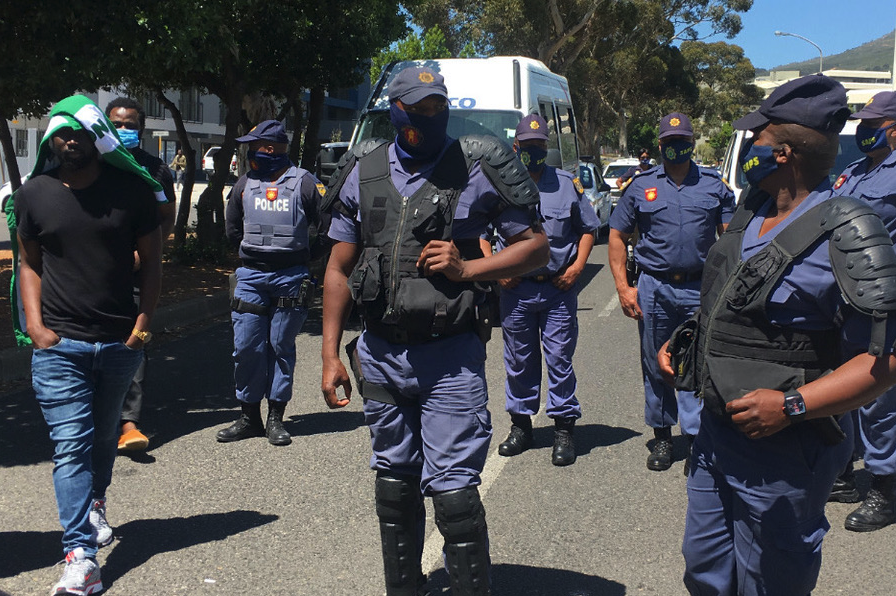
The ICJ and Lawyers Alert today called on the Nigerian authorities to undertake immediate independent and thorough investigations into credible allegations of extrajudicial killings by the military responding to mass protests against the SARS police unit.
Those responsible for criminal conduct must be brought to justice and held to account, the two organizations said.
The authorities must respect their international legal obligations under international law and cease the unlawful, unnecessary and disproportionate use of force in response to Nigerians’ lawful protest actions.
Protest actions have escalated over the last two weeks as Nigerians have staged a series of protests under the #EndSARS movement. Thousands of people joined the demonstrations, demanding an end to police brutality and corruption.
Reports confirm that more than 56 people have died over the two weeks of protest actions, including 38 protesters who were killed, on the 20 October alone, as a result of the Nigerian military opening fire on thousands of peaceful protesters.
“The right to peaceful assembly is guaranteed under international law, including the International Covenant of Civil and Political Rights (ICCPR) which Nigeria has acceded to. Nigeria’s brutal responses to the peaceful demonstrations, including the use of lethal force on force protestors, not only violates this right but also their right to life,” said Kaajal Ramjathan-Keogh, ICJ Africa Regional Programme Director.
Lawyers Alert Executive Director Rommy Mom said: “The Nigerian government’s responses to the protests have undermined the rule of law. Groups and persons should not be afraid to approach the Judicial Panels of Inquiry to lay their grievance towards identification of culpable SARS officers for appropriate sanctions and the compensation of victims.” The organizations recall that under international law, the use of lethal force by law enforcement officials is permissible only when strictly necessary to protect life.
Police in the SARS unit are credibly alleged to be responsible for a widespread practice of torture and other serious human rights violations.
In addition to ending these violent attacks on protestors, the ICJ and Lawyers Alert call on the Nigerian government to address the demands of protestors and embark on comprehensive reform of the police, with emphasis on oversight functions, tethering oversight to civil society groups, the National Human Rights Commission and the constitutional oversight body of the Nigeria police.
“These protests have gained momentum outside Nigeria and have extended beyond the local borders to Ghana, United Kingdom and South Africa. The world’s attention is currently on Nigeria, as the global support for protestors rise amidst further police brutality. The Nigerian government must ensure that it respects and protects the human rights of all in accordance with its obligations under international law,” added Ramjathan-Keogh.
Background
Founded in 1992, the Special Anti-Robbery Squad (SARS) was mandated to “investigate cases involving armed robbery and kidnapping”. However, since its inception, there have been widespread complaints by Nigerians about the conduct of SARS This year Amnesty International issued a report, documenting at least 82 cases of torture, ill treatment and extra-judicial execution by SARS during the period of January 2017 and May 2020
In addition to the ICCPR, Nigeria is party to the UN Convention against Torture and the African Charter on Human and Peoples’ Rights (African Charter), which guarantees the right to life under Article 4 and the right to assemble freely with others under Article 11. These rights are also respectively protected under sections 33(1) and 40 of the Nigerian Constitution.
Article 6 of the ICCPR prohibits the arbitrary deprivation of life.
Principle 9 of the UN Basic Principles on the Use of Force and Firearms by Law Enforcement Officials affirm that:
Law enforcement officials shall not use firearms against persons except in self-defence or defence of others against the imminent threat of death or serious injury, to prevent the perpetration of a particularly serious crime involving grave threat to life, to arrest a person presenting such a danger and resisting their authority, or to prevent his or her escape, and only when less extreme means are insufficient to achieve these objectives. In any event, intentional lethal use of firearms may only be made when strictly unavoidable in order to protect life.
Contact
Kaajal Ramjathan-Keogh, Director of ICJ’s Africa Regional Programme, c: +27845148039, e: kaajal.keogh(a)icj.org
Tanveer Jeewa, Communications Officer, tanveer.jeewa(a)icj.org
Homepage photo credit: Tshwanelo Mathwai
Oct 26, 2020 | News
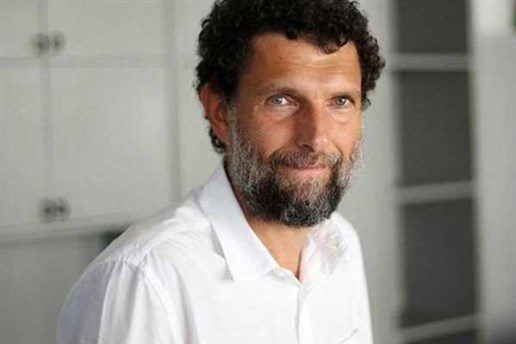
A new bogus indictment against human rights defender and businessman, Osman Kavala, and US academic, Henri Barkey, for allegedly spying and attempting to overthrow Turkey’s constitutional order is politically motivated and bereft of legal credibility, Human Rights Watch and the ICJ said today.
The indictment, alleging the two were involved in the July 15, 2016, attempted military coup, demonstrates Turkey’s blatant refusal to abide by a European Court of Human Rights judgment, finalized in May 2020, which ordered Kavala’s release, and not only prolongs ongoing violations of his rights but gives rise to new ones.
An Istanbul court on October 8 accepted the indictment and has scheduled a first trial hearing against Kavala, who was been in Istanbul’s Silivri Prison since November 2017, and Barkey, who lives in the US, for December 18.
“The new case against Osman Kavala and Henri Barkey demonstrates the Turkish authorities’ flagrant misuse of the courts for political ends and their fundamental disregard for the basic principles of criminal justice,” said Hugh Williamson, Europe and Central Asia director at Human Rights Watch.
“Defying the European Court of Human Rights order to release Kavala has confirmed the Court’s conclusion that Turkey is using detention and prosecution to silence a human rights defender.”
The 64-page prosecutor’s indictment, dated September 28, accuses Kavala and Barkey of “securing for purposes of political or military espionage information that should be kept confidential for reasons relating to the security or domestic or foreign policy interests of the state” (under Turkish Penal Code article 328), punishable with up to 20 years in prison, and “attempting through force and violence to overthrow the constitutional order of the Republic of Turkey or introduce a different order or prevent this order” (article 309), punishable with life in prison without parole.
The indictment recycles unsubstantiated accusations, which previously circulated in the pro-government Turkish media, that Kavala and Barkey were involved in espionage and in the 2016 attempted military coup. The indictment provides no credible evidence linking them with any criminal activities. (Further details about the content of the indictment are provided below.)
In a December 2019 judgment, which became final on May 11, the European Court of Human Rights ruled that the evidence on which Kavala was detained for the Gezi protests and the 2016 coup attempt was insufficient and agreed that Kavala’s detention and the charges against him “pursued an ulterior purpose, namely to silence him as a human rights defender.”
On September 3, the Council of Europe Committee of Ministers, acting in its supervisory capacity for the implementation of European Court judgments, issued a decision ordering the Turkish government to ensure Kavala’s release, pointing to “a strong presumption that his current detention is a continuation of the violations found by the Court.”
On September 29, pro-government media reported that the Istanbul prosecutor’s office had prepared the new indictment against Kavala and Barkey. On the same day, Turkey’s Constitutional Court postponed its review of Kavala’s application regarding the legality of his continuing detention, which had been scheduled for that day.
On October 1, the Council of Europe Committee of Ministers issued a second decision calling on Turkey to ensure Kavala’s immediate release, expressing “deep concern that the applicant has still not been released” and announcing that an interim resolution would be issued at the Committee of Ministers’ December 1-3 session if Kavala had not yet been released.
“Turkey is bound by the ruling from European Court to free Kavala immediately, and the ruling covers his detention under the latest case against him,” said Roisin Pillay, director of the ICJ Europe and Central Asia Programme.
“The new indictment presents no new grounds to justify his detention, and it is imperative that Turkey ends the persecution campaign against him by releasing him and dropping all charges.”
For more Human Rights Watch reporting on Turkey, please visit:
http://www.hrw.org/europecentral-asia/turkey
For more ICJ work on Turkey, please visit:
https://www.icj.org/search/?fwp_search=Turkey&submit=Search
Contact
Massimo Frigo, Senior Legal Adviser, ICJ Europe and Central Asia Programme, t: +41-22-979-3800; e: massimo.frigo(a)icj.org
Turkey-Kavala case-News-press release-2020-ENG (story with additional information, in PDF)
Oct 19, 2020 | News
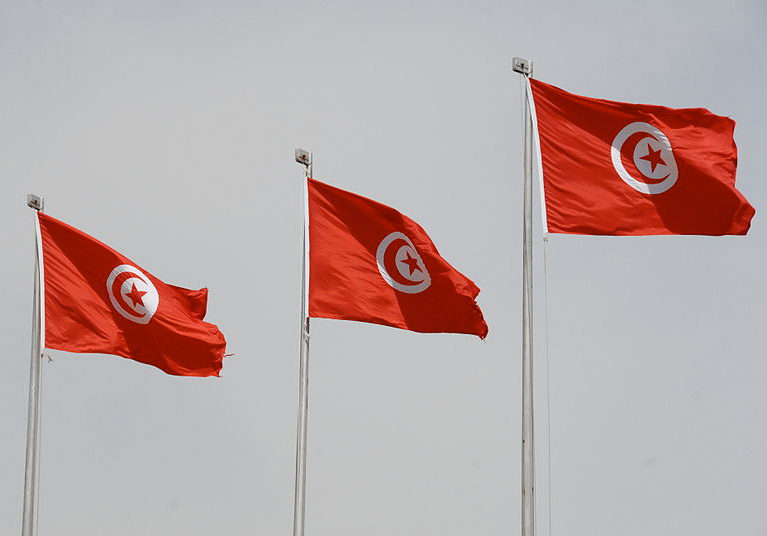
Tunisian Parliament should reject the revised Draft Law No. 91-2018 on the state of emergency when it is tabled in the plenary session starting tomorrow, said the ICJ today.
The Draft Law is inconsistent with the rule of law and Tunisia’s international human rights obligations and should be considered further to ensure its compliance with international law and standards.
The Draft Law was approved by the Parliament’s Committee on Rights, Freedoms and External Relations on 15 May 2019. Articles 2, 3 and 4 of the Draft Law authorize the President to declare a state of emergency for one month, renewable once, “in the event of catastrophic events” or “imminent danger threatening public order and security, the security of people and institutions and the vital interests and property of the state.”
Tunisia has remained under a continuous state of emergency since 24 November 2015.
“The Draft Law would entrench the President’s power to unilaterally determine what constitutes an emergency on broad grounds,” said Said Benarbia, the ICJ’s MENA Programme Director.
“It should be amended to enhance legislative oversight over the declaration of the state of emergency, provide for effective judicial review over emergency measures, and ensure that such measures do not unlawfully infringe on the enjoyment of recognized rights and freedoms.”
Under the law, regional governors could impose restrictions on movement and prohibit gatherings where necessary for “the maintenance of security and public order.” They could suspend the activities of associations that they decide act in a manner “contrary to public order and security” that “obstructs the work of the public authorities”. The Minister of Interior may also order house arrest and other measures against anyone deemed to “hamper public order and security”, including by summoning them to appear at the police station twice a day and intercepting their communications and correspondence.
The ICJ stressed that these measures risk interference with a number of rights, including freedom of expression, association, assembly, movement and the rights to liberty.
“The proposed law would entrench opportunities for Tunisian authorities to continue perpetrating abuses of human rights under arbitrarily imposed states of emergency,” said Kate Vigneswaran, ICJ’s MENA Senior Legal Adviser.
“It’s up to Parliament to ensure that appropriate safeguards are put in place which clearly limit the basis for imposing any restrictive measure to objective criteria and a real risk of harm, not the whims and political desires of the executive.”
The ICJ said that notwithstanding the inclusion of procedural safeguards – including registration of such decisions with reasons with the Public Prosecutor – the broad basis for the imposition of house arrest is concerning given Tunisian authorities’ abusive use of house arrest in the past.
Contact:
Said Benarbia, Director, ICJ Middle East and North Africa Programme, t: +41-22-979-3817; e: said.benarbia(a)icj.org
Kate Vigneswaran, Senior Legal Adviser, ICJ Middle East and North Africa Programme, t: +31-62-489-4664; e: kate.vigneswaran(a)icj.org
Tunisia-Law of Emergency-News-2020-ENG (story with additional information, PDF)
Tunisia-Law of Emergency-News-2020-ARA (story in Arabic, PDF)
Sep 18, 2020 | News
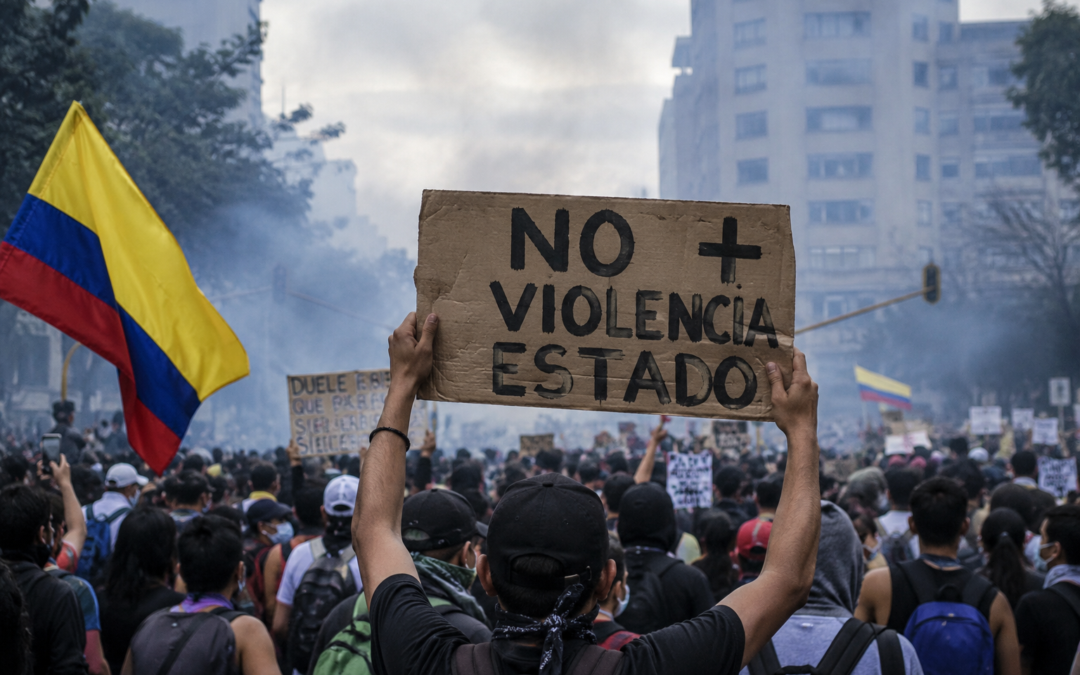
Today, the ICJ called upon the responsible authorities to ensure that prompt, transparent, thorough, impartial and effective investigations are carried out of allegations of extrajudicial killings and other serious human rights violations by the Colombian police during recent street protests.
The ICJ stressed that any official responsible should be prosecuted and brought to justice and victims of any violations be provided an effective remedy and reparation.
From 9 September to 10 September 2020, mass protests against serious human rights violations by Colombian police took place in Bogota, following the death of Javier Ordóñez. Ordoñez died in police custody after he had been subjected to severe ill-treatment, including by prolonged taser shock.
The protests were met with acts of unlawful, unnecessary and disproportionate use of force by police. The protests left 13 people dead, and more than 200 injured.
The incidents have been condemned by the Inter-American Commission on Human Rights (IACHR), which pointed to allegations of unlawful detention and ill-treatment of persons arrested following the demonstrations. The UN High Commissioner for Human Rights has also expressed concern at the allegations the use of excessive force during the protests.
According to witness accounts, police opened fire against people who were protesting peacefully. Some of the victims killed were said to be people who had not taken part in the protests and died due to stray bullets. Some videos of police conduct have been circulated on social media.
Similarly, Bogota Mayor, Claudia López Hernández, has affirmed that she had handed over videos of police shooting indiscriminately against people during the protests to the Office of the Attorney General and other authorities. In addition, she shared part of the videos on her Twitter account.
The ICJ recalls that under international standards governing the use of force by law enforcement officials, lethal force may never be used unless strictly necessary to protect life.
The ICJ stresses that investigations must be impartial and the need for investigators to be independent of the police. Equally important, the investigations must take place within the civilian rather than the military justice system.
The ICJ is also concerned at the threats received by human rights lawyers who have been working working to document possible human rights violations during the protests.
Background
The protests were triggered by the death of Javier Ordoñez, who died at a police facility (Comando de Acción Inmediata, CAI), on the early morning of 9 September.
A video shows that before being transferred to the facility, Ordoñez was repeatedly shocked by policemen with a stun gun while on the ground and did not represent any threat to life or safety the police or other persons. Initial results of the investigation, including the autopsy report, indicate that Ordoñez was hit in the head, neck, shoulders, and chest inside the police facility.
On 11 September 2020, the Police and the Ministry of Defence offered an “apology” for any violation of the law that may have been committed by the police, without acknowledging any specific wrongdoing.
Subsequently, on 16 September, the Minister of Defence recognized that Javier Ordóñez was murdered by the police. Although he stated that the Police respect peaceful protests, he also said the protests of September 9 and 10 were a massive and systematic attack against the police.
Along the same lines, on 13 September 2020, the office of the Mayor of Bogotá held a ceremony of “forgiveness and reconciliation”. The ceremony had the participation of some of the victims, who demanded justice.
On 17 September 2020, the Office of the Attorney General filed arrest warrants against two policemen involved in the murder of Ordóñez. The warrants have been granted by a judge. Both policemen had been arrested.
In accordance with Colombia’s obligations under the International Covenant on Civil and Political Rights, investigations “must always be independent, impartial, prompt, thorough, effective, credible and transparent”.
The UN Basic Principles on the Use of Force and Firearms by Law Enforcement Officials require that any the use of force is exceptional, necessary, and proportional and that lethal force may only be used when strictly necessary to protect life.
Colombia has been recently facing a significant increase in serious human right violations and abuses, including unlawful killings. For example, since the Peace Agreement was signed in November 2016, there has been an upward trend in the killings, death threats, and harassments against human rights defenders.
As of December 2019, the UN Verification Mission in Colombia verified 303 killings of human rights defenders and social leaders since the signature of the Peace Agreement. So far, during 2020, the Office of the United Nations High Commissioner for Human Rights in Colombia has documented 47 killings of human rights defenders and is reviewing other potential 44 cases.
Contact:
Carolina Villadiego, Legal and Policy Adviser, Latin America. Email: carolina.villadiego(a)icj.org
Rocío Quintero M, Legal Adviser, Latin America. Email: rocio.quintero(a)icj.org