Nov 5, 2019 | News
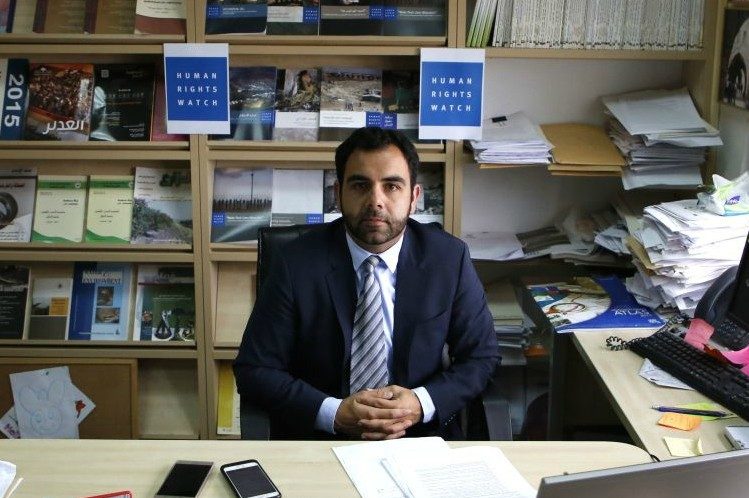
Today, the ICJ called on the Israeli Government to reverse its decision to deport Omar Shakir, the Human Rights Watch (HRW) Israel and Palestine Director, and ensure that he, HRW, and other human rights defenders are able to carry out their human rights work without intimidation.
The ICJ fears that the decision will have a chilling effect on human rights defenders in the country, who the Israeli authorities are bound to protect and not intimidate or persecute.
The deportation decision is based on a 2017 amendment to the “Entry into Israel Law”, which allows authorities to deny foreigners a permit for entry to and residence in Israel “if he or she, or the organization or the body for which he or she operates, has knowingly published a public call to engage in a boycott against the State of Israel or has made a commitment to participate in such a boycott.”
An appeal against the deportation decision was rejected by the Jerusalem District Court in April 2019, and by Israel’s Supreme Court today.
Israel’s Supreme Court seems to have accepted the Government’s claim that Shakir’s work at HRW, which entailed calling on businesses to cease operating in Israeli settlements in the West Bank, as required by international law, constitutes a call for the boycott of Israel.
The ICJ noted that the move to deport Omar Shakir constitutes an unjustifiable infringement on his right to freedom of expression, guaranteed by article 19 of the International Covenant on Civil and Political Rights. As a State party to the Covenant, Israel has an obligation to respect and protect this right.
The Human Rights Committee already expressed its concern with regard to Israel’s anti-boycott legislation and called on the Israeli authorities to “ensure that individuals fully enjoy their rights to freedom of expression and association and that any restrictions on the exercise of such rights comply with the strict requirements of article 19.”
The deportation would also contravene the UN Declaration on Human Rights Defenders, which affirms the duty of States to promote and facilitate the work of human rights defenders, while scrupulously protecting their fundamental freedoms.
Oct 25, 2019 | News
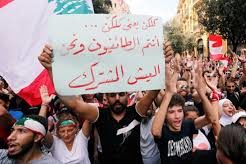
Today the ICJ condemned the response of Lebanese security forces to predominantly peaceful protests that erupted across Lebanon on 17 October following the government’s attempt to introduce a daily tariff on voice calls made through applications such as WhatsApp.
The ICJ called on the Lebanese authorities to respect and protect the right of protestors to peaceful assembly and freedom of expression; to refrain from using unlawful force to disperse protests and ill-treatment of protestors and; to effectively investigate and ensure accountability for any abuses committed in connection with the protests.
Security forces in Lebanon have employed excessive and unlawful force against protestors, amid nationwide dissent over Lebanon’s worsening economic crisis.
NGOs and video footage circulating on news and social media platforms document a number of disproportionate measures used to disperse crowds and quell the unprecedented protests, including by firing tear gas, beating protestors and forcefully removing them from their peaceful sit-ins.
“The Lebanese authorities must ensure the effective investigation and prosecution of all abuses committed in the context of these protests by State or Non-state actors, including the arbitrary use of force, arrests and ill-treatment,” said Said Benarbia.
With respect to the use of force, the Lebanese authorities are bound by international law and standards, which stipulate that the use of force by law enforcement officials is only permissible when it is a last resort, is strictly necessary and is used to the extent required for the performance of their duty.
Attacks by armed groups affiliated with the Amal Movement and Hezbollah have also been reported by local organizations and media.
At least 15 protesters were injured in Nabatieh and six persons in Riad al-Solh and admitted to hospital. Additional violent attacks on protesters, allegedly attributed to the Amal Movement, also took place in the city of Soor.
Background
The protests purportedly broke out in response to years of rampant corruption, unemployment and poverty.
By 18 October, protests were characterized by calls to oust governmental authorities perceived as Lebanon’s ruling elite, including the president, government and legislative authority, and fundamental change to the sectarian political system.
In an attempt to diffuse the increasingly tense situation and appease protestors, Prime Minister Saad Hariri announced the adoption of a raft of economic reforms on 21 October.
Anti-government protests however, which have now entered their ninth consecutive day, have gained considerable momentum.
Lebanon is a party to the International Covenant on Civil and Political Rights and the Arab Charter on Human Rights. Both of these treaties require the State to guarantee and protect the rights to freedom expression and freedom of assembly and freedom from torture and other cruel, inhuman or degrading treatment or punishment, including through the unlawful use of force.
Lebanon-Protests-News-web story (story in Arabic, PDF)
Oct 21, 2019 | News
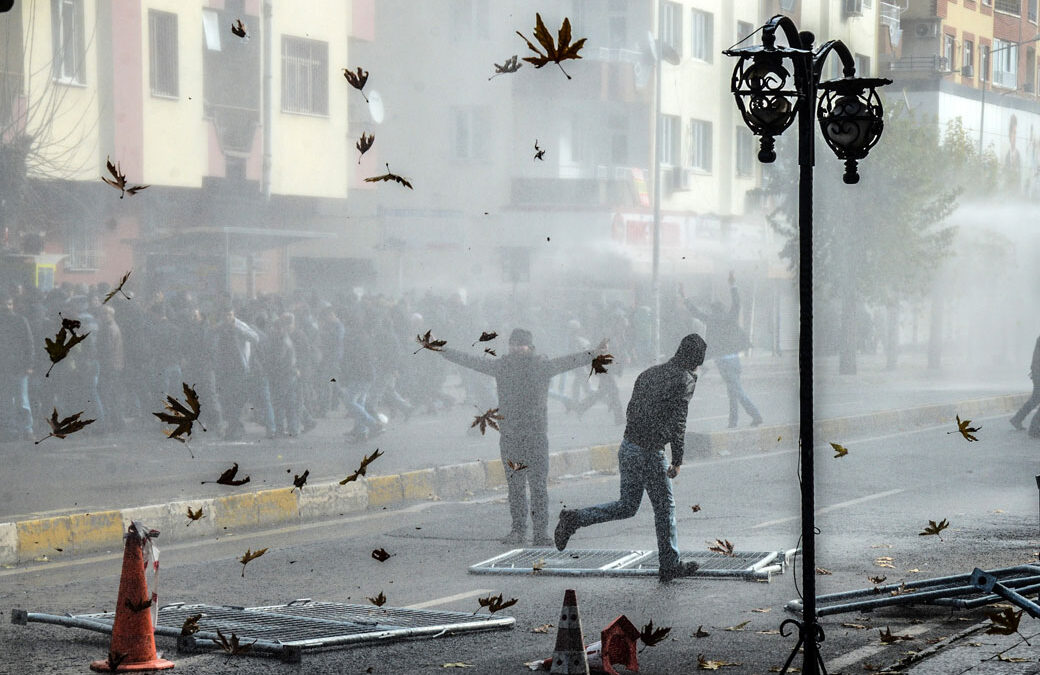
The ICJ has condemned the arbitrary arrest of at least 186 individuals – 24 of whom are still detained solely for their opinions publicly expressed against the Turkish intervention in northern Syria. The ICJ calls for their immediate and unconditional release and for all charges against them to be dropped.
At least 186 individuals had been arrested by Turkish authorities by 16 October after publicly criticizing Turkey’s military intervention in northern Syria.
They are accused of “provoking the public to hatred and animosity”, “carrying out propaganda for a terrorist organization” and “openly degrading the State of the Republic of Turkey” as prohibited by Articles 216, 220, 301 and 314 of the Turkish Penal Code and Article 7/2 of Prevention of Terrorism Law. Further such arrests are reportedly continuing.
Moreover, an investigation was launched against Istanbul MP Sezgin Tanrıkulu, a member of the main opposition Republican People’s Party (CHP), due to his social media messages and statements. HDP co-chairs and MPs were also investigated over “terrorism links” for their statements on the Peace Spring Operation.
“The Turkish Penal Code and Prevention of Terrorism Law in particular with their overly broad definition of terrorism, place excessively restrictive limitations on the exercise of the right to freedom of expression protected under Article 26 of the Turkish Constitution and give law-enforcement bodies sweeping powers to proceed to arbitrary arrests,” said Massimo Frigo, Senior Legal Adviser of the ICJ Europe and Central Asia Programme.
The ICJ is concerned that these arrests have been undertaken in contravention of the right to freedom of expression under article 19 of the International Covenant on Civil and Political Rights (ICCPR) and article 10 of the European Convention on Human Rights (ECHR), treaties to which Turkey is party.
In particular, these restrictions do not appear to be necessary in a democratic society and proportionate, as required by international law.
Detention ordered in breach of these rights is also inherently arbitrary and therefore not in line with Turkey’s obligations to respect the right to liberty under Article 9 ICCPR and Article 5 ECHR.
“These prosecutions violate the Turkish Constitution and international law and should be immediately dropped”, said Massimo Frigo.
“As a priority identified in its Judicial Reform Strategy, Turkey must also quickly abrogate these criminal provisions that cause undue and arbitrary restrictions on freedom of expression,” he added.
The ICJ recalled that the Venice Commission, in its 2016 report, concluded that the provisions of the Turkish Penal Code under which they are charged “provide for excessive sanctions and have been applied too widely, penalizing conduct protected” under international human rights law.
Similar issues were identified last July by Turkey’s Constitutional Court regarding prosecution for terrorism propaganda, of signatories of a petition calling for peace (the “Academics for Peace” petition) in the southeastern part of the country.
The Constitutional Court ruled that the criminal proceedings violated the right to freedom of expression safeguarded by Article 26 of the Turkish Constitution.
Contact:
Róisín Pillay, Director, ICJ Europe Programme, t +32 476 974263; e roisin.pillay(a)icj.org
Oct 16, 2019 | Multimedia items, News, Video clips
ICJ’s first ever fundraising gala took place on 14 October at the iconic setting of the Palais Eynard in Geneva.
Sami Kanaan, Counselor and former Mayor of the City of Geneva, which provided its generous support, opened the event by speaking of the importance of the ICJ cooperation with the local legal community.
Next, several speakers offered a few answers to the theme of the evening: ‘Geneva, the defense of the Rule of Law: what can I do?’.
Pierre de Preux, former Bâtonnier, explained the great value that can be brought to defending rule of law in the world by supporting the ICJ through missions, as he himself did in Tunisia in the 80s.
He was followed by ICJ Commissioners Sir Nicolas Bratza (former President of the European Court of Human Rights), who discussed backsliding on human rights in contemporary Europe; lawyer Reed Brody, who discussed his work in bringing powerful dictators to account for human rights atrocities; and Justice Martine Comte of France, who described her experience in leading ICJ missions in Central Asia.
The ICJ President Prof. Robert Goldman and ICJ Secretary General Sam Zarifi also addressed the attendees.
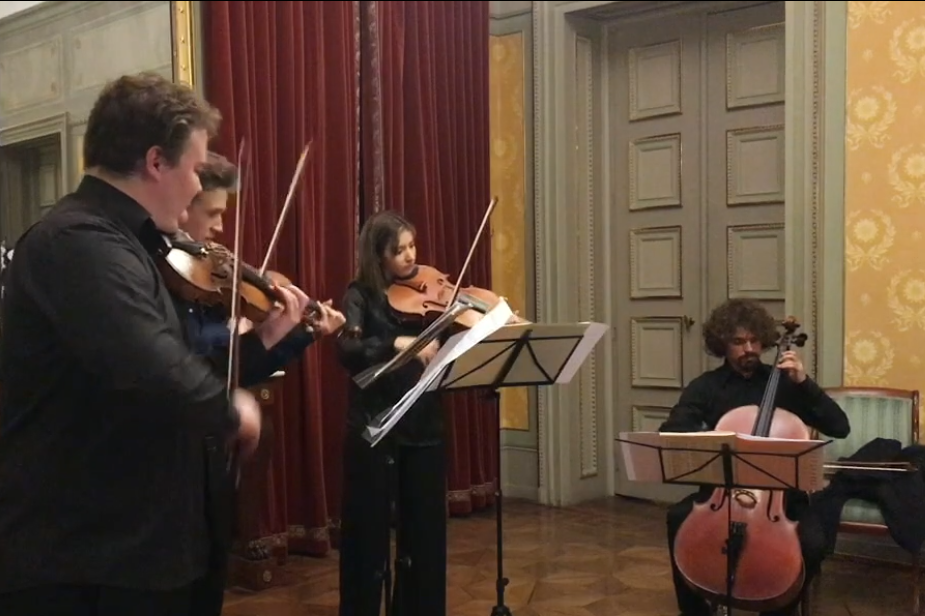
The exchange was then followed by an inspiring concert by the young virtuosi of the Menuhin Academy and a delicious Buffet cocktail provided by refugee Chefs Jena Hamza (Syrian Kurd) and Sritharan Tambithurai (Sri Lanka). All in all, a wonderful evening combining substance, beauty and friendship.
Watch the video here:
Oct 3, 2019 | News
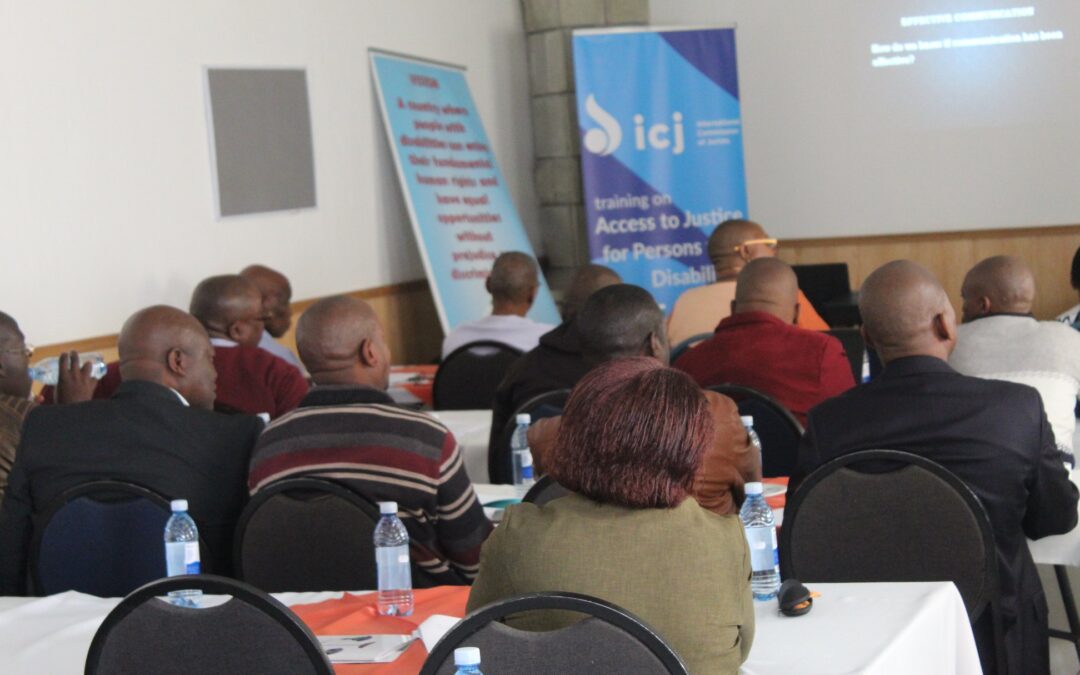
From 1 to 3 October, the ICJ and the Lesotho National Federation of Organizations of the Disabled (Lnfod), an umbrella body of organizations for persons with disabilities, held a judicial training in Lesotho on the rights and access just to persons with disabilities.
The workshop was attended by judges, magistrates, disability law and policy experts, Lnfod and ICJ legal advisers and ICJ Commissioner Justice Charles Mkandawire.
At the workshop, the ICJ Legal Adviser Associate Nokhukanya Farise discussed on the UN international legal framework on access to justice for persons with disabilities at both the universal and regional levels. In this regard, the ICJ highlighted provisions related to access to justice of the International Convention on the Rights of Persons with Disabilities (CRPD), as well as the Protocol to the African Charter on Human and Peoples’ Rights on the Rights of Persons with Disabilities in Africa.
These instruments provide for a substantive right to access to justice for persons with disabilities under article 13.
In addition, they expand on the rights to non-discrimination and equality of persons with disabilities, as well as their right to equality and access to the physical environment, facilities, services and infrastructure required under article 9 of the CRPD.
Justice Charles Mkandawire of the High Court of Malawi and ICJ Commissioner, who attended the workshop and facilitated a session on the role of the judiciary, said: “The judiciary should be functional independently of the executive and legislature, and the relationship between all three should be characterised by mutual respect. The judiciary should also be impartial and independent to prevent the abuse of power.”
Lnfod has been actively working to secure access to justice for persons with disabilities in the criminal justice system of Lesotho. In the workshop, independent law and policy expert Dianah Msipa discussed the case of Koali Moshoeshoe and Others v DPP and Others, where Lnfod successfully challenged the constitutionality of Section 219 of the Criminal Procedure & Evidence Act No.9 of 1981 in the High Court (Constitutional Division).
That provides that persons with intellectual/psychosocial disabilities are not competent witnesses, denying them equal access to justice.
Lnfod explained the Court’s ruling that the legal barrier violated the right to equality before the law and was discriminatory on the basis of disability. It also disproportionately affected women and girls with intellectual and psychosocial disabilities as this rendered them vulnerable sexual abuse.
Lnfod indicated it hoped that the Koali Moshoeshoe case would act as a reformative judicial precedent which will be disseminated and implemented by the courts of law across the country.
“The shift towards the realization of the right to legal capacity for persons with intellectual/psychosocial presents a remarkable opportunity towards overall enjoyment of all the rights provided for in the United Nations Convention on the Rights of Persons with Disabilities on an equal basis with others,” Lnfod said in a statement delivered before the workshop.
At the workshop, independent disability law and policy expert Dianah Msipa explored the issues of understanding disability, the rights of access to justice for persons with disabilities, barriers to effective participation in the criminal justice system, and the use of accommodations in access to justice.
“The training was well-received by all the delegates and I am encouraged by the word of the delegates who stated that they would start providing accommodations to persons with disabilities,” Dianah Msipa said.
Contact:
Khanyo Farise, e: Nokukhanya.Farise@icj.org