Jul 18, 2016 | News
The Maldives must immediately commute the death sentence imposed on Hussain Humam Ahmed and reinstate the 60-year old moratorium on capital punishment with a view towards abolishing it in law, the ICJ said today.
The Maldives Supreme Court on 24 June 2016 upheld the death sentence of 22-year old Hussain Humam Ahmed, convicted in 2012 for the murder Afrasheem Ali, a Member of Parliament (MP).
The execution, which the Government has expressed its intention to carry out within thirty days of the ruling, would be the first in the country since 1953.
“The reintroduction of the death penalty after 60 years, even as an increasing majority of nations are moving towards its abolition, is a tremendous blow to the already weak human rights situation in the Maldives,” said Nikhil Narayan, the ICJ’s South Asia senior legal adviser.
“Maldivian authorities must immediately halt Humam’s and others’ imminent executions and reinstate the moratorium as a first step towards getting rid of it outright,” he added.
On 7 July 2016, just two weeks after upholding Humam’s death sentence, the Supreme Court upheld a second death sentence, this one against Ahmed Murrath, a 32-year old convicted for the 2012 murder of Ahmed Najeeb, a prominent lawyer.
Hussain Humam was first arrested in October 2012 for the stabbing death of Afrasheem Ali, an MP for the ruling Progressive Party of the Maldives (PPM).
The trial, conviction and Supreme Court decision come even as the prosecutor’s office has admitted that the investigation into the murder is still ongoing.
The Supreme Court ruling also ignored a last-minute request by the victim’s family to delay enforcement of the death sentence until the conclusion of the investigation.
Human rights groups and independent observers have highlighted a number of fair trial and due process irregularities in Humam’s investigation and trial.
Humam’s conviction was based solely on his “confession” at a May 2013 hearing, after initially pleading not guilty.
Humam later retracted the confession and claimed that the police had obtained it through coercion.
“Proceeding with Humam’s execution on the basis of a deeply flawed trial, particularly in a context in which the Maldivian Supreme Court and criminal justice system are already under considerable criticism for their lack of independence, impartiality and failure to adhere to international fair trial and due process standards, would amount to a further violation of his rights to life and human dignity,” said Narayan.
The ICJ opposes capital punishment in all cases without exception. The death penalty constitutes a violation of the right to life.
“The death penalty is the ultimate form of cruel and inhuman punishment, which cannot be reversed once carried out, and neither serves the interests of justice for victims nor as a deterrent against future crimes,” Narayan added.
Following the Supreme Court’s decision, on 30 June, the Maldivian Government amended regulations to enforce the death sentence by lethal injection.
The new regulations require the president to order Humam’s execution within three days of endorsement of the death sentence by a committee comprising of the chief prosecutor, the commissioner of prisons, and the chief justice.
The execution must then be carried out within seven days of the president’s order. The president may then only halt the execution on a direct plea from the victim’s family.
President Yameen’s administration has maintained its resolve to implement the death sentence within thirty days of the 24 June Supreme Court ruling.
The Maldives must immediately halt Humam’s and others’ imminent execution, reinstitute the moratorium on the use of the death penalty and take meaningful steps towards its eventual abolition in law and practice, the ICJ says.
Background:
The ICJ has previously detailed the human rights crisis in the Maldives, and the deep politicization of the Maldivian judiciary and criminal justice system, in its August 2015 fact-finding report.
The Maldives is party to most of the principal human rights treaties, including the International Covenant on Civil and Political Rights, which obliges the Maldives to respect the rights to life, human dignity, freedom from cruel, inhuman or degrading treatment or punishment, and to a fair trial.
In December 2014, the UN General Assembly adopted a resolution, for the fifth time since 2007, emphasizing that the use of the death penalty undermines human dignity and calling on those countries that maintain the death penalty to establish a moratorium on its use with a view to its abolition. A majority of 117 UN Member States voted in favor of a worldwide moratorium on executions as a step towards abolition of the death penalty.
Contact:
Nikhil Narayan, ICJ South Asia Senior Legal Adviser, t: +977-981-3187821, e: nikhil.narayan(a)icj.org.
Jun 24, 2016 | Advocacy
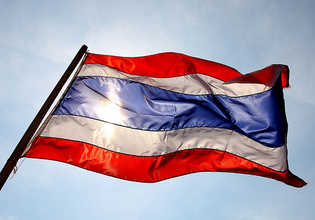
The ICJ, International IDEA (Australia) and the Office of the United Nations Resident Coordinator in Thailand have collaborated to produce an unofficial translation of the draft Constitution of Thailand which is scheduled to be the subject of a national referendum on 7 August 2016.
The original Thai text as formally published by the Royal Thai Government shall in all events remain the sole authority having legal force.
Thailand-Draft-Constitution-EnglishTr-Advocacy-2016-ENG (full text in PDF)
Contact
Sam Zarifi, ICJ Regional Director for Asia and the Pacific, t: +66807819002; e: sam.zarifi(a)icj.org
Kingsley Abbott, Senior International Legal Adviser, t: +66 94 470 1345; e: kingsley.abbott(a)icj.org
Jun 22, 2016 | Advocacy
The ICJ and other human rights groups issued a joint statement on the 10th anniversary of the Optional Protocol to the Convention against Torture.
It can be downloaded here: Universal-OPCAT+10 Joint Statement-Advocacy-2016-ENG (full text in PDF)
Jun 21, 2016 | News
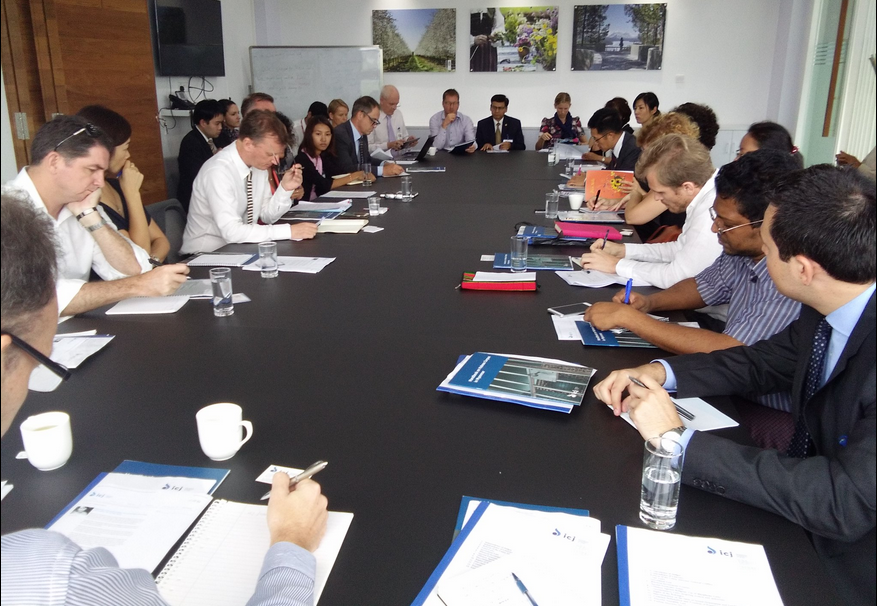
The ICJ urged the diplomatic community in Myanmar to assist, and assess, the new government’s efforts to improve the protection and promotion of human rights in the country at a diplomatic dialogue today.
The ICJ shared its 14 General Recommendations to the new Government and Parliament, with ambassadors and high-level diplomatic representatives, and discussed specific, actionable recommendations to the Government to effectively address human rights violations immediately and in the long term and to provide redress to those whose rights have been violated.
Access to justice for victims of human rights violations has been severely curbed in Myanmar during decades of military rule.
Most of the population has been consistently denied access to the courts and effective remedies as a result of unfair and discriminatory laws and poor court decisions.
With an improper regulatory regime for investment and environmental protection, and an ineffective judiciary to enforce laws and provide access to justice, economic development has risked undermining human rights protection and negatively impacting on economic, social and cultural rights.
Vani Sathisan, ICJ’s International Legal Adviser for Myanmar, stated that while the new government is more receptive than its predecessor to international human rights laws and standards, it should urgently establish a clear plan on strengthening rule of law reform and that all legislation must be guided by the principles of non-discrimination, greater accountability, transparency and justice.
Among the key recommendations the ICJ shared are:
- Supporting the committing of resources to the judiciary as well as the Attorney General’s Office to improve the state of legal education, court facilities, and safeguards to prosecutors to undertake investigations independently;
- Pushing for the passage of new land laws in consultation with civil society modeled on international standards and best practices;
- Ensuring that a new investment law conforms to the new land law that protects all forms of land tenure and provides access to justice when human rights occur;
- Seeking more clarity on the Government’s ability to monitor and regulate the conduct of businesses and their impacts on human rights;
- Supporting and strengthening the capacity of the Myanmar National Human Rights Commission to undertake investigations on human rights violations independently and impartially;
- Repealing or amending laws that are abused to violate the right to freedom of expression and opinion; and
- Encouraging the Government to consult and engage more closely with civil society and the international human rights community.
The diplomatic dialogue aimed to provide the international human rights organizations with an opportunity to clarify their various policy guidelines and provide updates to assist the diplomatic community with their multilateral lobbying efforts in Myanmar with the Executive, Legislative and Judiciary, and civil society.
The Embassy of Denmark hosted the event. Members of the diplomatic community included those from the EU, UK, Canada, Denmark, Sweden, Finland, Australia, The Philippines and Bangladesh.
The ICJ was joined in a panel by the Office of the High Commissioner for Human Rights and Human Rights Watch.

Jun 2, 2016 | News
The ICJ is alarmed by the intimidation and harassment experienced by bloggers in Singapore recently, perpetrated by police authorities.
In the last few days, the homes of four bloggers were raided and their phones and laptops confiscated, without the legal process or justification required by international standards.
The ICJ strongly urges the Government of Singapore to stop this harassment and ensure that bloggers are protected against such unjustified interference with or reprisals for the exercise of their right to freedom of expression.
“By resorting to this kind of harassment and intimidation of bloggers, Singapore is showing complete disregard for human rights and the rule of law,” said Sam Zarifi, ICJ’s Regional Director for Asia and the Pacific.
“The Government of Singapore must stop intimidating citizens who express their political opinions openly. The actions taken by the Singaporean police against the four bloggers do not only constitute an attack on freedom of opinion and expression in the country, but also clearly violates their right to privacy,” he added.
On 27 May 2016, the Election Department of Singapore filed police reports alleging that bloggers Roy Ngerng and Teo Soh Lung, and The Independent Singapore, an independent news website, violated the rules against election advertising ahead of polling day.
Under Singapore’s election rules, campaigning is prohibited 24-hours prior to polling day, which is called the “Cooling-Off Day”.
Roy Ngerng and Teo Soh Lung were alleged to have written posts on their social media accounts expressing support for the opposition candidate, Mr. Chee Soon Juan.
The Independent Singapore, on the other hand, was alleged to have published articles that amount to election advertising.
The ICJ considers that provisions or interpretations of Singapore’s election laws that would impose a sweeping ban on all political expression in relation to particular candidates in a 24-hour period prior to polling day, including the expression of opinions by private individuals without remuneration, cannot constitute a demonstrably justified and proportionate restriction on freedom of opinion and expression under international standards.
Early this year, the delegation representing the Government of Singapore said as it went through the 2nd cycle of the Universal Periodic Review that “no one in Singapore is prosecuted for criticizing the government or its policies.”
The delegation emphasized that Singapore’s Constitution guarantees the right to freedom of expression.
The Government of Singapore also accepted recommendations made by other States at the Universal Periodic Review to “ensure the full enjoyment of the right to freedom of expression”.
It also accepted the recommendation to protect bloggers from persecution and harassment for the exercise of their human rights.
The ICJ urges the Government of Singapore to remain true to the commitments it made during the recent Universal Periodic Review and respect the right to freedom of expression of bloggers.
Contact:
Emerlynne Gil, ICJ’s Senior International Legal Adviser for Southeast Asia, t: +668 4092 3575 ; e: emerlynne.gil(a)icj.org
Additional information
On 6 May 2016, The Independent Singapore published two articles: 5 Highlights of DPM Speech and Workers’ Party and the Bukit Batok by-election – what WP members said.
The first article reported about the speech of the Deputy Prime Minister of Singapore at the rally of the ruling party, the People’s Action Party (PAP), wherein he expressed support for the PAP candidate.
The second article reported statements made by the Workers’ Party (WP) members on key issues relating to the elections.
On 7 May 2016, it published the article Tan Cheng Bock Denies involvement in posting by irrational group of PAP fans, where it reported on how the former Member of Parliament, Dr. Tan, disavowed statements he allegedly made and that were posted on the Facebook group which favor the ruling party.
On 31 May 2016, Roy Ngerng and Teo Soh Lung were interrogated for three hours by police. The two were interrogated separately. Teo Soh Lung was accompanied by her lawyer, while Roy Ngerng was not.
After the interrogation, the police accompanied the bloggers back to their respective homes. The police searched their homes without warrants or their consent, and confiscated their mobile phones, laptops, and hard disks. After the search, Roy Ngerng was taken back to the police station and interrogated for another few hours.
At the police station, law enforcement authorities intimidated Roy Ngerng into logging in and out of his social media accounts and his blog, The Heart Truths, in their full view and presence.
The publisher and editor of The Independent Singapore were likewise interrogated separately by the police, on 31 May 2016 and 1 June 2016. Their mobile phones and laptops were also confiscated by the police after their interrogation.