Jul 26, 2021 | News
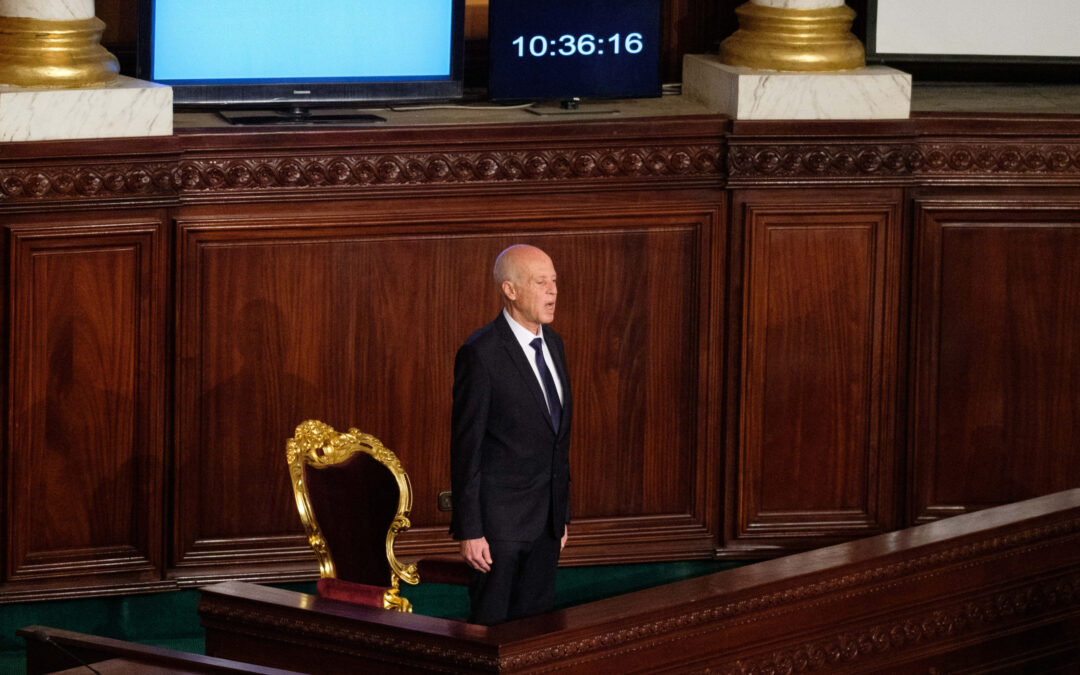
President Kais Saied’s dismissal of Tunisia’s head of government and suspension of parliament constitute a flagrant attack on the rule of law and erodes the foundations of the constitutional order in Tunisia, the International Commissions of Jurists (ICJ) said today.
Jun 28, 2021 | News
Egyptian authorities must repeal the newly enacted Law 71, which criminalizes media coverage and other reporting on criminal trials, in a flagrant violation of the right to a public trial and the right to freedom of expression, the ICJ said today.

Jun 24, 2021 | News, Uncategorized
Egyptian authorities must immediately quash the convictions of Hanin Hossam and Mawadda Al-Adham and immediately and unconditionally release the two “TikTok girls,” the ICJ said today.
هذا البيان الصحفي متوفر باللغة العربية أيضاً
On 20 June 2021, the Cairo Criminal Court sentenced 20 year-old Hanin Hossam and 23 year-old Mawadda Al-Adham to 10 and six years in prison, respectively, and a fine of 200.000 Egyptian pounds each (12,778 US Dollars), after convicting them on “human trafficking” charges arising from their social media activities.
“Their convictions must be quashed and Hanin Hossam and Mawadda Al-Adham and others imprisoned must be immediately and unconditionally released,” said Said Benarbia, ICJ’s Middle East and North Africa Director.
“The role of the judiciary is to protect and uphold everyone’s right to freedom of expression, not to crack down on its legitimate exercise in the name of some purported and ill-defined moral or social values.”
The two women, known as the “TikTok girls”, were arrested in April 2020 for violating “public morals” and “undermining family values” after publishing videos, including some in which they were shown dancing or signing, on the social media platform TikTok. In July 2020, a Cairo Court convicted and sentenced Hossam and Al-Adham to two years in prison; their conviction was overturned on appeal in January 2021.
However, prosecutors moved swiftly soon after their successful appeal to charge them in another case with “human trafficking”, and “using girls in acts contrary to the principles and values of Egyptian society with the aim of gaining material benefits.” The sentences imposed on 20 June by the Cairo Criminal Court on Hossam and Al-Adham arise from their conviction on those charges.
The charges are based on the 2018 cyber-crimes law, which effectively criminalizes the lawful and legitimate exercise of the right to freedom of expression and association.
“Egypt’s military and government are turning Egypt into an open-air prison in which any and all forms of free expression are crushed,” added Benarbia.
On 12 March 2021, 31 UN Member States delivered a joint declaration at the 46th session of the UN Human Rights Council denouncing the human rights situation in Egypt, including restrictions on freedom of expression.
Contact:
Said Benarbia, Director, ICJ Middle East and North Africa Programme, t: +41-22-979-3817; e: said.benarbia(a)icj.org
Asser Khattab, Research and Communications’ Officer, ICJ Middle East and North Africa Programme, e: asser.khattab(a)icj.org
Jun 23, 2021 | Human Rights Council, News, Work with the UN
The Egyptian authorities systematically abuse “counter-terrorism” laws against human rights defenders, setting a dangerous model for other countries around the world to follow.
On 23 June, the International Commission of Jurists (ICJ) and the Cairo Institute for Human Rights Studies (CIHRS) jointly organized an online event on the sidelines of 47th session of the United Nations Human Rights Council to denounce Egypt’s targeting of human rights defenders through the country’s “counter-terrorism” laws.
Titled ‘Weaponizing Counter Terrorism Laws to Silence Human Rights Defenders’, the interactive online webinar aimed to highlight how the Egyptian authorities use “counter-terrorism” laws to target human rights defenders, including by placing lawyers and human rights activists on Egypt’s “terrorist list”, a recent practice resulting in serious human rights violations.
The event was moderated by Bahey Eldin Hassan, CIHRS Director, who stressed that the abuse of the “counter-terrorism” laws was not only employed against human rights defenders, and is not a phenomenon limited to Egypt.
The United Nations Special Rapporteur on Human Rights and Counter-Terrorism, Fionnuala Ní Aoláin, pointed out that repressive regimes take advantage of the lack of a globally agreed definition of terrorism when legislating for counter terrorism purposes. As a result, they get to place whomever they like under the “terrorism label” at the national level, with no meaningful oversight or penalties.
“The United Nations Security Council has taken on a massive legislative role on counter terrorism, which has given cover to and enabled State repression at the national level,” Ní Aoláin noted addressing the role of the international community.
“This is not an accident or a ‘bad apple’ problem, the misuse of counter-terrorism is embedded in the practised national legal systems,” Ní Aoláin added. “That abuse is part of the DNA of State practice in many countries.”
“We are at a pivotal moment. States must ask themselves what 20 years of abuse of counter terrorism laws have done,” Ní Aoláin urged. “It has weakened protections and made us less safe in many ways. This is a time for States to stand up and ensure pressure for change of this situation.”
Brian Dooley, Senior Advisor to the UN Special Rapporteur on Human Rights Defenders, noted that for authorities to imprison a human rights defender “with a straight face” for a long period of time, they have to use major accusations such as terrorism.
“The Egyptian authorities know that these human rights defenders are not terrorists,” Dooley said. “In most of the cases we have seen, where defenders were sentenced to ten years or more in prison, the relevant authorities use some sort of anti-terrorism, national security, or treason laws to justify putting a human rights defender away in prison for 10 or more years.”
Said Benarbia, ICJ Middle East and North Africa Director, began by naming some of the most prominent human rights defenders who remain in pre-trial detention facing “terrorism-related charges” in Egypt.
Among those Benarbia mentioned are: Alaa Abdelfattah, a blogger and a human rights activist; Mahienour al-Masri, a human rights lawyer; Mohammad al-Baqer, a lawyer and the director of the independent NGO, Adalah; and Amr Imam, a lawyer at the Arabic Network for Human Rights Information.
“In most of the cases the ICJ documented human rights defenders face charges of ‘joining a terrorist group’,” but the State security prosecution has consistently failed to even name the terrorist organization or group concerned,” Benarbia said. “In most of the cases, prosecutions were initiated with the sole purpose of intimidating and silencing human rights defenders.”
Benarbia emphasized that prosecuting individuals despite a total lack of evidence to support the charges is contrary to both the Egyptian and international law and standards.
“Any country that, like Egypt, uses ‘counter terrorism’ legislation to clamp down on basic freedoms and retaliate against human rights defenders and create open-air prisons should not have a say in setting international standards on terrorism,” Benarbia added.
Human Rights Defender, Celine Lebrun Shaath, delivered a passionate statement about her husband, Ramy Shaath, an Egyptian Palestinian human rights defender who has been detained since July 2019. Shaath, who herself was deported from Egypt in the wake of her husband’s arrest, mentioned that the online event was taking place on Ramy Shaath’s birthday; the second since his imprisonment. “I would rather not be here today,” she added, lamenting what had happened to her husband.
“We do not know to what terrorist group Ramy is supposed to be belonging,” Shaath said. “He is accused of spreading ‘fake news’, but we don’t know which news or where he had spread them.”
Shaath expressed her hope that the Egyptian government would heed the call for her husband’s release and free Ramy and all the political prisoners.
“[Human Rights Defenders] should be looked at as a wealth for this country. They are the future, they are not a threat, dissent is not terrorism, dissent is a vibrant part of democracy that should be cherished and protected,” Shaath underscored.
On 12 March 2021, 31 UN Member States signed a joint declaration condemning the human rights situation in Egypt, which Finland delivered on their behalf at the Human Rights Council’s 46th session. The joint letter focused primarily on “the restrictions on freedom of expression and the right to peaceful assembly, the constrained space for civil society and political opposition, and the application of terrorism legislation against peaceful critics.”
The event was cosponsored by Human Rights Watch, Amnesty International, the International Service for Human Rights and the International Federation for Human Rights.
You can watch the entire event here.
Contact:
Said Benarbia, Director, ICJ Middle East and North Africa Programme, t: +41-22-979-3817; e: said.benarbia(a)icj.org
Asser Khattab, Research and Communications Officer, ICJ Middle East and North Africa Programme, e: asser.khattab(a)icj.org
Jun 22, 2021 | News
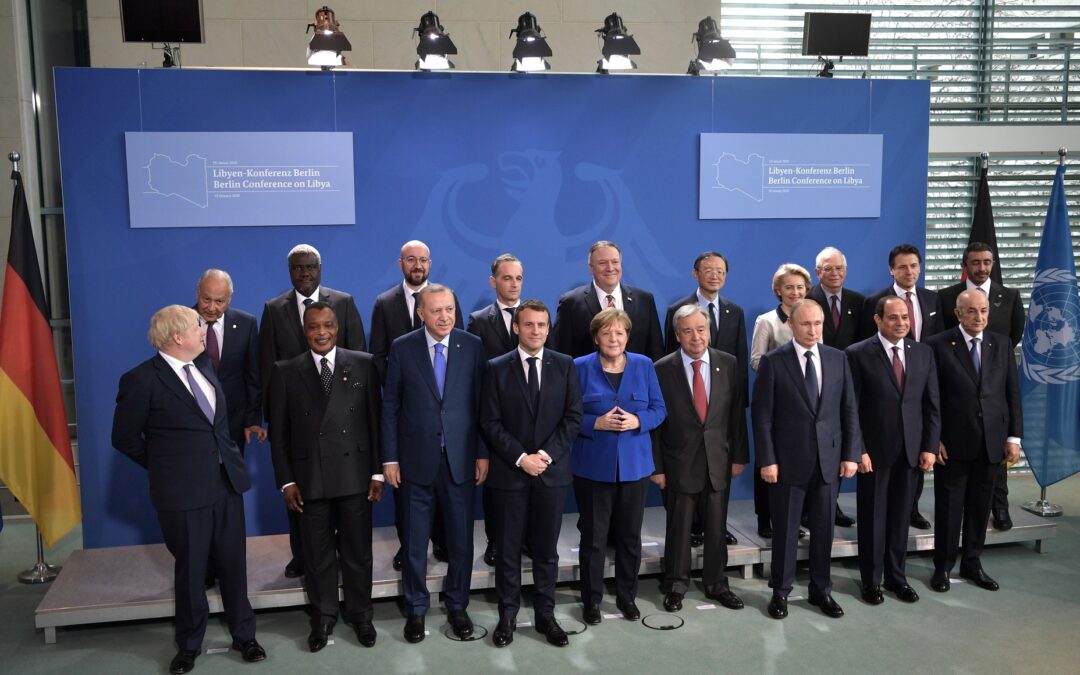
The Second Berlin Conference on Libya, taking place on 23 June, should focus on ensuring accountability for crimes under international law and guaranteeing that the transitional justice process is fully consistent with international law and standards as its key priorities, the ICJ said today.
هذا البيان الصحفي متوفر باللغة العربية أيضاً
“The Berlin II Conference must bring accountability to the top of the political agenda in Libya”, said Saïd Bernarbia, the ICJ MENA Director.
“The necessity to hold the 24 December elections cannot sideline the need for the Libyan authorities to hold perpetrators of crimes under international law to account and to end impunity for past and ongoing human rights abuses. Time and again experience from around the world has shown that accountability is crucial for a sustainable political solution.”
The 19 January 2020 Berlin Conference Conclusions stressed “the need to hold accountable all those who have violated provisions of international law”, and encouraged the Libyan authorities to strengthen “transitional justice institutions, including prosecution initiatives, reparations, truth-seeking and institutional reform.” A dedicated Working Group on human rights and international humanitarian law was created to implement such conclusions.
The Berlin II Conference must follow up on these commitments and give priority to ensuring that crimes under international law committed by all parties in Libya be effectively investigated with a view to holding perpetrators to account.
“The transitional justice process must be prioritized with a view to establishing the truth about past and ongoing gross human rights violations and abuses, upholding victims’ right to remedies and reparations, including by providing guarantees of non-repetition”, Benarbia said.
The Berlin II Conference should also support the work and mandate the UN Independent Fact-Finding Mission on Libya established by the Human Rights Council in June 2020.
Download this press release in PDF form here.
Contact
Said Benarbia, Director, ICJ Middle East and North Africa Programme, t: +41-22-979-3817; e: said.benarbia(a)icj.org
Asser Khattab, Research and Communications Officer, ICJ Middle East and North Africa Programme, e: asser.khattab(a)icj.org