Mar 21, 2016 | News
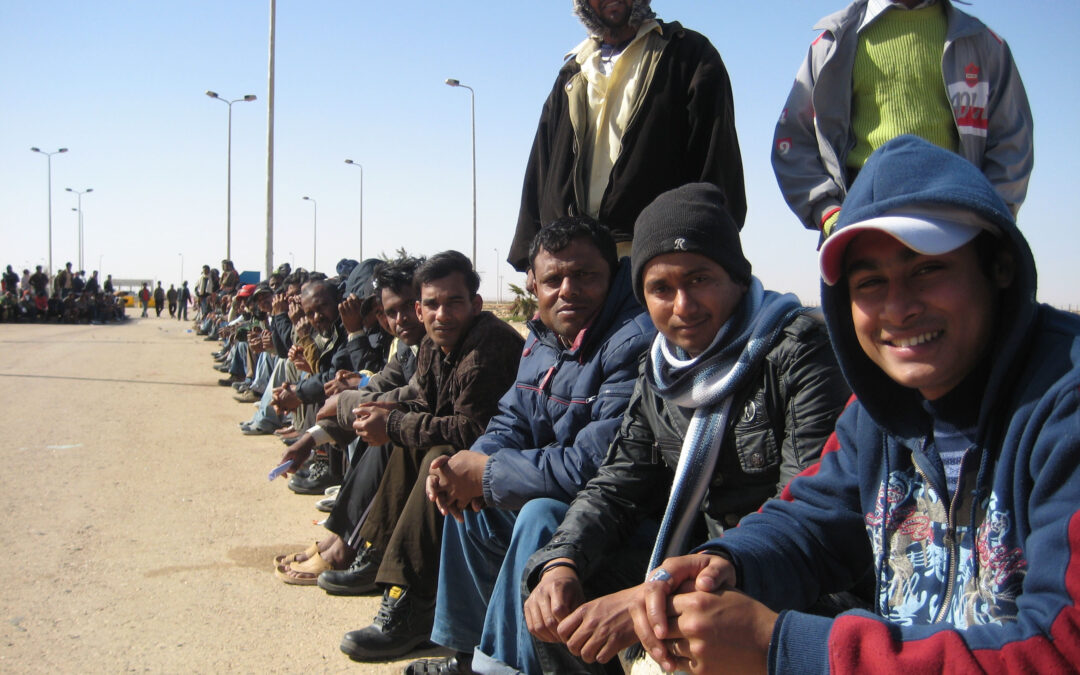
The ICJ today expresses serious concern that the deal concluded on Friday 18 March between the European Union and Turkey on the return of migrants and refugees to Turkey is likely to lead to serious violations of international and EU human rights and refugee law.
“This initiative carries high risks of infringing the right of asylum and the prohibition of non-refoulement, as well as the right to an effective remedy for potential violations of these rights”, said Róisín Pillay, Director of the ICJ Europe Programme.
All EU Member States, including Greece, have obligations to protect these rights under international human rights law, and Member States and EU institutions have similar obligations under the EU Charter of Fundamental Rights.
The agreement seeks to establish swift return from Greece to Turkey of any migrant or asylum seeker attempting to reach Greece who does not apply for international protection there or whose application is deemed unfounded or inadmissible.
In order to facilitate such returns, Turkey may be declared to be a “safe third country” which could allow for the dismissal of asylum requests in Greece based on this element alone, and the rapid return of applicants.
The EU and Turkey, in their joint statement, contend that these operations will not be carried out in violation of international and EU law, including the prohibition of collective expulsions and the principle of non-refoulement, which prohibits return to a country where the returned person faces a real risk of torture or other serious violation of human rights.
It is nevertheless unclear how the system proposed could lead to swift returns, while respecting international human rights and refugee law, the EU Charter of Fundamental Rights and the EU Asylum Procedure Directive, for a number of reasons.
First, the ICJ stresses that Turkey cannot be considered a “safe third country” for the return of migrants and refugees.
Authoritative reports and international jurisprudence on Turkey demonstrate that neither the general human rights situation in Turkey, nor its asylum procedure and reception system are in line with international law, including Turkey’s obligations under the European Convention on Human Rights’ prohibition of inhuman and degrading treatment in article 3 ECHR.
Second, the ICJ affirms that the commitment of Turkey to adapt its asylum system to comply with international law and standards does not in itself allow for returns from EU countries in compliance with the principle of non-refoulement.
International and EU law binding on Greece and other EU Members States requires an assessment of the situation in the country of return at the moment the return is effected to determine whether there is a real risk of violations of human rights.
Therefore, at present, and irrespective of the commitments made on reform, any return to Turkey would be at high risk of infringing the principle of non-refoulement and the returning country’s legal obligations.
Crucially for the prospects of the new system, it is also clear that the Greek asylum system is not in a position to proceed to a swift consideration of asylum applications in compliance with human rights, including procedural guarantees.
“As is clear from ongoing Council of Europe discussions about implementation of European Court decisions against Greece, the Greek asylum procedure cannot yet provide for an effective remedy for cases of arbitrary refoulement. Without respect for such guarantees, many migrants will be left vulnerable,” said Massimo Frigo, Legal adviser at the ICJ.
The ICJ emphasises that, whatever co-operative arrangements are put in place, Greece and Turkey will have responsibility under international human rights and EU law as regards the rights of persons subject either to Greek or Turkish territorial jurisdiction or to Greek or Turkish authority and/or control.
Furthermore, through its direct involvement in and financing of these arrangements, the EU itself may be complicit in any breach of the right of asylum, the prohibition of collective expulsions, the prohibition of non-refoulement or the right to an effective remedy.
The ICJ is further concerned at the “one for one” resettlement mechanism that will be established to settle one Syrian refugee in a EU country for every Syrian returned to Turkey.
It is of serious concern that this mechanism contemplates the return of Syrians to Turkey. Syrians are prima facie entitled to international protection and would likely fall within one of the grounds of international protection of the EU Qualification Directive.
It would therefore be unlawful under EU law to return them to Turkey.
Full text and additional information on the content of the deal available here.
Contact
Róisín Pillay, Director, Europe Programme, roisin.pillay(a)icj.org
Massimo Frigo, Legal adviser, Europe Programme, massimo.frigo(a)icj.org

Mar 10, 2016 | News
The ICJ welcomes the decision of the Magistrate Court to dismiss the charges against Lena Hendry for her involvement in 2013 screening of No Fire Zone: The Killing Fields of Sri Lanka, an award-winning human rights documentary on the civil war in Sri Lanka.
Magistrate Mohamad Rehab Mohd Aris determined that the prosecution failed to prove a prima facie case against Lena Hendry (photo).
As a consequence, she did not have to enter her defense.
“We welcome the decision of the Magistrate’s Court to clear Lena Hendry from all charges,” said Emerlynne Gil, ICJ’s Senior International Legal Adviser.
“We must emphasize though that subjecting Lena Hendry in the first place to criminal prosecution simply for screening this documentary violated her human rights and contravenes Malaysia’s obligations to uphold freedom of expression,” she added.
“We should remember that the provision in the Film Censorship Act 2002 used against Lena Hendry remains on the books and still operative. It can still be used to stifle the voices of other human rights defenders in Malaysia,” Gil further said.
Lena Hendry was charged under section 6(1)(b) of the Film Censorship Act 2002 for allegedly showing the film without prior authorization by the Board of Censors.
The said provision prohibits any person to circulate, exhibit, distribute, display, manufacture, produce, sell, or hire any film or film publicity material that has not been approved by the Board of Censors.
If Lena Hendry had been found guilty, she could have faced a fine of up to RM30,000 (approximately US$6,900) and/or a sentence of up to three years imprisonment.
The ICJ reiterates its call to the Government of Malaysia to safeguard freedom of expression and uphold the right of individuals to elaborate and disseminate information, including on questions of public import and the documentation of human rights abuses.
Contact:
Emerlynne Gil, Senior International Legal Adviser for Southeast Asia, t: +66 840923575 ; e: emerlynne.gil@icj.org

Feb 29, 2016 | News
El día 1 de febrero del presente año, el Juez Tercero de Primera Instancia Penal Narcoactividad y Delitos contra el Ambiente desestimó la querella presentada por el Señor Ricardo Méndez Ruiz en febrero de 2015, en contra del Fiscal de Derechos Humanos Licenciado Orlando López.
Dicha querella pretendía afectar la labor que ha venido realizando el Fiscal Orlando López a favor de la lucha contra la impunidad, criminalizándolo y afectando su derecho a la libertad de expresión.
La CIJ celebra dicha resolución que reconoce la función de defensores y defensoras de derechos humanos, operadores de justicia, abogados y abogadas y a la sociedad guatemalteca.
En este caso, el Fiscal de Derechos Humanos tuvo que enfrentar una querella por casi un año.
Recientemente la Corte de Constitucionalidad denegó un Recurso de Amparo presentado por Ricardo Méndez Ruiz en contra del Procurador de los Derechos Humanos, por haber emitido dicho Procurador la resolución en la que declaró “la violación de los derechos a la dignidad, a la integridad, a la seguridad que constituyen una amenaza al derecho a la vida, a la igualdad, la libertad de accion y de asociación de los defensores de Derechos Humanos y los miembros de organizaciones no gubernamentales de derechos humanos…” y señaló como responsable de dicha violación al señor Ricardo Méndez Ruiz.
Finalmente, el Procurador de Derechos Humanos recomendó a Ricardo Méndez Ruiz “abstenerse de realizar señalamientos para criminalizar la labor de los defensores y defensoras de derechos humanos en Guatemala” y lo invitó a reflexionar sobre el “daño social que representa difundir masivamente el tipo de contenidos analizados” en dicha resolución, por medio de los cuales “no sólo agrede a personas, organizaciones o movimientos, representantes diplomáticos y Misiones Internacionales, sino también fomenta el odio y la confrontación social”.
Ante este amparo, la Corte de Constitucionalidad resolvió que “el acto señalado como objeto de reproche no genera agravio constitucional susceptible de ser reparado en amparo” y que “debe denegarse la protección constitucional solicitada” por Ricardo Méndez Ruiz.
La CIJ hace un nuevo llamado a las autoridades del Estado de Guatemala para que inicie una investigación exhaustiva e imparcial acerca de las actuales campañas contra defensores y defensoras de derechos humanos y que adopte las medidas necesarias de acuerdo a derecho con respecto a dichos actos.

Feb 19, 2016 | News
The ongoing incommunicado detention of human rights defenders Nguyễn Văn Đài and Lê Thu Hà must end, said today seven human rights groups, including the ICJ. It violates their right to freedom from torture and other cruel, inhuman or degrading treatment or punishment.
All charges against Nguyễn Văn Đài and Lê Thu Hà, should be withdrawn and they should be immediately and unconditionally released, the organizations added.
An incommunicado detention is one in which a detainee is held without access to the outside world, particularly to family, lawyers, courts and independent doctors. The practice of incommunicado detention violates key rights of persons deprived of liberty and facilitates torture and other ill-treatment. Prolonged periods of incommunicado detention can themselves constitute a violation of the prohibition on torture and other ill-treatment.
Nguyễn Văn Đài and Lê Thu Hà were arrested on 16 December 2015 and charged under Article 88 of the Penal Code, ‘Conducting propaganda against the state’. All efforts by family and legal counsel to visit the pair since their arrests have been denied.
Vietnam-Release prisoners-News-webstory-2016-ENG (full story, in PDF)

Feb 12, 2016 | Advocacy, Non-legal submissions
The ICJ submitted a written statement to the Human Rights Council as a response to the latest report of the Special Rapporteur on freedom of religion or belief.
The written submission recognized the Special Rapporteur’s active participation in the Regional Conference on Freedom of Religion or Belief in Southeast Asia, organized by the ICJ in collaboration with the Asian Forum for Human Rights and Development (FORUM-ASIA) and Boat People-SOS (BPSOS) in Bangkok, Thailand from 30 September to 1 October 2015.
It also highlighted the adoption of the Conference Declaration on Freedom of Religion or Belief in Southeast Asia, a document through which participants expressed their commitment to working to enhance the right to freedom of religion or belief in the region.
The ICJ expressed its concern regarding the banning of Christmas celebrations in Brunei Darussalam, as the restrictions imposed are inconsistent with international law standards, specifically with the principle of non-discrimination.
Finally, the statement called on Brunei to eliminate the restrictions imposed for celebrating non-Muslim festivities and encouraged the Government of Brunei to implement the measures recommended by the Special Rapporteur in his report.
SouthEast Asia-HRC statement on freedom or belief-Advocacy-Non legal submissions-2016-ENG (full text, in PDF)