
Sep 30, 2013 | News
Last week the ICJ concluded a series of five workshops organized in collaboration with the National Human Rights Commission of the Federation of Bar Associations of Venezuela and states bar associations.
The workshops, that were held in five cities of Venezuela in the course of 2013, provided participants with a space for free reflection and debate on issues of judicial independence and the functioning of rule of law institutions.
The themes discussed in the workshops included human rights in legal education; the role of bar associations in promoting and strengthening an independent, competent and integral legal profession; human rights litigations; professional, civil and criminal responsibility of lawyers; and the role of the Supreme Court and the Office of Public Prosecution in a democratic society.
Participants to the workshops included representatives of bar associations, former Supreme Court justices and senior judges, practicing lawyers and members of Venezuelan civil society.
***
SPANISH TEXT:
La CIJ concluye serie de 5 talleres sobre independencia judicial en Venezuela
La semana pasada la Comisión Internacional de Juristas concluyó una serie de cinco talleres organizados en colaboración con la Comisión Nacional de Derechos Humanos de la Federación de Colegios de Abogados de Venezuela y los Colegios de Abogados de varios Estados en Venezuela.
Los talleres, que tuvieron lugar en cinco ciudades de Venezuela en el transcurso de 2013, ofrecieron a los participantes un espacio de reflexión libre y de debate sobre temas relativos a independencia judicial y el funcionamiento de las instituciones del Estado de derecho.
Los temas tratados en los talleres incluyeron la importancia de la formación en derechos humanos de los abogados; el papel de los Colegios de Abogados en la promoción y fortalecimiento de una profesión independiente, competente e integral; los litigios en materia de derechos humanos; la responsabilidad profesional, civil y penal de los abogados; y el papel del Tribunal Supremo de Justicia y del Ministerio Público en una sociedad democrática.
Los participantes en los talleres incluyeron a representantes del gremio, ex jueces del Tribunal Supremo y jueces de tribunales superiores, abogados en ejercicio y miembros de la sociedad civil venezolana.
Venezuela-CIJ Programa Seminario Barquisimeto-agenda-2013-spa (full text in pdf)
Venezuela-CIJ Programa Seminario Coro-agenda-2013-spa (full text in pdf)
Venezuela-CIJ Programa Seminario Puerto Ayacucho-agenda-2013-spa (full text in pdf)
Venezuela-CIJ Programa Seminario San Cristobal-agenda-2013-spa (full text in pdf)
Venezuela-CIJ Seminario Caracas-Programa-agenda-2013-spa (full text in pdf)
Sep 26, 2013 | News
The ICJ today expressed grave concern over the shooting of a Supreme Court judge of Dagestan and his son.
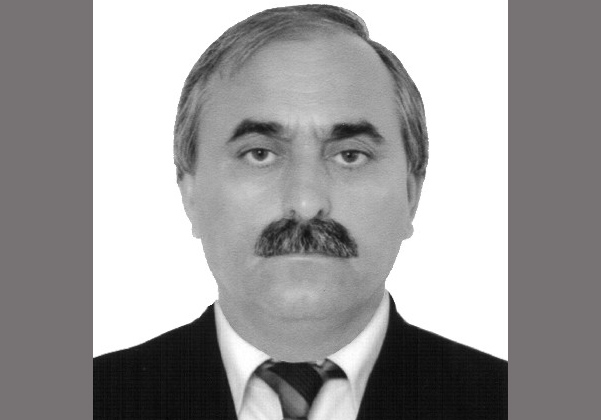
The ICJ calls on the federal and local authorities to ensure prompt, independent, impartial and thorough investigation of the shooting of Judge Mukhtar Shapiyev (photo) and his son.
Those reasonably suspected of responsibility for this crime should be identified and brought to justice in fair and transparent proceedings, where the rights of all the parties, including the victims and the accused are respected.
The ICJ recalls that Mukhtar Shapiyev is the third judge to be killed in Dagestan this year.
On 15 January, Magomed Magomedov, a Supreme Court judge of Dagestan, was shot and died as a result of the attack and, on 9 March, federal judge Akhmed Radzhabov, was shot to death near his house.
“When judges’ security is not guaranteed, and when they face a real and constant risk to their lives, the justice system and the very rule of law are undermined,” Temur Shakirov, Legal Adviser of the ICJ Europe Programme, said. “The UN Basic Principles on the Independence of the Judiciary clarify that it is the obligation of the State to ensure that those who are entrusted with the power to take judicial decisions are effectively protected.”
Reports indicate that Mukhtar Shapiyev and his son, Kamil Shapiyev, were shot at by at least two persons near their home in the capital Makhachkala at about 20:45 on Wednesday 25 September. Both victims later died in hospital.
Judge Shapiyev previously worked as the Prosecutor of one of the districts in Dagestan. In January 2012, he was appointed as a Supreme Court judge of Dagestan and worked in the collegium on civil cases.
Urgent measures, which the ICJ calls for to guarantee that the security of judges in Dagestan is effectively protected, include ensuring effective security against attempts on their lives and lives of their family members.
CONTACTS
Róisín Pillay, Director, ICJ Europe Programme, roisin.pillay(a)icj.org
Temur Shakirov, Legal Adviser, ICJ Europe Programme, temur.shakirov(a)icj.org
Russia-Judge killed in Dagestan-news-web story-2013-rus (full text in pdf)
Sep 19, 2013 | News
The ongoing involvement of the lead prosecutor in the hearing on the appeal against the acquittal of opposition leader, Anwar Ibrahim, raises concerns about prosecutorial impartiality, the ICJ said today.
The ICJ is particularly concerned at the failure of the lead prosecutor, Datuk Seri Muhammad Shafee Abdullah, who was said to have some prior knowledge of the facts of the case, to remove himself from involvement in the proceedings and so maintain an appearance of prosecutorial integrity and impartiality.
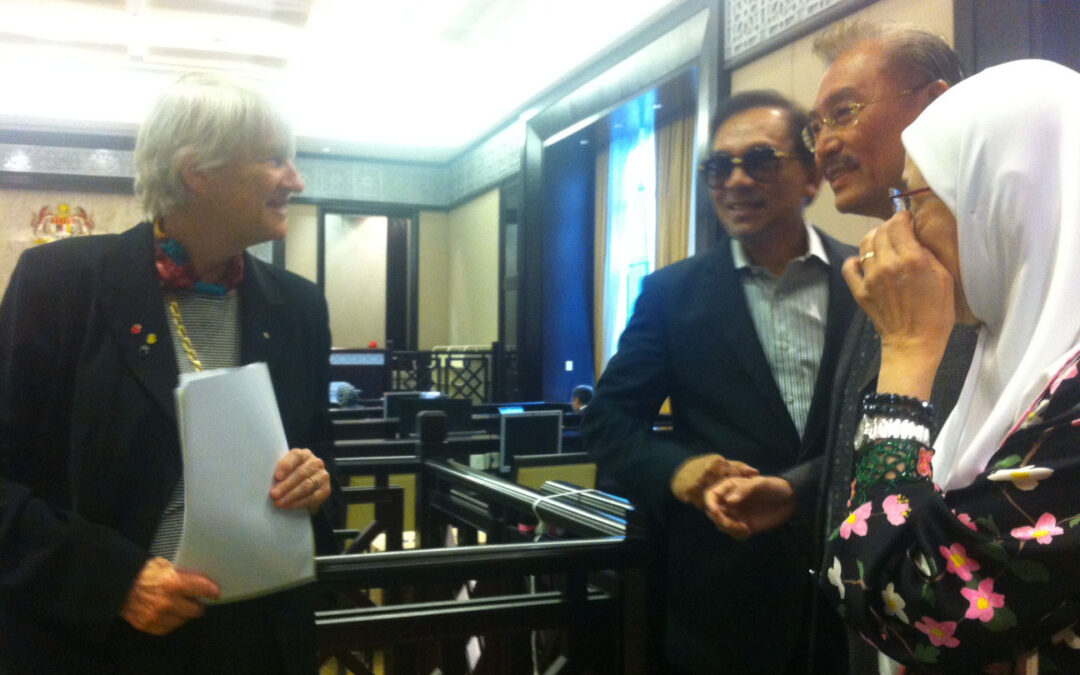
“This case is a significant test of the integrity of the judicial system in Malaysia, which for so long has been the subject of concern to human rights proponents, bodies and organizations,” said Justice Elizabeth Evatt, a Commissioner of the ICJ who was observing the proceedings.
The hearing on the appeal was postponed to allow the preliminary objection raised on the first day, 17 September, by the lawyers of Anwar Ibrahim against Judge Tengku Maimun Tuan Mat’s selection as a member of the three-person panel to hear the appeal.
The defense lawyers argued that there was a perception of bias due to Judge Tengku Maimun Tuan Mat’s former ruling in a libel suit involving Anwar Ibrahim and the then Prime Minister Mahathir Mohamad in 2007.
Judge Tengku Maimum Tuan Mat thereafter recused herself from the proceedings.
The Court of Appeal therefore reconvened on the second day, 18 September, with a new judge, Dato’ Rohana Binti Yusuf, to hear the motion objecting to the appointment of Datuk Seri Muhammad Shafee Abdullah as lead prosecutor in the case.
The motion was based partly on the fact that that Datuk Seri Muhammad Shafee Abdullah was present at Deputy Prime Minister Najib’s home at the same time as the complainant two days before the incidents leading to the filing of charges against Anwar Ibrahim.
At the very beginning of the case, Datuk Seri Muhammad Shafee Abdullah filed an affidavit concerning this fact, although he was not called as a witness in the proceedings.
The Court later denied the motion objecting to his appointment as lead prosecutor in this appeal, saying that there was no conflict of interest or apparent unfairness.
Justice Evatt, however, expressed concern that Datuk Seri Muhammad Shafee Abdullah had taken on the role of lead prosecutor in the appeal.
“We expect higher standards of prosecutorial conduct,” she said. “Considering the political overtones in this case, Datuk Seri Muhammad Shafee Abdullah should be especially sensitive to any appearance that might lead to a perception of bias and partiality that might arise from his earlier knowledge of facts of the case.”
The UN Guidelines on the Role of Prosecutors provide that in the performance of their duties, prosecutors shall carry out their duties with impartiality.
The ICJ also acknowledged Judge Tengku Maimun Tuan Mat’s recusal as a sign that the Court of Appeal recognized the need to appear impartial. Under the UN Basic Principles on the Independence of the Judiciary, “judges shall always conduct themselves in a manner as to preserve the dignity of their office and the impartiality and independence of the judiciary.”
The Bangalore Principles of Judicial Conduct, state that to ensure such impartiality “a judge shall disqualify himself or herself from participating in any proceedings in which it may appear to a reasonable observer that the judge is unable to decide the matter impartially.”
The Court did not indicate new dates on when the hearing on the appeal would take place. The ICJ will continue to monitor this case.
The ICJ has previously condemned Malaysia’s continuing use of colonial-era criminal charges of ‘sodomy’ to cover even consensual sexual relations between adults.
The ICJ believes that Article 377B of the Malaysian Penal Code is inconsistent with respect for the right to privacy under international standards.
Justice Evatt, the first female judge to be appointed to an Australian Federal Court, a former member of the United Nations Human Rights Committee, and a commissioner of the ICJ, traveled to Malaysia to observe the appeal hearing from 17 to 18 September 2013, at the Court of Appeal in Putrajaya.
Contact:
Emerlynne Gil, International Legal Adviser, t +662 6198477 ext. 206 ; email: emerlynne.gil(a)icj.org
Sep 13, 2013 | News
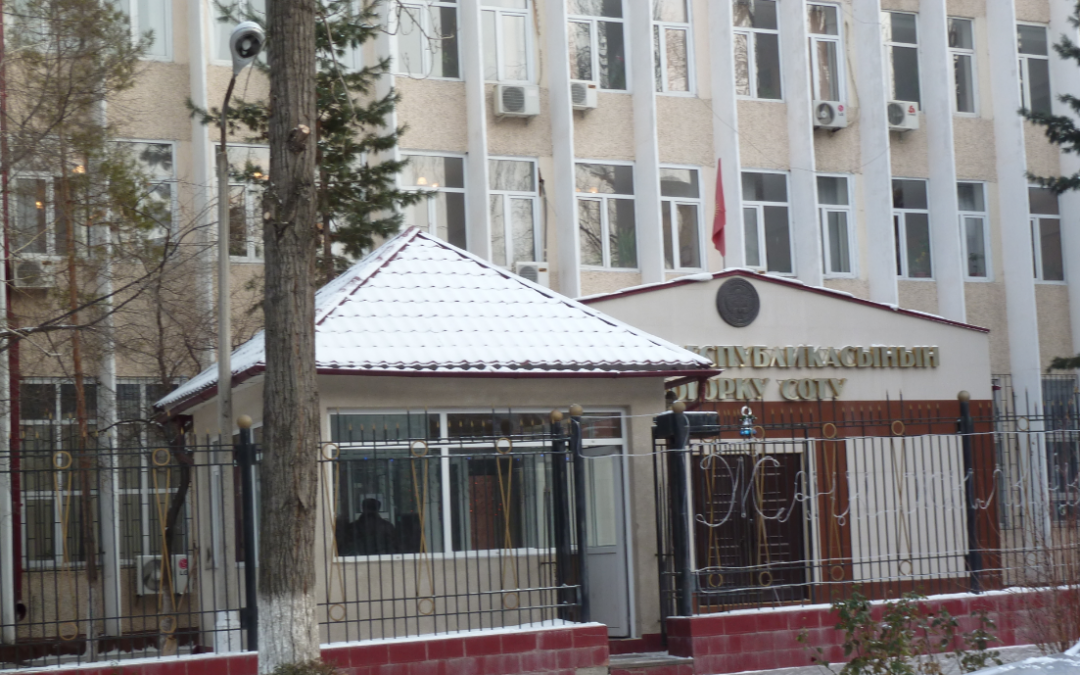
The ICJ welcomes the decision of the Osh Regional Court to overturn an intermediate ruling to initiate disciplinary proceedings against two lawyers representing the interests of a victim of sexual assault.
The ICJ sent a mission to observe today’s hearing. The mission raised no issues of concern regarding the conduct of the proceedings observed.
On 3 July 2013, the Osh City Court issued an intermediate ruling to initiate disciplinary proceedings against two lawyers, Valerian Vakhitov, Khusanbai Saliyev, for taking procedural steps provided for under Kyrgyzstan law, including filing motions to the upper judicial instances or filing motions to recuse the judge during and not before the trial.
Today, the Osh Regional Court upheld lawyers’ appeal and overturned the decision to initiate disciplinary proceedings against the lawyers.
The case concerns charges against a teacher in a religious institution for sexual acts with one of his students, a nine-year-old boy.
The representatives of the defendant alleged that he is not criminally responsible by reason of insanity – a proposition contested by the lawyers of the victim. The main trial is ongoing.
The trial was observed by an ICJ trial observation mission: Oleg Levytskyy (Ukraine) and Almaza Osmanova (Kyrgyz Republic).
The observers met with the court, the prosecutor, representatives of the victims and the defendant.
“We welcome the decision to overturn the ruling to initiate disciplinary proceedings against these lawyers,” said Róisín Pillay, Director of the ICJ Europe Regional Programme. “In accordance with international standards, it is the lawyers’ duty to assist their clients in every appropriate way and take legal action to protect their interests. Therefore punishing lawyers for their diligent work would run contrary to the obligation of the state to guarantee that lawyers can carry out their functions without intimidation, hindrance, harassment or improper interference.”
Contacts
Róisín Pillay, Director, ICJ Europe Programme, roisin.pillay(a)icj.org
Temur Shakirov, Legal Adviser, ICJ Europe Programme, temur.shakirov(a)icj.org
Kyrgyzstan-Osh_Lawyers_Trial Observation-news-web story-2013-rus (full text in pdf)
Sep 12, 2013 | News, Uncategorized
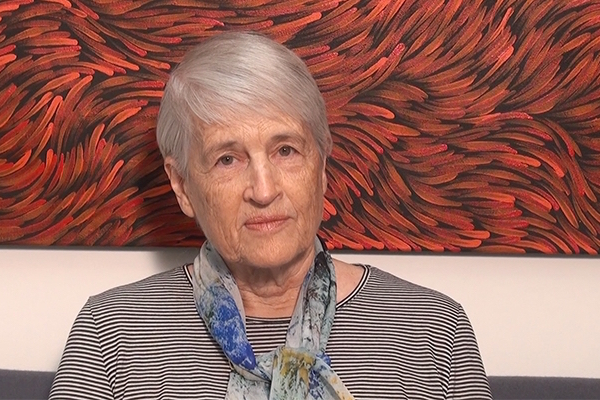
Justice Elizabeth Evatt AC (photo), will be observing the hearing of the appeal of Anwar Ibrahim’s case from 17 to 18 September 2013 at the Court of Appeal in Putrajaya.
Justice Evatt is the first female judge to be appointed to an Australian Federal Court, a former member of the United Nations Human Rights Committee, and a commissioner of the ICJ.
Anwar Ibrahim is a Malaysian politician and is currently the leader of the opposition party, Parti Keadilan Rakyat, and the opposition alliance known as Pakatan Rakyat.
The appeal hearing that Justice Elizabeth Evatt will be observing emerged from the 2008 charges filed against Anwar Ibrahim immediately after the general elections held that year.
He was charged for allegedly committing sodomy, which is a crime under Section 377B of the Penal Code and carries the penalty of up to 20 years of imprisonment and whipping.
The High Court acquitted Anwar Ibrahim on 9 January 2012.
This is the second time that Anwar Ibrahim is facing sodomy charges after his dismissal from the Malaysian Cabinet in 1998.
In 2004, The ICJ also sent a representative to observe the sodomy trial of Anwar Ibrahim, where the Federal Court overturned the High Court decision to convict him.
The ICJ called the Federal Court’s ruling “a step in the right direction in upholding the rule of law”.
Justice Evatt’s mandate as ICJ’s high-level observer to the appeal hearing includes monitoring the fairness of the proceedings against Anwar Ibrahim in the light of relevant international standards.
These standards include, among others the UN Basic Principles on the Independence of Judges, which set out standards on the independence and impartiality of judges, and the UN Guidelines on the Role of Prosecutors, which set out standards on the independence of prosecutors.
Justice Evatt will also be evaluating whether the prosecution under Section 377B of the Malaysian Penal Code is being used in this case to suppress political dissent, contrary to the right to freedom of expression.
“The right to observe trials stems from the general right to promote and secure the protection and realization of human rights. Trial observation is a key tool in monitoring the respect for human rights and the rule of law. It is an effective method to examine the level of independence and impartiality of a country’s criminal justice system,” said Emerlynne Gil, ICJ’s International Legal Adviser on Southeast Asia. “Trial monitoring also serves to promote better compliance with both domestic law and international standards that aim to ensure protection of human rights, including the rights to fair trial and due process.”
Contact:
Emerlynne Gil, International Legal Adviser for the ICJ Asia & Pacific Programme, t +662 6198477 ext. 206; email: emerlynne.gil(a)icj.org