Sep 13, 2019 | News
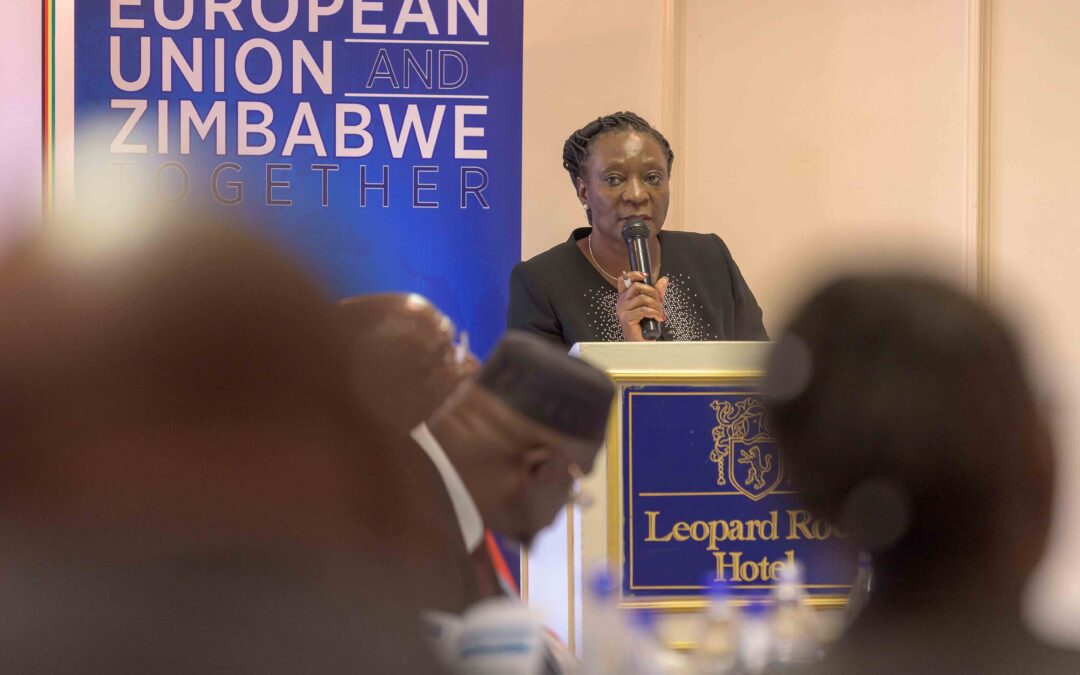
The ICJ, in collaboration with the Judicial Service Commission (JSC) of the Republic of Zimbabwe, has concluded a two-day Judicial Symposium on the theme ‘Core-Skilling: Towards a Human Rights Jurisprudence’, organized to mark the end of the second judicial term in the Zimbabwe judicial calendar.
In his remarks at the opening of the symposium, ICJ’s Africa Regional Director, Mr Arnold Tsunga, noted that the theme of the symposium had been carefully chosen to enhance discourse on national transformation in an atmosphere of respect for the rule of law and international human rights. He noted further that the symposium was to critique the concept of transformative adjudication and explore its relevance to applying the Constitution of Zimbabwe as an instrument and framework for national transformation.
Noting that the ICJ appreciated its on-going partnership with the JSC in Zimbabwe, Mr Tsunga expressed the hope that the training and symposium would enhance the effectiveness of the judiciary with a view to improving access to justice for all, especially victims of human rights violations, women, marginalized and vulnerable groups and contributing to attainment of the United Nations Sustainable Development Goals number 16 and 5.
On his part, in his opening remarks the Chief Justice of the Republic of Zimbabwe, the Hon. Chief Justice Malaba, noted that the ICJ-JSC organized symposia have provided a platform for continuous improvement of judicial work and networking amongst judges.
Chief Justice Malaba observed that these meetings have enabled judges to dialogue on how to improve the effectiveness and efficiency in the justice delivery system. He noted that this year’s theme on human rights jurisprudence lies at the heart of an independent and effective judiciary.
He further noted that the current Constitution of Zimbabwe has a better framework and potential for the protection of human rights than previous constitutions. Accordingly, he expressed the view that the judiciary has a more important role to play in protecting and safeguarding human rights.
He highlighted that the judiciary’s commitment to the protection of human rights is evidenced in local jurisprudence in respect to human rights cases, where several important judgments have been given by all the courts.
Chief Justice Malaba used the opportunity to give updates on developments which were taking place within the JSC, particularly in its research centre, in the High Court, in the Fiscal and Tax Appeals Division, amendments to the Judicial Laws which were gazetted on the 9th of September 2019.
Chief Justice Malaba stated that in performance appraisal, the JSC has constituted a Performance and Training Committee led by the Deputy Chief Justice to come up with a system that enables accurate measurement of the performance of judges.
Responding to issues of accountability raised by the Chief Justice, ICJ’s Mr Tsunga urged the JSC to develop and adopt a system to track, monitor, document and communicate results arising from these trainings, as the results would help the ICJ, and international development partners to evaluate the usefulness of the trainings and efforts at justice sector reforms.
This year’s symposium was attended by 16 female and 27 male judges from the Constitutional Court, Supreme Court, High Court, Labour Court and Administrative Court of Zimbabwe.
Sep 11, 2019 | Advocacy, Non-legal submissions
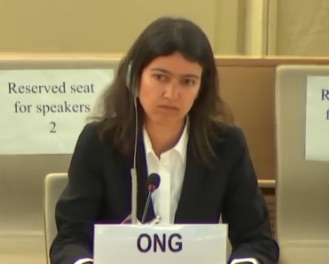
The ICJ today reiterated its call for the UN Human Rights Council to establish an international independent Commission of Inquiry on the human rights situation in Venezuela.
The statement, delivered in a general debate at the Council following the oral update by the UN High Commissioner for Human Rights mandated by the previous Human Rights Council resolution on Venezuela, read as follows:
“Mr. President,
The International Commission of Jurists (ICJ) welcomes the High Commissioner for Human Rights’ oral update on the situation in Venezuela.
The update and previous reporting point to a wide range of human rights violations, which continue to occur inside the country. These include arbitrary deprivation of liberty, serious violations of indigenous people’s rights, excessive use of force by security forces and attacks on freedom of expression, among others, as well as the impacts of laws, policies and practices that have adversely affected the independence of the judiciary.
Over the years, the International Commission of Jurists has monitored and documented the lack of judicial independence in Venezuela and the absence of accountability for those responsible for gross human rights violations.
The ICJ urges the Human Rights Council to establish an independent Commission of Inquiry on the human rights situation in Venezuela, given that Venezuelan authorities have been unable or unwilling to pursue effective domestic accountability, and judicial and prosecutorial mechanisms in the country lack independence and impartiality.
The Commission of Inquiry should be mandated to investigate reports of violations of international human rights law in Venezuela, establish the facts and circumstances of violations committed since at least 2014, and identify those responsible with a view to contributing to full accountability for all violations, including those that constitute crimes under international law.
Thank you.”
The oral update of the UN Human Commissioner for Human Rights, on the situation in Venezuela, may be accessed here.
In August 2019, the ICJ joined other NGOs in calling for an international commission of inquiry on Venezuela.
States are expected to discuss a further resolution on Venezuela at the current Human Rights Council session, for adoption on 26 or 27 September.
Aug 30, 2019 | Advocacy, Non-legal submissions
The ICJ has presented information to the UN Human Rights Committee in preparation for the Committee’s examination of the eighth periodic report of Ukraine under the International Covenant on Civil and Political Rights (ICCPR).
In this submission, the ICJ draws the Committee’s attention to the situation with the security and independence of the legal profession and Ukraine’s compliance with and implementation of its obligations under Articles 2, 6 and 14 of the ICCPR, as well as the UN Basic Principles on the Role of Lawyers.
The ICJ stresses that attacks on lawyers are likely to lead not only to violations the rights of the individual lawyers concerned, but also to violations of the rights of the clients they represent, including the right to a fair trial (Article 14 ICCPR), the right to liberty (Article 9 ICCPR), the right to freedom from torture or other ill-treatment (Article 7 ICCPR), and the right to an effective remedy (Article 2.3 ICCPR) as attacks on lawyers may, in turn, hinder the provision of effective legal representation.
Ukraine-List of Issues-Advocacy-non legal submission-2019-ENG (full submission, in PDF)
Aug 22, 2019 | News
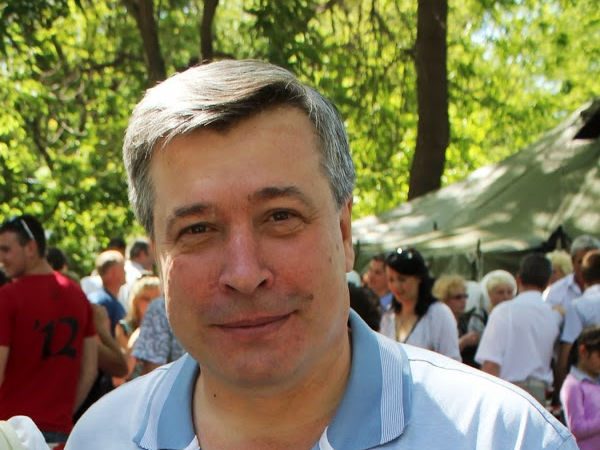
The ICJ calls on the Ukrainian authorities to investigate the murder of lawyer Olexandr Ivanov, killed today with an automatic weapon near SIZO (Pre-trial Dentention Centre) №6 in Kropyvnytskyi.
The shooting was carried out from a car by unknown persons. The lawyer died on the spot. Another person injured in the incident was hospitalized in critical condition.
“The killing of lawyer Oleksandr Ivanov must be independently, promptly, and thoroughly investigated and the perpetrators brought to justice,” said Temur Shakirov, ICJ Senior Legal Adviser.
“Such crimes strip any legal reforms of their positive impact if lawyers’ life is always in danger when exercising their functions,” he added.
The police have confirmed the occurrence of the killing and initiated an investigation preliminarily qualified as intentional murder under article 115-2 of the Criminal Code of Ukraine.
The Ukrainian National Bar Association (UNBA) is planning to convene an emergency meeting of the Committee on Protection of Lawyers Rights and Professional Guarantees. The UNBA has also referred to the leadership of regional prosecution and police authorities to bring the case under personal control.
“During its recent mission to Ukraine the ICJ heard of cases of killings of lawyers and this case demonstrates that little progress has been achieved in addressing the security of lawyers in Ukraine,” said Shakirov.
Additional information:
International human rights law, including the European Convention on Human Rights to which Ukraine is a party, requires that states take steps to protect the life and physical integrity of persons who they know or ought to know are at real risk of violence.
According to the UN Basic Principles on the Role of Lawyers, governments must ensure that lawyers are able to perform all of their professional functions without intimidation, hindrance, harassment or improper interference (principle 16). The UN Basic Principles specify that “[w]here the security of lawyers is threatened as a result of discharging their functions, they shall be adequately safeguarded by the authorities” (principle 17).
Aug 22, 2019 | Advocacy, News
Today, the ICJ joined 10 other international and Venezuelan human rights organizations to call the United Nations Human Rights Council to establish a Commission of Inquiry (COI) on human rights in Venezuela in its upcoming session in September.
The ICJ considers that an independent COI is necessary given the Venezuelan authorities have been unable or unwilling to pursue effective domestic accountability and the judicial and prosecutorial mechanisms lack independence and impartiality.
In recent years, the ICJ has documented in several reports the lack of judicial independence, the lack of accountability for those allegedly responsible for gross human rights violations, the abuse and misuse of the military jurisdiction, and wide ranging breakdown in the functioning of the rule of law.
The United Nations High Commissioner for Human Rights in her 2019 report has similarly stressed that wide ranging human rights violations had occurred in Venezuela evidenced by the excessive use of force by security forces, attacks on freedom of expression, arbitrary detention and extrajudicial killings, dismantling of checks and balances, and deprivations constituting violations of the right to food and health. In addition, a panel of independent international experts mandated by the Secretary General of the Organization of American States (OAS), mentioned in 2018 “that reasonable grounds exist to believe that crimes against humanity have been committed in Venezuela”.
Commissions of Inquiry have been effectively established by the UN Human Rights Council to assess serious situations of human rights in several countries where there is a need to ensure proper human rights fact finding and ultimately accountability for widespread or systematic human rights violations. These include COIs for Syria, North Korea, Burundi, Yemen, Libya and Eritrea.
The ICJ and the other organizations have emphasized that the Commission of Inquiry that could be established for Venezuela “should be mandated to investigate reports of violations of international human rights law in Venezuela, including but not limited to violations associated with torture and inhuman treatment, arbitrary detention, discrimination, violations of freedom of expression, violations of the right to life and enforced disappearances, as well as violations of the rights to health and food. It should be tasked with establishing the facts and circumstances of violations committed since at least 2014, mapping out patterns of violations and identifying those responsible and, where possible, the chain of command, with a view to contributing to full accountability for all violations including those that constitute crimes under international law (…)”.
Download:
Venezuela-COI final-Advocacy-2019-ENG (full Q&A document prepared by all 11 organizations in PDF)