Jun 25, 2019 | News, Publications, Reports
Colombia’s transitional justice tribunal, the Special Jurisdiction for Peace (JEP in its Spanish acronym) has made progress in fighting impunity, but can do more to address the needs and demands of victims of the country’s long civil war, the ICJ said in a report released in Bogota today.
The report Jurisdicción Especial para la Paz: análisis a un año de su entrada en funcionamiento (available only in Spanish) will be presented by a high-level mission composed of the President of the ICJ, Prof Robert Goldman (former President of Inter-American Commission on Human Rights), the Vice President of the ICJ, Carlos Ayala (former President of the Inter-American Commission on Human Rights), and ICJ Commissioner Philippe Texier, former judge of the Court of Cassation of France.
The commissioners will meet with different Colombian authorities including the President of Colombia, Iván Duque Márquez, and the President of the JEP, Patricia Linares Prieto.
They will also meet with victims and other members of civil society.
The JEP is charged with prosecuting and punishing gross violations of human rights and serious violations of international humanitarian law committed during the country’s civil war.
The JEP was established by the Peace Agreement entered into between the Colombian government and the former armed group FARC-EP, on November 24 of 2016.
“The JEP has made progress in guaranteeing victims’ rights and fighting impunity for gross violations of human rights and serious violations of international humanitarian law,” said Prof Robert Goldman, ICJ’s President.
“But the JEP must do more to strengthen the effective participation of victims in its procedures, as well as to guarantee victims’ rights to justice and full reparation in compliance with international standards,” he added.
Accordingly, the report identifies ways by which the JEP can achieve these goals.
The ICJ also expresses concern about security threats faced by human rights defenders and victims and witnesses appearing before the JEP. The ICJ urges the JEP and other Colombian public authorities to adopt effective measures to guarantee their safety.
The ICJ also considers it is necessary to ensure respect for the judicial independence of the JEP against external pressures to ensure the proper performance of its functions.
The report describes the findings of a mission carried out by ICJ Commissioners Carlos Ayala, Wilder Tayler and Philippe Texier in January 2019. The report includes an analysis of the main actions and decisions taken by the JEP as well as relevant decisions of other public authorities. It reflects developments up to June 7, 2019.
Jun 25, 2019 | News
The ICJ welcomes yesterday’s judgment of the Court of Justice of the EU (CJEU) which ruled that forcing the retirement of Polish Supreme Court judges by lowering their mandatory retirement age, violated EU law.
Following the judgement, the security of tenure of these judges must now be permanently ensured, the ICJ said.
“The independence of the judiciary in Poland has been systematically undermined by the Polish executive and legislative authorities in recent years. This is a landmark decision that should herald a return to the rule of law in Poland, including legal, institutional and practical protection for judicial independence,” said Róisín Pillay, Europe and Central Asia Programme Director at the ICJ.
“This decision should be fully complied with. But it should also prompt the Polish authorities to reverse the wider damage that has been done to the rule of law, to restore the independence of the institutions of the judiciary, and end the harassment of judges through unjustified disciplinary proceedings,” she added.
In its decision issued on 24 June, the CJEU found that the lowering of the retirement age for judges, without transitional arrangements for those already in office, was not justified by any legitimate objective and therefore undermined the principle of irremovability of judges, which is central to judicial independence. It therefore violated the principle of effective judicial protection in Article 19(1) of the Treaty of European Union.
The Court also considered the discretionary power of the President to allow a judge to remain in office following the mandatory retirement date.
It found that, although this power was based on the opinion of the National Council of the Judiciary, such opinions were in practice given without any reasons, and therefore did not provide an effective safeguard.
The Court found that the President’s discretionary power gave rise to reasonable doubts that judges could be subject to external influence, in violation of the principle of effective judicial protection under Article 19(1) TEU.
Background
A law on the Supreme Court, which entered into effect in July 2018, attempted to force the “retirement” of 27 of the 72 Supreme Court judges, including the First President, by lowering the mandatory retirement age for its judges from 70 to 65 years.
The ICJ has repeatedly condemned the “forced retirement” of the 27 Supreme Court Justices as violating the security of tenure of judges in direct contravention of the principle of judicial independence, as expressed in international law and standards.
These include the UN Basic Principles on the Independence of the Judiciary, Council of Europe standards, the European Court of Human Rights’ jurisprudence and the rule of law principles enshrined in article 2 of the Treaty on European Union.
An ICJ letter of 11 July 2018, signed by 22 senior judges from all regions of the world, urged the Polish government to act immediately to reinstate the forcibly retired judges in office.
Proceedings against Poland under Article 258 TFEU were launched by the European Commission in October 2018, alleging infringement of Article 19(1) TEU (the principle of effective judicial protection) together with Article 47 of the EU Charter of Fundamental Rights (the right to a fair hearing and an effective remedy).
Following an interim decision of the CJEU in December 2018, the judges who were forcibly retired were reinstated in office, under a Law on the Supreme Court that came into force in January 2019.
Jun 24, 2019 | Advocacy, Non-legal submissions
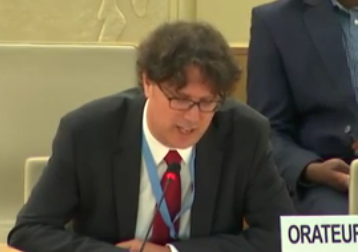
At the UN, the ICJ today highlighted the rights and duties of judges and prosecutors to exercise their freedoms of expression, assembly and association to defend the rule of law and human rights.
The oral statement was delivered in a Clustered Interactive Dialogue with the Independent Expert on Sexual Orientation and Gender Identity and the Special Rapporteur on the Independence of Judges and Lawyers, at the UN Human Rights Council in Geneva.
It read as follows:
“The International Commission of Jurists (ICJ) welcomes the report of the Special Rapporteur on the Independence of Judges and Lawyers on freedom of expression, association and peaceful assembly of judges and prosecutors.[1]
As the report acknowledges, exercise of these rights can be subject to restrictions arising from the fundamental need for judges and prosecutors to be perceived as independent and impartial. At the same time, as the report also emphasizes, any such restrictions must be provided by law and be demonstrably necessary to such legitimate aims, which in turn crucially requires proportionality.[2] These standards have been recognized both globally and in all regions of the world.[3] Any such restrictions on judges should be adopted and enforced by the judiciary itself.
We particularly welcome the recognition in the report that in situations where democracy and the rule of law are under threat, judges and prosecutors have not only the right, but potentially a duty, to speak out and organize in defence of democracy, the rule of law, and human rights, and that this can include participating in peaceful public demonstrations.[4]
Far too often in the ICJ’s work around the world, we see Executive and Legislative bodies, as well as compromised judicial hierarchies, arbitrarily or selectively targeting judges and prosecutors for removal, demotion or other disciplinary measures, precisely for exercising these rights to defend against threats to the rule of law. Examples highlighted in our submission to your study included Egypt, Morocco, Honduras, Hungary and Bulgaria.[5]
Mr. Rapporteur, how can judiciaries, governments, and civil society organisations (including international or regional legal professional associations) act internationally to support judges and prosecutors who are facing such abuse in another country?
The ICJ also welcomes the reports of the Independent Expert on protection against violence and discrimination based on sexual orientation and gender identity. We urge all States to strongly support the renewal of this essential mandate at the current session.
Thank you.”
[1] ICJ’s detailed submission to the Special Rapporteur’s consultation is available at: https://www.icj.org/judgesexpression2019/
[2] Paragraphs 39, 45, 46, 89.
[3] In addition to the global and European, Asian, and American standards cited in the report, see the African Commission on Human and Peoples’ Rights, Principles and Guidelines on the Right to a Fair Trial and Legal Assistance in Africa (2005), paras A(4)(s) and (t), and F(d) and (e).
[4] Paragraphs 61, 69, 90, 102.
[5] See for further information: https://www.icj.org/judgesexpression2019/
Jun 21, 2019 | News, Publications, Reports, Workshop reports
The ICJ has today published a report on indigenous and other traditional or customary justice systems in Asia.
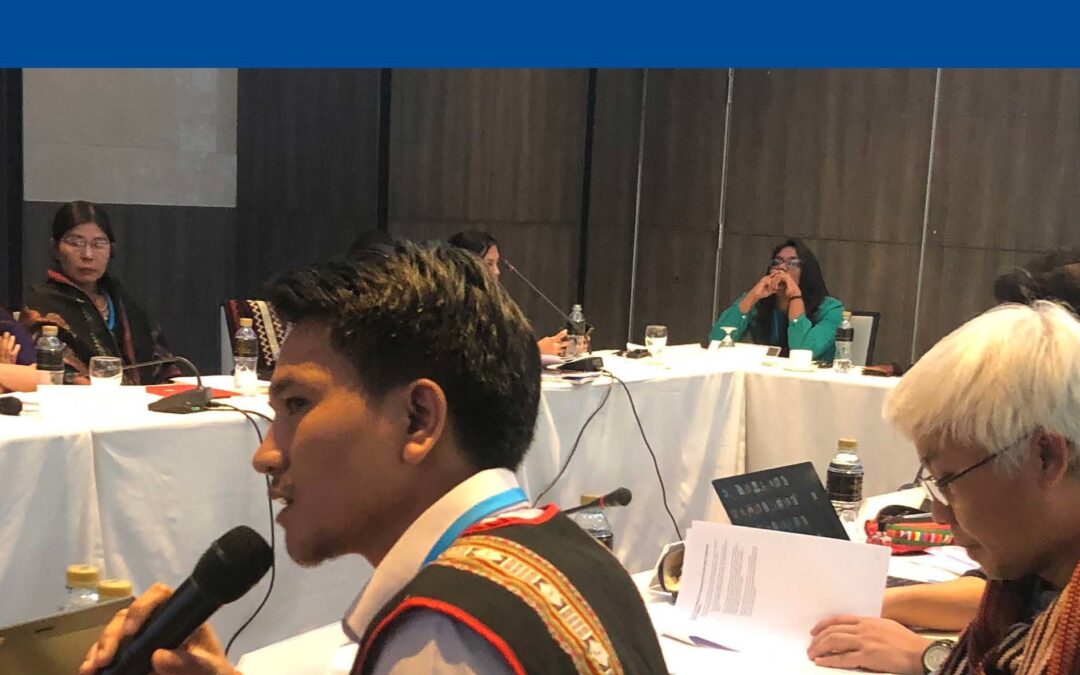
The report is based on discussions at the 2018 Geneva Forum of Judges & Lawyers which was convened in Bangkok, Thailand, in December.
The Bangkok meeting brought together judges, lawyers, and other legal experts from around the Asia-Pacific region, from both formal State justice systems and indigenous and other traditional or customary systems.
Participants reaffirmed the potential for indigenous and other traditional or customary justice mechanisms to contribute to the realization of equal and effective access to justice, particularly for indigenous, rural, poor and other marginalised populations.
Participants stressed the importance of sustained consultations and engagement directly with indigenous justice systems, to encourage their development in harmony with international human rights standards and in coordination with more official or formal national legal institutions.
Participants also highlighted the opportunities and risks associated with similar forms of constructive engagement with other, non-indigenous, traditional or customary justice systems. The relevance of UN Sustainable Development Goal 16 was also highlighted.
Participants further agreed that States must at the same time ensure that formal systems are also made more accessible, both in practical and in cultural terms, to relevant communities.
The report urges that, in line with the UN Declaration on the Rights of Indigenous Peoples, constitutional or other legal provisions should recognize the role of indigenous justice systems, within an overall framework for protection and promotion of international human rights standards.
Indigenous peoples and States should jointly consider means for improved coordination and collaboration between indigenous and non-indigenous justice systems, with a view to seeing the different systems work in harmony to provide effective access to justice and protection of human rights for all people.
The report cautions however, that a similar approach may or may not be appropriate in relation to certain other traditional and customary justice systems not covered by the UN Declaration on Rights of Indigenous Peoples.
The report also outlines experiences from a number of countries around the region, both in terms of existing obstacles to equal access to justice, and the possibilities for constructive engagement.
It also identifies a number of legal and policy questions of continuing controversy, including on the relationship between indigenous and other traditional or customary justice systems, and the official State justice system, and how international human rights and rule of law standards should be applied.
The UN Special Rapporteur on the Rights of Indigenous Peoples, a key participant in the Bangkok meeting, has announced that her report to the Human Rights Council in September 2019 will focus on indigenous justice systems.
The interactive dialogue on her report will be an important opportunity for States and civil society to further exchange views on the best means of implementing the relevant provisions of the UN Declaration on the Rights of Indigenous Peoples in the diversity of contexts around the world.
The Geneva Forum global and regional consultations, the Special Rapporteur’s report and associated dialogue, and the ICJ’s own research, global experience and expertise, will provide a foundation for the development by the ICJ of further legal, policy and practical guidance to be published in 2020.
The report summarizing discussions at the 2018 Forum should be read in conjunction with the separately published and periodically updated Traditional and Customary Justice Systems: Selected International Sources, which compiles relevant treaty provisions, standards, conclusions and recommendations of UN and other expert bodies, as well as the Report of the 2017 Forum.
The Geneva Forum is an annual global meeting of senior judges, lawyers, prosecutors and other legal and United Nations experts, convened by the ICJ through its Geneva-based Centre for the Independence of Judges and Lawyers, with the support of the Canton and Republic of Geneva (Switzerland) and other partners.
Each year, participants and the ICJ discuss an issue relevant to the independence and role of judges, lawyers and prosecutors, with a view to developing and disseminating practical guidance for practitioners.
Contact
matt.pollard(a)icj.org
Universal-Trad Custom Justice GF 2018-Publications-Thematic reports-2019-ENG (full report in PDF)
Jun 13, 2019 | News
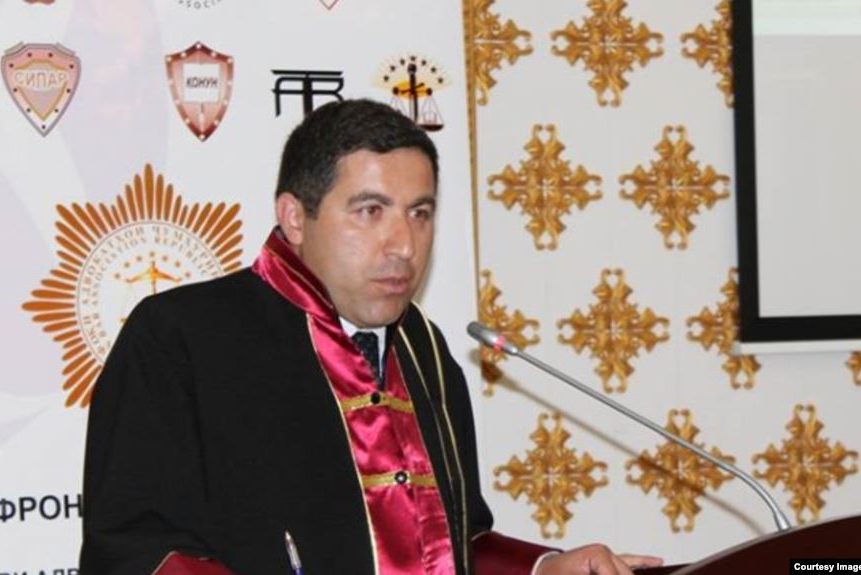
Today, the ICJ called on the authorities in Tajikistan to immediately release a prominent lawyer who is currently serving a sentence of imprisonment of 28 years on dubious charges.
The UN Working Group on Arbitrary Detention (WGAD) published a decision in Mr Yorov’s case on (date), finding that “the trials of Mr. Yorov were carried out in total disregard for the guarantees encapsulated in article 14 of the Covenant, being of such gravity as to give the deprivation of liberty of Mr Yorov an arbitrary character […].”
The Working Group recommended that the government remedy the situation of Yorov without delay and to this end “release Mr. Yorov immediately and accord him an enforceable right to compensation and other reparations, in accordance with international law”.
The ICJ has previously expressed concern that Buzurgmehr Yorov’s conviction may constitute a reprisal for his defense work in high-profile political trials in connection with his representation of thirteen leaders of the Islamic Renaissance Party of Tajikistan (IRPT).
The ICJ earlier expressed concerns at the conviction of the lawyer to a 28 year sentence in prison, which is based on clearly improper charges related to the defense of his clients.
The ICJ welcomes the decision of the WGAD and calls on the Tajikistan authorities to fully implement the decision and to take all necessary measures to protect lawyer Yorov, his family and his lawyers against any threats to their security, or any intimidation, hindrance, harassment or improper interference with their performance of their professional functions as lawyers.
In this regard, the ICJ notes recent protests by dozens of individuals who took part in a rally against Yorov in front of the representative offices of the United Nations and the European Union in Tajikistan, soon after the decision of the WGAD.
Posters of the demonstrators called on the UN High Commissioner of Human Rights to “take her hands off Tajikistan” and named organisations that had defended Mr Yorov or brought the petition on behalf of Yorov to the UN WGAD.
In this context, it is imperative that the Tajikistan government immediately publicly affirm the legitimacy of the decision of the WGAD and make clear its commitment to complying with it, the ICJ underlined.
Background
Buzurgmekhr Yorov was arrested two years ago on 28 September 2015, on charges of “fraud” and “forgery of documents.” Later, he was accused of violating three more articles of the Criminal Code, including in relation to alleged “public calls for extremist activity.”
On 6 October 2016, The Dushanbe City Court sentenced Yorov to 23 years imprisonment in a strict regime prison.
In March 2017, Yorov was sentenced to an additional two years’ deprivation of liberty for “contempt of court and insulting the representative of power.” In August 2017, he received a further three years sentence on charges of “insulting the president.”
The ICJ has, on a number of occasions, expressed its serious concerns over the arrest and conviction of Buzurgmehr Yorov and other lawyers in Tajikistan.
On 24 May 2019, the UN Working Group on Arbitrary Detention, a group of independent experts established in 1991 whose members are appointed by the UN Human Rights Council, published an Opinion finding a number of violations of human rights of Yorov protected under the International Covenant on Civil and Political Rights and recommended as a remedy his immediate release, payment of compensation or other reparation and conducting an investigation into the violation of Yorov’s rights.
The UN Basic Principles on the Role of Lawyers require that the Governments ensure that lawyers “are able to perform all of their professional functions without intimidation, hindrance, harassment or improper interference ”. Under these Principles “where the security of lawyers is threatened as a result of discharging their functions, they shall be adequately safeguarded by the authorities.” The right to “offer and provide professionally qualified legal assistance or other relevant advice and assistance in defending human rights and fundamental freedoms” is guaranteed by the Declaration on the Right and Responsibility of Individuals, Groups and Organs of Society to Promote and Protect Universally Recognized Human Rights and Fundamental Freedoms (Article 9.3(c)).