Feb 5, 2016 | News
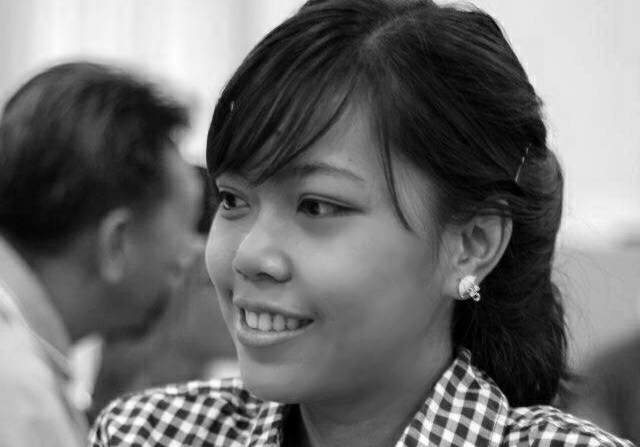
The ICJ today called on the Royal Thai Government to immediately drop criminal proceedings against human rights lawyer Sirikan Charoensiri.
On 2 February 2016, Sirikan Charoensiri received two summons to appear at the Chanasongkram Police Station on 9 February 2016 to be charged with two offences under the Criminal Code of Thailand: “giving false information regarding a criminal offence” and “refusing to comply with the order of an official”.
Such charges could result in punishment of up to two years’ imprisonment.
“The charges against Sirikan Charoensiri apparently relate to her efforts to protect the legal and human rights of her clients, students who never should have faced arrest or criminal proceedings for peacefully exercising their freedoms of expression and assembly in the first place,” said Matt Pollard of the ICJ’s Centre for the Independence of Judges and Lawyers.
“Prosecuting Sirikan Charoensiri for her efforts to defend human rights is totally unacceptable and will only put Thailand further in violation of its international obligations,” he added.
The charges appear to relate to the circumstances surrounding Sirikan Charoensiri’s provision of legal aid to 14 students who were arrested on 26 June 2015 after carrying out peaceful protests calling for democracy and an end to military rule.
Although the precise basis for the changes is not set out in the summonses, the complainant is named as Pol. Col. Suriya Chamnongchok, a police officer involved in the investigation of the 14 students.
Sirikan Charoensiri, a lawyer with Thai Lawyers for Human Rights (TLHR), has provided legal aid to many individuals, including activists and human rights defenders, since military rule was imposed in May 2014.
The ICJ first expressed concern about the Government’s targeting of Sirikan Charoensiri on 2 July 2015, after the Royal Thai Police threatened Sirikan Charoensiri with legal action, publically announced they were considering charging her with a crime, and visited her home and questioned her family.
These threats and harassment, like the currently pending charges, appeared to be in retaliation for her having refused consent for police to search her car after the students’ court hearing, and for having filed a complaint with the police when they proceeded to impound it.
The ICJ has brought the case to the attention of the United Nations Special Rapporteurs on the Independence of Judges and Lawyers, and on the Situation of Human Rights Defenders.
The situation of human rights in Thailand will be examined by the UN Human Rights Council in May 2016, as part of the Council’s Universal Periodic Review of all States.
“Ahead of Thailand’s human rights review by the United Nations in May, and against the background of the tabled ‘roadmap’ towards democratic rule, the need for the Royal Thai Government to restore respect for human rights only grows more urgent by the day,” said Pollard.
Contact
In Bangkok: Kingsley Abbott, International Legal Adviser for Southeast Asia, t +66 94 470 1345 ; e: kingsley.abbott(a)icj.org
In Geneva: Matt Pollard, ICJ Senior Legal Adviser, t: +41 22 979 38 12 ; e: matt.pollard(a)icj.org
Background
The International Covenant on Civil and Political Rights (ICCPR), to which Thailand is a Party, guarantees the right to peaceful assembly; the right to freedom of expression; the prohibition of arbitrary arrest or detention; the right to a fair and public hearing by a competent, independent and impartial tribunal established by law (including the right of prompt access to a lawyer and precluding jurisdiction of military courts over civilians in circumstances such as these); and the prohibition of arbitrary or unlawful interference with privacy, family, home and correspondence (which includes arbitrary searches or seizures).
The UN Declaration on Human Rights Defenders affirms the right of everyone peacefully to oppose human rights violations. It prohibits retaliation, threats and other harassment against anyone who takes peaceful action against human rights violations, both within and beyond the exercise of their professional duties. It protects the right of persons to file formal complaints about alleged violations of rights. The UN Basic Principles on the Role of Lawyers provide that governments are to ensure that lawyers are able to perform their professional functions without intimidation, hindrance, harassment or improper interference.
Thailand-Sirikan Charoensiri-News-Press releases-2016-THA (full text in PDF, Thai)
Feb 5, 2016 | News
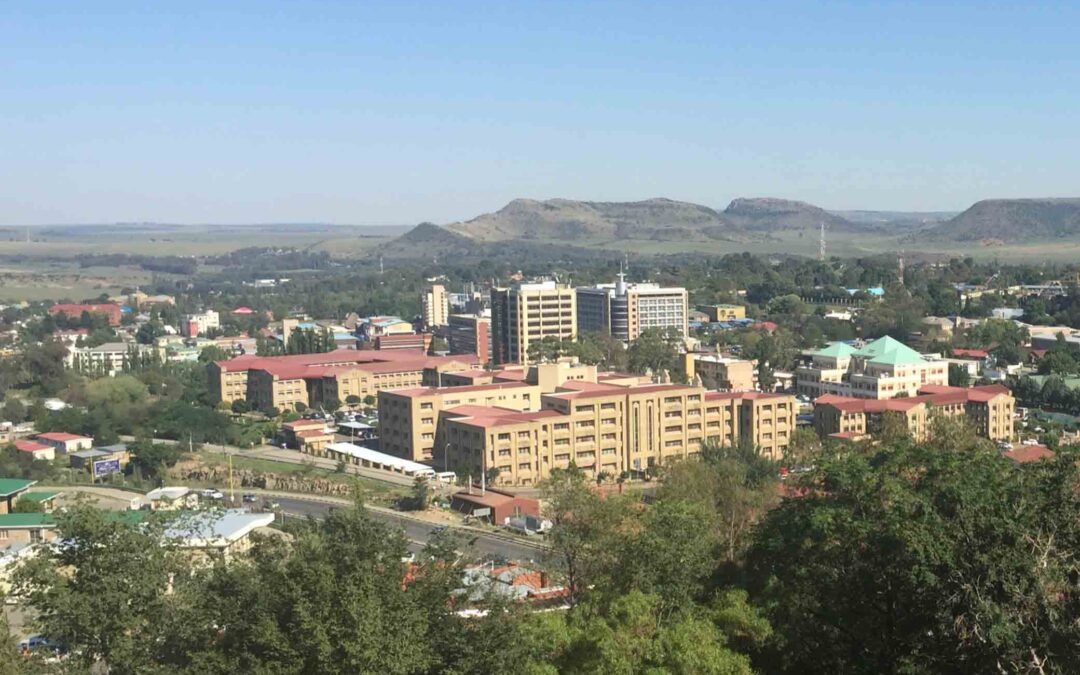
The ICJ is monitoring the ongoing trial under court martial of the 23 members of the Lesotho Defence Forces in the case The King vs Brigadier Mareka and 22 Others.
The Court Martial was convened through a government order issued and signed by the Minister of Defence and National Security Hon Tseliso Mokhosi on 13 August 2015.
Under the convening order, Brigadier Mareka and 22 others were generally accused of charges related to planning and or involvement in mutiny and violence.
The convening order also identified the names of the members of the court martial as well as the prosecuting authority at such court martial.
The court martial raises issues around observance of human rights, the rule of law and good governance in Lesotho.
Its significance is reflected in the fact that the Southern African Development Community (SADC), an inter-governmental organization, is also seized with the matter as part of its mandate under the SADC Organ on Politics, Defence and Security Cooperation, and directed the convening of a SADC supported Commission of Inquiry into the issues related to the court martial.
The subsequently-established Commission of Inquiry has completed its work and filed its report with the SADC Organ on Politics, Defence and Security Cooperation and the Prime Minister of Lesotho.
The report is yet to be made public and is planned to be released on the 8th February 2016.
The ICJ will particularly monitor the consistency of the Court Martial trial with international fair trial standards, both in terms of the conduct of proceedings, and the independence and impartiality of the tribunal including in light of the manner of selection of the Court Martial members, in which a number of junior soldiers were promoted in rank in order to justify their presiding in a disciplinary case over their superiors.
In particular the promotion of the President of the Court Martial Major General Letsoela seems to have been done to facilitate that he as a junior officer sits to determine a case involving Brigadier Mareka and another brigadier who ordinarily are his superiors in terms of rank.
The ICJ will also monitor whether the Court Martial and investigative authorities act in accordance with international standards in responding to the credible allegations of human rights violations committed against Brigadier Mareka and 22 others.
The allegations include prolonged incommunicado detention, torture, inhuman and other degrading treatment while in custody, being inhibited from fully consulting with and briefing their legal representatives, and defiance of High Court orders by the Lesotho Defence Forces including that the soldiers should be detained in open prison and not a military detention facility and should not be kept in leg irons.
Contact
Arnold Tsunga, ICJ’s Africa Director, t: +277 16405926 ; e: arnold.tsunga(a)icj.org
LESOTHO-Brig Mareka and 22 Others-News-Web story-2016-ENG (full story in PDF)
Jan 29, 2016 | News
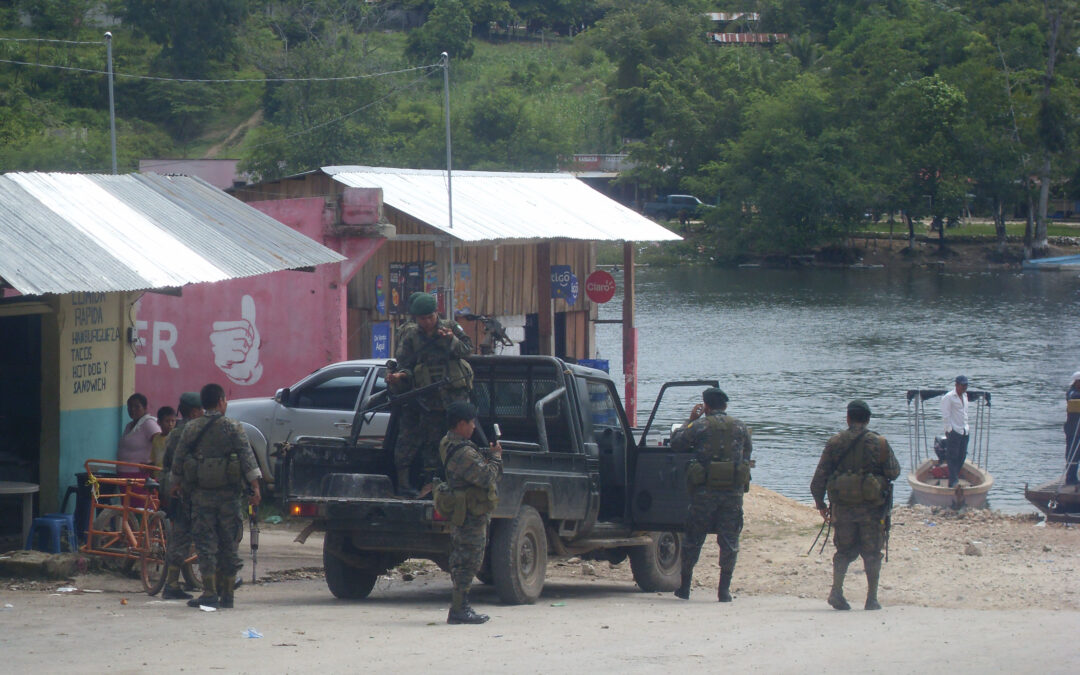
La CIJ expresa su preocupación frente a una nueva denuncia abusiva de la Fundación contra el Terrorismo, esta vez contra el Director de la CIJ para Centroamérica y un consultor que contribuye con el Bufete de Derechos Humanos, y contra el Director de Centro de Acción Legal, Ambiental y Social.
Esta denuncia se suma a otras en contra de abogados y abogadas de Guatemala. A través de querellas y acusaciones falsas, esta Fundación pretende afectar la función que estos profesionales cumplen como defensores de los derechos humanos.
Estas denuncias falsas son parte de una campaña iniciada hace más de un año y que ha querido afectar a más de cien personas, a quienes la Fundación contra el Terrorismo ha calificado como terroristas y guerrilleros (as), sin aportar pruebas.
Efectivamente se han presentado denuncias contra funcionarios y ex funcionarios del Ministerio Público, como la ex Fiscal General Claudia Paz y Paz y la actual Fiscal General Thelma Aldana, el Fiscal de Derechos Humanos o en contra de jueces y juezas del Organismo Judicial que ejercen su función en forma independiente, promoviendo un discurso de odio en contra de estas personas que actúan como defensores y defensoras de derechos humanos.
Ante esto hechos, la CIJ demanda:
- Que el Estado de Guatemala, por medio de las autoridades correspondientes, inicie una investigación exhaustiva e imparcial acerca de las actividades que realiza la Fundación contra el Terrorismo sobre todo, que investigue el origen de aquellas actividades que dirige en contra de defensores y defensoras de Derechos Humanos;
- Que el Estado de Guatemala, por medio de las autoridades correspondientes, brinde la protección debida a defensores y defensoras de derechos humanos;
- Que una vez finalizada la investigación el Estado de Guatemala, a través de las autoridades y mecanismos correspondientes, adopte las medidas necesarias de acuerdo a derecho con respecto a la Fundación contra el Terrorismo y su Director, por llevar a cabo campañas de odio en contra de defensores y defensoras de derechos humanos.
Dec 18, 2015 | Events, News
Today the ICJ held a round table “Organisation and operation of the Legal Profession: International Comparative Perspective” in Dushanbe, Tajikistan.
The ICJ invited experts to speak about comparative experiences from their countries to inform the national debate about the reform of the legal profession currently underway in Tajikistan.
Experts contributing to the discussion included: Tamara Morschakova, an ICJ Commissioner and former Justice of the Constitutional Court of the Russian Federation; Olga Swartz, a legal scholar from the Russian Federation; Daniyar Kanafin, a lawyer from Kazakhstan; Gulniza Kozhomova, President of the Bar Association of the Kyrgyz Republic; Almaz Osmanova, Member of the Board of the Bishkek Bar Association (Kyrgyz Republic); Jeroen Brower, Chair of the Ethics Commission of the Dutch Bar Association; and lawyers and other stakeholders from Tajikistan.
Participants discussed the principles and practice of the independence and self-governance of bar associations, as well as other issues of significance for the independence of lawyers, including the qualification process and disciplinary action.
Programme of the event in English and in Russian:
Tajikistan_roundtable_ agenda_Eng (PDF, English)
Tajikistan_roundtable_ agenda_Rus (PDF, Russian)
Dec 17, 2015 | News, Publications, Reports
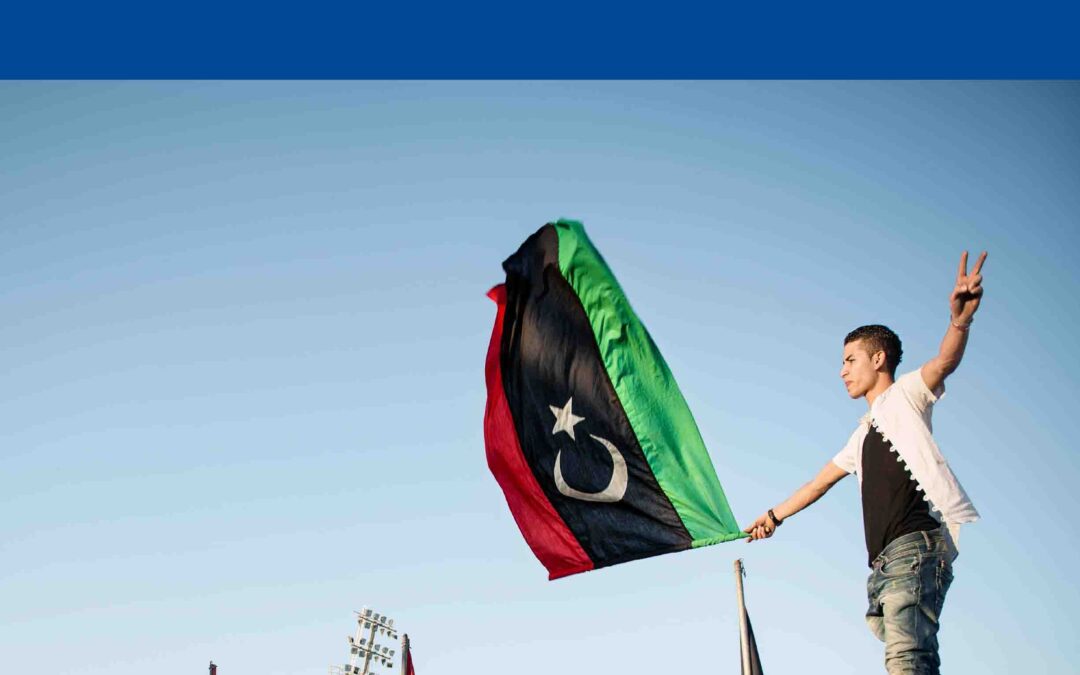
With the signing of the political agreement on a national unity government today, the next step in Libya’s transition will be to ensure that its new Constitution fully conforms to international rule of law and human rights standards, the ICJ said today.
The statement came as the ICJ released its new report The Draft Libyan Constitution: Procedural Deficiencies, Substantive Flaws.
In the report, the ICJ calls on the Libyan Constitution Drafting Assembly (CDA) to substantially revise the Draft Constitution published in October with a view to ensuring its full compliance with Libya’s obligations under international human rights law and international standards.
Libyan authorities, including the CDA, should also put in place effective mechanisms to ensure that the drafting process is inclusive, participatory, and fully reflects the views of a broad range of stakeholders, including civil society and minority groups.
The report concludes that the Draft Constitution, in many key respects, does not conform to Libya’s obligations under international human rights law or to international rule of law standards.
“The new Constitution provides a crucial opportunity to depart from decades of authoritarianism under Moammar Ghadafi’s regime. It must therefore provide for a strong foundation upon which the rule of law, including the separation of powers, the independence of the judiciary and civilian oversight over military and armed groups, can be established and upheld,” said Said Benarbia, Director of the ICJ MENA programme.
The Draft Constitution should also be amended to provide for a comprehensive set of human rights and protections that fully accord with international human rights law, including provisions relating to non-discrimination, the right to life, the right to liberty and security, the prohibition on torture and other cruel, inhuman or degrading treatment or punishment, protections for minorities, the right to freedom of thought, conscience and religion, fair trial rights, and a range of economic, social and cultural rights.
“The Libyan Constitution must at a minimum conform to the definition and scope of the rights contained within the human rights treaties to which Libya is a state party. Any scope for limitation of rights must conform to the criteria for such limitations under international law and, in particular, only as are provided for by law, are proportionate, and are demonstrably necessary in a free and democratic society,” Benarbia added.
Contact:
Doireann Ansbro, Associate Legal Advisor of the ICJ Middle East and North Africa Programme, tel: +216 71 841 701, email: doireann.ansbro(a)icj.org
Libya-Draft Constitution Flaws Deficiencies-Publications-Reports-2015-ENG (full report in PDF, English)
Libya-Constitution Flaws Report-News-Press releases-2015-ARA (full press release in Arabic, PDF)
Libya-Draft Constitution Flaws Deficiencies-Publications-Reports-2015-ARA (full report in PDF, Arabic)