The suspension of the President and Vice-President of Poland’s Constitutional Tribunal, carried out with the involvement of the police, and the refusal of the President of Poland to receive the oath of five judges elected by the Sejm, have further deepened the crisis over the Tribunal, the International Commission of Jurists (ICJ) said today.
The ICJ calls on Poland’s State institutions to seek solutions to the present Constitutional crisis that comply fully with the rule of law, including the principle of the independence of the judiciary.
On 5 May 2026, the European Court of Human Rights (ECtHR) issued interim measures requiring Poland to ensure that its authorities “refrain from hindering the taking up and exercise of judicial duties” by four judges that had been elected by the Sejm, the lower chamber of the Parliament, on 13 March 2026, namely Marcin Dziurda, Anna Korwin-Piotrowska, Krystian Markiewicz and Maciej Taborowski. Poland’s President, Karol Nawrocki, had refused to officiate the oath of these elected judges.
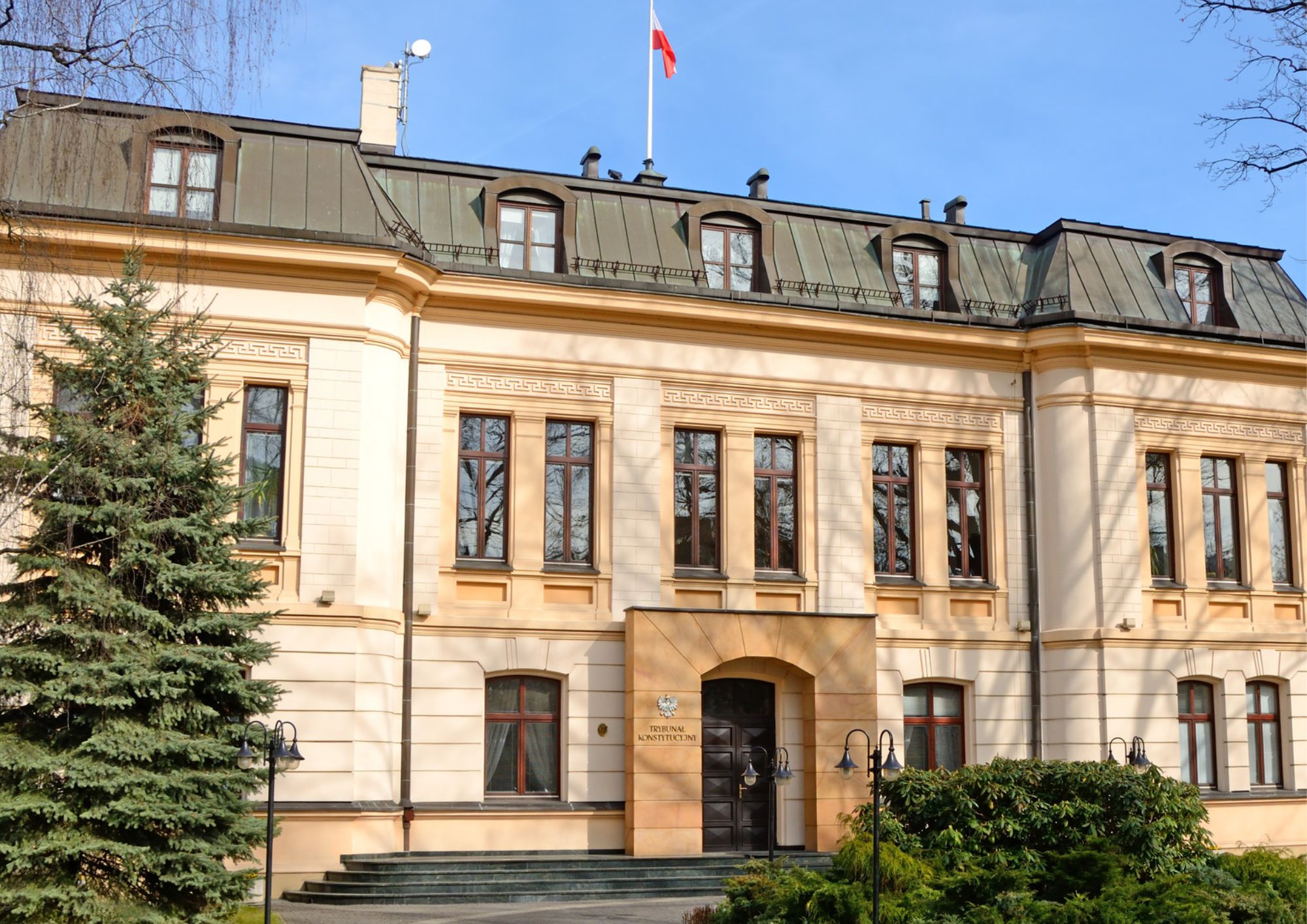
On 30 October 2026, Anna Korwin-Piotrowska, elected by the Sejm as one of the new judges, ordered the suspension of the President of the Constitutional Tribunal, Bogdan Święczkowski, and its Vice-President Bartłomiej Sochański, from their duties for one month. Police officers arrived at the Tribunal on the same day. Overnight, President Nawrocki entered the Tribunal building and, according to reports, told the newly elected judges that they could not be considered judges of the Tribunal. Bogdan Święczkowski and six other judges have declared the orders unlawful, while Anna Korwin-Piotrowska has assumed the role of acting head of the Tribunal.
“The refusal of the President of the Republic to receive the oath of judges elected by the Sejm violates international standards and is contrary to the interim measures indicated by the European Court of Human Rights and to rule of law,” said ICJ Secretary-General Santiago Canton. “At the same time, the suspension of the President and Vice-President of the Tribunal without a fair and appropriate procedure established by law, carried out with the involvement of the police, contravenes international standards on the independence of the judiciary, including the UN Basic Principles on the Independence of the Judiciary.”
The ICJ calls on the President of the Republic, all responsible Government officials, the Sejm and the judges of the Tribunal to refrain from any actions concerning the composition or leadership of the Tribunal taken outside of regular legal procedure. The police must not be used to give effect to measures concerning the leadership of the Tribunal, which is contrary to international standards on the independence of the judiciary, and criminal and disciplinary proceedings must respect all the guarantees of a fair trial and must never be used as a means to change its composition.
“The responsible Polish authorities must act to ensure that the Tribunal does not become a battlefield for political rivals, resolve the crisis only through lawful means and proper constitutional processes, and allow the Tribunal to operate without threats or interference,” Canton added.
The ICJ also calls on the President of the Republic to officiate at the oath of office of the judges elected by the Sejm without undue delay, on the Government to fulfil its legal duty of publishing the judgments of the Tribunal, as the Council of Europe’s Venice Commission has recommended, and on all authorities to comply fully with the judgments of the Court of Justice of the European Union and the ECtHR concerning the Tribunal and with the interim measure indicated by the ECtHR.
The ICJ recalls that the Court of Justice of the European Union (CJEU) held on 18 December 2025 that the Tribunal did not meet the requirements of an independent and impartial tribunal previously established by law, based on irregularities in the procedures for the appointment of three of its members in December 2015 and of its President in December 2016. In a case concerning a panel of the Tribunal that included one of those judges, the ECtHR found a violation of the right to a tribunal established by law.
While these judgments should be fully implemented, preventing judges elected by the Sejm from taking up their duties, or suspending the President and Vice-President of the Tribunal through orders carried out with the involvement of the police, will do little to resolve the situation. As the Venice Commission has stated, crippling the Tribunal “will only give a different ruling political majority in future arguments to do the same”.
Background
Since March 2026 the Sejm has elected eight judges. Under the law on the status of the Tribunal’s judges, the judges must take their oath before the President of the Republic. President Nawrocki has received the oath of three of them, but refused to receive it from the other five. His office argues that by receiving the oath the President confirms the validity of the election, and has said that one of the five does not meet a formal requirement for the office. The five took the oath in the Sejm and submitted a notarized copy to the President’s office, a form whose validity the President and the leadership of the Tribunal dispute. These judges have not been assigned cases.
On 30 October 2026, Anna Korwin-Piotrowska, one of the judges whose oath the President of the Republic refused to receive, issued orders suspending the President of the Tribunal, Bogdan Święczkowski, and its Vice-President, Bartłomiej Sochański, from their duties for one month, stating that she acted as the judge with the longest judicial service. The orders refer to a provision of the Law on the Organisation of Common Courts and to a “state of higher constitutional necessity”. According to the Warsaw police, officers arrived at the Tribunal after she reported possible threats to the safety of judges and staff. On the same day, the Prosecutor General and Minister of Justice, Waldemar Żurek, submitted to the Tribunal five motions seeking its consent to initiate criminal proceedings against its President and Vice-President. Bogdan Święczkowski was prevented from entering the building that evening and again on 1 November.
President Karol Nawrocki entered the building that night with the First President of the Supreme Court. His office described the events as a forcible takeover of a constitutional organ of the State, and has since announced that it intends to file a criminal complaint against three of the newly elected judges for an alleged violation of the President’s bodily inviolability. Judge Korwin-Piotrowska has said that the President “pushed her away”. Judge Święczkowski and six other judges declared the measures of 30 October unlawful, and the two groups have issued conflicting orders.
In Xero Flor w Polsce sp. z o.o. v. Poland (2021), the European Court of Human Rights found a violation of the right to a “tribunal established by law” because a panel of the Tribunal had included one of the judges elected in December 2015. In Commission v Poland, the Court of Justice of the European Union held that the Tribunal did not meet the requirements of an independent and impartial tribunal previously established by law under Article 19(1) of the Treaty on European Union, on account of irregularities in the procedures for the appointment of three of its members in December 2015 and of its President in December 2016.
Since March 2024, the Government has failed to publish the Tribunal’s judgments. In July 2025, the Tribunal declared unconstitutional the laws adopted by the Sejm in 2024 to reform it. In its opinion of December 2024, the Council of Europe’s Venice Commission stated that the judgments of the Tribunal must be published without any further interference by the government, and that it could not support restoring the lawful composition of the Tribunal by completely renewing its membership. In a judgment of 12 May 2026, the Tribunal in its current composition held that the President was under no obligation to receive the oath of a person elected by the Sejm and the oath must be taken in the President’s physical presence. In its opinion of October 2026, the Venice Commission found that the President must receive the oath “without undue delay” and that his role is “a primarily ceremonial duty.” The Commission considered that judges may take office without his participation where he unlawfully refuses to administer the oath.
The ICJ has expressed concern about the independence of the Constitutional Tribunal since 2018, including in a statement to the UN Human Rights Council in June 2018, a joint statement in June 2021 and its submission to the Universal Periodic Review of Poland in 2022. In July 2018, it called for the immediate reinstatement of forcibly retired Supreme Court justices.
Applicable international standard
The UN Basic Principles on the Independence of the Judiciary provide:
“1. […] It is the duty of all governmental and other institutions to respect and observe the independence of the judiciary. […]
- Judges shall be subject to suspension or removal only for reasons of incapacity or behaviour that renders them unfit to discharge their duties.
- All disciplinary, suspension or removal proceedings shall be determined in accordance with established standards of judicial conduct.”
Article 14(1) of the International Covenant on Civil and Political Rights provides:
“[…] everyone shall be entitled to a fair and public hearing by a competent, independent and impartial tribunal established by law. […]”
The European Convention on Human Rights provides:
“Article 6(1): […] everyone is entitled to a fair and public hearing within a reasonable time by an independent and impartial tribunal established by law. […]
Article 34: […] The High Contracting Parties undertake not to hinder in any way the effective exercise of this right.
Article 46(1): The High Contracting Parties undertake to abide by the final judgment of the Court in any case to which they are parties.”