Apr 30, 2015 | News
The ICJ welcomes yesterday’s adoption, by the UN Working Group on Arbitrary Detention, of the Working Group’s “Basic Principles and Guidelines on Remedies and Procedures on the Right of Anyone Deprived of His or Her Liberty by Arrest or Detention to Bring Proceedings Before Court”.
Under its resolution 20/16 (2012), the UN Human Rights Council requested the Working Group to prepare draft basic principles and guidelines on habeas corpus. The Working Group set out a first draft set of principles and guidelines ahead of its global consultation on the subject in September 2014. From 2 to 5 February 2015, the Working Group met to continue its elaboration of the Basic Principles and Guidelines, resulting in the adoption of a second draft. The Working Group adopted its final iteration of the document at the conclusion of its session on 29 April 2015. The Basic Principles and Guidelines will be presented to the Human Rights Council during the Council’s 30th regular session, to be held from 14 September to 2 October 2015.
The ICJ welcomes the Basic Principles and Guidelines as a means of assisting States to enhance, in law and in practice, respect for the right to habeas corpus. It especially welcomes certain aspects of the document, including:
- Paragraph 68, in which applicable qualifications are set out to any derogating measures to accommodate constraints on the application of some procedural elements of the right to habeas corpus;
- Principle 6 and Guideline 4 which reaffirm that habeas corpus petitions must be heard by courts that bear all characteristics of competence, independence and impartiality (paras 27, 70 and 72(a)), that competence includes the power to order immediate release if detention is fund to be arbitrary or unlawful (para 27), that immediate implementation of such orders is required (para 71(c)) and that courts must give reasoned and particularized decisions (para 71(d));
- Guideline 7, in which it is provided that individuals are entitled to take proceedings multiple times (paras 81 and 82), that expediency is required, including in cases of subsequent challenges, and especially in cases alleging, among other things, torture or ill-treatment (para 83) and that authorities remain obliged to ensure regular review of the continuing need for detention (para 84);
- Principle 9 and Guideline 8 concerning legal representation and legal aid;
- The clarifications in Principle 10 and Guideline that persons able to bring proceedings include counsel, family members or other interested parties, whether or not they have proof of the consent of the detainee (paras 34 and 92) and that no restrictions may be imposed on a detainee’s ability to contact such persons (para 35);
- The express recognition in Guideline 12 that information obtained by torture or other forms of ill-treatment may not be used in evidence;
- Guideline 13 concerning disclosure and limitations applicable to any non-disclosure of information on security or other grounds;
- Guideline 14, reflecting authorities’ obligation to justify the need and proportionality of detention;
- Principle 15 and Guideline 16 (on remedies), reflecting the overarching right to remedies and reparation (paras 43), the need for authorities to give immediate effect to an order for release (para 44) and the right to compensation, restitution, rehabilitation, satisfaction and guarantees of non-repetition (paras 109-112); and
- Principle 16 concerning the application of Article 9(4) of the International Covenant on Civil and Political Rights (ICCPR) alongside international humanitarian law (paras 45 and 47), the application of Article 9(4) to civilians in an international armed conflict (para 47), the application of habeas principles to prisoners of war (para 48), and the question of administrative detention or internment in the context of a non-international armed conflict (para 49).
The ICJ has engaged in all stages of the Working Group’s elaboration and consultations. It made written submissions in November 2013, April 2014 and March 2015. Its staff, Matt Pollard and Alex Conte, gave panel presentations at the September 2014 global consultation.

Apr 24, 2015 | News
The ICJ today called on the Egyptian authorities to ensure a prompt, impartial and effective investigation into the deaths of two lawyers, Imam Afifi and Karim Hamdi, who recently died while in police custody in Mataria police station.
The ICJ is deeply concerned that the deaths of Imam Afifi and Karim Hamdi while in police custody are part of a widespread and sustained campaign targeting hundreds of lawyers since 2013, including those defending political opponents of the regime and human rights activists, as well as lawyers exercising their rights to freedom of assembly and expression.
“The Egyptian authorities must effectively investigate and prosecute all those responsible for the alleged torture and death of Imam Afifi and Karim Hamdi while in police custody and must hold accountable any person responsible for wrongful conduct ,” said Said Benarbia, Director of the ICJ MENA Programme.
“The authorities must bring an end to their ongoing campaign of harassing and persecuting lawyers, including arbitrary arrests and prosecutions, for simply discharging their professional duties or for speaking out against human rights violations,” he added.
Under international standards, lawyers should be able to carry out their professional duties free from hindrance, intimidation, harassment or interference, says the ICJ.
They should not be identified with their clients or their clients’ causes or subject to arbitrary arrest and prosecutions as a result of the discharge of their functions.
Background:
On 10 April, Imam Afifi, a 63-year old lawyer, was assaulted and arrested in the Mataria neighborhood where a demonstration was taking place against the government.
He was detained in Mataria police station where he was allegedly subjected to torture, including a severe beating to his head.
On 11 April, he was transferred from the police station to Mataria hospital.
A medical report from the same day, to which the ICJ had access, indicates that Imam Afifi was admitted to the hospital with a massive trauma to the head. He died in hospital on 22 April.
On 22 February, another lawyer, Karim Hamdi, was arrested and questioned on suspicion of belonging to the Muslim Brotherhood, membership of which has been outlawed, and participating in an unauthorized demonstration against the government.
While in police custody in Mataria police station, he was reportedly severely beaten on his neck, chest and abdomen. He died two days later after being transferred to hospital.
Following a complaint by the Bar Association to the prosecutor’s office, two members of the National Security Agency were charged with torturing and murdering Karim Hamdi.
Additional information:
According to information available to the ICJ, attacks against lawyers since 2013 include the following:
On 23 April 2015, six lawyers were summoned for interrogation in relation to their participation in a demonstration on 9 March to protest against the death of Mr Karim Hamdi.
The lawyers also challenged the prosecutor’s decision to prohibit anyone from reporting on the investigation into Mr Hamdi’s case.
On 23 March 2015, human rights lawyer, Azza Soliman, was charged with breaching public order and security under the 2013 Demonstration Law after voluntarily providing testimony against police involved in the killing of Social People’s Alliance party activist, Shaimaa El Sabbagh, on 24 January 2015.
The Qasr El Nile Prosecution Office in Cairo subsequently changed her status from witness to defendant.
On 9 February 2015, a human rights lawyer, Ms Mahienour El Massry, was sentenced to two years imprisonment after she attended the El-Ramel police station in Alexandria, in March 2013, in order to defend demonstrators.
The charges against her included “insulting government employees in the performance of their duties”, “insulting representatives of the authorities” and “attempting to break into a police station”.
Three lawyers, Basma Zahran, Mahmoud Bilal and Oussama Al Mahdi, were referred for investigation, on 3 September 2014, for “disrupting and causing trouble” during trial proceedings for insisting that their client, the human rights activist Ahmed Douma, seated in a sound-proof glass cage, should be heard.
On 5 July 2013, Abdel Men’em Abdel Maqsoud was arrested while attempting to attend the interrogation of his clients, deputy Secretary General of the Muslim Brotherhood, Rachad Bayoumi, and Mohamed Saad Al Katanah.
He was detained before being released on bail on 2 September 2014.
Contact:
Alice Goodenough, Legal Adviser of the ICJ Middle East and North Africa Programme, t: 44 7815 570 834, e: alice.goodenough(a)icj.org
Nader Diab, Associate Legal Adviser of the ICJ Middle East and North Africa Programme, t: 41 229 793 804, e: nader.diab(a)icj.org
Egypt-Deaths of lawyers-News-Press release-2015-ARA (full text of Arabic version in PDF)

Apr 23, 2015 | News
The ICJ is concerned at the recent arrest of Swaziland High Court Judges Jacobus Annandale and Mpendulo Simelane, the High Court Registrar Fikile Nhlabatsi and the Minister of Justice Sibusiso Shongwe.
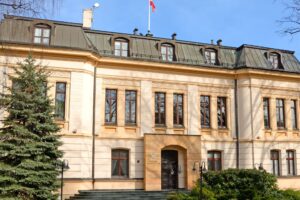
The four detainees appeared today before High Court Justice Qinisile Mabuza (photo).
Justice Minister Sibusiso Shongwe was denied bail and remains detained, while the other two High Court Judges and the registrar were released on bail.
The judges, registrar and Minister of Justice are all facing various charges related to corruption and obstructing the course of justice.
The ICJ is also aware that police are presently seeking to arrest Chief Justice Michael Ramodibedi, and that they have surrounded his place of residence.
The ICJ has received information alleging that the police have cut off the electricity and water and have actively prevented people from bringing food supplies to him and his family.
The ICJ urges the authorities in Swaziland to immediately investigate the situation of the Chief Justice and, if the allegations are substantiated, to immediately restore supply of essential services to the Chief Justices family, denied in violation of rights guaranteed under the Swaziland’s Constitution and its international legal obligations.
“The arrest and attempted arrest of several judges, and a High Court Registrar as in this case, invariably raises questions of separation of powers and the independence of the judiciary,” said Wilder Tayler Secretary General of the ICJ.
“The ICJ therefore calls on the authorities in Swaziland to conduct themselves with rigorous adherence to rule of law principles, the separation of powers between the executive and the judiciary. They must also do so with strict respect for international human rights law,” he added.
The ICJ emphasizes that the Chief Justice and the other judges are entitled as everyone else in Swaziland to freedom from arbitrary detention and the right to a fair trial guaranteed under international law.
These protections include the right to be informed the reasons for their arrest and the nature of any criminal charges, the right to representation by a lawyer of their choice and the right to be considered for bail if appropriate.
If no crime is alleged, but serious professional misconduct is suspected, then arrest and detention is inappropriate.
Additional information:
The ICJ has had longstanding concerns with the state of the independence of the judiciary and legal profession and the fair administration of the justice in Swaziland.
The ICJ has recently intervened in a case involving the conviction of prominent lawyer Thulani Maseko in an unfair trial.
For an ICJ analysis of the independence of the judiciary and legal profession in Swaziland, go here.
Contact:
Arnold Tsunga, Regional Director, ICJ’s Africa Programme, t: +27 731318411, e: arnold.tsunga(a)icj.org

Apr 20, 2015 | News
The ICJ is concerned at reports that a police official has purported to terminate a lawyer’s representation of a client against the client’s wishes, in violation of the right to fair trial and international standards on the independence and role of the legal profession.
A.J. Uchkempirov, the investigator of the City Department of Internal Affairs (the city police department) of Karakol City, reportedly issued a ruling removing lawyer Nurkyz Asanova from representation of her client, Mr Ishen Abdyrashev.
The ICJ is particularly concerned given that the removal of lawyer Asanova comes while she is representing Mr Abdyrashev in a case alleging that he was subjected to torture by police officers in detention, and subsequently detained at a police officer’s home and forced to carry out unpaid work for one and a half months.
On 29 December 2014, Ishen Abdyrashev, assisted by lawyer Asanova, complained about these events and a criminal investigation was initiated.
The investigation has now been completed and a criminal trial is underway.
On 3 April 2015, Abdrashev himself was charged with robbery, which he denies.
Lawyer Asanova also represents him in the robbery case.
On 14 April, investigator Uchkempirov issued a ruling purporting to remove her, despite Mr Abdyrashev’s opposition.
The purported basis for the ruling was that Lawyer Asanova was in some way interfering with the investigation of the case.
The investigator had no authority under Kyrgyz law to issue such a decision.
Under international standards, such a decision could in any event only be taken by an appropriately independent authority following a regular and fair procedure, which was clearly not the case here.
According to the UN Basic Principles on the Role of Lawyers, for instance, “[n]o court or administrative authority before whom the right to counsel is recognized shall refuse to recognize the right of a lawyer to appear before it for his or her client unless that lawyer has been disqualified in accordance with national law and practice and in conformity with these principles” (Article 19).
This is an important guarantee for the right under international law of every person to be represented by a lawyer of their own choice, as protected by the International Covenant on Civil and Political Rights and recognized by the Basic Principles.
The Principles also recognize, further to the right to fair trial under the Covenant, that it is the obligation of the government to guarantee that lawyers are able to pereform their functions without “intimidation, hindrance, harassment or improper interference” and that they are able to consult with their clients both within their own country and abroad.
The investigator’s decision should be declared void and lawyer Nurkyz Asanova’s right to represent, to communicate with and to visit her client, should be fully recognized and respected.
Furthermore, the authorities must take steps to ensure that there is no further unlawful interference with Ishen Abdyrashev’s right to the lawyer of his choice.
Kyrgysztan-Lawyer Asanova_statement-News-web story-2015-RUS (full text in PDF)
Apr 14, 2015 | News
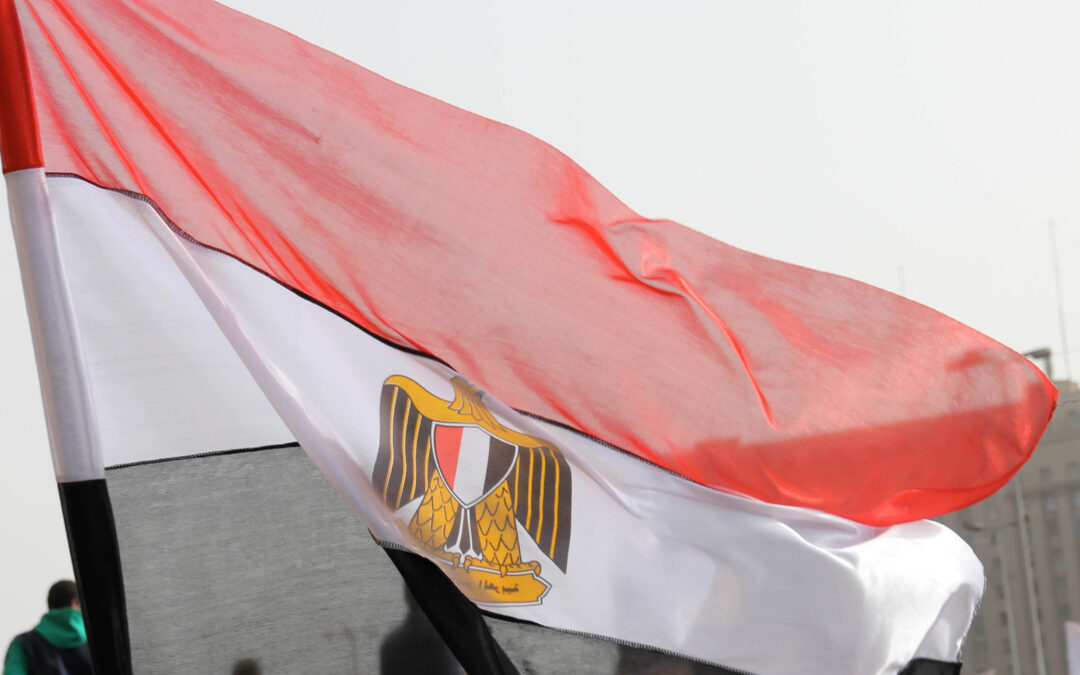
The ICJ is deeply concerned over the decision of the High Judicial Council and the President of the Cairo Court of Appeal to investigate two judges with a view to referring them to the disciplinary Council.
Media reports have indicated that Assem Abdel Jabar, deputy president of the Cassation Court, and Hicham Raouf, a judge in Cairo’s Appeal Court, are being investigated over their individual participation, together with other leading lawyers and legal experts, in a workshop organized by an Egyptian organization, United Group, to discuss and propose new legislation on the prevention of torture.
According to information available to the ICJ, the two judges have so far not been formally notified of any charges against them and have received no information about the allegations on which they are based.
The actions against these judges continue a pattern of intimidation and attempted silencing of judges who are seen by authorities as not aligning themselves with government objectives.
The apparent investigation is only the latest in a string of cases where judges have been subject to arbitrary disciplinary proceedings for legitimately exercising their rights to freedom of expression and assembly.
On 14 March 2015, the Disciplinary Council forced 31 judges into retirement for signing a statement, on 24 July 2013, which criticized the “attack on the constitutional legitimacy and the ouster of the legitimate president that was elected”.
The disciplinary proceedings against these judges were marred with violations of due process rights.
The judges were not adequately informed of the date and location of the hearings, defence witnesses were not called and requests by the judges that the hearings be public were disregarded.
On 4 April 2015, a disciplinary hearing took place against Zakaria Abdelaziz, former president of Egypt’s Judges Club and one of the leading advocates for judicial independence in Egypt.
The charges alleged “involvement in politics” and “breaking into the State Security Building during a demonstration on 5 March 2011”.
According to information available to the ICJ, the case files were not made available to Zakaria Abdeaziz until the first hearing despite repeated requests to obtain them.
Under international human rights law and standards, judges are guaranteed the right to freedom of belief, association, assembly and expression, including by commenting on matters of public concern and matters pertaining to the rule of law and human rights situation in a country.
“Instead of subjecting judges to arbitrary proceedings for lawfully exercising their rights, the Egyptian authorities should stop its sustained campaign to muzzle judges who are seen as not friendly to the authorities,“ said Said Benarbia, Director of the ICJ MENA programme. “The Egyptian authorities must reinstate all judges who were removed from office solely for exercising their rights to freedom of expression and assembly and drop all charges against those currently subject to disciplinary proceedings for charges stemming from the exercise of these rights.”
Contact:
Alice Goodenough, Legal Adviser of the ICJ Middle East and North Africa Programme, t: +44 7815 570 834, e-mail: alice.goodenough(a)icj.org
Nader Diab, Associate Legal Adviser of the ICJ Middle East and North Africa Programme, t: +41 229 793 804, e-mail: nader.diab(a)icj.org
Egypt-Judges harassed-News-web story-2015-ARA (full text in PDF)