Feb 26, 2013 | Advocacy, Non-legal submissions
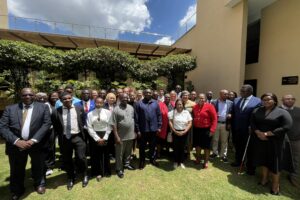
The ICJ joined 14 other NGOs in expressing deep concern over the exclusion of civil society from the consultation process on the UN human rights treaty bodies strengthening process.
In a statement delivered by the International Service for Human Rights during an informal hearing for civil society on 26 February 2013, the continued exclusion of the Geneva-based NGO Alkarama, and the lack of transparency by which this decision was made, was criticised.
Signatories to the statement urged the facilitators of the process and UN member States to enable independent civil society to contribute to the treaty body strengthening process.
TBSP-Alkarama-NonLegalSubmission-2013 (download statement in full)
Nov 27, 2012 | News
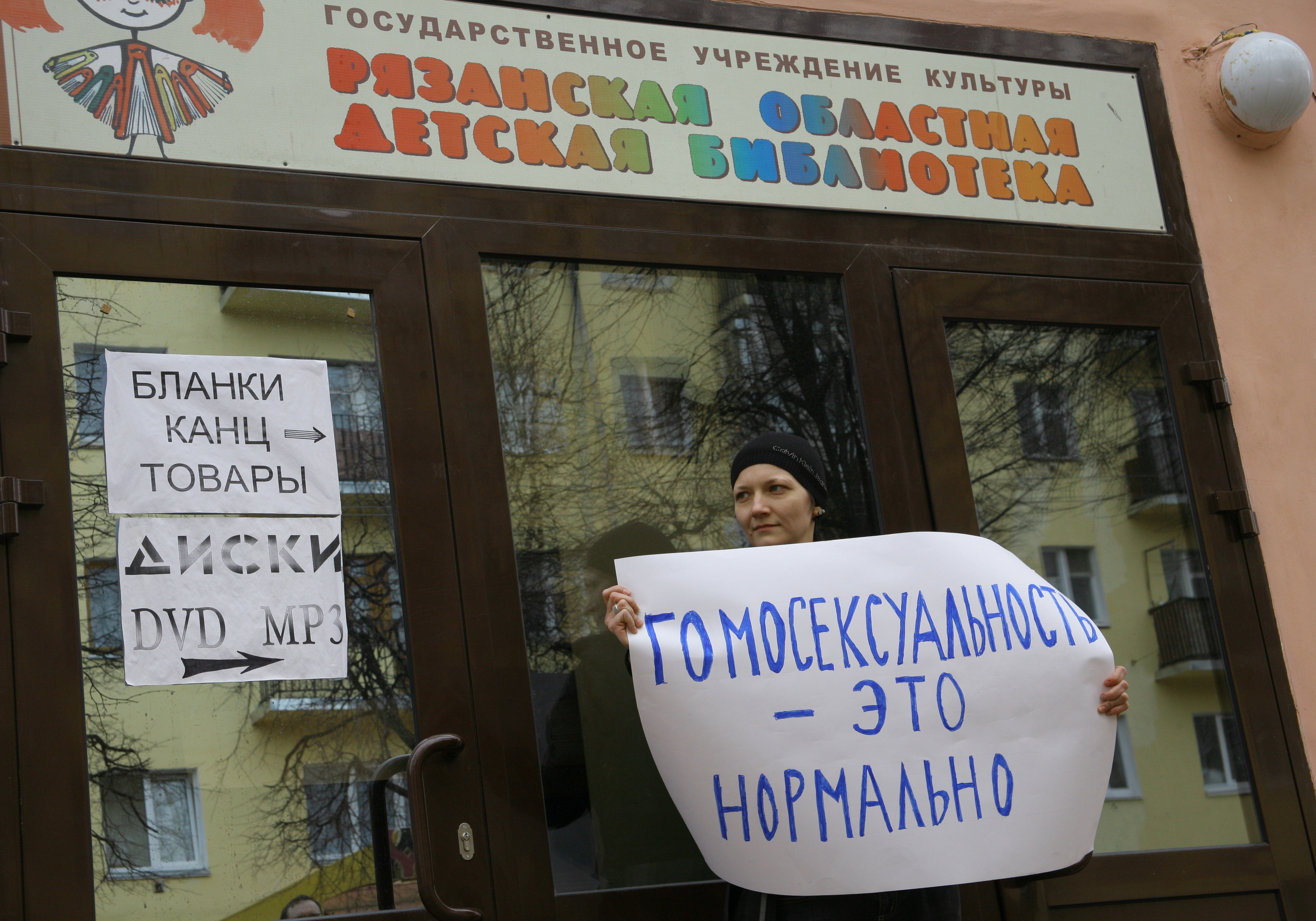 The ICJ and ILGA-Europe welcome the historic decision by the UN Human Rights Committee in Irina Fedotova v. Russian Federation, which was released on 19 November.
“We are very pleased with the Committee’s Views in this case and in particular with the recognition that expressing opinions and information about same-sex sexual orientation cannot be limited in the name of public morality,” said Alli Jernow, ICJ Senior Legal Advisor.
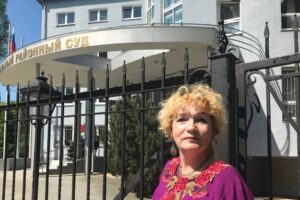
In March 2009, Fedotova had displayed posters declaring “Homosexuality is normal” and “I am proud of my homosexuality” near a secondary school building in Ryazan.
The Ryazan Law on Administrative Offences prohibited “public actions aimed at propaganda of homosexuality among minors.” She was arrested, convicted, and ordered to pay a fine of 1,500 roubles.
Fedotova lost her appeal to the district court and the Constitutional Court ruled that the prohibition of information that was “capable of harming health, morals and spiritual development, as well as forming perverted conceptions about equal social value of traditional and non-traditional family relations” could not be considered a violation of the right to freedom of expression.
But the Human Rights Committee held that Russia had violated Fedotova’s rights to freedom of expression and to be free from discrimination.
These rights are guaranteed by articles 19 and 26 of the International Covenant on Civil and Political Rights.
“The decision is especially important because it effectively reverses the position taken by the Committee in the 1982 case of Hertzberg v. Finland, which upheld a ban similar to the one in the Fedotova case,” Jernow added.
The Human Rights Committee ordered the Russian Federation to reimburse the fine paid by Fedotova as well as her legal costs and to ensure that the relevant provisions of domestic law are made compatible with articles 19 and 26 of the Covenant.
Since the Ryazan law was adopted, a number of other regions in Russia have adopted legislation banning “homosexual propaganda.” Activists across the country, including in St. Petersburg, have been arrested and convicted under such laws.
In its decision, the Human Rights Committee emphasized that limitations for the purpose of public morals, which are derived “from many social, philosophical and religious traditions,” could not be based exclusively on a single tradition.
Furthermore, any such limitations “must be understood in light of universality of human rights and the principle of non-discrimination.” The Committee recalled that the “prohibition against discrimination under article 26 comprises also discrimination based on sexual orientation.”
The Committee stated that Russia “has not shown that a restriction on the right to freedom of expression in relation to ‘propaganda of homosexuality’ – as opposed to propaganda of heterosexuality or sexuality generally – among minors is based on reasonable and objective criteria.”
Fedotova’s actions were not aimed at involving minors in any particular sexual activity. Rather, “she was giving expression to her sexual identity and seeking understanding for it.”
“We hope this landmark decision will send a strong signal to Russia to reconsider such discriminatory steps and to abandon any legislative proposals criminalising ‘homosexual propaganda’,” said Evelyne Paradis, Executive Director of ILGA-Europe.
The ICJ had submitted a legal opinion, which the Committee excerpted in detail, arguing that the law was discriminatory and that limitations on rights could not discriminate. Earlier this year, the ICJ and ILGA-Europe published a briefing paper titled “Homosexual Propaganda Bans: Analysis and Recommendations.”
Contact:
Alli Jernow, ICJ Senior Legal Advisor, t + 41 22 979 3823
Juris Lavrikovs, ILGA-Europe, t + 32 2 609 54 16 and + 32 496 708 375
Nov 21, 2012 | News
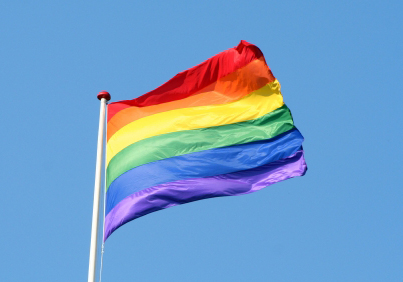 The ICJ and other human rights groups celebrate historic first condemnation of killings based on gender identity.
An international coalition of organizations dedicated to human rights celebrated yesterday’s historic vote in the Third Committee of the United Nations General Assembly to pass resolution A/C.3/67/L.36 condemning extrajudicial, summary or arbitrary executions.
The vote reversed the events of 2010 when the same body voted to strip the resolution of reference to “sexual orientation.”
The UNGA also expanded upon its commitment to the universality of human rights by including “gender identity” for the first time in the resolution’s history.
The resolution, which is introduced biennially in the Third Committee, urges States to protect the right to life of all people, including by calling upon states to investigate killings based on discriminatory grounds.
It was introduced by the Government of Sweden and co-sponsored by 34 states from around the world.
For the past 12 years, this resolution has urged States “to investigate promptly and thoroughly all killings, including… all killings committed for any discriminatory reason, including sexual orientation.”
Apart from Human Rights Council resolution 17/19, it is the only UN resolution to make specific reference to sexual orientation.
This year, the term “gender identity” was added to the list of categories vulnerable to extrajudicial killings.
At Tuesday’s session, the United Arab Emirates, speaking on behalf of the Organization of Islamic Cooperation, presented an amendment that would have stripped the resolution of reference to “sexual orientation and gender identity” and substituted “or for any other reason.”
The UAE proposal was rejected in a vote with 44 votes in favor, 86 against, and 31 abstentions and 32 absent.
Another failed effort, led by the Holy See, would have stripped all specific references to groups at high risk for execution; however it was never formally introduced.
The Third Committee also retained language expressing “deep concern” over the continuing instances of arbitrary killing resulting from the use of capital punishment in a manner that violates international law, which some States led by Singapore attempted to have deleted. The Singapore proposal was rejected in a vote with 50 votes in favor, 78 against, and 37 abstentions and 30 absent.
The full resolution passed with 108 votes in favor, 1 against, 65 abstentions, and 19 absent.
Many governments, including Brazil, the United States and South Africa, among others, spoke out to condemn the proposed amendment to remove reference to sexual orientation and gender identity.
The Government of Japan ended the silence that has often characterized the Asian Group’s participation on LGBT rights at the UNGA by stating: “we cannot tolerate any killings of persons because of their sexual orientation or gender identity. Our delegation voted against the proposed amendment to this paragraph because we think it is meaningful to mention such killings from the perspective of protecting the rights of LGBT people.”
Some governments condemned the reference to sexual orientation and gender identity, including Sudan on behalf of the Arab Group, Iran, and the United Arab Emirates on behalf of the Organisation of Islamic Cooperation.
Trinidad and Tobago stated that specific reference to “gender identity” presented a “particular challenge” for the country.
Speaking frequently, the Government of Egypt stated that it was “gravely alarmed at the attempt to legitimate undetermined concepts like gender identity” by equating them with other forms of discrimination such as that based on race, color, sex, religion, and language. In reference to sexual orientation and gender identity, Egypt stated: “we are alarmed at the attempts to make new rights or new standards.”
The vote affirms the resolution’s dramatic conclusion in 2010. At that time, the Third Committee removed the reference to “sexual orientation” by a vote of 79 in favor, 70 opposed, with 17 abstaining and 26 not voting and was silent on “gender identity.”
However, in a remarkable turn of events, the resolution was later introduced before the full General Assembly, which voted to reinstate the language by passing it 93 to 55, with 27 abstentions and 17 absent or not voting.
The states’ decision on Tuesday to support the inclusion of “sexual orientation” and introduce “gender identity” into the resolution is one more in a series of positive developments the UN and in regional human rights systems where there is increasingly recognition of the need for protection from discrimination regardless of sexual orientation and gender identity.
The successful expansion of the resolution to include “gender identity” on Transgender Day of Remembrance, a day dedicated to those murdered as a result of their gender identity or expression, was particularly significant.
Contact:
Allison Jernow, t +41 22 979 38 23, e-mail: allison.jernow@icj.org
NOTE:
The vote
- For a full vote on the Singapore Amendment, click here. For a photograph of the vote, click here.
- For a full vote on the United Arab Emirates Amendment to remove sexual orientation and gender identity, click here. For a photograph of the vote, click here.
- For a full vote on the passage of the Extrajudicial, Summary and Arbitrary Executions Resolutions, click here. For a photograph of the vote, click here.
Nov 14, 2012 | Advocacy, Events, Non-legal submissions
At a two-day conference of the Organization for Security and Co-operation in Europe (OSCE), the ICJ called on the OSCE to take practical steps aimed at enhancing human rights compliance while countering terrorism.
The OSCE conference addressed the subject of Strengthening Regional Co-operation, Criminal Justice Institutions and Rule of Law Capacities to Prevent and Combat Terrorism and Radicalization that Leads to Terrorism and was held in Vienna, Austria, on 12 and 23 November 2012.
Addressing the aim of the conference to identify best practices, the ICJ’s Representative to the United Nations, Alex Conte, spoke on trends in national legislative responses to the countering of terrorism, specifically concerning compliance with the rule of law and human rights and the combating of conditions conducive to the spread of terrorism and to radicalization. He recommended that the OSCE:
- Continue with its encouragement of participating states to ratify and implement the universal terrorism-related conventions, including the four most recent conventions, as well as any international human rights treaties to which they are not yet parties.
- In doing so, pick up on the best practices identified by the former UN Special Rapporteur on counter-terrorism with a view to ensuring that domestic implementing legislation is in compliance with, and is applied in a manner consistent with, human rights and the rule of law, in order to avoid laws and practices that might create conditions conducive to the spread of terrorism and to radicalization.
- Organise structured workshops for judges and the legal profession, including with reference to the best practices mentioned.
- Establish mechanisms through which participating states can be assisted in undertaking a review of new and existing implementing legislation
OSCEConference-CounterTerrorismAndROL-Agenda (download conference agenda in PDF)

Oct 25, 2012 | Advocacy, Non-legal submissions
 During a half-day of general discussion held today by the Human Rights Committee, the ICJ supported the establishment by the Committee of a General Comment on the right to security and liberty of the person under article 9 of the International Covenant on Civil and Political Rights (ICCPR).
As an update to its General Comment No 8 of 1982, the Human Rights Committee (the Committee) has commenced a process to develop a new General Comment on article 9 of the ICCPR. Responding to a list of issues prepared by the Committee for potential expansion within the General Comment, the ICJ supported the initiative and called for clarification of certain issues in this work.
The ICJ’s submission and statement also called on the Committee to give express consideration to the following thematic issues within the General Comment:
- The meaning of ‘arbitrary’ deprivation of liberty;
- Application of article 9 in international and non-international armed conflicts, including in the context of administrative detention;
- Control orders and other mechanisms involving restrictions of movement and the extent to which such mechanisms might interfere with liberty rights;
- Detention of asylum-seekers and irregular migrants; and
- The role and accountability of legal entities.
The Committee is scheduled to consider and adopt a first draft of the General Comment during its session in March 2013. The ICJ intends to make substantive submissions on this first draft.
ICJ-HRCttee-GCArticle9-IssuesStatement-non-legal submission (2012) (download in PDF)
ICJ-HRCttee-GCArticle9-IssuesSubmission-non-legal submission (2012) (download in PDF)
HumanRightsCommittee-Issues-Article9 (download in Word)