Mar 12, 2017 | Advocacy, Non-legal submissions
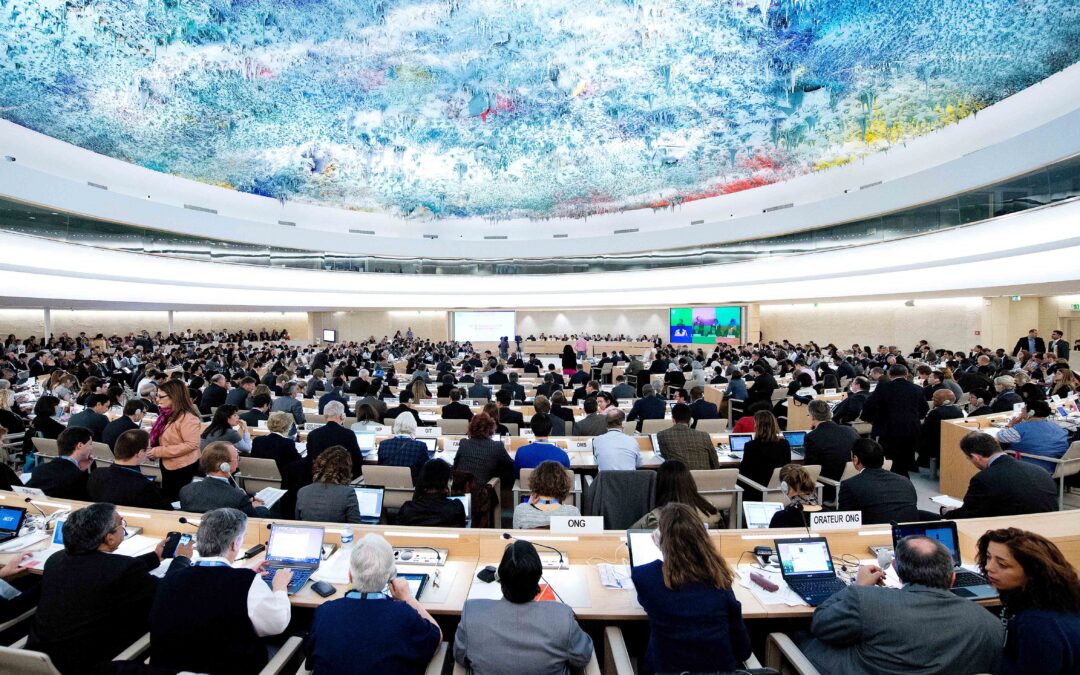
The ICJ has made an oral statement to the UN Human Rights Council on a range of measures needed to ensure truth, justice, reparations and non-repetition of past violations, in Nepal.
The statement read as follows:
TRUTH, JUSTICE, REPARATION, AND GUARANTEES OF NON-RECURRENCE IN NEPAL
10 March 2017
Mr. President
Without effective measures to ensure truth, justice, reparation and guarantees of non-recurrence, countries in situations of transition or post-conflict fail victims and put future reconciliation, peace and stability at risk. One example is Nepal.
Nepal’s Truth and Reconciliation Commission and Commission of Investigation on Disappeared Persons have not been effective. Changes are needed to bring their legal frameworks and operations in line with international standards and Supreme Court jurisprudence. These bodies require adequate resources. Trust-building measures including consultation processes must address the perspectives and needs of victims and for victims to feel ownership over the transitional justice process in Nepal.
Nepal must ensure prompt, independent and impartial investigation and prosecutions for serious human rights violations, including those committed during the armed conflict.
It must ensure justice and reparation for victims, including as provided for in the UN Basic Principles and Guidelines on the Right to a Remedy and Reparation.
It must criminalize serious crimes under international law in a manner that is consistent with international law, to help prevent such violations ever occurring again.
Nepal should also issue a standing invitation to all thematic special procedures of the Council.
Thank you, Mr. President.
Mar 12, 2017 | Advocacy, Non-legal submissions
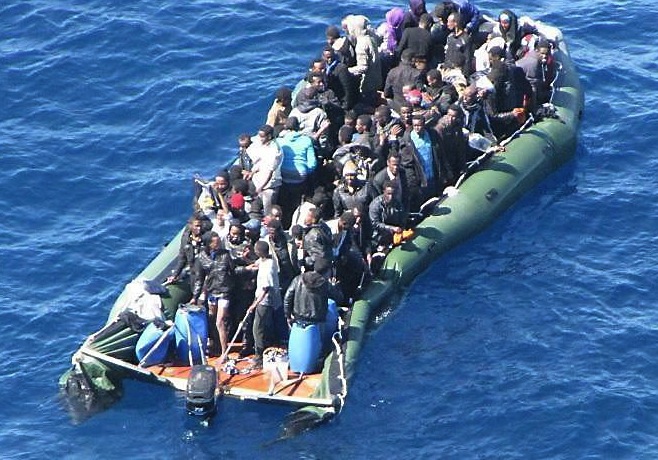
The ICJ made an oral statement to the Human Rights Council, on the role of judges and lawyers in relation to large movements of migrants and refugees.The statement, made in an Enhanced Interactive dialogue on human rights and large movements of migrants, was as follows:
THE ROLE OF JUDGES AND LAWYERS IN RELATION TO LARGE MOVEMENTS OF REFUGEES AND MIGRANTS
10 March 2017
Mr. President,
The International Commission of Jurists (ICJ) welcomes the Principles and Guidelines included in the High Commissioner’s report and conference room paper. The ICJ appreciates their emphasis on equal and effective access to justice for migrants, and the recognition that this requires legal assistance that is competent, independent, confidential, and, when needed, without charge, as well as due process guarantees. We welcome the clear affirmation of the essential role of judges and lawyers in upholding and protecting the human rights of migrants and the rule of law.
To complement these and other relevant standards, the International Commission of Jurists is developing a set of Principles and recommendations specifically focussed on the role of judges and lawyers in relation to large movements of refugees and migrants. The ICJ principles and recommendations are based on global consultations with senior judges, lawyers, UN agencies, regional human rights mechanisms, and other relevant legal experts.
The ICJ Principles and recommendations address the role of judges and lawyers in status determination procedures, in relation to detention and removal, the right to an effective remedy, the importance of ensuring independence and impartiality of judicial decision-makers, equality before the law, and the relationship between national judiciaries and international law.
In addition to a consultation we convened yesterday at a parallel event, we welcome further feedback on the draft ICJ Principles from all stakeholders, before we launch the final version at the June session of the Human Rights Council.
Thank you.
Download the draft Principles here: https://www.icj.org/refugeesmigrantsconsultation/
Please send written feedback to un(a)icj.org, until 14 April 2017.
Mar 8, 2017 | Events, News
During March to April 2017 the ICJ conducted consultations on draft Principles and Guidelines on the role of judges and lawyers in relation to large movements of refugees and migrants.
The initial consultation meeting took place in Geneva on Thursday, 9 March 2017, 15:00 – 16:30 at the Palais des Nations, Room XXI.
At this side event the ICJ presented and received feedback from States and civil society on draft ICJ Principles on the Role of Judges and Lawyers in relation to Large Movements of Refugees and Migrants.
The Principles were developed by the ICJ on the basis of consultations with senior judges, lawyers, and legal scholars working in the field of international refugee and migration law. The ICJ published the final version of the Principles, together with commentary, in May 2017.
The Principles seek to help judges and lawyers, as well as legislators and other government officials, better secure human rights and the rule of law in the context of large movements of refugees and migrants. They are intended to complement existing relevant legal and other international instruments, as well as the Principles and practical guidance on the protection of the human rights of migrants in vulnerable situations within large and/or mixed movements being developed by the OHCHR.
The final version of the Principles is available here.
More information about the earlier consultations and overall process of development of the Principles is available here.

Feb 23, 2017 | Advocacy, Open letters
The ICJ joins South Sudanese, regional and other international non-governmental organizations in a joint letter urging the Human Rights Council to renew and strengthen the mandate and capacity of the UN Commission on Human Rights in South Sudan.
Action is needed to address the continued lack of accountability for severe, widespread and on-going crimes under international law and human rights violations and abuses, many of which amount to war crimes and crimes against humanity, during the upcoming 34th session of the UN Human Rights Council (UN HRC).
South Sudan-letter HRC34-Advocacy-Open letters-2017-ENG (full text in PDF)
Feb 13, 2017 | Advocacy, Non-legal submissions
The ICJ and Thai Lawyers for Human Rights (TLHR) have made a submission to the UN Human Rights Committee in view of its forthcoming review of the implementation of the International Covenant on Civil and Political Rights by Thailand.
In their submission, the ICJ and TLHR have brought to the Committee’s attention their concerns in relation to the following issues:
- Constitutional and legal framework within which the Covenant is implemented;
- States of emergency;
- Right to life and prohibition of torture and cruel, inhuman or degrading treatment or punishment;
- Right to liberty and security of the person, treatment of persons deprived of their liberty, right to a fair trial and independence of judiciary; and
- Freedoms of expression and association and right to peaceful assembly.
Thailand-ICCPR Submission ICJ-TLHR-Advocacy-Non legal submissions-2017-ENG (Full text in PDF)
Thailand-ICCPR Submission ICJ-TLHR-Advocacy-Non legal submissions-2017-THA (Thai version, in PDF)




