Dec 14, 2016 | Advocacy, Non-legal submissions
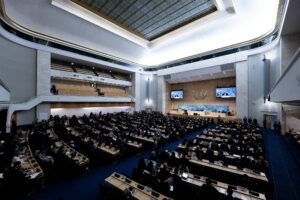
The ICJ today joined other NGOs in calling on the UN Human Rights Council to take bold and decisive action to address the grave situation in South Sudan.
The statement, made during a Special Session of the Human Rights Council, convened on an urgent basis to discuss the situation in South Sudan, underscores the negative consequences of continuing impunity and lack of accountability, and calls among other things for the Human Rights Council resolution to be adopted that would:
· Support a strengthened mandate and capacity of the UN Commission on Human Rights in South Sudan to investigate serious violations of human rights and humanitarian law and identify alleged perpetrators, with a special focus on sexual and gender based crimes.
· Request that the report of the UN Commission is transmitted to the UN Security Council for consideration and further action.
· Urge that all states encourage further concrete action to prevent a further escalation of violence and conflict, and to deter and address these on-going violations of international human rights and humanitarian law at the UN Security Council, including sanctions and the imposition of a comprehensive arms embargo.
· Urge the African Union to take immediate steps to establish the hybrid court for South Sudan provided for in the 2015 peace agreement.
The Human Rights Council ultimately adopted, without a vote (i.e. by consensus), a resolution that includes many of these elements (final text not yet available).
The full statement can be downloaded in PDF format here: un-jointstatementsouthsudan-advocacy-2016
It was delivered by Human Rights Watch on behalf of:
- Amnesty International
- Association for Human Rights in Ethiopia
- Defend Defenders
- Human Rights Watch
- Humanity United
- International Commission of Jurists
- International Refugee Rights Initiative
- International Service for Human Rights
- National Coalition of Human Rights Defenders Uganda
- Pan-African Human Rights Defenders Network
- South Sudan Human Rights Defenders Network
Dec 13, 2016 | News
The ICJ and Human Rights Commission of Pakistan (HRCP) urge the Pakistani authorities to fully engage with the UN human rights body by answering its questions comprehensively.
The call follows the recent adoption by the United Nations Human Rights Committee of a document raising a multiplicity of concerns about Pakistan’s human rights record.
“It is encouraging to see Pakistan’s increased engagement with United Nations human rights mechanisms in recent years”, said Sam Zarifi, ICJ’s Asia Director.
“But it is important that the Government does not stop here and now takes the additional constructive step of answering all the Committee’s questions truthfully and honestly,” he added.
In November 2016, during its 118th session, the Human Rights Committee adopted a document known as a List of issues in relation to Pakistan’s compliance with the International Covenant on Civil and Political Rights (ICCPR), in which the Committee asked multiple questions about the country’s human rights record, including:
- Fair trial concerns as a result of the expanded jurisdiction of military courts following the introduction/adoption of the 21st Amendment to the Constitution, including the criteria for and the process of selecting cases to be tried by military courts, the qualifications of judges presiding over those courts and their proceedings;
- Reintroduction of the death penalty and the wide scope of its application, including the mandatory death sentence for “blasphemy”;
- Broad and vaguely defined “blasphemy offences”, their disproportionate use against individuals belonging to religious minorities; the large number of “blasphemy” cases instituted on the basis of false accusations; and the lack of mechanisms to protect judges who hear “blasphemy” cases and those accused of blasphemy from intimidation and threats;
- Rights of Ahmadis, including their “right to profess, practice and propagate” their religion without interference;
- Repatriation of Afghan refugees, including information on the adoption of a draft national refugee law and a comprehensive policy on the voluntary repatriation and management of Afghan nationals;
- Rights of women, including steps taken by the Government to prevent and punish persistent violence (sexual and otherwise) against women, including so-called honour killings;
- Torture and other ill-treatment, extrajudicial killings, and enforced disappearances, including steps taken by the Government to implement the Supreme Court’s judgment in the Muhabbat Shah case, which held military authorities responsible for the enforced disappearance of at least 28 people from a Malakand internment centre.
This is the first time Pakistan’s human rights record is being reviewed by the Human Rights Committee, the treaty body that monitors implementation of the International Covenant on Civil and Political Rights by its State parties, since Pakistan ratified the Covenant in 2010.
The next step in the review process is for Pakistan to respond to the questions framed in the List of Issues.
The Human Rights Committee will undertake a comprehensive review Pakistan’s compliance with and implementation of the ICCPR and adopt concluding observations in July 2017.
“It is of the utmost importance to Pakistan to derive greater benefit from its engagement with the UN human rights mechanisms by making a sincere effort to answer the concerns of the Committee,” said I A Rehman, Secretary General of HRCP.
Background
Pakistan ratified the International Covenant on Civil and Political Rights (ICCPR) in June 2010. Following ratification/accession, every state party to the ICCPR is required to submit an initial “state report” containing information on the implementation of each provision of the treaty.
Pakistan submitted its initial state report to the Human Rights Committee in October 2015.
In light of the information provided in the State report, as well as information received from civil society, the Human Rights Committee then prepares a List of Issues containing particular issues of concern to the Committee, and asking whatever questions it sees fit in light of those concerns.
The answers provided by the State party to those questions, as well as other information submitted by civil society and others form the basis of the “review” of the State’s compliance with the treaty.
The State is not obligated to reply to the List of Issues in advance of the review session, but in practice most do.
The State replies are presented to the Committee at the beginning of the review and are the starting point for the interactive dialogue between the Committee and the State under review.
During the review, the Committee meets with State representatives who present answers to the List of Issues and respond to the Committee’s questions.
At the end of the session, the Committee adopts Concluding Observations, which highlight the Committee’s concerns and make recommendations to the State on improving the implementation of the ICCPR.
Pakistan’s ICCPR review is scheduled to take place in July 2017.
Contact
Sam Zarifi, ICJ Asia Pacific Regional Director (Bangkok), t: +66 807819002; email: sam.zarifi(a)icj.org
Pakistan-list-of-issues-advocacy-2016-eng (in PDF)
Nov 11, 2016 | News
The ICJ today condemned efforts by a group of States led by the African Group of the UN Members States to halt the work of the UN Independent Expert charged with protecting people from discrimination and violence based on sexual orientation and gender identity (SOGI).
The organization said that the move constituted an unwarranted interference with the independence and capacity of the Human Rights Council to discharge its mandate for the promotion and protection of all human rights and fundamental freedoms for all, without discrimination.
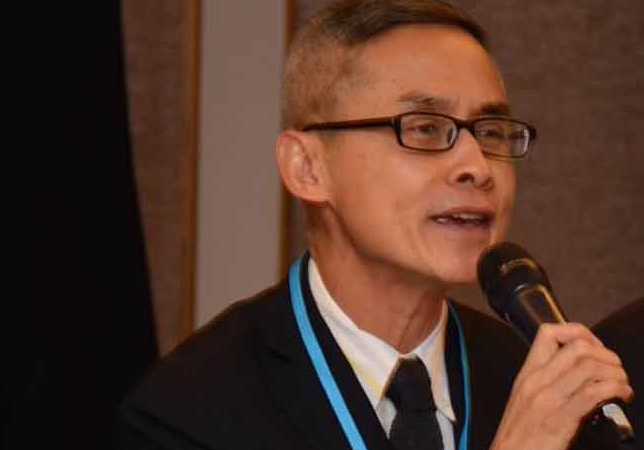
On 3 November 2016 Botswana on behalf of the African Group introduced a draft resolution before the Third Committee of the UN General Assembly in New York questioning the authority for the mandate of the Independent Expert Vitit Muntarbhorn (photo) and deferring action indefinitely on confirming the mandate’s establishment.
The ICJ is calling on the African Group to withdraw its draft resolution.
If a vote on the resolution does go ahead, the ICJ said that States must resoundingly reject it and send a signal to the world that the rights of all persons must be protected on an equal basis and that the UN Human Rights Council is capable of acting to secure such protection.
The ICJ considers that adoption of the resolution would represent a dramatic setback to the Human Rights Council’s efforts to tackle violence and discrimination based on SOGI.
Each year, the Third Committee of the UN General Assembly considers the Human Rights Council’s annual report.
This year, that report contains Human Rights Council resolution 32/2 on Protection against violence and discrimination based on sexual orientation and gender identity.
The Human Rights Council’s adoption of resolution 32/2 on 30 June 2016 made history by establishing the first-ever mandate of an Independent Expert of the Human Rights Council on protection against violence and discrimination based on SOGI.
In September this year the Human Rights Council appointed Prof. Vitit Muntarbhorn of Thailand to discharge this mandate.
Since then, Prof. Muntarbhorn has duly taken up his position and has begun fulfilling this work.
The draft resolution that the African Group has tabled at the Third Committee questions the basis in international law for the establishment of the Independent Expert’s mandate on SOGI and seeks to defer action on Human Rights Council resolution 32/2 indefinitely.
Since the Human Rights Council was set up in 2006, none of its resolutions mandating the establishment of a Special Procedure has ever been challenged by the General Assembly.
The ICJ considers that the adoption of the African Group’s resolution would set an extremely detrimental and regressive precedent by blocking the Human Rights Council from carrying out its own mandate.
It would undermine the UN’s preeminent human rights body’s overall authority by sapping its independence and ability to fulfil its mandate for the promotion and human rights for all without discrimination as it sees fit.
Contact
Livio Zilli, ICJ Senior Legal Adviser and UN Representative, t: +41 22 979 38 23 ; e: livio.zilli(a)icj.org
Read also
What is the Future of the SOGI Mandate and What Does it Mean for the UN Human Rights Council?
Sep 28, 2016 | Advocacy, Non-legal submissions
The ICJ today delivered an oral statement to the UN Human Rights Council, during the interactive dialogue with the Special Rapporteur on the situation of human rights in Cambodia.The ICJ welcomed the report of the Special Rapporteur on the situation of human rights in Cambodia, before continuing as follows:
The ICJ concurs with the Special Rapporteur’s observation that “democratic space has been reduced in Cambodia through the application of a range of laws … and the restriction of a range of legitimate activities of non-governmental and civil society organizations.”
Since 2014, Cambodia has adopted laws inconsistent with its international human rights obligations, including undermining the independence of the judiciary, and unduly restricting the work of civil society.
Human rights defenders increasingly face retaliation for their legitimate work, shrinking civil society space.
Last week, the ICJ observed the criminal trial of Ny Chakrya, Deputy Secretary-General of the National Election Committee and former Head of Human Rights Section and Legal Aid at a leading NGO, ADHOC. He was convicted of crimes, including criminal defamation, for raising allegations of human rights violations. Ny Chakrya and four staff-members of ADHOC, all of whom are in detention, also face another investigation with all the hallmarks of being politically motivated.
Indeed, numerous members of the political opposition and human rights defenders are in exile, face legal proceedings, or have been convicted, in cases that also appear to be politically motivated.
Further, the investigation into the July 2016 killing of leading human rights defender, Kem Ley, lacks transparency.
We very much welcome the spotlight the Special Rapporteur placed on such cases by naming them here today.
2016 marks 25 years since the Paris Peace Agreements under which Cambodia undertook to “ensure respect for and observance of human rights and fundamental freedoms in Cambodia.”
We urge Cambodia, the signatories to the Paris Peace Agreements, the Special Rapporteur on Cambodia, the Office of the High Commissioner for Human Rights, and the Human Rights Council, to work to ensure these Agreements are given full effect – particularly as Cambodia prepares for local and national elections scheduled for 2017 and 2018.
The statement may be downloaded in PDF format here: hrc33-srcambodia-2016
Sep 26, 2016 | Advocacy, Non-legal submissions
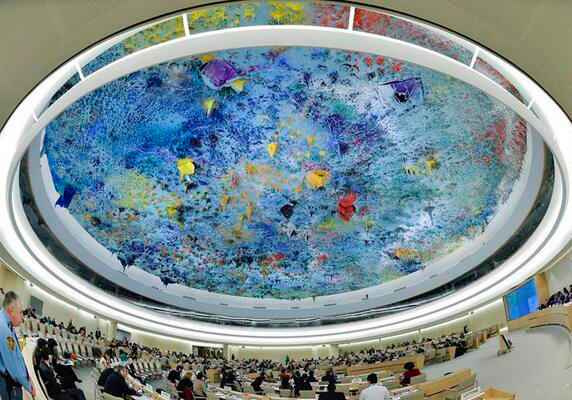
The ICJ today at the UN Human Rights Council, joined other organisations to condemn the increasing attacks aimed at deterring NGOs from exposing human rights violations.
The statement was delivered by the leading international NGO the International Service for Human Rights (ISHR), on behalf of ICJ, Amnesty International, Asian Forum for Human Rights and Development (FORUM-ASIA), Centros de Estudios Legales y Sociales (CELS), Conectas Direitos Humanos, East and Horn of Africa Human Rights Defenders Programme (EHAHRDP), and Gulf Centre for Human Rights (GCHR), during a general debate on Follow up to the Vienna Declaration and Programme of Action (VDPA).
The organisations stated as follows:
“The failure of States to protect in these instanes is incompatible with the VDPA’s recognition of the ‘important role of non-governmental organisations in the promotion of all human rights’, that NGOs should be able to play this role ‘without interference’, and that they ‘enjoy the rights and freedoms recognised in the Universal Declaration of Human Rights’.
One example of such interference is the ruling on 17 September by a Cairo Criminal Court to freeze the personal bank accounts of five Egyptian human rights defenders – Bahey el din Hassan, Hossam Bahgat, Gamal Eid, Mostafa El-Hassan, and Abdel Hafiz Tayel – as part of the ongoing investigations into case no.173, also known as the foreign funding case.
The court also froze the bank accounts of three human rights NGOs: the Cairo Institute for Human Rights Studies, Hisham Mubarak Law Center, and Center for the Right to Education.
As a result, a judicial committee is now expected to manage the funds of these independent NGOs and defenders, as well as have full access to their records and databases of the NGOs, including files related to victims of human rights violations.
The VDPA makes clear that the ‘administration of justice, … especially, an independent judiciary and legal profession in full conformity with applicable standards contained in international human rights instruments, are essential to the full and non-discriminatory realization of human rights’.
To illustrate: In Egypt, the judiciary has been used as a tool in the ongoing crackdown on civil society, systematically failing to respect fair procedures. None of the individuals or organizations accused have thus far been permitted to view their entire case file, nor to present their defense before the investigative judges. Further, the court relied for its verdict on allegedly falsified investigations compiled by Egypt’s National Security Agency (NSA), and disregarded all material evidence presented by the defendants.
Such systematic attacks on civil society are not only illegal, but ill-advised and absolutely inimical to a State’s national interests, peace and prosperity.
We call on Egyptian authorities to immediately and unconditionally reverse the ruling and drop the investigation into case no. 173. We also stress that Egyptian human rights defenders need the support of this Council, particularly those States that have repeatedly expressed their commitment to protecting HRDs. We urge States to demonstrate their genuine leadership in this regard.”