Sep 16, 2016 | Advocacy, Non-legal submissions
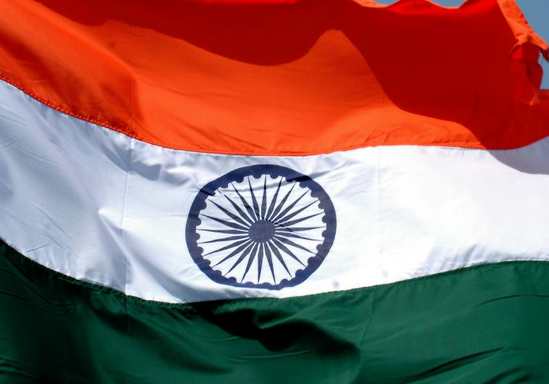
On 16 September 2016, the ICJ made a submission to the Universal Periodic Review of India.
The submission brings to the attention of the members of the Human Rights Council’s Working Group on the UPR issues concerning:
- discrimination and violence based on sexual orientation and gender identity;
- death penalty;
- impunity and accountability;
- freedom of speech, expression and association;
- ratification and implementation of international human rights instruments.
india-icj-upr-submission-advocay-non-legal-submission-2016-eng (full text in PDF)
Sep 15, 2016 | Advocacy, Non-legal submissions
The ICJ, with support of the NGO the Human Rights Commission of Pakistan (HRCP), spoke at the UN Human Rights Council today on the continuing problem of enforced disappearances in Pakistan.
The statement was delivered during an interactive dialogue with the Working Group on Enforced or Involuntary Disappearances.
The ICJ, with support of the Human Rights Commission of Pakistan (HRCP), welcomed the Working Group’s follow-up report on recommendations from its 2012 visit to Pakistan, and stated further as follows:
The practice of enforced disappearance has persisted and expanded since the Working Group’s visit. Previously restricted mainly to Balochistan, the Federally Administered Tribal Areas and Khyber Pakhtunkhwa, enforced disappearances are now a nation-wide phenomenon.
In August 2015, Zeenat Shahzadi, a Pakistani journalist, went “missing” from Lahore, a rare case of alleged enforced disappearance of a woman.
Estimates of the overall number of cases of enforced disappearance vary. The official Commission of Inquiry on Enforced Disappearances has reported nearly 1,400 unresolved cases.
The HRCP, an NGO that documents human rights violations in 60 districts, has reported 370 cases of enforced disappearance since 2014.
Other NGOs claim between 5,000 to 18,000 cases. Even by the most conservative estimates, a significant number of enforced disappearances remain unresolved.
The Government has not brought perpetrators to account in even a single case of enforced disappearance. Rather than effective measures to prevent the practice or to strengthen existing accountability mechanisms, recent legislation actually facilitates enforced disappearances.
In January 2015, Pakistan empowered military courts to try civilians for terrorism-related offences. These courts have since sentenced at least 100 people to death, and at least 12 have been hanged, after grossly unfair trials without possibility of appeal to any civilian courts, including the Supreme Court.
Families allege that some of those tried had been subjected to enforced disappearance by military authorities, and military control over the proceedings leaves the family and victim without effective remedy.
Victims’ groups, lawyers, and activists working on enforced disappearance also continue to face security risks including attacks, harassment, surveillance, and intimidation.
The ICJ and HRCP commend the Working Group for its systematic follow-up, which can have a positive impact, and urge the Working Group to continue to monitor and report on the situation in Pakistan.
The statement may be downloaded in PDF format here: hrc33-oralstatement-disappearances-pakistan-15092016
Jul 29, 2016 | News
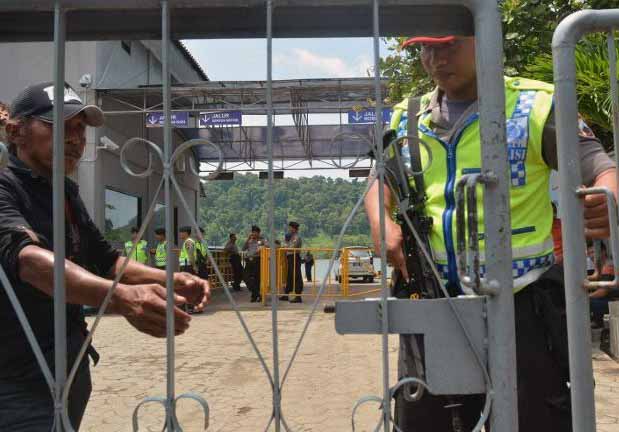
The ICJ condemns the executions of four persons in Indonesia. The ICJ vigorously calls on the Government of Indonesia to impose an immediate moratorium and take steps towards the abolition of the death penalty in the country.
“The execution of these four persons is reprehensible. Indonesia should stop further executions,” said Sam Zarifi, ICJ’s Regional Director for Asia and the Pacific.
“These executions damage Indonesia’s standing in the international community since they go against the growing international consensus around the world to abolish the death penalty,” he added.
The individuals executed shortly after midnight today were Freddy Budiman (Indonesia), Seck Osmane (Nigeria), Michael Titus Igweh (Nigeria), Humphrey Jefferson Ejike Eleweke (Nigeria).
Indonesia is a current member of the United Nations Human Rights Council, having been first elected in 2006.
The General Assembly resolution that created the Council specifically provides that “members elected to the Council shall uphold the highest standards in the promotion and protection of human rights” (res 60/251, 2006, para 9).
According to the ICJ, one of the persons executed – Michael Igweh – was allegedly tortured by law enforcement authorities to extract his confession.
The Geneva-based organization, on several occasions, has called the Government of Indonesia’s attention to its violations of Article 14 of the International Covenant on Civil and Political Rights (ICCPR), which guarantees the right to a fair and public hearing by a competent, independent, and impartial tribunal established by law. Any reliance on confessions extracted by torture would be a gross violation of the fairness of the trials.
“Because of the irreversible nature of the death penalty, trials in capital cases must scrupulously respect all international and regional standards protecting the right to a fair trial,” Zarifi further said.
The ICJ opposes capital punishment without exception and emphasizes the impact of the executions on the families of those who were executed.
The four persons executed were on a list of 14 people set to be executed soon. The other individuals are: Merri Utami (Indonesia), Zulfiqar Ali (Pakistan), Gurdip Singh (India), Frederick Luttar (Zimbabwe), Agus Hadi (Indonesia), Pujo Lestari (Indonesia), Eugene Ape (Nigeria), Okonkwo Nonso Kingsley (Nigeria), Ozias Sibanda (Nigeria) and Obinna Nwajagu (Nigeria).
The ICJ strongly urges the Government of Indonesia to stop any further executions, immediately impose a moratorium, and take steps towards the abolition of the death penalty.
In December 2014, the UN General Assembly adopted resolution 69/189, affirming for the fifth time that the use of the death penalty undermines human dignity and calling for countries that still maintain capital punishment to establish a moratorium on its use with a view to its abolition.
Contact
Emerlynne Gil, Senior International Legal Adviser of the ICJ, t: +66 840923575 ; e: emerlynne.gil(a)icj.org
Jun 30, 2016 | News
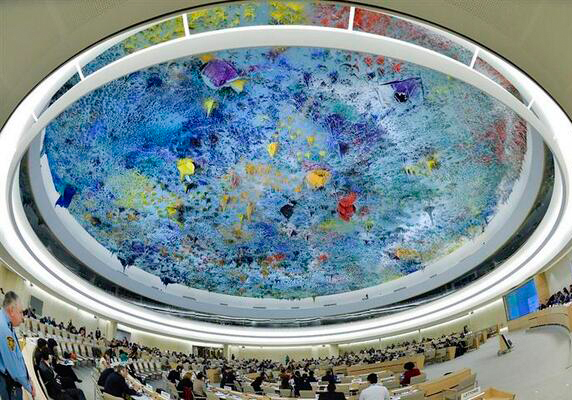
The United Nations Human Rights Council, in a defining vote, adopted a resolution on 30 June 2016, on “Protection against violence and discrimination based on sexual orientation, and gender identity,” to mandate the appointment of an independent expert on the subject.
It is a historic victory for the human rights of anyone at risk of discrimination and violence because of their sexual orientation or gender identity, a coalition of human rights groups said today. This resolution builds upon two previous resolutions, adopted by the Council in 2011 and 2014.
The Core Group of seven Latin American countries – Argentina, Brazil, Chile, Colombia, Costa Rica, Mexico, Uruguay – and 41 additional countries jointly presented the text.
The resolution was adopted by a vote of 23 in favor, 18 against and six abstentions.
“This is truly momentous,” said Micah Grzywnowicz, of the Swedish Federation for LGBTQ Rights (RFSL). “This is our opportunity to bring international attention to specific violations and challenges faced by transgender and gender non-conforming persons in all regions. It’s time for the international community to take responsibility to ensure that persons at risk of violence and discrimination because of gender identity are not left behind.”
“It’s a historic resolution,” said Josefina Valencia, of the International LGBTI Association for Latin America and the Caribbean, ILGA LAC. “Latin America has played a very important role to build a common course for the advancement of our human rights. We are proud of the international solidarity and the commitment shown by States for equality.”
The positive vote responds to a joint campaign of a record 628 nongovernmental organizations from 151 countries calling on the Human Rights Council to adopt the resolution and create the independent expert.
“It is important to note that around 70 percent of the organizations are from the global south,” said Yahia Zaidi of MantiQitna Network. “This is a powerful cross-regional message of strength to the UN to protect the rights of LGBTI persons. The independent expert will be a focal point for all violations based on SOGI and hence help grassroots organizations to better utilize the otherwise complex labyrinth of the UN system.”
The expert will be tasked with assessing implementation of existing international human rights law, identifying best practices and gaps, raising awareness of violence and discrimination based on sexual orientation and gender identity, engaging in dialogue and consultation with states and other stakeholders, and facilitating provision of advisory services, technical assistance, capacity-building, and cooperation to help address violence and discrimination on these grounds.
“To have an independent expert can be a ‘game-changer’ in counteracting violence which fuels the HIV epidemic in key populations and more specifically in LGBT communities,” said Alain Kra of Espace Confiance.
“It will ease the work of all human rights defenders and it is essential for our governments and people to have the knowledge on how to protect LGBT communities from any violence and discrimination they face,” added Joleen Mataele of the Tonga Leiti’s Association.
Although a number of hostile amendments seeking to introduce notions of cultural relativism were adopted into the text by vote, the core of the resolution affirming the universal nature of international human rights law stood firm.
The International Commission of Jurists believes that the UN Human Rights Council made history by creating a mandate empowering a UN Independent Expert specifically to address human rights violations perpetrated against people in all regions of the world because of discrimination against their real or imputed sexual orientation or gender identity.
Results of the vote
Voting in favor of the resolution
Albania, Belgium, Bolivia, Cuba, Ecuador, El Salvador, France, Georgia, Germany, Latvia, Macedonia, Mexico, Mongolia, Netherlands, Panama, Paraguay, Portugal, Republic of Korea, Slovenia, Switzerland, United Kingdom, Venezuela, Vietnam
Voting against the resolution
Algeria, Bangladesh, Burundi, China, Congo, Cote d’Ivoire, Ethiopia, Indonesia, Kenya, Kyrgyzstan, Maldives, Morocco, Nigeria, Qatar, Russia, Saudi Arabia, Togo, United Arab Emirates
Abstaining on the resolution
Botswana, Ghana, India, Namibia, Philippines, South Africa
Organizations supporting this statement:
- Access Chapter
- AIDES France
- Amnesty International
- ARC International
- Clóset de Sor Juana AC
- Egale Canada Human Rights Trust
- Espacio de Mujeres Lesbianas Salvadoreñas por la Diversidad (ESMULES)
- Federatie van Nederlandse Verenigingen tot Integratie van Homoseksualiteit – COC Nederland (Netherlands)
- Foundation for SOGI Rights and Justice (FORSOGI), Thailand
- FRI, the Norwegian Organisation for Sexual and Gender Diversity
- GALANG Philippines
- GATE – Global Action for Trans* Equality
- Human Rights Law Centre
- Human Rights Watch
- Iranti-org (South Africa)
- International Commission of Jurists
- ILGA LAC, Asociación Internacional de Lesbianas, Gays, Bisexuales, Trans e Intersexuales para América Latina y el Caribe
- International Lesbian, Gay, Bisexual, Trans and Intersex Association (ILGA)
- Lesbians, Gays and Bisexuals of Botswana (LEGABIBO)
- LGBT Denmark – the National Organization for Gay Men, Lesbians, Bisexuals and Transgendered People
- MantiQitna Network
- OutRight Action International
- Pacific Sexual Diversity Network
- Pan Africa ILGA
- Proyecto Arcoiris, colectivo anticapitalista e independiente
- Samoa Faafafine Association
- Swedish Federation for LGBTQ Rights (RFSL)
- TLF Share Collective – Philippines
- Tonga Leitis Association
Jun 29, 2016 | Advocacy, Non-legal submissions
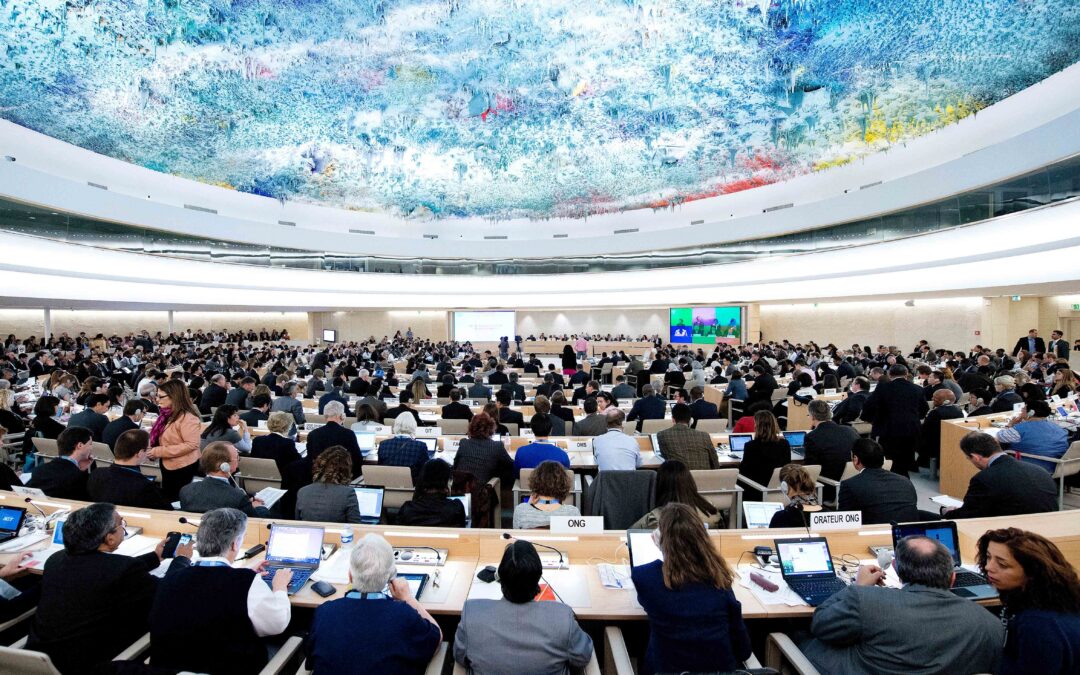
The ICJ, joined by FIDH, Franciscans International, and IMADR, today delivered a statement to the UN Human Rights Council.
The statement was on the situation of Rohingya Muslims in Myanmar, and on the need for active participation by international judges in the judicial mechanism to be adopted in Sri Lanka as part of the process of accountability and reconciliation.
The organizations stated, during general debate on an oral update on Sri Lanka from the High Commissioner for Human Rights, and the Commissioner’s report on the situation of Rohingya in Myanmar, that:
The Government of Myanmar has persecuted the Rohingya, refused to extend basic citizenship rights, and Parliament passed legislation entrenching discrimination such as the Race and Religion Protection laws. This has displaced thousands within Rakhine State and driven the Rohingya to sea and neighbouring countries. The ICJ, FIDH, Franciscans International and IMADR call on Myanmar:
- to repeal the 1982 Citizenship Law or amend it in accordance with the recommendations of the Special Rapporteur, to grant Rohingya full citizenship and accompanying rights;
- to develop a citizenship plan based on non-discrimination;
- to reject the Rakhine State Action Plan in its current form;
- to repeal laws that discriminate against ethnic and religious minorities;
- to diligently prosecute all acts of violence fuelled by discrimination, and hate speech that incites discrimination, hostility or violence; and
- to improve basic living conditions for the Rohingya and Arakanese in Rakhine State by enhancing protection of their economic, social, and cultural rights.
We welcome recent initiatives by the Government of Sri Lanka towards implementing Resolution 30/1, including the establishment of an Office of Missing Persons, and ratification of the Convention for the Protection of All Persons from Enforced Disappearance.
However, many of the commitments in the resolution remain unfulfilled. The other three transitional justice mechanisms envisioned by the resolution – an office of reparation, a truth-seeking commission, and a judicial mechanism – are yet to be established.
We call on Sri Lanka to implement, without delay, all elements of Resolution 30/1, including particularly the establishment of a credible judicial mechanism with full participation of international judges, prosecutors and lawyers. We agree that international participation is “a necessary guarantee for the independence and impartiality of the process in the eyes of the victims” (High Commissioner’s Oral Update, A/HRC/32/CRP.4, paragraph 32).
Rapid progress on this and other key elements of the resolution is essential to the credibility of the overall process of transition in Sri Lanka.
The statement can be downloaded in full, in PDF format, here: HRC32-OralStatement-SriLankaMyanmar-2016