Mar 18, 2015 | Non-legal submissions
The Colombian Commission of Jurists, an affiliate of the ICJ, made an oral statement to the UN Human Rights Council today, addressing threats to the independence of the judiciary in Bolivia.
The statement came in the discusson of Bolivia’s review by the Council universal periodic review procedure, in which Bolivia accepted recommendations on judicial independence, including to “guarantee the full independence of the judiciary system, in accordance with…international standards.”
In response, the ICJ and Colombian Commission of Jurists highlighted the disciplinary and criminal proceedings brought by the Legislative Assembly against three judges of the Constitutional Court at the end of last year. The proceedings were based solely on the disagreement of the political branches with an interim order issued by the Court in a case challenging the constitutionality of a new law to regulate notaries.
In the so-called “trial” conducted by the Legislative Assembly in December, Assembly Members’ statements demonstrated a manifest lack of impartiality. The Assembly extensively and arbitrarily limited the rights of the judges to present evidence and witnesses in their defence.
In the result, one judge was arbitrarily removed from office in January, and another resigned under the pressure. The Assembly also referred both of these women for criminal prosecution. Proceedings against a third judge were suspended only for health reasons.
As the Government had announced that it will seek radical reform of the judicial system during 2015. In light of recent events, the two organisations asked:
- How will Bolivia ensure that reforms are consistent with universal and regional standards on the role and independence of the judiciary?
- What role will Bolivian and international civil society and legal experts have in developing the reforms?
- Will reforms ensure a judicial selection procedure that is based on objective criteria and truly independent of the executive and legislative branches of government?
- Will consideration be given to transferring responsibility for discipline and removal procedures to a new independent and impartial body, with real guarantees of fairness, and clearly defined grounds for removal that exclude disagreement with rulings?
Ireland had also raised concern about independence and effectiveness of the judiciary in its oral statement.
The delegation of Bolivia mentioned in its opening statement its intention to convene a forum on judical reforms and put reforms to a referendum, but did not provie any details other than that various sectors of Bolivian society would be involved. During the opportunity given at the end of the session to respond to the questions from states and NGOs, the delegation of Bolivia chose not to address these issues.
Read also Bolivia: ICJ condemns removal and forced resignation of Constitutional Court judges by Legislative Assembly and links therein.
The full written statement may be downloaded in PDF format here: Bolivia-HRC28-UPR-Advocacy-non legal submission-2015-ENG
Mar 17, 2015 | Events, News
This side event will take place on Thursday 19 March 2015, 12.00-14.00, at the Palais des Nations, Geneva, Room XXVII.
It aims at creating a space to discuss the EU agenda on Business & Human Rights, identifying current challenges and development, and exploring opportunities arising from the Treaty process.
Panelists:
Mons. Silvano Tomasi, Holy See, Permanent Observer
Mr. Jerome Bellion-Jourdan, Delegation of the European Union to the UN
Mrs. Elena Valenciano, European Parliament Sub-Committee on Human Rights, Chair
Mr. Richard Meeran, Leigh Day, Partner
Ms. Anne van Schaik, Friends of the Earth Europe, Economics and Justice Team
Moderation: Dr. Carlos Lopez, International Commission of Jurists, Senior Legal Adviser
Erope-Flyer side-event EU BHR perspectives-News-event-2015-ENG (ful text in PDF)
Mar 13, 2015 | Advocacy, Non-legal submissions
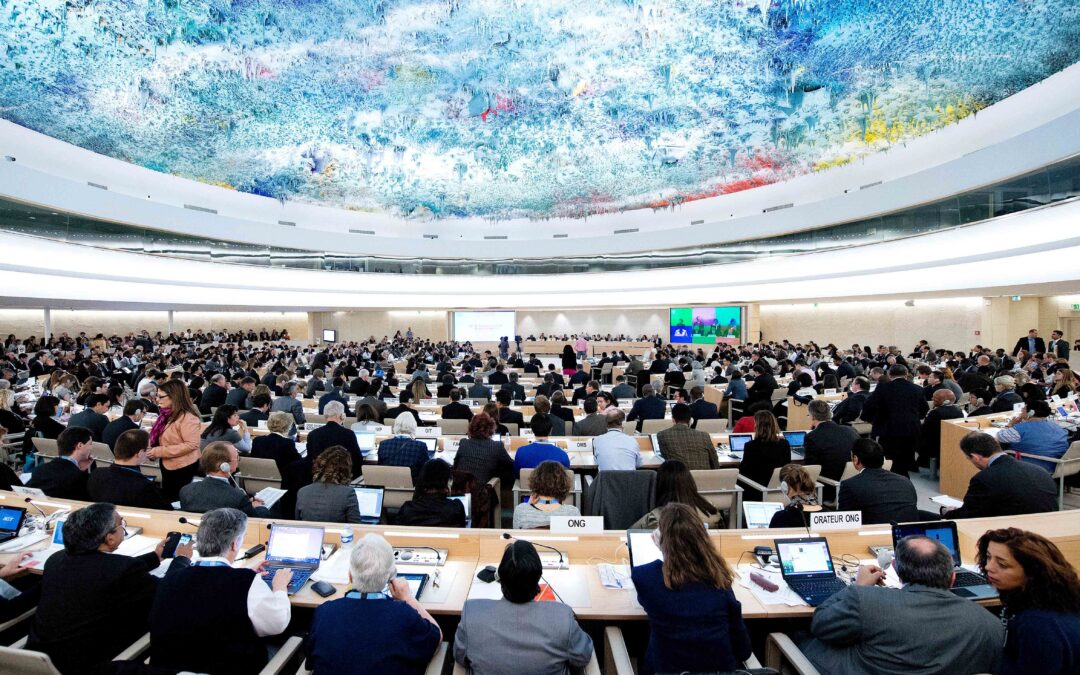
The Colombian Commission of Jurists, an affiliate of the ICJ, today called for the UN Human Rights Council to uphold the use of civilian courts, rather than military tribunals, to try civilians and to adjudicate claims for human rights violations.
An oral statement to the UN Human Rights Council highlighted that:
- military tribunals should as a matter of principle have no jurisdiction to try civilians or to adjudicate claims of serious human rights violations;
- These matters should be the domain of civilian courts; and
- The jurisdiction of military tribunals should be restricted to specifically military offenses committed by military personnel.
The oral statement emphasised to the global reach of the issue, referring by way of example to the military commissions established by the United States of America at Guantánamo Bay, as well as recent negative developments in Colombia, Egypt, Thailand and Pakistan.
The statement noted that the Principles Governing the Administration of Justice Through Military Tribunals presented to the Commission on Human Rights by Emmanuel Decaux in 2006 (UN Doc E/CN.4/2006/58), are widely referenced, but have yet to receive full recognition by the Human Rights Council. The statement added its support to the calls by the Special Rapporteur on Independence of Judges and Lawyers, the Working Group on Arbitrary Detention, and others, for the Council to endorse and seek implementation of the Principles without further delay.
The statement responds to an expert consultation on the administration of justice through military tribunals convened by the Council (UN Doc A/HRC/28/32).
The full oral statement can be downloaded in pdf format here: Advocacy-HRC28-MilitaryCourts-OralStatement-2015
Said Benarbia, Director of ICJ’s Middle East North Africa Programme participated in the expert consultation.
His statement can be found here: MENA-Military Courts HRC28-Advocacy-2015-ENG (full text in PDF).
Thailand exercised its right of reply, which can be viewed in the UN webcast archive, here.
Mar 13, 2015 | Advocacy
The ICJ today supported, with 91 other NGOs from around the world including a number of ICJ national sections and affiliates, an oral statement calling on the UN Human Rights Council to establish a Special Rapporteur on Privacy at its current session.
The UN General Assembly, the UN High Commissioner for Human Rights, existing special procedure mandate holders, and many states and civil society organisations have recognized the pressing need to provide continuous, systematic and authoritative guidance on the scope and content of the right to privacy as enshrined in article 12 of UDHR and article 17 of ICCPR. Significantly, all of them have identified the need to assess and monitor the ongoing implementation of this right. The creation of a Special Rapporteur would fill this long-standing gap.
Although the initiative has its origins in concerns about online and telecommunications surveillance, the call is for the creation of a Special Rapporteur with a mandate to look at all aspects of the right to privacy, in all contexts, including issues relating to private sector practices.
The text of the oral statement, delivered by Article 19, can be downloaded here: Advocacy-HRC28-Privacy-JointOralStatement-2015
Mar 4, 2015 | Events
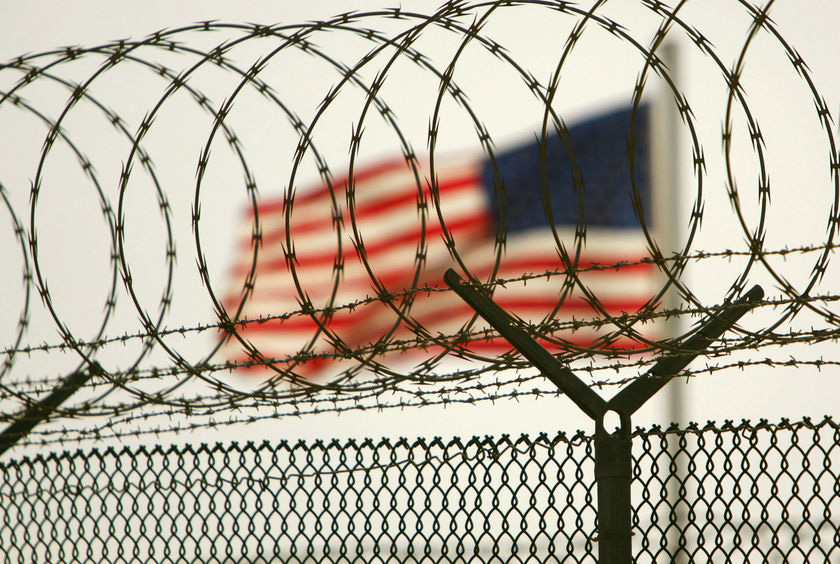
A panel discussion on Guantánamo and accountability for torture, featuring UN Special Rapporteur on Torture Juan E. Méndez and other experts, will take place in Geneva on 9 March 2015 in connection with the UN Human Rights Council session.The panel features:
- Juan E. Méndez, UN Special Rapporteur on Torture
- Jamil Dakwar, Director, Human Rights Program, American Civil Liberties Union
- Peter Jan Honigsbert, U of San Francisco Law School, Founder & Director of Witness to Guantánamo
- Julia Hall, Expert on Counter-Terrorism and Human Rights, Amnesty International
moderator: Connie de la Vega, University of San Francisco Law School & Human Rights Advocates.
The ICJ joins the ACLU, Amnesty International, Human Rights Advocates, Conectas, Human Rights Watch, CELS, and OMCT in supporting this event.
The event takes place 9 march 2015, at 15:00-17:00, Room XXIII, Palais des Nations, in Geneva.
The event flyer may be downloaded in PDF format here: SideEventTorture