Jul 1, 2019 | Advocacy, Non-legal submissions
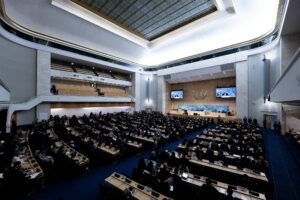
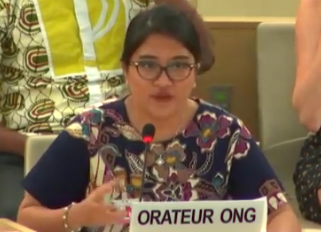
The ICJ today highlighted the negative impacts of criminalisation of HIV non-disclosure, exposure and transmission, on human rights, as well as an ongoing initiative to develop a set of relevant principles, at the UN Human Rights Council.
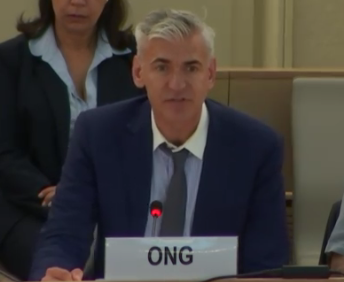
The oral statement, delivered during the General Debate under Agenda Item 3, was titled “Developing principles to address the detrimental impact on health, equality and human rights of criminalization with a focus on select conduct in the areas of sexuality, reproduction, drug use and HIV” and read as follows:
“The ICJ welcomes the High Commissioner’s report (A/HRC/41/27) on human rights in the response to HIV.
Unjust criminalization of HIV non-disclosure, exposure and transmission is a barrier to the realization of human rights – fostering stigma, discrimination, violence and abuse.
Last year, the ICJ – supported by UNAIDS, OHCHR and UNDP – convened a meeting of jurists to address the harmful effects of misuse of criminal law in relation to HIV and other issues.
The meeting endorsed civil society’s call for jurists to elaborate a set of principles to assist legislatures, the courts, administrative and prosecutorial authorities, and advocates address the deleterious impact on health, equality, and human rights of criminalization in a range of areas. In addition to HIV, jurists concluded the principles should address criminalization of sexual and reproductive healthcare services, including abortion; criminalization of consensual sexual conduct, including sex work, sex outside marriage, same-sex relations, and adolescent sexual activity; and criminalization of drug use and of possession of drugs for personal use.
To ensure the jurists’ principles are effective and protect the most at-risk individuals, the process for developing them is as important as the content of the principles themselves. Thus, broad consultation with a wide range of stakeholders, including national and international civil society organizations, UN human rights mandate holders and UN agencies, is ongoing.”
Jun 27, 2019 | Advocacy, Non-legal submissions
The ICJ highlighted the role of women in ensuring respect for human rights in relation to businesses, in a statement to the UN Human Rights Council today.
In an oral statement made during an interactive dialogue with the Working Group on Discrimination Against Women and the Working Group on the issue of human rights and transnational corporations and other business enterprises, the ICJ stated as follows (check against delivery):
The International Commission of Jurists (ICJ) welcomes the report of the Working Group on the issue of human rights and transnational corporations and other business enterprises, and agrees that despite years of progress, women continue to experience multiple forms of discrimination. Women’s voices continue to be unheard and they face insurmountable challenges as they use these voices to access justice on behalf of their communities.
We have seen numerous cases where women lead their communities in protesting abuses committed by business enterprises. Many of these communities are located in remote areas, far from courts or other mechanisms that could be used by them to seek justice. The women who lead these communities often do not identify as women human rights defenders. They see themselves as mothers protecting the health of their families or the land from which they grow their food and earn their living. Because of where these communities are located, local government authorities play a significant role on whether or not these women are heard or are able to access justice.
The women farmers of Kendeng in Indonesia, for instance, have been protesting the operation of a cement factory in their area, which contaminate their water and land. In 2016, the Supreme Court of Indonesia had already ruled in favor of these women farmers and their community, and ordered the revocation of the cement factory’s permit. To this day, however, the cement factory continues to operate, ignoring the final order of the Supreme Court. The Kendeng women farmers have raised the non-implementation of the Supreme Court’s order with the Governor of Central Java and the Indonesian government, but their voices remain unheard.
In the Philippines, the women community leaders of Pio V. Corpus, Masbate, have been protesting plans to establish a cement factory and a coal-fired power plant in their town. They allege that their local government leaders approved plans for this factory and power plant without consultation and in blatant disregard of the disastrous impact these would have on the environment and people’s health.
Mr. President, we join the Working Group in urging States and business enterprises to ensure meaningful participation of potentially affected women in all stages of human rights due diligence. We also urge States to take measures to ensure that women – wherever they may be located – are able to access justice for abuses committed by business. Finally, we recommend that local government authorities be made aware of the Guiding Principles and able to integrate the gender framework and guidance in discharging their human rights responsibilities.
Thank you.
May 30, 2019 | News
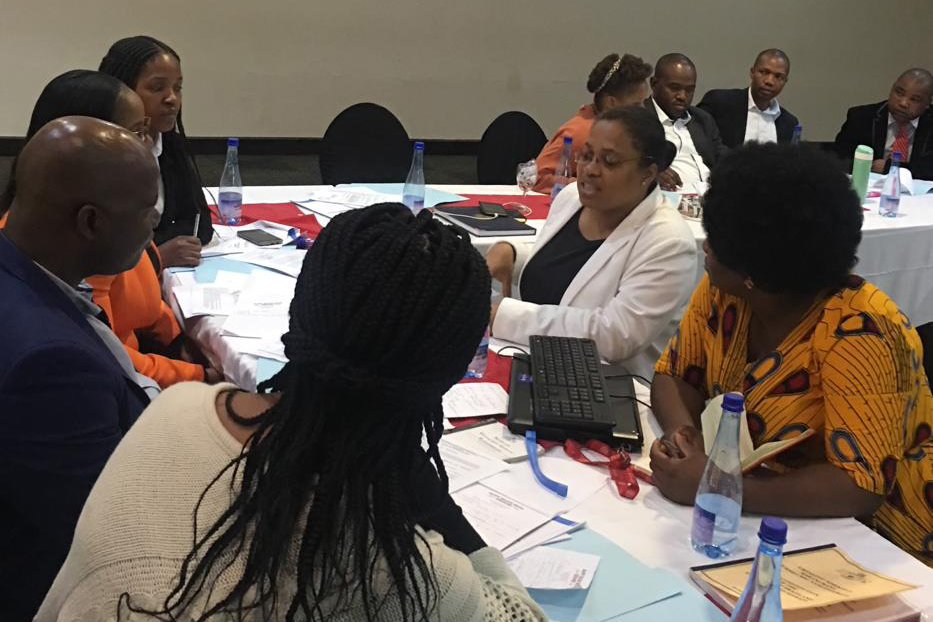
On May 29 2019, the ICJ facilitated a workshop with a number of justice sector officials and stakeholders who are active in the implementation of the Sexual Offenses and Domestic Violence Act (SODVA).
Building on previous engagements in 2018 and 2019, the participants decided on a clear plan of action for further coordination towards the eradication of sexual and gender based violence (SGBV) in Eswatini.
Participants in the meeting included representatives from the Office of the Director of Public Prosecutions, the Office of the Deputy Prime Minister, the police, correctional services, the judiciary and the Medical and Dental Association of Eswatini.
The meeting, was opened by ICJ Commissioner and Principal Judge of the High Court of Eswatini, Justice Qinisile Mabuza.
“For too many years, the clamour for this law has been loud; now that we have it, we have to interrogate how efficiently we are using it and check for the gaps that we need to address. Its implementation is in our hands, and we cannot allow ourselves to fail those that need our protection; we cannot fall foul of failing in our duty,” said Judge Mabuza.
A draft report, commissioned by the ICJ, was presented by Nonhlanhla Dlamini, the Director of Swaziland Action Group Against Abuse (SWAGAA).
The report, provided participants with a contextual analysis of challenges faced by survivors of SGBV in accessing the justice system in Eswatini.
ICJ Legal Adviser Timothy Fish Hodgson discussed key provisions of the SODV Act and the need for their interpretation and application consistently with the Convention on the Elimination of Discrimination Against Women.
SWAGAA’s draft report revealed that despite the enactment of the SODV Act significant barriers to access to justice for survivors of SGBV remain.
These include:
- Underreporting of SGBV;
- Stereotyping and discrimination faced by survivors when reporting;
- Partial application of SODV Act due to lack of knowledge on the part of key justice sector actors;
- Under-resourcing, lack of infrastructure and services presupposed by SODV Act which prevents full implementation;
- Continued stereotype-driven assumptions made by courts despite the outlawing of such approaches in the SODV Act;
- Lack of due diligence in the collection of medical evidence;
- A perception on the part of survivors that perpetrators are better taken care of in the prosecution process than survivors; and
- A growing and inaccurate perception of the SODV Act and its purposes, which has been facilitated by misleading media reports.
Participants made practical recommendations of how challenges could be addressed in their particular environments. Stressing the need to ensure continued collaboration and momentum in the implementation of the SODV Act, ICJ Africa Director Arnold Tsunga observed that: “Whether this process actually builds towards better protection from SGBV for the marginalized in Eswatini and the SODV Act’s impact is dependent on how participants in this platform and other officials are able to adopt practical measures and implement them effectively.”
Apr 1, 2019 | News
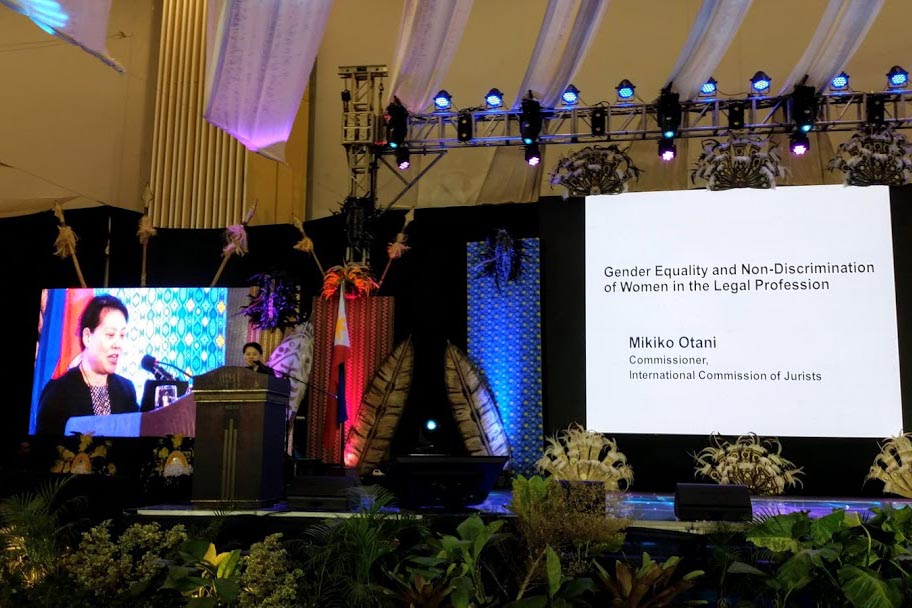
On 31 March, Mikiko Otani, ICJ’s Commissioner and a member of the UN Committee on the Rights of the Child, spoke to Filipino lawyers at the bi-annual National Lawyers’ Conference of the Integrated Bar of the Philippines (IBP), which took place at the Iloilo Convention Center, Iloilo City.
Mikiko Otani, who had been Chair of the Committee on International Human Rights of the Japan Federation of Bar Associations (JFBA) remains active in the JFBA, talked about the importance of advancing gender equality in the legal profession and the important initiatives of the JFBA on eliminating gender discrimination.
She noted that “female lawyers experience many forms of discrimination in the workplaces, practices, court rooms and bar associations.”
In countries all over the world, many formal barriers women used to face in entering the legal profession, including admission to law schools, the bar, have been eliminated.
However, women continue to face barriers, some of which are specific to the legal profession, but others common to women who work more generally.
Mikiko Otani noted that when she started practice as a lawyer in 1990, women applicants for jobs at law firms would often be asked during the interview whether they planned on getting married or having children.
Law firms preferred to hire male lawyers as they were thought to be unencumbered with looking after household matters, such as housekeeping and child care.
She recalled, “My colleagues questioned my decision to get married and have children almost immediately after becoming a lawyer while also continuing my practice as this was an unusual for women lawyers in Japan to do at that time. They felt that my decision to start a family at that point would be a hindrance to my career.”
She also talked about the bias observed in case assignment, where only male lawyers would be assigned to cases that required extensive traveling, while female lawyers would be often assigned to family cases, which are considered to be easy, unpopular or low-profile cases.
There was also frequent bias against female lawyers in promotion or offering partnership in law firms, contributing to a major gender gap in income between male and female lawyers.
In 2008, the JFBA formulated a Basic Plan which included the study of inequalities between male and female lawyers in Japan, finding ways to ensure a work-life balance for women, creating complaint handling bodies, and hosting trainings and educational activities in order to promote gender equality.
Mikiko Otani’s remarks resonated among many female lawyers in the Philippines, who shared in the discussion that followed that they face the same challenges.
“As lawyers, it is our responsibility to assist everyone, including women, in accessing justice,” said Marienne Ibadlit, a member of the Board of Governors of the IBP.
“We cannot be faithful to this responsibility if within our profession, we perpetuate gendered relationships and social inequalities that discriminate against women. A bar association that is committed to gender equality is a prerequisite to a justice system that does not discriminate against women and ensures the full enjoyment of women of their human rights.”
Contact:
Emerlynne Gil, Senior International Legal Adviser for Southeast Asia, t: +662 619 8477 (ext. 206) ; e: emerlynne.gil(a)icj.org
Mar 23, 2019 | News
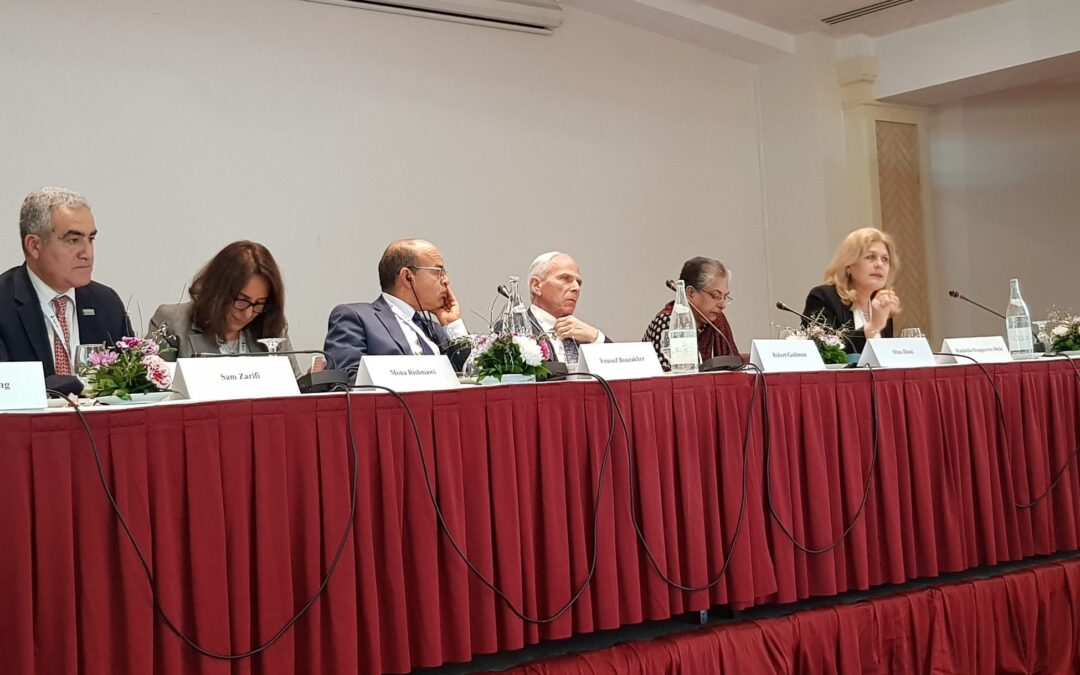
Some 100 distinguished judges and lawyers from around the world commit to expanding the reach of human rights and rule of law principles, in the face of a global backlash against human rights values. The Tunis Congress is the ICJ’s 18th Global Congress since 1952.
The ICJ World Congress, consisting primarily of jurists serving as Commissioners, ICJ National Section and affiliates, and the ICJ Secretariat, is discussing strategy for concerted action and issue a final Declaration reflecting the outcome.
“Since its founding 1952 the ICJ has been steadfast in its belief in the primacy of human rights grounded in rule of law principles as indispensable for well being of all people, as well as for peaceful and just international order,” said Sam Zarifi, ICJ Secretary General.
“Cynical manipulation by authoritarian populists positions the rule of law and human rights as obstacles to the popular will. But as the ICJ’s experience over the past six decades has shown, the rule of law is inextricably bound with the proper functioning of democracy and to the protection and promotion of human rights,” he added.
The ICJ Congress will focus on five key areas of concern: the independence of judges and lawyers and administration of justice; access to justice and accountability for human rights violations; global security and counter-terrorism; equality and non-discrimination; and fundamental freedoms and civil society space.
“The international human rights legal framework has allowed for huge improvements in the lives of people around the world since the Universal Declaration of Human Rights 70 years ago, and the ICJ has played an important role in the development of this legal framework,” Zarifi said.
“But we are now witnessing a resurgence of some of the dangerous, insidious ideas and practices that have led the world to carnage and chaos in the past: the scapegoating of groups such minorities, refugees and migrants; the undermining of multilateral institutions; and the silencing of civil society and those who are giving voice to those who are marginalized on the basis of their gender, religion, ethnicity, physical capacity or sexual orientation,” he added.
“Global powers such as the United States, Russia, and China are actively attacking the rule of law and respect for human rights around the world, while the European Union is distracted by the politics of xenophobia and fearmongering,” he further said.
“It is now crucial for other States, and for people around the world, to show that respect for the rule of law and human rights are universal values and global demands, and the ICJ is proud to pull together the community of jurists from all regions of the world to support these values and demands,” he added.
In the face of these threats and challenges, the Congress will consider means to defend and strengthen the rule of law and legal protection of human rights globally, regionally and in individual countries.
The ICJ is made up of around 60 distinguished judges and legal practitioners from all parts of the world and diverse, works on all five continents and addresses human rights protection in dozens of countries.