Nov 25, 2019 | Multimedia items, News, Video clips
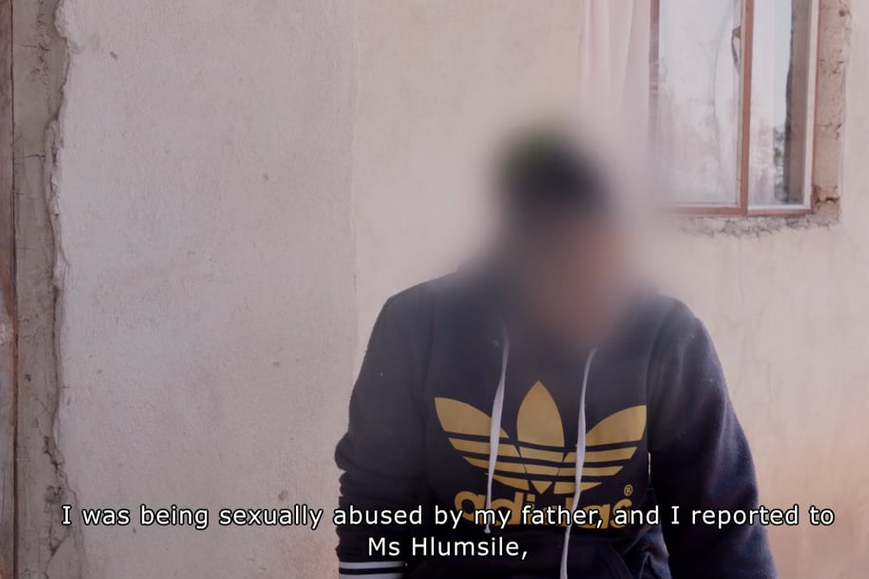
The ICJ just launched a 15 minute documentary showing contributions by the ICJ and local human rights defenders in bringing the Sexual Offences and Domestic Violence (SODV) Act to pass in Mbabane, Eswatini.
The documentary was launched at an SODV Act media training held with the Cooperation for the Development of Emerging Countries (Cospe) and the Editor’s Forum. The training was aimed at taking a human rights-based approach to understanding the Act, following pushback from those who have expressed the view that parts of the Act are an as an affront to Swazi tradition and culture.
In an effort to combat the various challenges presented by SGBV, the Kingdom of Eswatini introduced the Sexual Offences and Domestic Violence (SODV) Act in 2018. The Act complies with its commitments under international and regional human rights law to fight the scourge of SGBV in the country.
The documentary highlights the way in which the Act is expected to be instrumental in combatting the scourge of sexual and gender-based violence, as well as areas in which it has been contested. The documentary was well-received by participants of the training and opened up an engaging dialogue about its usefulness.
The media is at the forefront of informing public discourse about the Act and it is hoped that this training provided some much-needed clarity around the Act.
Watch the documentary:
Contact
Khanyo Farisè (Legal Associate): e: Nokukhanya.Farise(a)icj.org
Shaazia Ebrahim (Media Officer): e: shaazia.ebrahim(a)icj.org
Nov 7, 2019 | News
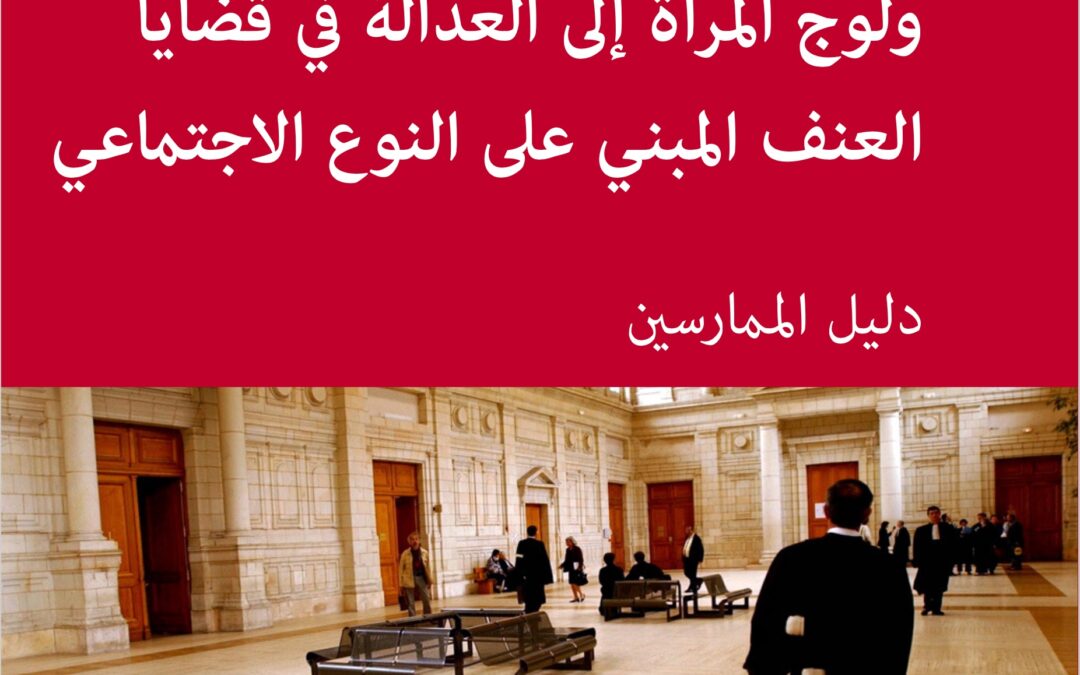
Today, the ICJ published an Arabic translation of Practitioners’ Guide N°12 on Women’s Access to Justice for Gender-based Violence.
The Guide is designed to support legal practitioners and human rights defenders involved or interested in pursuing cases of gender-based violence.
It provides information about regional and international law and standards relevant to gender-based violence, advice on implementing these standards as part of domestic law reform and examples of existing good practice in seeking protection for women.
The Guide (Arabic version here) also addresses the practical issues that are faced by women who have been subject to gender-based violence and the steps that are necessary to secure their access to justice in practice. It considers women’s experiences of the criminal justice system and reflects on how the justice system deals with women’s safety and need for access to services beyond legal assistance.
Download
Universal-Womens accesss to justice-Publications-Practitioners’ Guide Series-2019-ARA (full guide, in PDF)
Nov 3, 2019 | News
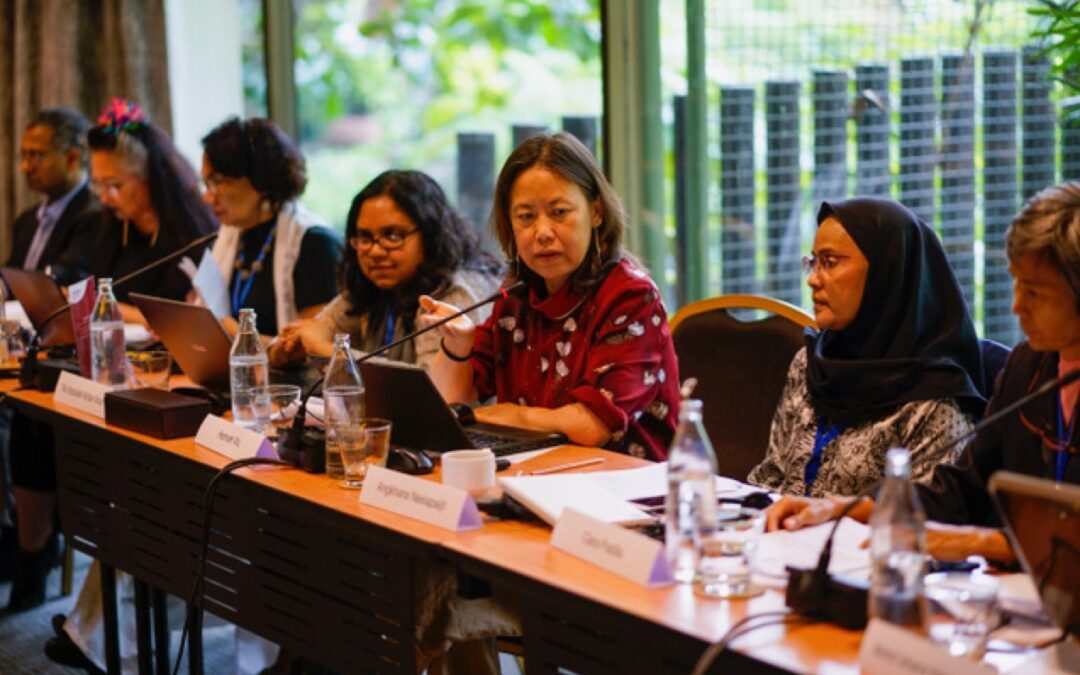
Bangkok, Thailand – From 1 to 2 November 2019, ICJ in collaboration with the UN Office of the High Commissioner for Human Rights (OHCHR) and the Ralph Bunche Institute for International Studies, hosted a consultation on gender and the right to freedom of religion or belief with the UN Special Rapporteur on Freedom of Religion or Belief, Dr. Ahmed Shaheed.
The primary objective of the consultation was to provide a forum for human rights defenders, particularly women and human rights defenders belonging to sexual orientation, gender identity, gender expression and sex characteristics (SOGIESC) minorities to share their perspectives on laws, practices and anti-rights strategies based on religion or belief that discriminate against women and SOGI groups and individuals in Asia. The consultation was attended by at least fifty-two (52) human rights defenders from all over Asia.
Emerlynne Gil, ICJ’s Senior International Legal Adviser, in her opening address, emphasized that gender equality and the right to freedom of religion or belief should not be viewed as inimical to each other. She said, “Women and individuals belonging to sexual orientation and gender identity minorities should also be able to being to a faith or religion of their choice, or religion into which they are born and they should continue to belong to the religion or belief without being discriminated against by the faith or religious community.”
The consultation included discussions on the domestic contexts and legal frameworks in relation to freedom of religion and the rights of women and SOGIESC minorities, including in relation to the right to health. The participants considered challenges faced by women and SOGIESEC minorities when religious leaders act as justice actors were also discussed. The consultation, while highlighting the good practices in advancing the rights of women and SOGIESC minorities, also explored existing challenges and tensions in respect of achieving gender equality.
At the conclusion of the consultation, Dr. Shaheed noted the diversity of the participants in the room, who came from all over Asia. He emphasized that “in order to engage more effectively and strategically, it is imperative that we improve our literacy in relation to the human rights framework and of religion in order to better understand its intersectionality.”
Contact
Sushmitha Thayanandan, National Legal Advisor, Sri Lanka (ICJ) e: sushmitha.thayanandan(a)icj.org
Oct 16, 2019 | Multimedia items, News, Video clips
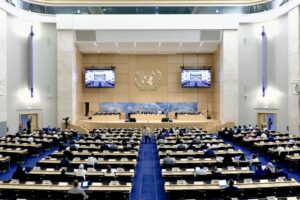
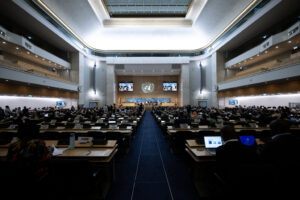
ICJ’s first ever fundraising gala took place on 14 October at the iconic setting of the Palais Eynard in Geneva.
Sami Kanaan, Counselor and former Mayor of the City of Geneva, which provided its generous support, opened the event by speaking of the importance of the ICJ cooperation with the local legal community.
Next, several speakers offered a few answers to the theme of the evening: ‘Geneva, the defense of the Rule of Law: what can I do?’.
Pierre de Preux, former Bâtonnier, explained the great value that can be brought to defending rule of law in the world by supporting the ICJ through missions, as he himself did in Tunisia in the 80s.
He was followed by ICJ Commissioners Sir Nicolas Bratza (former President of the European Court of Human Rights), who discussed backsliding on human rights in contemporary Europe; lawyer Reed Brody, who discussed his work in bringing powerful dictators to account for human rights atrocities; and Justice Martine Comte of France, who described her experience in leading ICJ missions in Central Asia.
The ICJ President Prof. Robert Goldman and ICJ Secretary General Sam Zarifi also addressed the attendees.
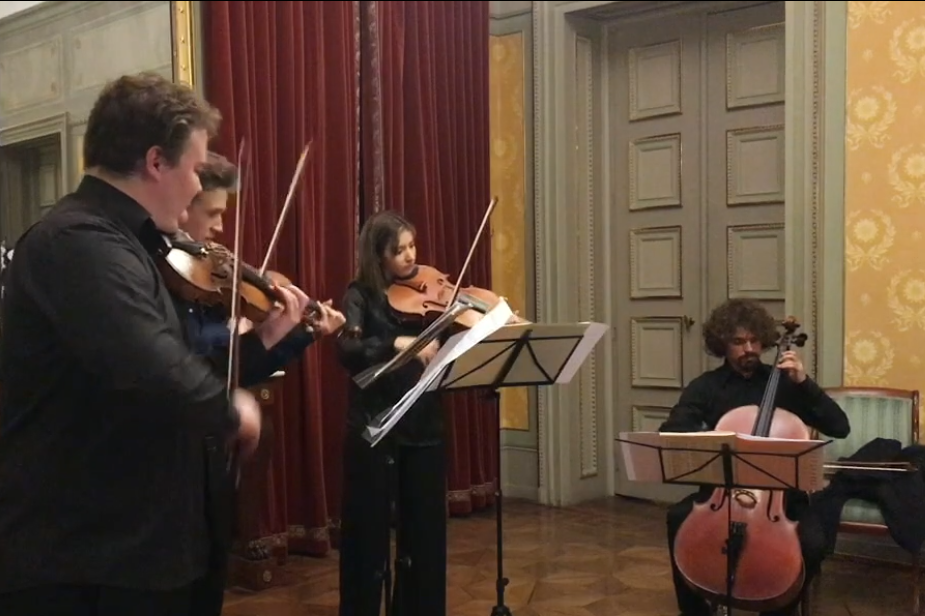
The exchange was then followed by an inspiring concert by the young virtuosi of the Menuhin Academy and a delicious Buffet cocktail provided by refugee Chefs Jena Hamza (Syrian Kurd) and Sritharan Tambithurai (Sri Lanka). All in all, a wonderful evening combining substance, beauty and friendship.
Watch the video here:
Sep 25, 2019 | Events, News
The ICJ is organizing its first fundraising Gala concert on Monday 14 October at 7:30pm in the Palais Eynard, 4 rue de la Croix Rouge, Geneva. The event will support the ICJ and its fight for the defense of the Rule of Law in the world and marks the end of the series of events we organized for our 60th anniversary in the city of human rights.
The theme of our Gala will be: “Geneva, the Defense of the Rule of Law: What can I do?”
After a welcome from the Mayor of Geneva and an introduction from Me Pierre de Preux, former Bâtonnier of the Geneva Bar, ICJ Commissioners including Sir Nicolas Bratza (former President of the European Court of Human Rights), Dame Silvia Cartwright (former Judge and Governor General of New Zealand), Professor Bob Goldman (ICJ President and former President of the Inter-american Commission on Human Rights) and Ms Roberta Clarke (ICJ Executive Chair, UN Women’s Office for the Caribbean, UN Women’s Regional Office for Asia and the Pacific) will give concrete answers to this question.
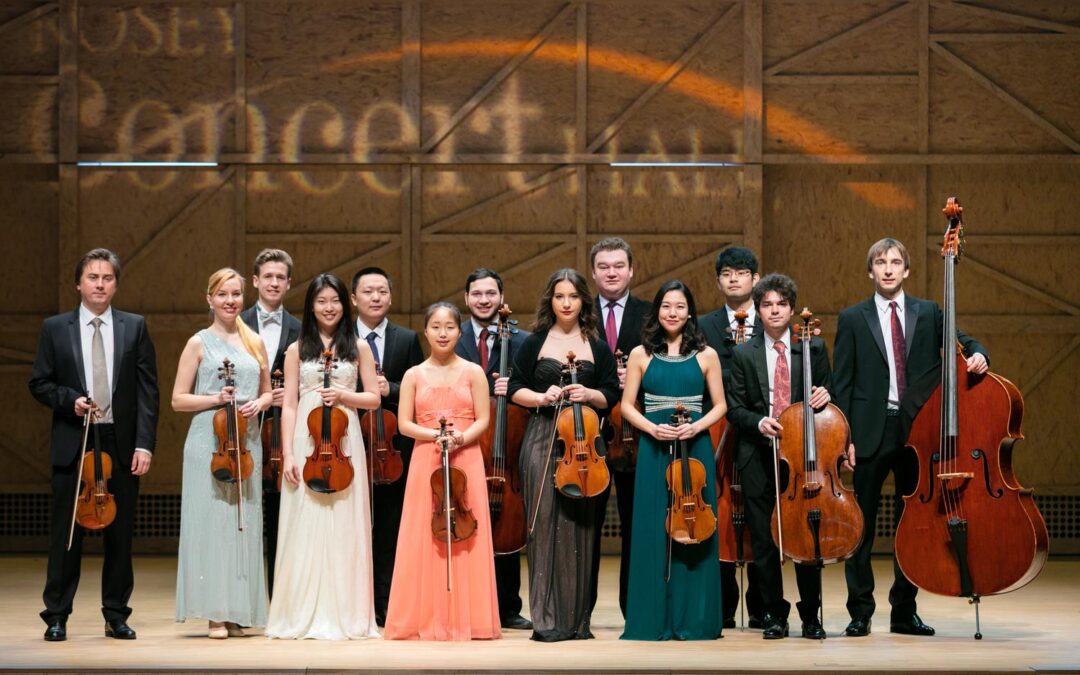
But the evening is also to enjoy a wonderful Concert of the ‘Soloists of the Menuhin Academy’ (photo) and the cocktail after that.
To reserve: Pascale.andris@icj.org
You cannot come but still want to make a donation: please click here
Download the invitation
Invitation Gala 14 Oct