Jun 22, 2018 | Advocacy, Non-legal submissions
The ICJ today issued a statement on online violence against women and girls.
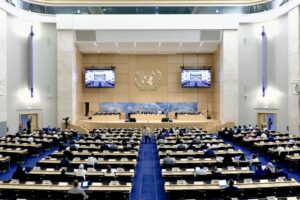
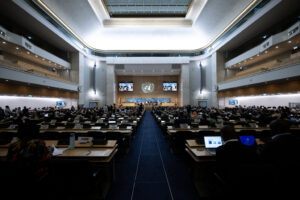
The statement was issued on the occasion of an interactive dialogue at the UN Human Rights Council, with the UN Working Group on discrimination against women. The ICJ was unable to read the statement due to the limited time provided for NGO statements. The statement is as follows:
“International Commission of Jurists (ICJ) welcomes the Report of the Special Rapporteur focusing on online violence against women and girls.
This is timely considering the noted rise in incidents of women being attacked online for expressing their opinions. In many countries, women political dissenters and women human rights defenders, who express their views through social media, face backlash from the subjects of their criticisms and their supporters. They are persecuted and are threatened with sexual and physical violence. Many of the attacks against them clearly embody harmful gender stereotypes.
The ICJ notes that these harmful stereotypes exist in many countries around the world and they hinder women from accessing justice. Unfortunately, technology and social media play a role in spreading and proliferating these harmful gender stereotypes.
The ICJ continues to assist in strengthening the capacities of formal justice actors such as judges to help women access justice and to eliminate gender stereotypes. In 2016, the ICJ engaged with judges from the Philippines, Thailand, Timor Leste, and Indonesia when they developed and adopted the Bangkok General Guidance for Judges in Applying a Gender Perspective.
The ICJ joins the Special Rapporteur’s recommendation for States to provide training for all justice actors, including judges, to ensure their ability to bring perpetrators of cases of online and ICT-facilitated violence to justice. The ICJ offers the General Guidance as a tool for justice actors to consider evidence in these cases without resorting to gender stereotypes and to decide cases based on the principle of equality under international human rights standards.
The ICJ shall persist in its work to enable women to access justice and to eliminate gender-based violence and discrimination.”
May 26, 2018 | News
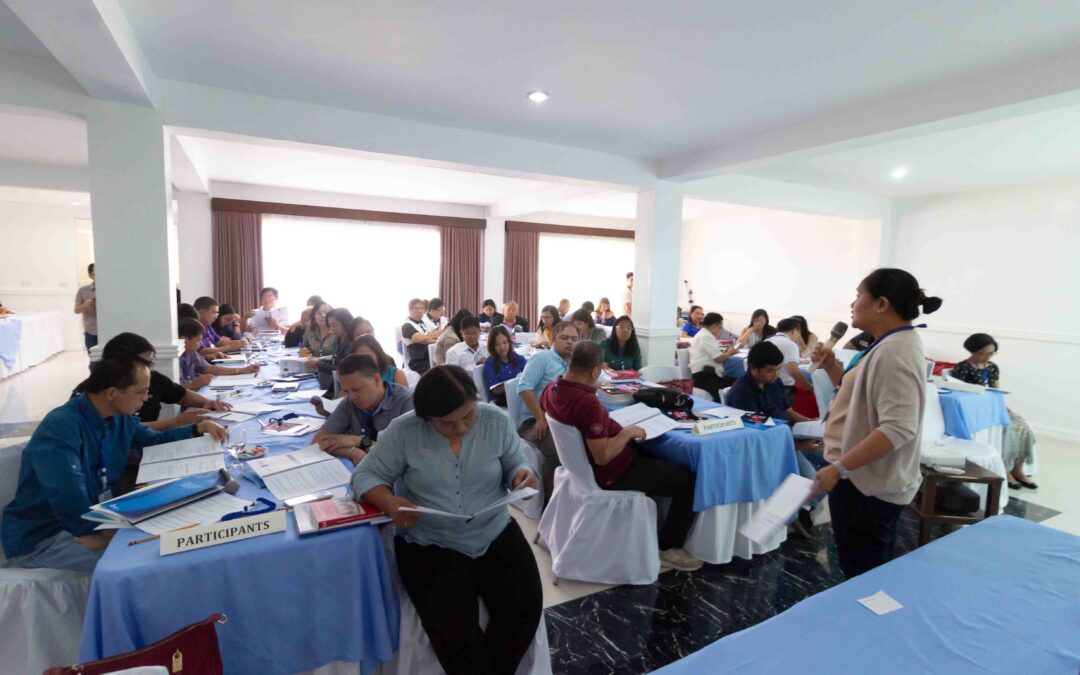
Today, the ICJ and the Integrated Bar of the Philippines (IBP) concluded a two-day workshop on eliminating gender discriminatory attitudes and behaviours towards women with a commitment to step up efforts on the protection of rights of women in the country.
Participants at the workshop were lawyers from IBP’s legal aid committees from the Eastern and Western Visayas Regions.
The workshop was held in Bohol from 25 to 26 May 2018.
“Legal aid providers are at the frontline of assisting women in accessing justice,” said Frederick Rawski, ICJ’s Regional Director for Asia and the Pacific.
“It is critical that they are able to immediately detect discriminatory conduct against the women they are assisting and help in eliminating such discrimination,” he added.
Recourse to gender stereotypes in the administration of justice widespread in the Philippines and they impact women’s access to justice.
Participants at the workshop noted, in this respect, examples such as the belief that women, unlike men, are weak in the physical and cognitive sense, and the ‘virtuous-or-good-woman-versus-bad-woman-or slut’ stereotype that are still reflected in law and court decisions in Philippines.
It was noted that the UN Committee on the Elimination of Discrimination against Women had emphasized that “stereotyping and gender bias in the justice system have far-reaching consequences for women’s full enjoyment of their human rights.”
The discussions during the two-day workshop also focused on strengthening the capacity of legal aid providers to further enhance access to justice of women whose loved ones and relatives had been extra-judicially killed.
Atty. Abdiel Dan Fajardo, National President of the IBP addressed the ongoing extrajudicial killings and culture of impunity in the Philippines that affects women particularly.
He said: “Without combatting the culture of impunity, legal aid lawyers cannot enhance access to justice for women. Therefore, it is high time to bolster the knowledge and awareness of legal aid lawyers in combatting impunity that affect women and their children.”
It was recalled that the remarks of the UN Special Rapporteur on extrajudicial, summary, or arbitrary executions, Agnes Callamard, in her report to the Human Rights Council in 2017, stressed that women are particularly affected by the extrajudicial killing of their partners and other family members.
The Special Rapporteur noted that in the Philippines, since majority of the victims are men, their female partners, “by virtue of their gender-based roles, are left to confront the associated stigma, fear, insecurity and economic deprivation, in addition to the burdens of identifying and burying their dead loved ones and seeking justice.”
At the Bohol workshop, ICJ and IBP also signed a Memorandum of Agreement to commence joint work on strengthening the IBP’s National Center for Legal Aid (NCLA).
May 24, 2018 | News, Publications, Reports, Thematic reports
The widespread occurrence of sexual and gender-based violence (SGBV) in Swaziland requires prompt action to enact the Sexual Offences and Domestic Violence Bill, says the ICJ in a report released today.
The ICJ’s report found that discriminatory practices based on customary laws and traditional beliefs undermine equality between men and women and contribute to an environment in which SGBV is at crisis point in the country.
“As the Senate of Swaziland deliberates over the Sexual Offences and Domestic Violence Bill, it must recall that enactment of the Bill is an essential step in complying with recommendations of the UN Human Rights Committee and CEDAW Committee and as a means of discharging the commitments made by His Majesty’s Government during the 2016 Universal Periodic Review,” said Arnold Tsunga, Director of the ICJ Africa Regional Programme.
In earlier submissions to the Senate of Swaziland, the ICJ noted that enactment of the Bill is a matter required of the Kingdom of Swaziland pursuant to its international human rights law obligations, including those arising from the Africa region, to criminalize and sanction the perpetrators of SGBV.
His Majesty’s Vision 2022, the aims and targets of the Deputy Prime Minister’s Office and Swaziland’s consensus in the adoption of the 2030 Agenda for Sustainable Development reinforce compliance with those obligations.
The Sexual Offences and Domestic Violence Bill 2015, first drafted over ten years ago, has still not been passed into law, including because there is a perception that some of its provisions will infringe Swazi law and custom.
“Legislative and policy reform is needed as is the enhanced technical capacity and commitment of justice actors and policy makers to combat domestic and sexual violence,” Tsunga added.
Contact
Arnold Tsunga, Director, ICJ Africa Regional Programme, t: +27.73.131.8411; e: arnold.tsunga(a)icj.org
Alex Conte, ICJ Global Redress and Accountability Initiative, t: +41.79.957.2733; e: alex.conte(a)icj.org
Download
Swaziland-GRABaselineStudy-Publications-Reports-Thematic reports-2018-ENG (full report in PDF)
Apr 13, 2018 | Multimedia items, News, Video clips
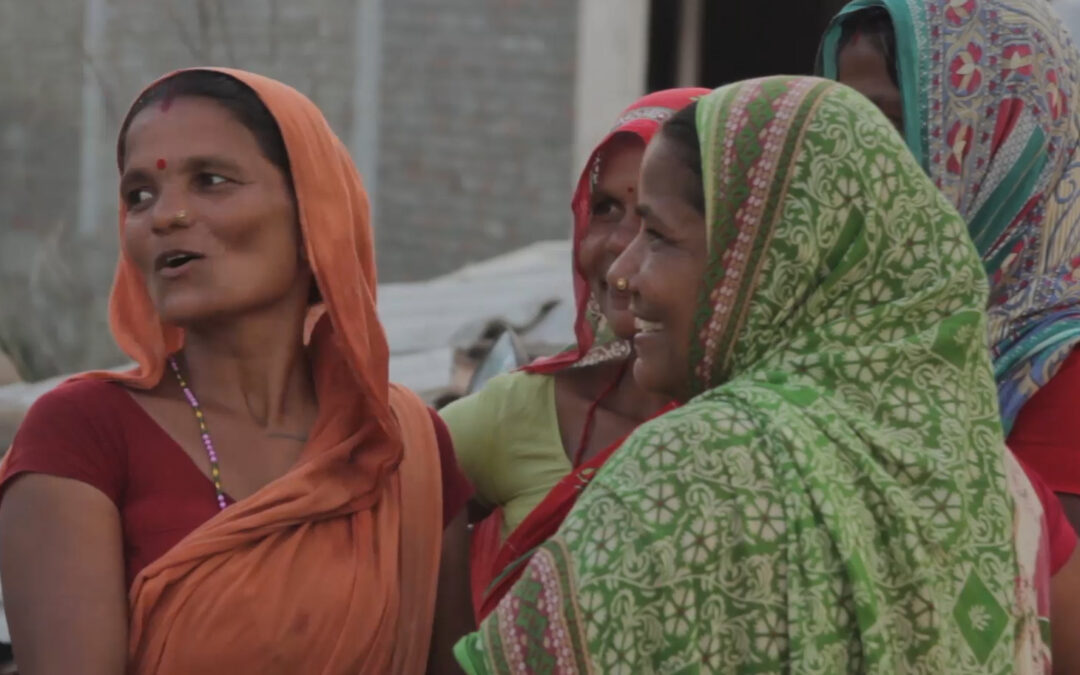
In 2017, Nepal held its first local-level elections for almost 20 years and the first ever conducted under the new federal state structure established under the 2015 Constitution. They were significant because of the unprecedented number of women who stood as candidates and won.
Women in Nepal have experienced systemic discrimination for decades, especially those in rural areas, among ethnic minorities and marginalized groups.
These elections presented the women of Nepal with the opportunity to break through barriers that have prevented them for decades from participating in political and public life.
The Local Level Governance Act lays out the mandate and functions of newly formed local bodies.
If the recently elected women are allowed to meaningfully participate in local governance, the new law could empower them further so that they can take the lead in addressing key human rights issues, especially the human rights of women.
This video documents the campaign of Rikam BK, a Nepalese politician, belonging to the Communist party of Nepal-Maoist (CPN-M).
In the Nepal Legislative Election held on 26 November 2017, she was elected as a Sub-Mayor (NCP Maoist) of Lahan Municipal Council winning 5000 votes.
She is the chairperson of the Dalit Preservation Abhiyan Forum, in Siraha. She has been advocating the issue of land certificates in the names of both husband and wife.
She continues to call for those deprived of land rights to have equal access to land. She is also the member of National Alliance for Women Human Rights Defenders (NAWHRD).
Many of the women featured in this video are women human rights defenders who have been working to promote and protect human rights in Nepal for decades.
Many of them participated in the Regional Conference on Women Human Rights Defenders as Political Actors, which was organized by the ICJ, with the cooperation of NAWHRD.
The conference was held from 28 to 29 August 2017 in Kathmandu.
The ICJ recently released a briefing paper laying out the key points of the conference and offering a set of future actions aimed at supporting WHRDs in their role as political actors pursuing a human rights agenda.
Watch the video
Mar 20, 2018 | Advocacy
The ICJ today submitted a briefing note to the Senate of Swaziland calling for its urgent adoption of the Sexual Offences and Domestic Violence Bill 2015.
The ICJ’s briefing note concludes that enactment of the Bill is a matter required of the Kingdom of of Swaziland pursuant to its regional and universal human rights law obligations to criminalize and sanction the perpetrators of sexual and gender-based violence. Compliance with those obligations is reinforced by the ‘Vision 2022’ of His Majesty King Mswati III, the aims and targets of the Deputy Prime Minister’s Office and Swaziland’s consensus in the adoption of the 2030 Agenda for Sustainable Development.
The ICJ’s briefing note also concludes that, ten years after initial drafting of the Bill, its enactment during the current session of the Parliament of Swaziland is an essential step in complying with recommendations of the UN Human Rights Committee and CEDAW Committee and as a means of discharging the commitments made by His Majesty’s Government during the 2016 Universal Periodic Review.
Swaziland-SOADVBill-Advocacy-ParliamentaryBriefingNote-2018-ENG (Parliamentary Briefing Note, in PDF)