Feb 27, 2017 | News, Publications, Reports, Thematic reports
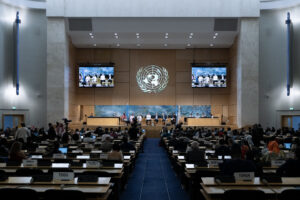
The Government of Myanmar should impose a moratorium on the development of Special Economic Zones (SEZs) until it can ensure SEZs can be developed inline with international human rights laws and standards, said the ICJ at a report launch held today in Yangon.
The 88-page report, entitled Special Economic Zones in Myanmar and the State Duty to Protect Human rights, assesses the laws governing Myanmar’s SEZs and finds that the legal framework is not consistent with the State’s duty to protect human rights.
For example, a case study examining the Kyauk Phyu SEZ in Rakhine State shows that the land acquisition process initiated in early 2016 lacks transparency, does not comply with national laws on land acquisition, and risks violating the rights of 20,000 residents facing displacement.
“The SEZ Law undermines the protection of human rights, and critical legal procedures are often poorly implemented, so the Kyauk Phyu project risks repeating the rights violations that have been associated with SEZs in the past,” said Sam Zarifi, the ICJ’s Asia Director.
“The NLD-led Government can make a break from the past by ensuring economic development projects benefit Myanmar’s people, rather than rushing to facilitate projects which result in human rights violations and ultimately undermine sustainable development,” he added.
Myanmar’s legal framework for SEZs is based on the 2014 SEZ Law and incorporating national laws governing land, labour and the environment.
The report shows that while national laws require Environmental Impact Assessments and the application of international standards on involuntary resettlement, the SEZ Law does not establish clear accountabilities for the implementation of these procedures.
This has contributed to human rights violations and abuses in each of Myanmar’s three SEZs, the report says.
“It has been encouraging that government officials have emphasized their commitment to protecting human rights in SEZs in line with the rule of law,” said Sean Bain, the ICJ’s Legal Consultant in Myanmar and lead author of the report.
“The legal reforms recommended in this report will be critical to meet these commitments while fulfilling the State’s duty to protect human rights in SEZs. We also suggest that investors take heightened due diligence measures to ensure they are not complicit in rights violations,” he added.
The report was based on extensive legal research as well as interviews with over 100 people, from affected communities to investors and government officials, during 2016.
Key recommendations to the Government of Myanmar
- Protect human rights in Myanmar’s SEZs by amending the SEZ Law, through meaningful public consultation in accordance with international standards.
- Order a moratorium on the development of SEZs, and on entering related investment agreements, until the SEZ Law has been amended to ensure conformity with international human rights law and standards.
- Commission a Strategic Environmental Assessment for the Kyauk Phyu SEZ, in line with Myanmar’s environmental conservation laws. This would involve consultation to inform decision-making on the Kyauk Phyu SEZ and related projects, by identifying cumulative environmental and social impacts of all the developments in Kyauk Phyu, while considering conflict dynamics and economic development in Rakhine State.
- Suspend land acquisition in Kyauk Phyu until after the completion of a resettlement plan that is in line with international standards, as required in the EIA Procedure.
Contact
Sean Bain, ICJ Legal Consultant in Myanmar, t: +95 9263533230 ; e: sean.bain(a)icj.org
Myanmar-SEZ assessment-Publications-Reports-Thematic reports-2017-ENG (full report, in PDF)
Myanmar-SEZ assessment SUMMARY-Publications-Reports-Thematic reports-2017-ENG (executive summary of the report, in PDF)
Myanmar-SEZ assessment full-Publications-Reports-Thematic reports-2017-BUR (Burmese version of full report, in PDF)
Myanmar-SEZ assessment-Publications-Reports-Thematic reports-2017-BUR (Burmese version of the executive summary, in PDF)
Feb 13, 2017 | News
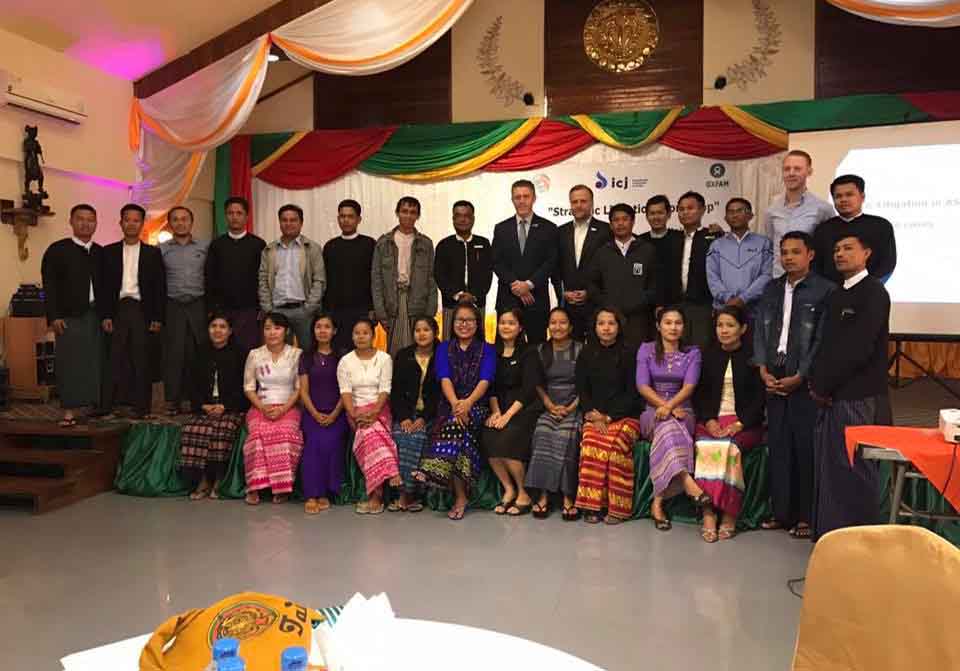
The workshop, held from 11-12 February in Sittwe, brought lawyers and civil society together to discuss of experiences of strategic litigation elsewhere in Myanmar and the region, and consider potential public purpose litigation cases in Rakhine State.
Dr Daniel Aguirre, the ICJ’s International Legal Adviser in Myanmar, provided an introduction to strategic litigation as a method for promoting accountability in a time of transition in governance.
He noted the critical role of independent lawyers in protecting human rights, by representing clients from all communities in Rakhine State.
And he emphasized the importance of strategic litigation as a means to prevent violations and abuses of human rights, or to seek reparations where violations and abuses have occurred.
Kingsley Abbot and Jintana Sakulborirak, from the ICJ’s Asia Regional Office in Thailand, discussed strategic litigation cases from the region, including in northern Thailand where community members have launched an action to appeal the legality of land acquisition for a planned SEZ in Tak Province.
The cases highlighted how media engagement is a critical part of strategic litigation, to raise public attention on human rights issues and demands for accountability in the implementation of investment projects.
Daw Aye Mon Thu, advocate from Dawei Pro Bono Lawyers Network presented the experiences of Heinda Mine cases from Dawei Region, Southern Myanmar, emphasizing the importance of trust-building and cooperation with local community as stake-holder. Such a strategic litigation cases are extremely rare in Myanmar.
Discussions followed about potential cases for strategic litigation from Kyauk Phyu and Sittwe, including issues related to land acquisition for railways construction and an SEZ appear to have been carried out unlawfully in violation of human rights.
Participants discussed the principle of undertaking litigation for broader advocacy objectives rather than solely focusing on actually winning the case in the court.
They also reflected on the challenges and limitations for Myanmar lawyers to undertake strategic litigation.
Highlighting the vital role of lawyers, speakers encouraged participants to consider strategic litigation as a means to challenge unlawful acts that violate or abuse human rights, particularly accompanying business enterprises.
Rakhine State is among Myanmar’s poorest and most isolated provinces, where lawyers and CSOs have had limited exposure to concepts of human rights and international laws.
This workshop, the first of its kind to be held in Rakhine State, is part of efforts to address this gap by building legal literacy on international human rights law and lawyers to consider litigation as a strategy to protect human rights.
Feb 10, 2017 | News
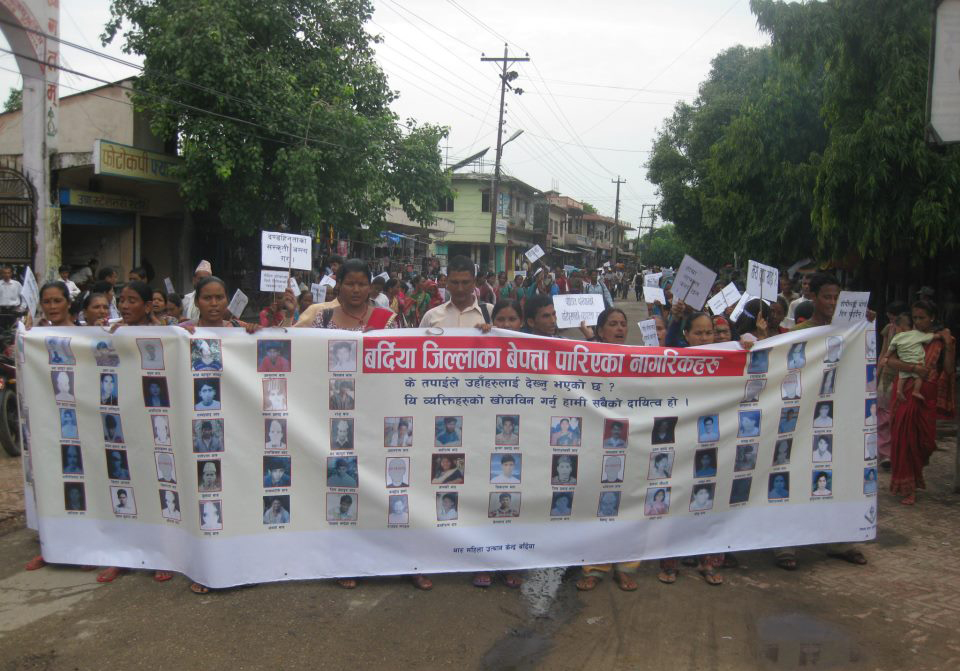
Extending the mandate of the Truth and Reconciliation Commission (TRC) and Commission on Investigation of Disappeared Persons (COID) without accompanying legal amendments to the TRC Act, 2014, in line with Nepal’s international legal obligations, will be meaningless, the ICJ said today.
It will fail to empower the commissions to address the root causes of the conflict and provide justice to victims, the ICJ added.
On 9 February 2017, the Government of Nepal formally extended the mandate of the TRC and COID for another year.
The TRC and COID were established on 10 February 2015 through the Commission on Investigation of Disappeared Persons, Truth and Reconciliation Act, 2014 (TRC Act), with the mandate to investigate alleged human rights abuses committed by both sides of Nepal’s decade-long armed conflict between the Government of Nepal and Communist Party of Nepal-Maoist (CPN-M) rebels.
However, due to a flawed legal mandate, resource and capacity limitations, and lack of political will, the commissions have been unable to carry out their work effectively.
“Unless the government of Nepal is prepared to amend the TRC Act in line with the Nepal Supreme Court’s rulings and international law, and to take other concrete steps to address the persistent challenges that have plagued the commissions’ ability to complete their work over the past two years, the extension of their mandate will be meaningless,” said Sam Zarifi, the ICJ’s Asia-Pacific Director.
In two separate rulings, the Nepal Supreme Court has previously ruled that the TRC Act and its predecessor TRC Ordinance were in violation of Nepal’s international legal obligations, as they allowed for amnesties for gross human rights abuses and serious violations of international humanitarian law amounting to crimes under international law.
Despite repeated calls by the ICJ, as well as other human rights and victims groups, to ensure a credible transitional justice process by amending the TRC Act in line with Nepal’s Supreme Court order and international standards, and by providing adequate resources to enable the commissions to carry out their work effectively and independently, the Government of Nepal has thus far failed to take any steps to implement the Supreme Court’s orders.
Nevertheless, the commissions finally commenced their work in February 2016, one year into their two-year mandate, and despite a severe lack of public faith in the commitment of the government and the ability of the commissions to deliver justice, victims came forward to submit more than 60,000 complaints to the two commissions combined.
“The government of Nepal must demonstrate its commitment to deliver justice to victims of Nepal’s armed conflict,” said Zarifi. “Victims have already waited more than a decade to receive justice and are losing hope in the transitional justice process.”
“The Nepal government and political parties must not once again betray the trust of victims by perpetuating a fundamentally flawed transitional justice process without concomitant reforms that will address victims’ rights to truth, justice and reparation,” he added.
While extending the mandate of the TRC and COID, the Government of Nepal must immediately establish a credible transitional justice process that ensures victims’ rights to truth, justice and reparation by: amending the TRC Act in line with the Supreme Court rulings and international law; empowering the TRC and COID with adequate resources to function independently, transparently and in a victim-centred manner; and, adopting necessary legislation to criminalize serious international crimes, including enforced disappearance, torture and other ill-treatment, and rape and other sexual violence, with retroactive effect and without any limitations period for conflict-era cases.
Feb 2, 2017 | News
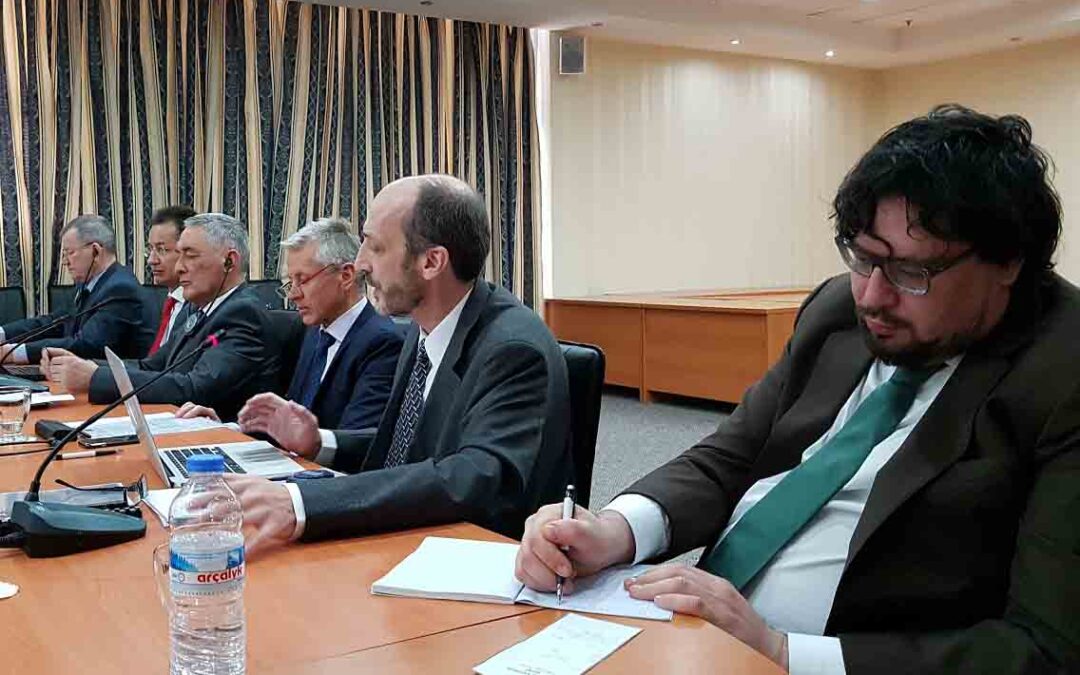
Today, the ICJ in cooperation with the the Supreme Court of Turkmenistan holds a seminar on Comparative Approaches to Judicial Ethics.
The seminar, supported by the European Union, will be attended by judges of the Supreme Court of Turkmenistan as well as other judges.
ICJ experts, including Judge Vladimir Borissov, former judge of the Supreme Court of Kazakhstan, Judge Georg Stawa, the President of the European Commission for the Efficiency of Justice (CEPEJ), and others will present comparative perspective and international standards related to the judicial ethics, accountability and guarantees for judges.
This is the second such event the ICJ holds in Turkmenistan. The first event, organized in June 2016, was dedicated to the issue of international obligations in national courts.
Turkmenistan-Judicial ethics seminar-News-web story-2017-RUS (full story in Russian, PDF)
Turkmenistan-Seminar Ethics-Agenda-2017-ENG (agenda in English, PDF)
Turkmenistan-Seminar Ethics-Agenda-2017-RUS (agenda in Russian, PDF)

Jan 19, 2017 | News
The Sri Lankan government must deliver on the clear demand for justice from Sri Lankans nationwide by implementing the Consultation Task Force recommendations without further delay, the ICJ said today.
Among these recommendations, the calls for a special court with international judges and a bar against amnesties for crimes under international law are of particular importance, the ICJ added.
The Consultation Task Force on Reconciliation Mechanisms (CTF), a panel of 11 independent eminent persons appointed by Prime Minister Ranil Wickremesinghe in January 2016, publicly released its final report on 3 January 2017.
The report, reflecting the views of people across the country gathered through island-wide public consultations on transitional justice, highlights the lack of public confidence in the justice system’s capacity and will to deliver justice for victims of Sri Lanka’s nearly 30-year armed conflict that ended in 2009.
“The CTF report highlights a widespread lack of trust among Sri Lankans across the country, regardless of region, ethnicity, religion or language, in the ability of the criminal justice system in its current form to address serious human rights abuses stemming from the conflict,” said Nikhil Narayan, the ICJ’s South Asia senior legal adviser.
The report also calls upon the Government of Sri Lanka to take necessary steps to ensure a credible transitional justice process in line with the October 2015 UN Human Rights Council resolution 30/1 that it co-sponsored.
“If the Sri Lankan government wants to restore public confidence in the system, it must seriously consider victims’ voices and implement the CTF recommendations on truth, justice and reparation consistent with the commitments it voluntary undertook at the Human Rights Council,” Narayan added.
Importantly, the CTF report reiterates the commitments pledged in HRC resolution 30/1, calling for active international participation in a special judicial mechanism established to deal with accountability for human rights abuses committed during the conflict by both sides, and for a bar against amnesties for international crimes.
According to the ICJ, the Sri Lankan government took an important first step towards reconciliation when it adopted the UN resolution and later established the CTF to carry out public consultations to hear a cross section of voices on transitional justice.
“Unfortunately, since then, it has been disappointing in its lack of urgency in implementing much of those stated promises and in its apparent disregard for the CTF recommendations,” Narayan said.
Several members of the government have dismissed the CTF’s recommendations, especially with regard to the inclusion of at least one international judge on every bench of the special judicial mechanism.
The Minister of Foreign Affairs recently spoke of the need for “an independent and credible domestic mechanism” without alluding to any international participation, as has been reiterated by those seeking redress as a crucial element to ensure faith in the justice mechanism.
The ICJ has in the past highlighted Sri Lanka’s culture of impunity in the justice system looking at a number of emblematic cases, and called into question the State’s capacity and political will to use the criminal justice system and other ad-hoc measures to deliver justice and accountability to victims and survivors of serious human rights abuses.
“As the situation of Sri Lanka comes before the UN Human Rights Council again this March, the Sri Lankan government is in a position to demonstrate both to the UN Member States but more importantly to its own people at home its seriousness in pursuing truth, justice, reparation and non-recurrence for conflict victims who have been waiting for justice for decades. It must seize this opportunity before it is one more of many missed opportunities,” Narayan added.
Contact:
Nikhil Narayan, ICJ South Asia senior legal adviser, t: +91-8939325204 (Chennai); +94-758898067 (Sri Lanka); +1-562-261-3770 (Whatsapp) ; e: nikhil.narayan(a)icj.org
Download the full text with additional background info, in PDF:
Sri Lanka-CTF recommendations-News-Press release-2016-ENG