Jul 8, 2021
In a letter dated 8 July 2021, ICJ expressed its concerns that the MTN Group has agreed to implement an unlawful request from the Swazi government to disrupt internet access in eSwatini.
Jun 4, 2021 | Agendas, Events, News
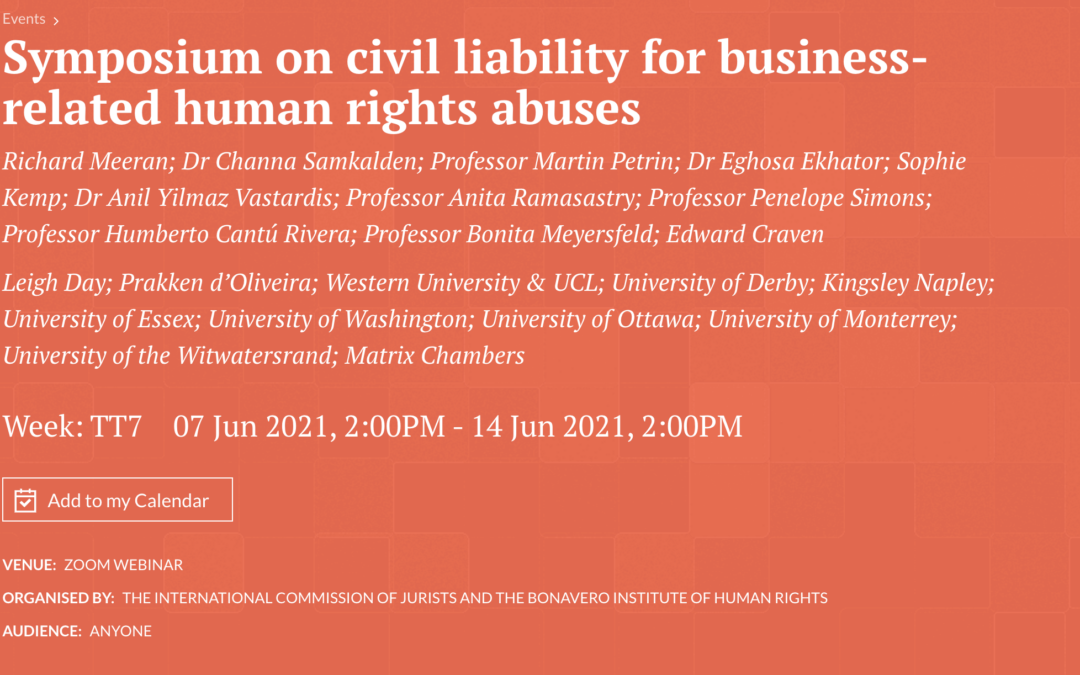
As part of its work to raise awareness and deepen the understanding about the importance of civil liability for the objective of improved accountability of business-related human rights abuses and access to justice and reparations, the ICJ is partnering with the Bonavero Institute of Human Rights to organize an online symposium.
The symposium is open to practitioners, policymakers, civil society, academics, and students working on these subjects. It will feature two panel discussions on Zoom on 7 June 2021 and 14 June 2021.
Past decades saw an emerging trend towards reliance on civil liability claims to address business-related human rights abuses (e.g., Lungowe v Vedanta and Okpabi v Shell in the UK; Choc v Hudbay Minerals and Araya v Nevsun in Canada; Akpan v Shell in the Netherlands; Jabir and others v KiK Textilien in Germany).
The ICJ and the Bonavero Institute of Human Rights’ symposium will discuss the wider implications of recent jurisprudence and identify the remaining gaps in the law.
The discussions will focus on a range of issues, including 1) the contours of rules on the duty of care; 2) prospects for supply chain liability under the law of civil remedies; 3) parent company liability and complicity under civil law; 4) prospects of access to justice.
Please follow the links below to register separately for each panel. The symposium will also involve a series of blogs by experts in the field to be published by Opinio Juris starting 21 June 2021.
Panel 1 ‘Duty of care and parent company liability’
Day and time: 7 June 2021 at 14.00 – 16.00 BST
To register for Panel 1, please click here
Panel 2 ‘Access to justice and civil claims for business-related human rights abuses: Challenges and opportunities’
Day and time: 14 June 2021 at 14.00 – 16.00 BST
To register for Panel 2, please click here
This symposium is co-convened by Dr Carlos Lopez and Dr Ekaterina Aristova. Please get in touch with the organisers if you have any questions. The symposium is part of the project on civil liability for human rights violations led by the Bonavero Institute and funded by the Oak Foundation.

Feb 12, 2021 | Cases, News
Today, the ICJ and The Corporate Responsibility (CORE) Coalition UK, welcomed the judgment of the UK Supreme Court in the case Okpabi et al. v Royal Dutch Shell plc et al as a major step forward for those seeking access to justice for corporate abuses in the Niger Delta and around the world.
The Supreme Court judgment allows the case to proceed in the UK courts, reversing earlier decisions by the Court of Appeal and the High Court, and reaffirming the precedent established in its own previous decision in Lungowe et al v Vedanta resources (2019).
Carlos Lopez, Senior Legal Advisor at the ICJ, said:
“The emphasis of the Supreme Court on the relevance of evidence from internal company documents is of utmost importance for the proper assessment of whether the parent company intervened, advised or controlled the relevant activities of its subsidiary that caused harm, including notably human rights abuses and environmental destruction.
“This should have an impact on future similar proceedings before courts in the UK and elsewhere.”
Mark Dearn, Director of CORE, said:
“This landmark ruling is a vital step towards justice for some 50,000 claimants from the Ogale and Bille communities. It sends a clear message to multinational corporations like Shell – you have a duty of care and you will be held to account for human rights abuses and environmental damage caused by subsidiaries you control.
“Shell brazenly claimed in court that the oil spills were due to ‘uniquely Nigerian problems’. But the unique problem long faced by communities in this region is Shell’s impunity, as it has repeatedly tried to dodge accountability for its catastrophic destruction of the environment and people’s livelihoods.”
“It’s now crucial that governments step up to the plate to create new corporate accountability laws so that businesses know exactly what is expected of them.”
In Vedanta, the Court affirmed that a parent company that sufficiently intervenes, controls or advises the relevant operations of its subsidiary may bear liability for the breach of its duty of care towards the people affected by those operations.
Okpabi and other nearly 50,000 claimants in total – sued Royal Dutch Shell (RDS -the UK based parent company) and its Nigerian subsidiary Shell Petroleum Development Corporation (SPDC) for their alleged involvement in the leakage of oil pipelines which destroyed their farming land, wiped out fish stocks and poisoned drinking water in the Niger Delta, Nigeria.
In 2018 the Court of Appeal dismissed the claimants’ case, but the claimants appealed to the Supreme Court. The ICJ and the CORE Coalition intervened before the Supreme Court.
The Supreme Court has allowed the claim to proceed, focusing on whether the claim had a real prospect of success and the high relevance of the internal company documents for a proper assessment.
Find the judgment here.
Notes to Editors:
- This case was first launched in 2015 in the UK High Court. For a timeline of the case’s passage through the UK court system, see here.
- The ICJ and CORE Coalition submitted a legal brief to the Supreme Court setting out the applicability of comparative law and standards regarding companies’ responsibilities in relation to human rights and environmental protection. These standards showed that Royal Dutch Shell PLC (Shell) could have duty of care in relation to the communities affected by its Nigerian subsidiary’s activities.
- In 2018 the Court of Appeal dismissed the claimants’ case, ruling that Shell did not exercise sufficient control over its subsidiary SPDC for Shell possibly to hold a duty of care towards those affected by the oil spills.
- The Supreme Court judgment reverses that judgment, cautioning against dismissing such claims in “mini-trials” without proper access to all relevant facts and evidence that are in great part in the power of the company. The judgment clarifies the evidential threshold needed for the courts to hear such cases in the UK: “The resolution of the jurisdictional challenge depended upon whether the appellants’ claim satisfied the summary judgment test of real prospect of success.” (para 127 ref. Vedanta at para 45)
- In another section the Court also corrected the Court of Appeal’s view that the promulgation by a parent company of group wide policies or standards can never in itself give rise to a duty of care, saying: “that is inconsistent with Vedanta. Group guidelines … may be shown to contain systemic errors which, when implemented as of course by a particular subsidiary, then cause harm to third parties.” (para 143)
- In Lungowe v Vedanta Resources plc, which CORE and the ICJ similarly filed a joint intervention, the Supreme Court ruled that a duty of care was owed by the UK parent company, Vedanta. A settlement was subsequently reached. As the Supreme Court notes, this ruling was “very relevant to both the procedural and the substantive issues raised on this [Okpabi v Shell] appeal”.
Feb 11, 2021
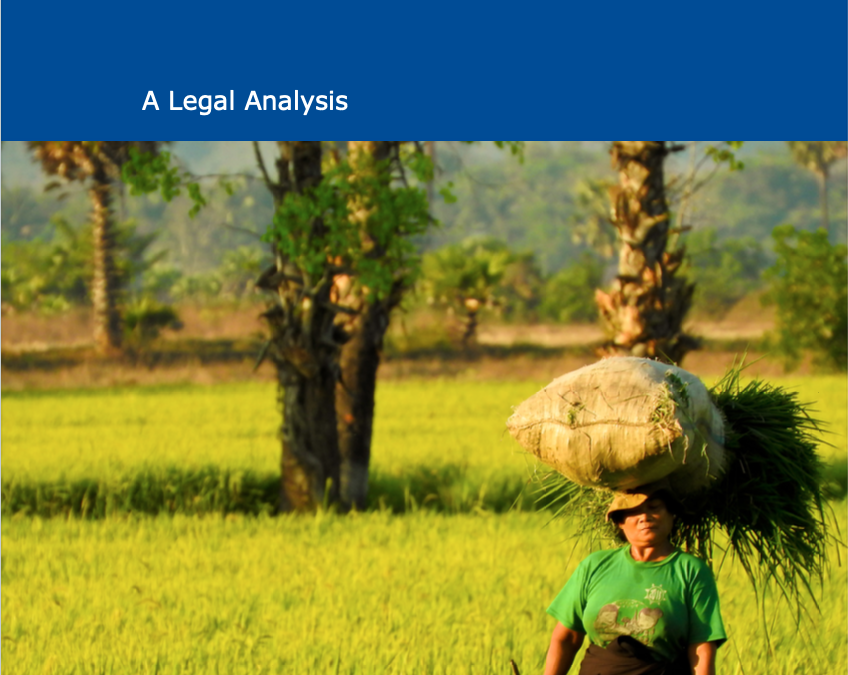
In a new report published today, the ICJ called on the Thai Government to review and amend its laws, policies and practices to remove obstacles in holding Thai companies accountable for wrongdoing outside the country’s borders.
The recommendations of the report, addressing business activities of a transnational character, include a request for the Government to ensure that its laws and actions are in alignment with Thailand’s international legal obligations and international human rights standards.
Some of obstacles that are identified include: limitations on liability owing to the status of companies as legal persons as opposed to natural persons; the legal nature of corporations as distinct juridical entities; evidentiary challenge of access to corporate documentation; jurisdictional challenges in the home state; conflict of laws; and statutes of limitation.
The report also looks at the aspects of complexities in civil and administrative liability and the use of collective complaints for redress.
The report analyses Thailand’s legal framework governing corporate legal accountability for outbound investments and the remedies available and accessible to affected persons.
It recalls the obligations of Thailand to protect the human rights of persons not only within its territory, but also, to some measure, extraterritorially. This obligation extends to activities of Thai business entities, especially in cases where the remedies available to victims before the domestic courts of the State where the harm occurs are unavailable or ineffective.
Key recommendations to the Government of Thailand, the Parliament of Thailand and justice sector actors include:
- Extending the jurisdiction of Thai courts to cover claims against corporations and State enterprises that are domiciled or which principally conduct their business affairs in Thailand, regardless of whether alleged human rights abuses by the companies or their subsidiaries occurred in another country;
- Expanding liability for certain abuses caused by the conduct of a company’s subsidiaries over which it exerts control;
- Providing legal and procedural guarantees in domestic law to increase access to information about corporations and their activities, particularly in relation to cross-border enterprise activities;
- Relaxing the rule governing statutes of limitations to ensure that it will not be unduly restrictive to injured persons seeking to bring claims relating to human rights abuses committed abroad by corporations, including – by providing that a statute of limitation shall not be effective against civil or administrative actions brought by victims seeking reparation for serious human rights abuses;
- Facilitating access to justice of victims and their representatives in ensuring their agency in choosing the appropriate jurisdiction and justice mechanism before which they can litigate their case or otherwise seek remedy or reparation;
- Processing class action trials without undue delay and allowing class suit for cases filed in a Thai court by plaintiffs from another country who may not have the resources or capacity to otherwise pursue a claim individually before Thai courts;
- Ensuring that the division between administrative and civil jurisdiction, particularly for State enterprises, should not be used as a reason to obstruct victims or their representatives in accessing justice;
- Strengthening the role of the National Human Rights Commission of Thailand (NHRCT) to investigate, document, and expose instances of human rights abuse committed by Thai transnational corporations abroad, even in the absence of express powers;
- Providing training for members of the legal and judicial professions in handling cases involving corporate human rights abuse, and particularly abuse arising from cross-border business activities; and
- Providing legal aid and other funding schemes to claimants who are citizens and non-citizens in relation to cases of rights abuses arising from business activities.
Download
Southeast-Asia-Access-to-Justice-Thai-companies-Publication-ENG (English)
Southeast-Asia-Access-to-Justice-Thai-companies-Publication-THA (Thai)

Nov 29, 2020 | News
The ICJ and its Swiss section (ICJ-CH) regret the results of the vote yesterday in Switzerland rejecting the popular initiative for responsible businesses. While the majority of the popular vote approved the initiative, there was no majority of voters in a majority of Cantons.
Under the Swiss constitution, to be approved, such initiative amending the constitution needs the majority of both the popular vote in Switzerland and in a majority of Cantons part of the Swiss Confederation.
“The strong support gathered by this initiative, expressed in the majority of the popular vote, is encouraging, and a strong message that the Federal Parliament and the Federal Council must take into account in the process of the implementation of the legislative counter-proposal and in further legislation,” said Marco Sassòli, ICJ commissioner.
A counter-proposal prepared by the Federal Council is now approved by default. This counter-proposal foresees due diligence obligations for some sectors and reporting obligations, but no specific legal liability.
The proposed initiative would have required multinationals based in Switzerland to respect human rights also abroad, and to carry out human rights due diligence to identify and prevent potential human rights abuses.
It would also have clarified the multinational’s legal responsibility for violations of internationally recognized human rights and environmental norms by enterprises that it controls and operate abroad.