Oct 23, 2023 | News
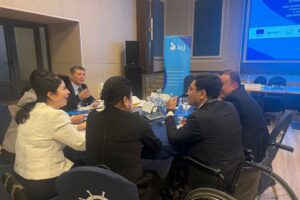
At a workshop convened on 11 and 12 October, the International Commission of Jurists (ICJ), Validity Foundation, and the United Disabled Persons of Kenya (UDPK) stepped up efforts to promote the greater use of strategic litigation to secure the rights of persons with disabilities. The workshop was aimed particularly at building the capacity of organizations of persons with disabilities (OPDs) to undertake strategic litigation.
“As a party to the Convention on the Rights of Persons With Disabilities, the African Disability Protocol and other regional and UN human rights treaties, Kenya is obliged to ensure that all persons with disabilities enjoy all human rights on an equal basis. Kenya’s obligations include a duty to ensure that effective remedies – including throughout courts – are available where persons with disabilities allege the denial of their rights,” said Wilson Macharia, ICJ Africa’s Associate Legal Advisor.
Strategic litigation is currently underutilized by persons with disabilities and their representative organizations in Kenya. At the workshop, persons with disabilities indicated that they faced barriers to instituting or participating effectively in litigation due to:
- a general lack of knowledge of their rights and the existing mechanisms to enforce these rights;
- a lack of knowledge on the operations of the available mechanisms, including complex court procedures.
- a lack of knowledge on existing legal aid programs and services.
- a failure by courts and other justice mechanisms to provide appropriate reasonable and procedural accommodations.
CSOs and lawyers who attended the workshop stressed that key stakeholders, including those who provide litigation support to indigent persons, typically do not have adequate capacity and training to advocate for the rights of persons with disabilities.
“The Law Society of Kenya should work towards establishing a committee with a specific mandate of advocating for the rights of persons with disabilities, in addition to mainstreaming disability rights in the existing committees”, said Were Bonface, an advocate from the Public Interest and Advocacy Directorate of the Law Society of Kenya.
During the workshop, the participants also discussed the need for continuous meaningful engagement between OPDs and other key stakeholders which undertake legal advocacy on human rights, including the Kenya National Commission on Human Rights, Katiba Institute, the Law Society of Kenya, and the Federation of Women Lawyers in Kenya.
Contact:
Wilson Macharia, ICJ Africa Associate Legal Adviser, e: wilson.macharia@icj.org
Background
The workshop brought together OPDs, CSOs, the Law Society of Kenya, the Kenya National Commission on Human Rights, the Judiciary, the national Legal Aid Service and other stakeholders. The workshop served as a platform to discuss potential areas of strategic litigation on the rights of persons with disabilities in Kenya, including legal reform, inclusive education, legal capacity, denial of reasonable accommodation, and accessibility. The workshop follows on from ICJ and African Union of the Blind’s partners’ previous engagement on access to justice for persons with disabilities at a half-day workshop held in Nairobi on 8 September 2022. The ICJ has also engaged with Criminal Justice Actors from Milimani Law Courts in Nairobi, and has supported Kenyan OPDs in preparing submissions to the Committee on the Rights of Persons with Disabilities.
The Constitution of Kenya 2010 incorporates widespread human rights protections for all persons, including persons with disabilities. In particular, article 54 elaborates the rights of persons with disabilities to be treated with dignity; to have equal access to all places, spaces and facilities; and to access equipment to overcome constraints arising from disability. Article 22 of the Constitution gives every person the right to institute court proceedings claiming that a right or fundamental freedom in the Bill of Rights has been denied, violated or infringed, or is threatened. In addition, the obligations under international human rights law, including the Convention on the Rights of Persons with Disabilities and the Protocol to the African Charter on Human and Peoples’ Rights on the Rights of Persons with Disabilities form part of Kenyan law by virtue of article 2(6) of the Constitution.
Resources
The Constitution of Kenya 2010
Kenya Persons with Disabilities Act 2003
Convention on the Rights of Persons with Disabilities
Protocol to the African Charter on Human and Peoples’ Rights on the Rights of Persons with Disabilities
International Principles and Guidelines on Access to Justice for Persons with Disabilities
Oct 23, 2023
A new question-and-answer briefing by the International Commission of Jurists (ICJ) examines recent developments that have detrimentally affected the right to freedom of association in Libya against the backdrop of an increasing crackdown on Civil Society Organizations (CSOs). Among such negative developments, the authorities have even begun enforcing repressive Gadhafi-era legislation, namely, Law No. 19 of 2001, which had not been enforced since the 2011 uprising.
.هذا البيان الصحفي متوفر باللغة العربية أيضاً
Said Benarbia, ICJ Middle East and North Africa Programme Director, said:
“Instead of subjecting them to the ongoing, relentless crackdown, Libyan authorities must ensure that independent CSOs be able to discharge their functions in defence of the rule of law and human rights independently, without political interference, undue restrictions, harassment, fear of intimidation or reprisal.”
The briefing analyzes the country’s legal framework and its compliance with domestic and international human rights law and standards. It answers the following questions:
- How has the legal framework regulating the right to freedom of association in Libya become more restrictive recently?
- Does the legal framework currently enforced by the Libyan authorities meet domestic and international human rights law and standards on the right to freedom of association?
- What are the impacts of the increasing restrictions on freedom of association on the rule of law and human rights?
Based on the analysis featured in the Q&A and with a view to ensuring full compliance with Libya’s obligations under international human rights law and relevant standards, the ICJ calls on the Libyan authorities to ensure that:
- All existing laws and decrees on CSOs be abolished, and new ones be adopted in accordance with Libya’s obligations under international human rights law and standards. Until then, the authorities shall ensure that any frameworks by the Government of National Unity or the Government of National Stability on the registration, functioning and funding of CSOs be fully in line with articles 14 and 15 of the 2011 Constitutional Declaration;
- CSOs be able to effectively play their watchdog role and act in defence of the rule of law and human rights, without political interference, intimidation, harassment or undue restrictions;
- All ongoing prosecutions and other arbitrary proceedings against civil society actors in relation to their legitimate work be terminated, and all those arbitrarily detained solely for their civil society work be immediately and unconditionally released;
- Accountability for human rights abuses to which civil society actors have been subjected; and
- CSOs be meaningfully consulted on and able to provide inputs in ongoing political processes, including those related to constitutional, electoral and transitional justice reforms.
Contact
Said Benarbia, Director, ICJ Middle East and North Africa Programme; t: +41 22 979 3817, e: said.benarbia(a)icj.org.
Mohamed Hanafy, Legal Researcher, ICJ Middle East and North Africa Programme; e: mh(a)icj.org.
Juliette Rémond Tiedrez, Legal Researcher, ICJ Middle East and North Africa Programme; e: juliette.remond-tiedrez(a)icj.org.
Download
Q&A on the current attacks on the right to freedom of association in English and Arabic.
Press Release in English and Arabic.
Oct 10, 2023 | News
The International Commission of Jurists (ICJ), in partnership with the Economic, Social and Cultural National Network/Justice & Rights Institute Nepal (JuRI-Nepal), the Public Interest Litigation LawyersGroup (Nepalgunj), and the Privatisation in Education and Human Rights Consortium (PEHRC), has launched a mentorship program geared towards training young lawyers on international law and standards applicable to private actor involvement in education.
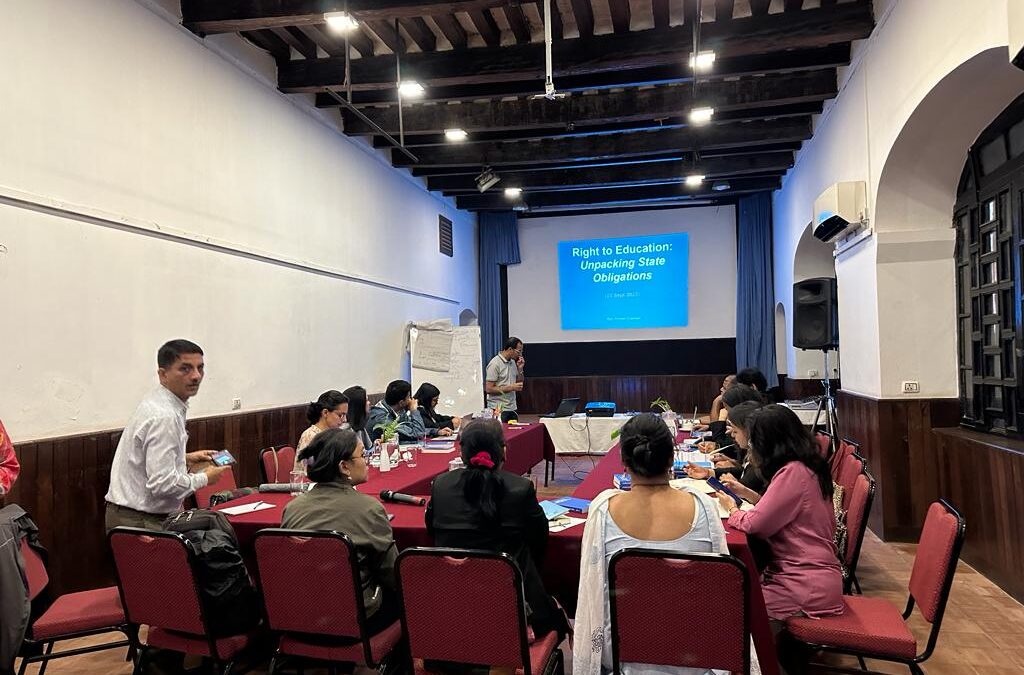
The 22 lawyers who will benefit from the programme are from Bagmati and Lumbini Province. To kick off the program, workshops were held on 23 September in Kathmandu and 28 September in Nepalgunj.
“We are delighted to initiate this mentorship program and are hopeful that it will be helpful to prepare a new set of human rights lawyers capable of and dedicated to advancing the realization of the right to education in Nepal in the context of burgeoning privatization,” said Karuna Parajuli, ICJ National Legal Adviser.
“The State has the primary role in guaranteeing access to education for all persons without discrimination of any kind. We hope that knowledge of their specific duties around will assist Nepali lawyers to identify issues and support their clients in enjoying their rights to education and ensuring effective and adequate regulation of private actors in education, added Parajuli.
Opening the workshop in Nepalgunj Judge Harka Bahadur Gurung emphasized the importance of these issues in the Nepali context:
“The current educational system in Nepal has segregated children as those going to high-fee private schools and others going to public schools with no basic infrastructure. Your litigation initiative should focus to remove this division and enable each student equal access to free and quality education”.
“The Constitution of Nepal guarantees education as a human right which is fully enforceable before Nepali Courts. This provides a strong avenue to initiate strategic litigation, which remains underutilized”, said ICJ’s Senior International Legal Adviser Mandira Sharma. “We encourage the mentees in this programme and Nepali lawyers more broadly to work towards crafting innovative advocacy strategies directed at fully realizing right to education in Nepal”, she concluded.
Contact
Dr Mandira Sharma, ICJ Senior International Legal Adviser, t: +9779851048475, e: mandira.sharma@icj.org
Karuna Parajuli, ICJ Legal Adviser, Nepal, t: +9779808431222, e: karuna.parajuli@icj.org
Further information
International law and standards on the right to education are spelled out in various treaties binding on Nepal such as the International Covenant on Economic, Social and Cultural Rights and the Convention on the Rights of the Child. Further detail on States’ obligations to restrict, regulate and monitor private actor involvement in education are further details in a range of standards including the general comments of UN Treaty Body Mechanisms and the Abidjan Principles on the human rights obligations of States to provide public education and to regulate private involvement in education.
Following the workshops, participants worked in groups to formulate an action plan for their mentorship period. They have been paired up with mentors (that include a senior advocate, senior litigating lawyers, and an ESCR expert). The mentorship program will run from October 2023 to March 2024.
The mentorship program is organized with the support of the Privatization in Education and Human Rights Consortium (PEHRC), an informal network of national, regional, and global organizations and individuals collaborating to analyse and respond to the challenges posed by the rapid growth of private actors in education from a human rights perspective and propose alternatives.
The main objectives of the mentorship program are to train young lawyers on how to utilize strategic litigation for claiming the right to education; expand their knowledge of international law (including Abidjan Principles) and share good practices on the right to education in other parts of the world.
Resources
https://www.icj.org/nepal-strategic-litigation-is-an-important-tool-to-ensure-compliance-with-international-human-rights-standards/
https://www.icj.org/late-as-usual-delayed-delivery-of-textbooks-infringes-the-right-to-education-of-nepali-students/
https://www.icj.org/nepal-icj-lawyers-workshop-discusses-strategic-litigation-to-enforce-the-right-to-education/

Sep 14, 2023
On 8 September, the International Commission of Jurists (ICJ) and 7 other organizations sent an open letter to the UN Human Rights Council to draw attention to the worsening human rights crisis in Cambodia, and to appeal for support for a resolution on strengthening and extending scrutiny of the situation at the 54th regular session of the UN Human Rights Council.

Sep 4, 2023
The International Commission of Jurists (ICJ) and the Due Process of Law Foundation (DPLF) submitted written legal comments to the Inter-American Court of Human Rights (IACHR) in relation to the Advisory Opinion requested by Mexico on “the activities of private companies engaged in the firearms industry and their effects in human rights”.
In their submission, the ICJ and DPLF set out some main tenets of international law and jurisprudence as developed by Inter-American human rights Court and Commission and the UN human rights treaty bodies.