Sep 20, 2016 | News
The ICJ expresses its deep concern at recent developments in Botswana in respect of impeachment proceedings initiated against four judges and their suspension from office pending a disciplinary hearing.
The four judges, constituting one-third of the 12 Member High Court of Botswana, Justices Key Dingake, Modiri Letsididi, Ranier Busang and Mercy Garekwe, were suspended under section 97 of the Botswana Constitution on allegations of misconduct and bringing the name of the judiciary into disrepute.
The ICJ calls on all involved judicial and executive authorities to scrupulously respect the principles governing the independence of the judiciary in their conduct in addressing this serious situation, including in their actions throughout the course of any impeachment and disciplinary proceedings.
On 28 August 2015, the President of Botswana, Ian Khama, suspended the four judges after they, along with the other eight members of the Court, signed a petition directed to the Chief Justice.
The petition had objected, among other things, to alleged poor conditions of service, as well as disparaging comments the Chief Justice was said have made about another judge’s ethnicity and defamatory statements related to corruption.
The petition also advocated for the Chief Justice’s impeachment and was copied to all judges of the High Court.
The Chief Justice and the President took issue with the contents and tone of the petition, alleging it to be disrespectful of the Chief Justice and causing disrepute of the judiciary in the eyes of members of the public.
On the 4th of September 2015, the Law Society of Botswana (LSB) issued a statement in which it condemned the actions taken by the Chief Justice and President against the four judges.
The LSB considered that the case ought to have been resolved administratively rather than through what it said was “selective” impeachment of only four out of the 12 judges, particularly as no prima facie evidence existed that a crime had been committed.
The LSB alleged that “the selective approach in suspending and subjecting to a Tribunal only four (4) of the twelve (12) Judges who had signed the Petition, supported the widely held view that the action was a witch-hunt intended to remove certain Judges and ensure a more Executive Minded Bench.”
On the 23rd of September 2015, the LSB issued another statement following reports that three of the 12 judges had withdrawn their signatures to the petition after the judges had been “offered an ‘amnesty’ against any possible action being taken against them if they retract their association and / or apologise”.
The LSB went on to criticize an amnesty “made only to a select few of the Judges and not all” the 12 judges who signed the petition.
On 24 September 2015, the LSB issued a further statement calling on the Chief Justice to resign or face impeachment after the JSC offered amnesty to three other judges, who had signed or associated themselves with the petition.
The amnesty extended to any possible action being taken against them if they retracted their association and / or apologized. The offer of amnesty was not made to all 12 judges that had signed the petition, and in particular, it was not made to the four suspended judges.
On 28 September 2015, the Impeachment tribunal was to have commenced hearing of the matter, but the four concerned judges instituted litigation against appointment of the Tribunal and their suspension, which litigation is still pending.
Since then, the courts have been irregularly issuing instructions, contrary to proper procedure, through the Registrar of the High Court in the pending litigation, and given that the Registrar is party to the litigation, this creates an inherent conflict of interest.
These developments surrounding this case have raised serious concerns over the independence of the judiciary generally but more specifically the prospects for an independent, impartial and fair hearing for the suspended judges.
Read mor
botswana-impeachment-judges-news-web-stories-2016-eng (full text in PDF)
Sep 19, 2016 | Advocacy, Non-legal submissions
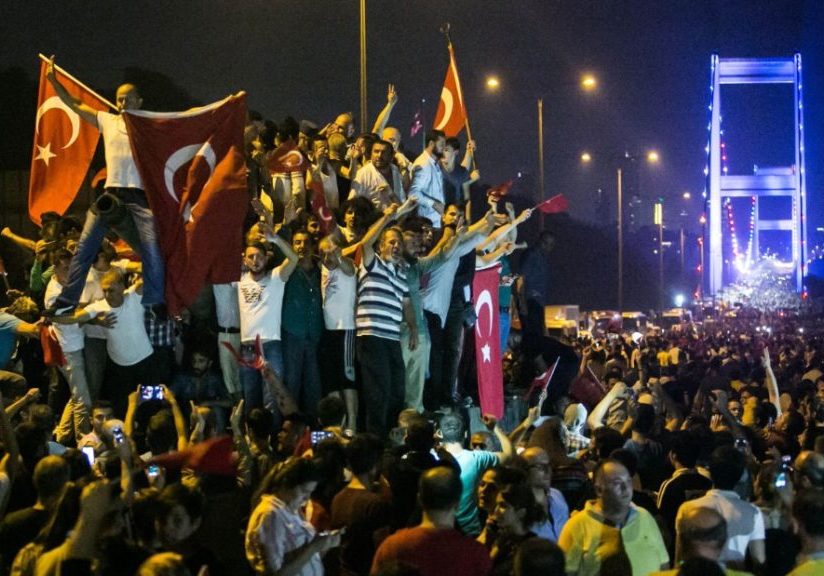
The ICJ today expressed concern at the UN for the independence of the judiciary, human rights, and the rule of law in Turkey, highlighting measures taken by the government, almost immediately after a failed coup in July, to suspend or dismiss thousands of judges and prosecutors.
The statement, which was delivered in General Debate on country situations, at the UN Human Rights Council in Geneva.
The statement read as follows:
The International Commission of Jurists (ICJ) wishes to draw the Council’s attention to the crisis of the rule of law in Turkey, and its serious consequences for the protection of human rights.
Within hours of the failed coup attempt in July, the Government initiated a purge of the judiciary on an unprecedented scale.
At least 3,300 judges and prosecutors have been dismissed or suspended, and hundreds have been arrested, including members of the High Council for Judges and Prosecutors.
Many of these measures appear to be arbitrary and fail to respect the right to a fair hearing before an independent authority.
These actions have done severe damage to the already fragile independence of the judiciary in Turkey, and threaten the right to a fair trial.
They represent a dramatic escalation of the attack on judicial independence that was already underway before the attempted coup, documented in an ICJ report published in June.
State-of-emergency decrees further undermine protection of human rights.
Periods for pre-trial detention have been extended and detainees’ confidential access to lawyers has been restricted. There are credible reports of ill-treatment of detainees, and of harassment of lawyers representing them.
The ICJ recalls that certain rights, including the prohibition on torture or other ill-treatment, and essential elements of the prohibition of arbitrary detention and right to a fair trial by an impartial tribunal, can never be derogated from, even in the most serious states of emergency.
The ICJ urges Turkey to take measures to restore the rule of law and ensure respect for human rights under the state of emergency.
The statement may be downloaded in PDF format here: hrc33-oralstatement-gditem4-turkey-2016
Aug 16, 2016 | Comunicados de prensa, Noticias
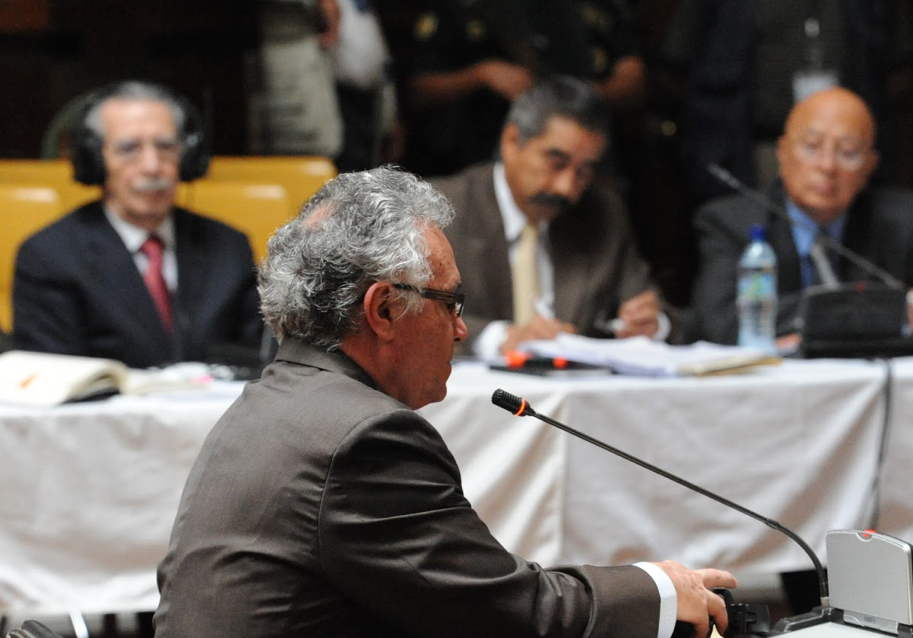
Las organizaciones internacionales que suscriben este comunicado expresan su consternación ante el allanamiento de la residencia del abogado y defensor guatemalteco de los derechos humanos, Ramón Cadena, Director en Centroamérica de la CIJ.
Aug 11, 2016 | News
The ICJ today urged President Duterte to respect the judiciary’s institutional independence and allow it to conduct its work, particularly in disciplining its own judges, without external influence or undue interference.
This week, President Duterte publicly released a list of public officers, including judges, who are allegedly involved in the illegal drugs trade. In response, on 9 August 2016, Chief Justice Maria Lourdes Sereno wrote to President Duterte noting that it is the responsibility of the judicial branch to discipline judges.
In her letter, the Chief Justice also stated that the disciplining of judges should be done without compromising the independence of the judiciary.
In response, President Duterte warned Chief Justice Sereno not to set off a “constitutional crisis”, saying that he may “order” the executive department not to “honor” the judiciary.
According to the UN Basic Principles on the Independence of the Judiciary and the UN Special Rapporteur on the independence of judges and lawyers, the body responsible for the discipline of judges should be independent of the executive and composed mainly (if not solely) of judges and members of the legal profession.
The ICJ therefore calls for the Supreme Court of the Philippines to be free to establish and employ its established mechanisms to discipline its own judges, in full respect for procedural guarantees.
On a related issue, the ICJ is now in the Philippines to speak to lawmakers regarding a proposal to re-introduce the death penalty and its concerns regarding the recent spate of extrajudicial killings in the country.
The organization has previously written to President Duterte regarding its concerns on the proposal to re-introduce the death penalty and the rising number of deaths of people who are alleged to be involved in the illegal drug trade.
“The proposed reintroduction of the death penalty, the spate of extrajudicial killings, and the fervor currently exhibited by President Duterte in going after allegedly corrupt members of the judiciary are directly linked to his zeal to address a perceived widespread drug menace in the country,” said Sam Zarifi, ICJ’s Regional Director for Asia and the Pacific.
The ICJ strongly urges President Duterte to focus his efforts in strengthening key institutions such as the judiciary so that they can be strong allies in his efforts to address crime in the country.
Contact:
Emerlynne Gil, ICJ’s Senior International Legal Adviser, t +66 840923575 ; e: emerlynne.gil(a)icj.org
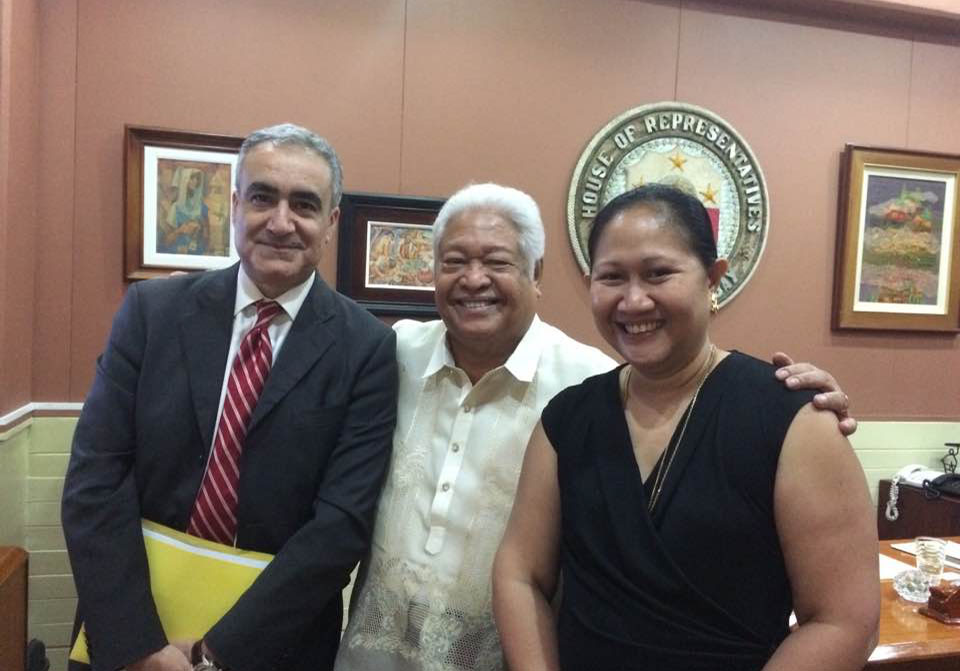
Picture: Sam Zarifi and Emerlynne Gil with Congressman Edcel Lagman (in the center), the main proponent of the law that abolished the death penalty in the Philippines in the past. He is now leading the charge in the House of Representative to try to defeat the proposal to reimpose the death penalty.

Aug 8, 2016 | News
The ICJ has deplored a suicide attack at a hospital in Quetta, which killed dozens of people today, in the deadliest attack ever on lawyers in Pakistan and among the worst anywhere.
Many of those killed were lawyers, who had been gathered at a hospital in Quetta following the killing of former president of the Balochistan Bar Association, Bilal Anwar Kasi, in a shooting incident earlier in the day.
“This attack targeted mostly lawyers and intellectuals (many of them from the Pashtun community) who had gathered at the hospital to mourn the loss of one of their own,” said Sam Zarifi, ICJ’s Asia Director.
“As such, it constituted a serious loss for the legal community and increases existing pressure on the independence of the bar.”
The ICJ calls on the Pakistani Government to conduct an immediate, impartial and thorough investigation into the attack and to bring those responsible to justice, including anyone who ordered or was otherwise complicit the crime.
The ICJ also urges the Government to take urgent measures to guarantee the security of lawyers, which should include effective measures of protection against attempts on their lives and lives of their family members.
The UN Basic Principles on the Role of Lawyers affirm that“[w]here the security of lawyers is threatened as a result of discharging their functions, they shall be adequately safeguarded by the authorities.”
“If lawyers are under constant fear of violence, they cannot ensure the functioning of an independent and impartial legal profession – an indispensible requirement for rule of law,” Zarifi added.
Contact:
Sam Zarifi, ICJ Asia Pacific Regional Director (Bangkok), t: +66 807819002; e: sam.zarifi(a)icj.org
Reema Omer, ICJ International Legal Adviser for Pakistan (London), t: +44 7889565691; e: reema.omer(a)icj.org

![Smoke rises after an Israeli air strike on the village of Taybeh in southern Lebanon [Source: Al Jazeera]](https://www.icj.org/wp-content/uploads/2026/03/Screenshot-2026-03-20-at-15.56.24-300x200.png)