May 10, 2016 | News
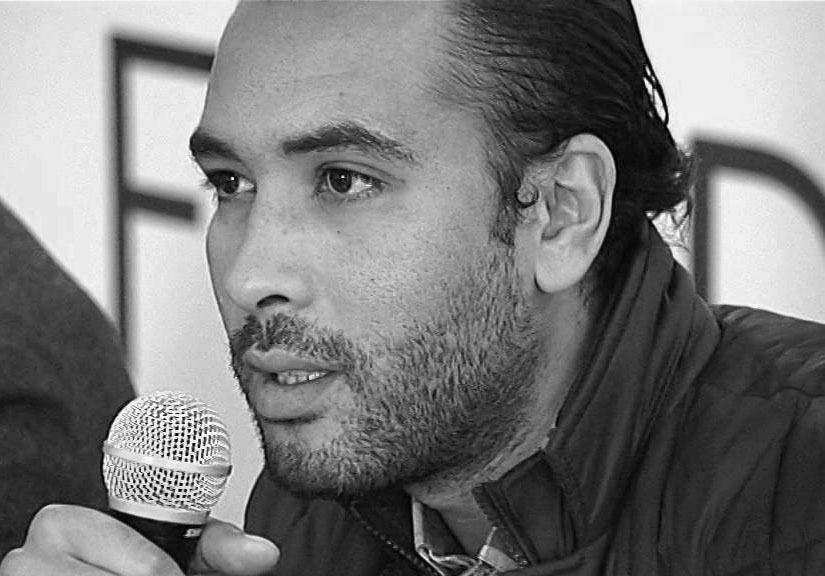
The ICJ today called on the Egyptian authorities to immediately release human rights lawyer Malek Adly and to drop all charges against him. He was arrested on Thursday 5 May 2016, pursuant to an arrest warrant.
Malek Adly has been charged with a number of offences, including “attempting to overthrow the regime,” “spreading false rumors,” and “using force against a public servant.”
The Prosecuting authorities have not provided information on specific behaviour that would constitute criminal conduct.
The ICJ is concerned that the charges may be in retaliation for Malek Adly’s work as a lawyer and human rights defender, and are aimed to chill him and others from engaging in work perceived as threatening to or disfavoured by Egyptian authorities.
They came at the backdrop of his work as a human rights lawyer, his critical views on the rule of law situation in Egypt, and his legitimate and peaceful exercise of freedom of expression and assembly in opposing transferring the sovereignty of Tiran and Sanafir islands from Egypt to Saudi Arabia, the ICJ says.
“Malek Adly’s arrest, detention and prosecution for carrying out his work as a lawyer and human rights defender and for peacefully expressing his views is yet another attempt by the Egyptian regime to muzzle lawyers, the last line of defence for victims of human rights violations in Egypt,” said Said Benarbia, Director of the ICJ Middle East and North Africa Programme.
“The regime’s crackdown on fundamental rights and freedoms has been worryingly extended to the very lawyers whose role is to challenge and protect against such crackdown,” he added.
Over the last three years, the ICJ has documented numerous cases of lawyers who have been subjected to human rights violations and reprisals in relation to the representation of their clients.
These include the cases lawyers Imam Afifi and Karim Hamdi who were allegedly subjected to torture and subsequently died while in police custody.
International standards aiming to safeguard the role of lawyers provide that States have a duty to ensure that lawyers are able to perform their functions “without intimidation, hindrance, harassment or improper interference” and that lawyers must not be subject to prosecution or other sanction for carrying out their professional responsibilities, the Geneva-based organization reminds.
International standards on human rights defenders require States protect human rights defenders from attacks, threats, retaliation and arbitrary action.
The Egypt 2014 Constitution guarantees the “independence of the lawyer’s profession and the protection of its interests as a guarantee to protecting the right to defence”. In addition, it prohibits the arrest of a lawyer while he or she is exercising the right to defence, except in flagrante delicto crimes.
“The Egyptian authorities must live up to their obligations under the Constitution and international law and put an immediate end to their attacks against lawyers,” concluded Benarbia.
Contact
Nader Diab, Associate Legal Adviser of the ICJ Middle East and North Africa Programme, t: +216 51727023; e: nader.diab(a)icj.org
Egypt-HR Lawyer MalekAdly-News-Press Releases-2016-ARA (full text in Arabic, PDF)

May 6, 2016
The ICJ, Lawyers’ Rights Watch Canada (LRWC) and Lawyers for Lawyers (L4L), wrote a joint-letter today to the Lawyers Council of Thailand (LCT) – the country’s representative body of lawyers – expressing concern over two cases of intimidation and harassment against human rights lawyers.
Lawyers, Sirikan Charoensiri (photo) and Benjarat Meethien, both face criminal proceedings – seemingly as a result of the legal representation they have provided in so-called ‘political’ cases.
The letter draws attention to the UN Basic Principles on the Role of Lawyers which specifically call on governments to ensure that lawyers are protected from ‘intimidation, harassment or improper interference’ (Principle 16).
It also reminds the LCT of their express mandate to ‘promote the unity and integrity of the Members; and promote and manage [their] welfare’.
The ICJ, LRWC and L4L urgently called on the LCT to take action and investigate the circumstances in these cases.
Thailand-Letter to LCT-Advocacy-Open letters-2016-ENG (full text in PDF, English)
Thailand-Letter to LCT-Advocacy-Open letters-2016-THA (full text in PDF, Thai)

Apr 25, 2016
In this submission, the ICJ provides comments on the Draft Federal Law “On amending certain legislative acts of the Russian Federation concerning ensuring the right of a lawyer to collect data necessary for providing qualified legal assistance” No 993553-6 (Draft Law).
The comments are provided in light of international law and standards on the role of lawyers and are informed by the ICJ report Towards a Stronger Legal Profession in Russia published in December 2015.
The document addresses the following issues: a “lawyers’ query”, a new legal tool which intends to empower defence lawyers to make requests for data and information; admission of evidence gathered by lawyers to be included in the case-file; the lawyers’ certificate which grants access to state buildings and the related issue of obstruction of lawyers’ access to their clients; ethical standards of lawyers and the problem of “pocket lawyers” in the Russian Federation.
Russia-Comment on Lawyer draft law-Advocacy-Analysis brief-2016-ENG (full text in English, PDF)
Russia-Comment on Right of Lawyer Law-Advocacy-Analysis brief-2016-RUS (full text in Russian, PDF)
Photo: Russian lawyer’s ID. Credit: http://minjust.ru/
Apr 22, 2016 | News
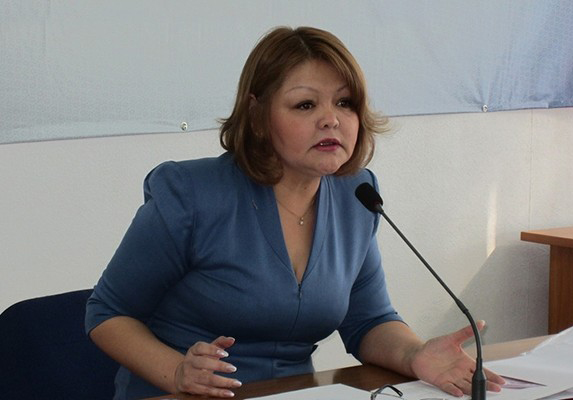
The ICJ welcomes the decision of the Almaty City Court in favour of Ayman Umarova, a lawyer who received repetitive demands from the investigative authorities to testify as a witness in a case in which she represented a client.
The Court decided that those demands were contrary to the law of the Republic of Kazakhstan.
Earlier this month, on 8 April, Umarova (photo) had challenged the official summons of Baurzhan Muzhikov, the head of an investigative group of the Anti-Corruption Service of Almaty, to testify as a witness.
The Medeu Regional Court confirmed the lawfulness of such demands, concluding that it was not related to her professional activity.
On 18 April, the Appeals Collegium of the Almaty City Court overturned the decision of the Medeu Regional Court.
Umarova was represented in the case by 28 lawyers as a demonstration of solidarity by the profession.
“The matter concerns not only Ayman Umarova but the entire legal community. If the case sets a precedent, the rights of our citizens will be in jeopardy,” Anuar Tugel, the President of the Republican Collegium of Lawyers, was reported to have said.
“The decision of the Almaty City Court is an important step in protecting the independence of the legal profession,” said Temur Shakirov, Legal Adviser of the ICJ Europe Programmme.
“While it is welcome that the Court remedied the practice of a forced testimony contrary to the international standards on the role of lawyers, it is worrying that such instances of obstruction of the work of lawyers continue to occur,” he added.
The UN Basic Principles on the Role of Lawyers, in Principle 22, stipulate that: “Governments shall recognize and respect that all communications and consultations between lawyers and their clients within their professional relationship are confidential”.
The UN Human Rights Committee has expressed concerns where “lawyers are released from their obligation of professional confidentiality and obliged to testify or face the risk of imprisonment” (UN Doc CCPR/C/TUN/CO/5 (2008), para. 15).
The ICJ recalls that, in accordance with of the UN Basic Principles, lawyers should be able to perform their professional duties without intimidation, hindrance, harassment or improper interference (Principle 16) and should never be identified with their clients’ causes (Principle 18).
Contact:
Róisín Pillay, Director, Europe Programme, roisin.pillay(a)icj.org
Temur Shakirov, Legal Adviser, Europe Programme, temur.shakirov(a)icj.org
Additional information:
On 28 March 2016, Ayman Umarova started her representation of Sayat Nadirbayev in a criminal case related to Talgat Ermegiyaev, former head of the Astana EKSPO-2017 company, accused of embezzlement.
On 2 April, after a request on the phone by the head of the Investigative Department of the Anti-Corruption Service of Almaty Baurzhan Muzhikov, Ayman Umarova received an official demand to appear and testify as a witness in the case. Since then she was required to appear and testify several times.
On 6 April, the Chair of the Almaty Collegium of Lawyers received a letter signed by Baurzhan Muzhikov, the head of an investigative group of the Anti-Corruption Service of Almaty, asking it to “facilitate the appearance of lawyer Umarova Ayman … to question her as a witness”.
On the same day, the Republican Collegium of Lawyers issued a statement where it qualified this request as a “violation of the guarantees of advocates’ activities” and urged that “appropriate measures [be taken] in regard to the officers of the Anti-Corruption Service”.
Kazakhstan-Landmark decision-News-Web Stories-2016-RUS (full text in Russian, PDF)
Apr 19, 2016
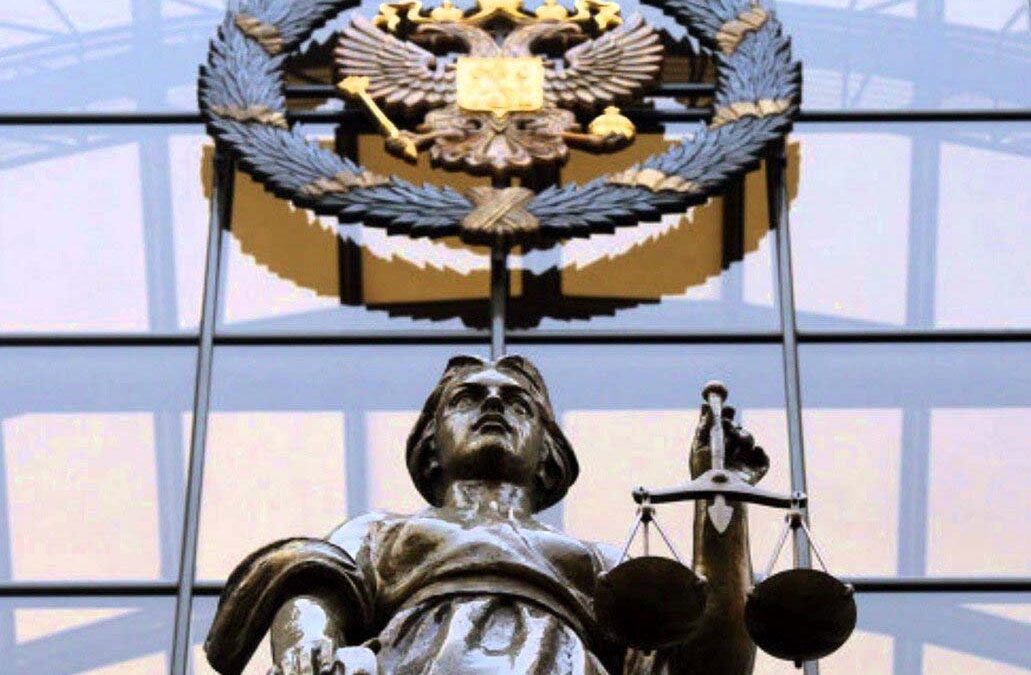
Today, the ICJ has provided comments on the Draft Resolution of the Plenum of the Supreme Court of the Russian Federation “On judicial practice of application of legislation regulating the issue of disciplinary responsibility of judges”.
The comments focus on a number of issues in the disciplinary system that the ICJ considers to be of particular importance in this regard.
The ICJ recommended that the Draft Resolution should, in particular:
– Clarify further the definition of disciplinary misconduct;
– Prohibit disciplinary action for judicial decisions of judges; and
– Clarify further the very exceptional nature dismissals of judges.
These comments and recommendations draw on the ICJ’s report and recommendations Securing justice: the disciplinary system for judges in the Russian Federation published in 2012 following a mission to the Russian Federation.
The report made a series of recommendations for specific and practical measures designed to advance the process of reform of the judicial disciplinary system in the Russian Federation.
Among other things the report concluded that “comprehensive reforms of the [disciplinary] system [were] needed to establish a judiciary that is an effective guardian of the Rule of Law, complies with international standards on the judicial independence, and is a reliable guarantor of the right to a fair hearing”.
Russia-Recommendaitons on Draft Resolution-Advocacy-Analysis Brief-2016-ENG (full text, in PDF)
Russia-Recommendaitons on Draft Resolution-Advocacy-Analysis Brief-2016-RUS (full text, in PDF)

![Smoke rises after an Israeli air strike on the village of Taybeh in southern Lebanon [Source: Al Jazeera]](https://www.icj.org/wp-content/uploads/2026/03/Screenshot-2026-03-20-at-15.56.24-300x200.png)