May 6, 2016
The ICJ, Lawyers’ Rights Watch Canada (LRWC) and Lawyers for Lawyers (L4L), wrote a joint-letter today to the Lawyers Council of Thailand (LCT) – the country’s representative body of lawyers – expressing concern over two cases of intimidation and harassment against human rights lawyers.
Lawyers, Sirikan Charoensiri (photo) and Benjarat Meethien, both face criminal proceedings – seemingly as a result of the legal representation they have provided in so-called ‘political’ cases.
The letter draws attention to the UN Basic Principles on the Role of Lawyers which specifically call on governments to ensure that lawyers are protected from ‘intimidation, harassment or improper interference’ (Principle 16).
It also reminds the LCT of their express mandate to ‘promote the unity and integrity of the Members; and promote and manage [their] welfare’.
The ICJ, LRWC and L4L urgently called on the LCT to take action and investigate the circumstances in these cases.
Thailand-Letter to LCT-Advocacy-Open letters-2016-ENG (full text in PDF, English)
Thailand-Letter to LCT-Advocacy-Open letters-2016-THA (full text in PDF, Thai)

Apr 25, 2016
In this submission, the ICJ provides comments on the Draft Federal Law “On amending certain legislative acts of the Russian Federation concerning ensuring the right of a lawyer to collect data necessary for providing qualified legal assistance” No 993553-6 (Draft Law).
The comments are provided in light of international law and standards on the role of lawyers and are informed by the ICJ report Towards a Stronger Legal Profession in Russia published in December 2015.
The document addresses the following issues: a “lawyers’ query”, a new legal tool which intends to empower defence lawyers to make requests for data and information; admission of evidence gathered by lawyers to be included in the case-file; the lawyers’ certificate which grants access to state buildings and the related issue of obstruction of lawyers’ access to their clients; ethical standards of lawyers and the problem of “pocket lawyers” in the Russian Federation.
Russia-Comment on Lawyer draft law-Advocacy-Analysis brief-2016-ENG (full text in English, PDF)
Russia-Comment on Right of Lawyer Law-Advocacy-Analysis brief-2016-RUS (full text in Russian, PDF)
Photo: Russian lawyer’s ID. Credit: http://minjust.ru/

Apr 22, 2016 | News
The ICJ welcomes the decision of the Almaty City Court in favour of Ayman Umarova, a lawyer who received repetitive demands from the investigative authorities to testify as a witness in a case in which she represented a client.
The Court decided that those demands were contrary to the law of the Republic of Kazakhstan.
Earlier this month, on 8 April, Umarova (photo) had challenged the official summons of Baurzhan Muzhikov, the head of an investigative group of the Anti-Corruption Service of Almaty, to testify as a witness.
The Medeu Regional Court confirmed the lawfulness of such demands, concluding that it was not related to her professional activity.
On 18 April, the Appeals Collegium of the Almaty City Court overturned the decision of the Medeu Regional Court.
Umarova was represented in the case by 28 lawyers as a demonstration of solidarity by the profession.
“The matter concerns not only Ayman Umarova but the entire legal community. If the case sets a precedent, the rights of our citizens will be in jeopardy,” Anuar Tugel, the President of the Republican Collegium of Lawyers, was reported to have said.
“The decision of the Almaty City Court is an important step in protecting the independence of the legal profession,” said Temur Shakirov, Legal Adviser of the ICJ Europe Programmme.
“While it is welcome that the Court remedied the practice of a forced testimony contrary to the international standards on the role of lawyers, it is worrying that such instances of obstruction of the work of lawyers continue to occur,” he added.
The UN Basic Principles on the Role of Lawyers, in Principle 22, stipulate that: “Governments shall recognize and respect that all communications and consultations between lawyers and their clients within their professional relationship are confidential”.
The UN Human Rights Committee has expressed concerns where “lawyers are released from their obligation of professional confidentiality and obliged to testify or face the risk of imprisonment” (UN Doc CCPR/C/TUN/CO/5 (2008), para. 15).
The ICJ recalls that, in accordance with of the UN Basic Principles, lawyers should be able to perform their professional duties without intimidation, hindrance, harassment or improper interference (Principle 16) and should never be identified with their clients’ causes (Principle 18).
Contact:
Róisín Pillay, Director, Europe Programme, roisin.pillay(a)icj.org
Temur Shakirov, Legal Adviser, Europe Programme, temur.shakirov(a)icj.org
Additional information:
On 28 March 2016, Ayman Umarova started her representation of Sayat Nadirbayev in a criminal case related to Talgat Ermegiyaev, former head of the Astana EKSPO-2017 company, accused of embezzlement.
On 2 April, after a request on the phone by the head of the Investigative Department of the Anti-Corruption Service of Almaty Baurzhan Muzhikov, Ayman Umarova received an official demand to appear and testify as a witness in the case. Since then she was required to appear and testify several times.
On 6 April, the Chair of the Almaty Collegium of Lawyers received a letter signed by Baurzhan Muzhikov, the head of an investigative group of the Anti-Corruption Service of Almaty, asking it to “facilitate the appearance of lawyer Umarova Ayman … to question her as a witness”.
On the same day, the Republican Collegium of Lawyers issued a statement where it qualified this request as a “violation of the guarantees of advocates’ activities” and urged that “appropriate measures [be taken] in regard to the officers of the Anti-Corruption Service”.
Kazakhstan-Landmark decision-News-Web Stories-2016-RUS (full text in Russian, PDF)
Apr 19, 2016
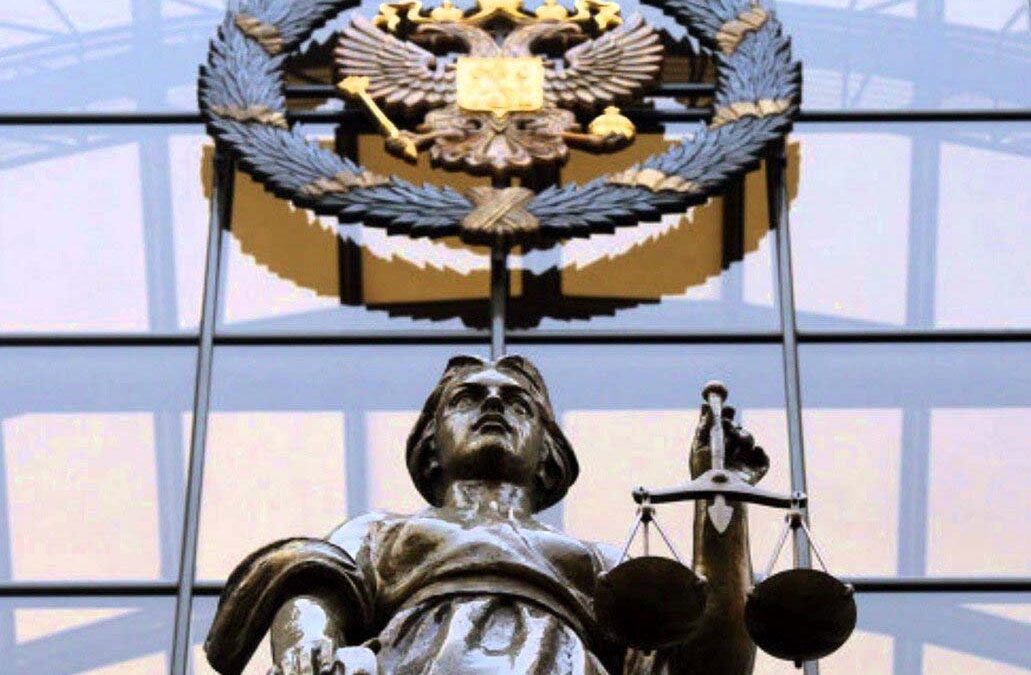
Today, the ICJ has provided comments on the Draft Resolution of the Plenum of the Supreme Court of the Russian Federation “On judicial practice of application of legislation regulating the issue of disciplinary responsibility of judges”.
The comments focus on a number of issues in the disciplinary system that the ICJ considers to be of particular importance in this regard.
The ICJ recommended that the Draft Resolution should, in particular:
– Clarify further the definition of disciplinary misconduct;
– Prohibit disciplinary action for judicial decisions of judges; and
– Clarify further the very exceptional nature dismissals of judges.
These comments and recommendations draw on the ICJ’s report and recommendations Securing justice: the disciplinary system for judges in the Russian Federation published in 2012 following a mission to the Russian Federation.
The report made a series of recommendations for specific and practical measures designed to advance the process of reform of the judicial disciplinary system in the Russian Federation.
Among other things the report concluded that “comprehensive reforms of the [disciplinary] system [were] needed to establish a judiciary that is an effective guardian of the Rule of Law, complies with international standards on the judicial independence, and is a reliable guarantor of the right to a fair hearing”.
Russia-Recommendaitons on Draft Resolution-Advocacy-Analysis Brief-2016-ENG (full text, in PDF)
Russia-Recommendaitons on Draft Resolution-Advocacy-Analysis Brief-2016-RUS (full text, in PDF)

Apr 7, 2016 | News
The Malaysian government should reject a proposal to make the Attorney General automatically the chair of the Bar Council of Malaysia, the ICJ said today.
The Malaysian Bar must remain independent and the government should not entertain this or any other measure that would compromise this independence, the ICJ says.
Yesterday, during the debate session at the Dewan Rakyat (Lower House of the Malaysian Parliament), parliamentarian Datuk Datu Nasrun Datu Mansur suggested that the Attorney General should be automatically appointed as the chairman of the Bar Council of Malaysia.
Datuk Datu Nasrun Datu Mansur made the suggestion while criticizing the Bar Council for its role in demanding greater government accountability.
“This latest proposal is just the most recent attempt by the government to silence all opposition and to weaken the rule of law,” said Emerlynne Gil, ICJ’s Senior Legal Adviser for Southeast Asia.
“First the government weakened the independence of the judiciary, and now it is going after the lawyers who are standing up for justice and accountability,” she added.
Responding to the suggestion, Law Minister Nancy Shukri said that the government will look into this, noting that amendments need to be made to the Legal Profession Act 1976 for this measure to be adopted.
“International standards on the independence of lawyers state very clearly that governments should not interfere with the work of professional associations of lawyers like the Malaysia Bar,” said Gil.
The United Nations Basic Principles on the Role of Lawyers stipulate that lawyers have the right “to form and join self-governing professional associations to represent their interests, promote their continuing education and training, and protect their professional integrity,” the ICJ reminds.
Furthermore, the Basic Principles distinctly state that “the executive body of the professional associations shall be elected by its members and shall exercise its functions without external interference.”
“An independent and self-regulated bar association is important to safeguard the professional interests and integrity of lawyers in Malaysia,” Gil said.
“It acquires specific importance especially now in Malaysia where there have been questions regarding the way justice is being administered in the country,” she added.
The Malaysia Bar is an essential agent in the administration of justice and hence, the lawyers belonging to it play a key role in supporting and calling for law and justice sector reform in the country, the ICJ further says.
Contact:
Emerlynne Gil, Senior International Legal Adviser for Southeast Asia, t: +66 840923575 ; e: emerlynne.gil(a)icj.org
Background:
The Malaysia Bar passed a motion last month during its 70th Annual General Assembly calling for the resignation of Attorney-General Tan Sri Mohamed Apandi Ali because he summarily ended the investigation of alleged corruption by Prime Minister Najib Razak.
The Prime Minister appointed Attorney-General Apandi on 27 July 2015, in the midst of the corruption investigation.
Attorney General Apandi subsequently cleared Prime Minister Najib Razak of any criminal wrongdoing and instructed the Malaysian Anti-Corruption Commission to close the investigations.
According to the ICJ, the motion passed by the Malaysia Bar calling for the resignation of the Attorney General was within its mandate as an independent professional association of lawyers, seeking as it did to draw attention to how administration of justice is being jeopardized right now.
The UN Basic Principles specifically recognize the right of lawyers to take part in public discussion of matters concerning the law, the administration of justice and the promotion and protection of human rights.
The UN Human Rights Council has unanimously affirmed that “an independent legal profession” is among the “essential prerequisites for the protection of human rights, the rule of law, good governance and democracy, and for ensuring that there is no discrimination in the administration of justice”. Such independence should be respected in all circumstances.