Jan 29, 2016 | Comunicados de prensa, Noticias
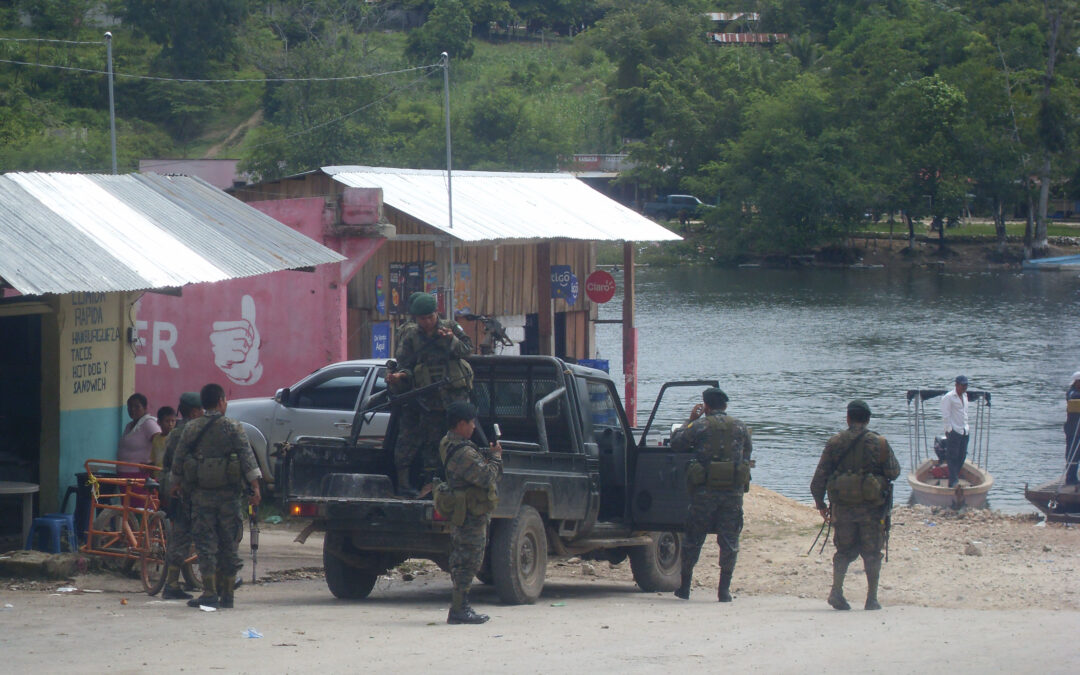
La CIJ expresa su preocupación frente a una nueva denuncia abusiva de la Fundación contra el Terrorismo, esta vez contra el Director de la CIJ para Centroamérica y un consultor que contribuye con el Bufete de Derechos Humanos, y contra el Director de Centro de Acción Legal, Ambiental y Social.
Esta denuncia se suma a otras en contra de abogados y abogadas de Guatemala. A través de querellas y acusaciones falsas, esta Fundación pretende afectar la función que estos profesionales cumplen como defensores de los derechos humanos.
Estas denuncias falsas son parte de una campaña iniciada hace más de un año y que ha querido afectar a más de cien personas, a quienes la Fundación contra el Terrorismo ha calificado como terroristas y guerrilleros (as), sin aportar pruebas.
Efectivamente se han presentado denuncias contra funcionarios y ex funcionarios del Ministerio Público, como la ex Fiscal General Claudia Paz y Paz y la actual Fiscal General Thelma Aldana, el Fiscal de Derechos Humanos o en contra de jueces y juezas del Organismo Judicial que ejercen su función en forma independiente, promoviendo un discurso de odio en contra de estas personas que actúan como defensores y defensoras de derechos humanos.
Ante esto hechos, la CIJ demanda:
- Que el Estado de Guatemala, por medio de las autoridades correspondientes, inicie una investigación exhaustiva e imparcial acerca de las actividades que realiza la Fundación contra el Terrorismo sobre todo, que investigue el origen de aquellas actividades que dirige en contra de defensores y defensoras de Derechos Humanos;
- Que el Estado de Guatemala, por medio de las autoridades correspondientes, brinde la protección debida a defensores y defensoras de derechos humanos;
- Que una vez finalizada la investigación el Estado de Guatemala, a través de las autoridades y mecanismos correspondientes, adopte las medidas necesarias de acuerdo a derecho con respecto a la Fundación contra el Terrorismo y su Director, por llevar a cabo campañas de odio en contra de defensores y defensoras de derechos humanos.
Dec 18, 2015 | Events, News
Today the ICJ held a round table “Organisation and operation of the Legal Profession: International Comparative Perspective” in Dushanbe, Tajikistan.
The ICJ invited experts to speak about comparative experiences from their countries to inform the national debate about the reform of the legal profession currently underway in Tajikistan.
Experts contributing to the discussion included: Tamara Morschakova, an ICJ Commissioner and former Justice of the Constitutional Court of the Russian Federation; Olga Swartz, a legal scholar from the Russian Federation; Daniyar Kanafin, a lawyer from Kazakhstan; Gulniza Kozhomova, President of the Bar Association of the Kyrgyz Republic; Almaz Osmanova, Member of the Board of the Bishkek Bar Association (Kyrgyz Republic); Jeroen Brower, Chair of the Ethics Commission of the Dutch Bar Association; and lawyers and other stakeholders from Tajikistan.
Participants discussed the principles and practice of the independence and self-governance of bar associations, as well as other issues of significance for the independence of lawyers, including the qualification process and disciplinary action.
Programme of the event in English and in Russian:
Tajikistan_roundtable_ agenda_Eng (PDF, English)
Tajikistan_roundtable_ agenda_Rus (PDF, Russian)
Dec 7, 2015 | News
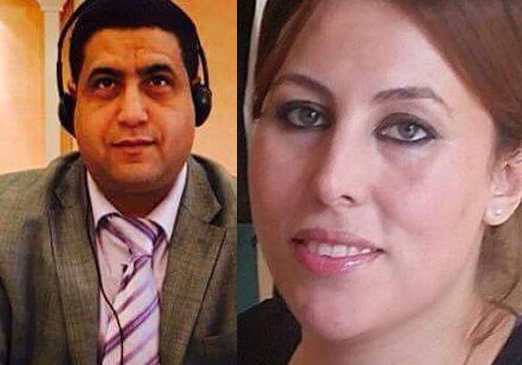
The ICJ today called on the Moroccan authorities to put an immediate end to the disciplinary proceedings initiated against judges Amal Homani and Mohamed Al-Haini.
The two were referred to the High Judicial Council by the Minister of Justice on unfounded allegations of “violating the duty of discretion” and “expressing opinions of a political nature”.
The charges stem from social media comments and media articles written by the judges in which they criticized the government’s Draft Law No. 100.13 on the Conseil Supérieur du Pouvoir Judiciaire and the Draft Law No 106.13 on the Statute for Judges, including provisions that appear designed to maintain executive branch control of the judiciary and the career of judges.
“Instead of subjecting judges who are promoting the rule of law and judicial independence to unjustified and arbitrary disciplinary proceedings, the Moroccan authorities must comply with their obligations under international standards to guarantee, protect and preserve judicial independence,” said Said Benarbia, Director of the ICJ Middle East and North Africa Programme.
“The disciplinary proceedings against judges Amal Homani and Mohamed Al-Haini are clearly without foundation and must be immediately and unconditionally terminated,” he added.
International standards are clear: members of the judiciary are, like other citizens, entitled to freedom of expression, belief, association and assembly.
The exercise of these basic human rights in a manner that preserves the dignity of their office and the impartiality and independence of the judiciary should not constitute a disciplinary offence, the ICJ says.
The social media comments and media articles by judges Amal Homani and Mohamed Al-Haini were clearly within the scope of their rights to freedom of expression, the Geneva-based organization adds.
Under the current legal framework, in particular Law No.1-74-467 of 1974 on the Statute for Judges, the Ministry of Justice has comprehensive and effective control over the entire judiciary, including the High Judicial Council, the career of judges and judicial administration.
Indeed, under the current framework, the Minister of Justice is the Vice-President of the High Judicial Council.
As such the impartiality and fairness of any disciplinary hearings initiated by the Minister of Justice based on statements perceived to criticize the executive branch, must be called into question, the ICJ says.
While provisions of the 2011 Constitution relating to the judiciary constitute an important step towards ending the executive’s control over the judiciary, Moroccan professional associations of judges and civil society organizations have expressed concern that the draft laws perpetuate such control as well as executive interference in judicial matters.
The ICJ has previously called on the Moroccan authorities to revise the two flawed draft laws to ensure their full compliance with international law and standards on judicial independence.
“The Moroccan authorities must end their attacks on judicial independence, including by revising flawed institutional and legal reforms and by ending politicized proceedings against judges,” Benarbia said.
Contact:
Theo Boutruche, Legal Adviser of the ICJ Middle East and North Africa Programme, tel: +961 70 888 961, e-mail: theo.boutruche(a)icj.org
Morocco-Judges Homani-El Haini-News-Press releases-2015-ARA (full press release in PDF, Arabic)
Nov 24, 2015
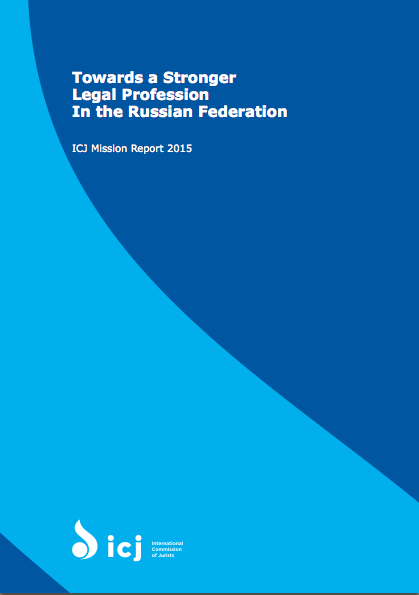
Today, the ICJ released a report calling for reform of the legal profession in the Russian Federation.
“The legal profession in Russia presents a complex picture. It includes obvious achievements and strengths, but remains severely constrained and flawed in its ability to uphold the rule of law and human rights within the justice system,” says the ICJ report published today in English and in Russian languages.
“The wider problems in the justice system, and its routine failure to protect human rights and in particular the right to a fair trial, including the principle of equality of arms, pose grave challenges to lawyers in fulfilling their professional duties,” the report concludes.
The ICJ report Towards a Stronger Legal Profession in the Russian Federation follows a mission to the Russian Federation in May 2015.
After three reports dedicated to various aspects and issues of the judiciary in the Russian Federation, the ICJ through the mission, and this report, has turned its attention to the problem of the legal profession at a time when significant changes in the profession are under discussion.
The report analyses the legal framework governing the legal profession in the Russian Federation, and discusses practical issues raised during the mission.
It evaluates laws and practices in light of international law and standards on human rights, including the right to fair trial, as well as international standards on the independence of the legal profession.
These standards address the organization and operation of the legal profession including regulation of the profession, qualification, ethics and discipline of lawyers, guarantees against interference with the work of lawyers and protections necessary for lawyers to defend the rights of clients.
Though these standards may be broadly worded and leave room for differing approaches by national systems, they provide authoritative and widely accepted guidance which should inform national systems and practices.
The report describes the history and current landscape of the legal profession in the Russian Federation. It describes the organization, bodies and procedures of the Federal and regional chambers and analyses questions related to the entry to the profession.
The report further describes problems with ethics and disciplinary proceedings and the professional guarantees of lawyers as well as the main points of the ongoing reform of the legal profession.
Finally, based on international law and standards, the report provides recommendations which propose legal and practical measures to be taken to advance the independence of the legal profession in the Russian Federation, and its effectiveness in upholding human rights.
CONTACTS:
Róisín Pillay, Director, Europe Programme, roisin.pillay(a)icj.org
Temur Shakirov, Legal Adviser, Europe Programme, temur.shakirov(a)icj.org
DOCUMENTS:
Russia-Towards-a-Stronger-Legal-Profession-Press-Release-2015-RUS (Press release PDF – Russian)
Russia-Towards-a-Stronger-Legal-Profession-Publication-2015-Eng (Full publication in PDF – English)
Russia-towards-a-stronger-legal-prof-publication-2015-RUS (Full publication in PDF – Russian)
Nov 7, 2015 | News
The ICJ, Lawyers for Human Rights Swaziland (LHR(S), Lawyers for Human Rights South Africa (LHR), and Southern Africa Litigation Centre (SALC) organized a training on strategic litigation for lawyers and human rights defenders from 6-7 November 2015 in Ezulwini.
The training was intended to empower Swazi lawyers and human rights defenders with tools for legal empowerment through litigation.
Further the training provided an opportunity for introducing the participants to international, regional and domestic mechanisms for strategic litigation and analysis of strategic litigation cases, opportunities and challenges in Swaziland.
Participants were drawn from different private law firms, human rights organisations, and the office of the Attorney General and women’s rights organisations.
To nurture regional peer learning and approaches the President of the Law Society of Lesotho Advocate Shale gave the key note presentation borrowing on lessons from other regions and Lesotho.
Resources persons included David Cote (LHR), Caroline James (SALC), Otto Saki (ICJ) and Thabiso Mavuso (Swaziland).
The expected impact is that increasingly lawyers and human rights defenders will take up strategic litigation as part of contributing to the achievement of systemic change and positive enforcement of fundamental rights and freedoms.
This training was held with the generous support of the European Union (EU) through the EU Delegation to Swaziland.
Contact:
Arnold Tsunga, ICJ Regional Director for Africa, t: +27 73 131 8411, e: arnold.tsunga(a)icj.org
Mandla Mkhwanazi LHR Swaziland Chairperson, t: +268 7602 6320, e: m.z.mkhwanazi(a)swazi.net
Caroline James, Lawyer, Southern Africa Litigation Centre t: 27 72 200 1813, e: CarolineJ(a)salc.org.za
David Cote, Programme Manager: Strategic Litigation Programme, LHR (South Africa) t: +27 11 339 1960, e: david(a)lhr.org.za

![Smoke rises after an Israeli air strike on the village of Taybeh in southern Lebanon [Source: Al Jazeera]](https://www.icj.org/wp-content/uploads/2026/03/Screenshot-2026-03-20-at-15.56.24-300x200.png)