Apr 20, 2015 | News
The ICJ is concerned at reports that a police official has purported to terminate a lawyer’s representation of a client against the client’s wishes, in violation of the right to fair trial and international standards on the independence and role of the legal profession.
A.J. Uchkempirov, the investigator of the City Department of Internal Affairs (the city police department) of Karakol City, reportedly issued a ruling removing lawyer Nurkyz Asanova from representation of her client, Mr Ishen Abdyrashev.
The ICJ is particularly concerned given that the removal of lawyer Asanova comes while she is representing Mr Abdyrashev in a case alleging that he was subjected to torture by police officers in detention, and subsequently detained at a police officer’s home and forced to carry out unpaid work for one and a half months.
On 29 December 2014, Ishen Abdyrashev, assisted by lawyer Asanova, complained about these events and a criminal investigation was initiated.
The investigation has now been completed and a criminal trial is underway.
On 3 April 2015, Abdrashev himself was charged with robbery, which he denies.
Lawyer Asanova also represents him in the robbery case.
On 14 April, investigator Uchkempirov issued a ruling purporting to remove her, despite Mr Abdyrashev’s opposition.
The purported basis for the ruling was that Lawyer Asanova was in some way interfering with the investigation of the case.
The investigator had no authority under Kyrgyz law to issue such a decision.
Under international standards, such a decision could in any event only be taken by an appropriately independent authority following a regular and fair procedure, which was clearly not the case here.
According to the UN Basic Principles on the Role of Lawyers, for instance, “[n]o court or administrative authority before whom the right to counsel is recognized shall refuse to recognize the right of a lawyer to appear before it for his or her client unless that lawyer has been disqualified in accordance with national law and practice and in conformity with these principles” (Article 19).
This is an important guarantee for the right under international law of every person to be represented by a lawyer of their own choice, as protected by the International Covenant on Civil and Political Rights and recognized by the Basic Principles.
The Principles also recognize, further to the right to fair trial under the Covenant, that it is the obligation of the government to guarantee that lawyers are able to pereform their functions without “intimidation, hindrance, harassment or improper interference” and that they are able to consult with their clients both within their own country and abroad.
The investigator’s decision should be declared void and lawyer Nurkyz Asanova’s right to represent, to communicate with and to visit her client, should be fully recognized and respected.
Furthermore, the authorities must take steps to ensure that there is no further unlawful interference with Ishen Abdyrashev’s right to the lawyer of his choice.
Kyrgysztan-Lawyer Asanova_statement-News-web story-2015-RUS (full text in PDF)

Apr 14, 2015 | News
The ICJ is deeply concerned over the decision of the High Judicial Council and the President of the Cairo Court of Appeal to investigate two judges with a view to referring them to the disciplinary Council.
Media reports have indicated that Assem Abdel Jabar, deputy president of the Cassation Court, and Hicham Raouf, a judge in Cairo’s Appeal Court, are being investigated over their individual participation, together with other leading lawyers and legal experts, in a workshop organized by an Egyptian organization, United Group, to discuss and propose new legislation on the prevention of torture.
According to information available to the ICJ, the two judges have so far not been formally notified of any charges against them and have received no information about the allegations on which they are based.
The actions against these judges continue a pattern of intimidation and attempted silencing of judges who are seen by authorities as not aligning themselves with government objectives.
The apparent investigation is only the latest in a string of cases where judges have been subject to arbitrary disciplinary proceedings for legitimately exercising their rights to freedom of expression and assembly.
On 14 March 2015, the Disciplinary Council forced 31 judges into retirement for signing a statement, on 24 July 2013, which criticized the “attack on the constitutional legitimacy and the ouster of the legitimate president that was elected”.
The disciplinary proceedings against these judges were marred with violations of due process rights.
The judges were not adequately informed of the date and location of the hearings, defence witnesses were not called and requests by the judges that the hearings be public were disregarded.
On 4 April 2015, a disciplinary hearing took place against Zakaria Abdelaziz, former president of Egypt’s Judges Club and one of the leading advocates for judicial independence in Egypt.
The charges alleged “involvement in politics” and “breaking into the State Security Building during a demonstration on 5 March 2011”.
According to information available to the ICJ, the case files were not made available to Zakaria Abdeaziz until the first hearing despite repeated requests to obtain them.
Under international human rights law and standards, judges are guaranteed the right to freedom of belief, association, assembly and expression, including by commenting on matters of public concern and matters pertaining to the rule of law and human rights situation in a country.
“Instead of subjecting judges to arbitrary proceedings for lawfully exercising their rights, the Egyptian authorities should stop its sustained campaign to muzzle judges who are seen as not friendly to the authorities,“ said Said Benarbia, Director of the ICJ MENA programme. “The Egyptian authorities must reinstate all judges who were removed from office solely for exercising their rights to freedom of expression and assembly and drop all charges against those currently subject to disciplinary proceedings for charges stemming from the exercise of these rights.”
Contact:
Alice Goodenough, Legal Adviser of the ICJ Middle East and North Africa Programme, t: +44 7815 570 834, e-mail: alice.goodenough(a)icj.org
Nader Diab, Associate Legal Adviser of the ICJ Middle East and North Africa Programme, t: +41 229 793 804, e-mail: nader.diab(a)icj.org
Egypt-Judges harassed-News-web story-2015-ARA (full text in PDF)

Apr 14, 2015
The ICJ has published its comments and recommendations regarding the Draft Federal Law № 314591-6.
This Draft Federal Law is “On introduction of amendments to the Law of the Russian Federation on the Status of Judges in the Russian Federation, the Federal Law on the bodies of judicial community in the Russian Federation and the Civil Procedure Code of the Russian Federation”.
It said that while the Draft Law provides an opportunity to address some of the shortcomings of the selection system, provided that it takes account of the systemic defects from which the judicial examination process suffers.
However, the Draft Law in its current form falls short of addressing the existing problems.
The ICJ made recommendations for additional measures to be included in the Draft Law.
More detailed recommendations on other aspects of judicial appointment are included in the 2014 ICJ report.
Russia-Comment on Draft Federal Law No 3145591-Advocacy-Legal submission-2015-ENG (full text in PDF, English version)
Russia-Comment on Draft Federal Law No 3145591-Advocacy-Legal submission-2015-RUS (full text in PDF, Russian version)
Apr 11, 2015 | News
The ICJ today condemned the execution of Muhammad Kamaruzzaman following an unfair trial. The ICJ repeated its call for the authorities in Bangladesh to institute an immediate moratorium on executions with a view to abolishing the death penalty in the country.
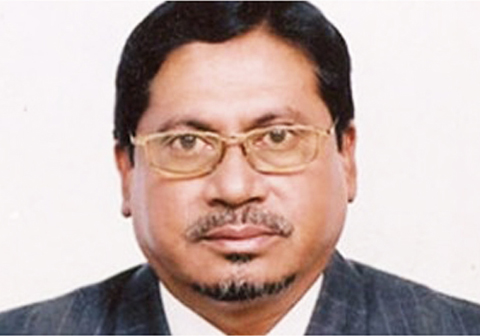
Muhammad Kamaruzzaman (photo), a senior leader of the Jamaat-e-Islami party, was hanged today in Dhaka Central jail.
He had been sentenced to death by the Bangladesh International Crimes Tribunal (ICT) in 2013 for his role in the atrocities committed during the 1971 war for independence in Bangladesh.
His conviction and sentence were confirmed on appeal in 2014.
The government established the ICT in 2010, after amending the International Crimes (Tribunals) Act 1973.
The ICT has jurisdiction to try crimes against humanity, crimes against peace, genocide, violations of the Geneva conventions and any other crimes under international law.
The ICJ has previously raised concerns that trials before the ICT do not comply with international standards for fair trials.
According to the ICJ, there are serious procedural flaws at all stages: pre-trial release has been routinely and arbitrarily denied; witnesses have been abducted and intimidated; and there have been credible allegations of collusion between the Government, prosecutors and judges.
“This execution constitutes a violation of the right to life and freedom from cruel, inhuman and degrading punishment,” said Sam Zarifi, the ICJ’s Director for Asia and the Pacific. “The fact that this execution was based on a trial that was procedurally and substantively flawed is all the more regrettable and a perversion of justice.”
On 6 April 2015, the Supreme Court rejected Muhammad Kamaruzzaman’s petition for a review of his sentence.
The UN High Commissioner for Human Rights has denounced the death sentence, noting that his review petition was summarily rejected without consideration on merits.
Government officials have reported that Muhammad Kamaruzzaman decided to not seek a presidential pardon for his sentence, following the rejection of his review petition.
After Abdul Qader Mollah in 2013, Kamaruzzaman is the second individual to be executed after being sentenced to death by the ICT.
“The ICJ supports the rights of all victims of the atrocities committed during the 1971 war for independence in Bangladesh to truth and justice. But the death penalty is not the answer,” Zarifi added. “Bangladesh should impose an official moratorium on the death penalty, with a view to abolishing it outright.”
The ICJ opposes capital punishment in all cases without exception. The death penalty constitutes a violation of the right to life and the right not to be subjected to cruel, inhuman or degrading punishment.
In December 2014, the UN General Assembly adopted a resolution, for the fifth time since 2007, emphasizing that that the use of the death penalty undermines human dignity and calling on those countries that maintain the death penalty to establish a moratorium on its use with a view to its abolition.
A majority of 117 UN Member States voted in favor of a worldwide moratorium on executions as a step towards abolition of the death penalty, with only 37 opposed.
Contact:
Sam Zarifi, ICJ Asia Pacific Regional Director (Bangkok), t: +66 807819002; email: sam.zarifi(a)icj.org

Apr 9, 2015 | News
Among the victims of a gun attack today at the Palace of Justice of Milan, according to press reports, were Judge Fernando Ciampi and lawyer Lorenzo Alberto Claris Appiani.
Press reports state that the person who opened fire in the Palace of Justice of Milan, killing three persons and injuring several others, was a defendant in a case.
The ICJ calls on relevant authorities immediately to launch a thorough inquiry into the system of security at the Palace of Justice, for judges, lawyers, and prosecutors, as well as witnesses and parties to cases, employees, and others present in the buildings.
The ICJ recalls that the State has a duty under international law to ensure protection for members of the judiciary and others who may be at risk of such attacks.


![Smoke rises after an Israeli air strike on the village of Taybeh in southern Lebanon [Source: Al Jazeera]](https://www.icj.org/wp-content/uploads/2026/03/Screenshot-2026-03-20-at-15.56.24-300x200.png)