Oct 3, 2014 | Artículos, Noticias
Del 27 de septiembre al 2 de octubre del presente año, la CIJ llevó a cabo una misión integrada por el comisionado de la CIJ José Antonio Martín Pallín y Ramón Cadena, Director de la CIJ para Centroamérica.
El objeto de la misma fue analizar el proceso de elección de magistrados de la Corte Suprema de Justicia.
La misión se entrevistó con el Procurador de los Derechos Humanos, diferentes organizaciones no gubernamentales, defensores y defensoras de derechos humanos, miembros del cuerpo diplomático, abogados y abogadas que han participado en otros procesos de elección por medio de comisiones de postulación y jueces y juezas del Organismo Judicial.
Guatemala-CIJ visita a Guatemala-News-web story-2014-SPA (full text in PDF)

Oct 3, 2014 | News
Del 27 de septiembre al 2 de octubre del presente año, la CIJ llevó a cabo una misión integrada por el comisionado de la CIJ José Antonio Martín Pallín y Ramón Cadena, Director de la CIJ para Centroamérica.
El objeto de la misma fue analizar el proceso de elección de magistrados de la Corte Suprema de Justicia.
La misión se entrevistó con el Procurador de los Derechos Humanos, diferentes organizaciones no gubernamentales, defensores y defensoras de derechos humanos, miembros del cuerpo diplomático, abogados y abogadas que han participado en otros procesos de elección por medio de comisiones de postulación y jueces y juezas del Organismo Judicial.
Guatemala-CIJ visita a Guatemala-News-web story-2014-SPA (full text in PDF)
Oct 1, 2014
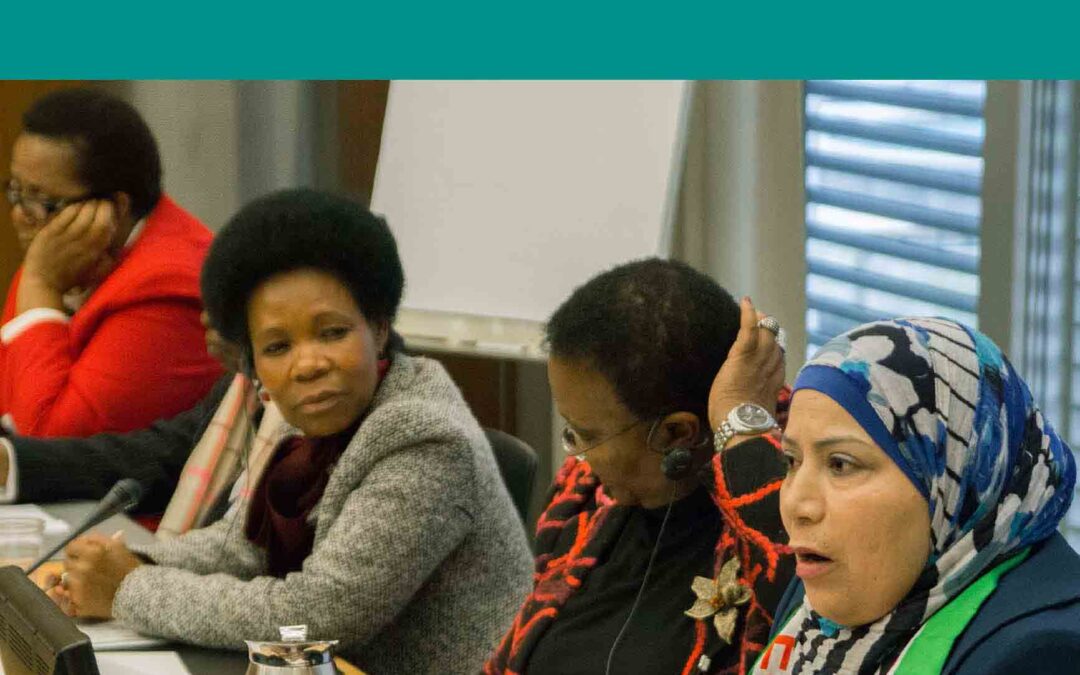
The present publication, no. 1 in the “Geneva Forum Series”, brings together materials related to the 2013 Geneva Forum on women and the judiciary.
Discussions focused on overcoming obstacles to women’s full and equal participation in the judiciary, and possible links to the better protection of women’s human rights by the judiciary.
The publication opens with highlights of the discussions in Geneva.
A second paper integrates the insights of the Geneva discussions together with findings from earlier regional colloquia in Tanzania and Tunisia. Finally, short snapshots are provided of the situation for women and the judiciary in six jurisdictions: Jordan, Kenya, Saudi Arabia, Tanzania, Tunisia and Uganda.
The ICJ has convened the Geneva Forum of Judges and Lawyers each year since 2010.
Organized by the ICJ’s Centre for the Independence of Judges and Lawyers, the Forum gathers legal practitioners from around the world for dialogue aimed at identifying and finding practical solutions to the challenges their professions face.
Improved judicial protection of human rights is the underlying motivation and theme for the Forums.
The ICJ plans to publish further entries in the “Geneva Forum Series” following future Forums.
The Series seeks to provide a permanent record of the discussions.
The summaries of the proceedings at the previous Geneva Forums can be consulted here:
1st Geneva Forum
2nd Geneva Forum
3rd Geneva Forum
Download the full text of the Geneva Forum Series no 1:
Universal-Women and Judiciary Gva For 1-Publications-Conference Report-2014-ENG

Sep 27, 2014 | News
On 24-26 September 2014, the ICJ conducted a workshop on fair trial standards and trial monitoring for Vietnamese lawyers in Manila, Philippines.
The objectives of the workshop were to strengthen the participants’ understanding of fair trial standards and to increase the pool of trained lawyers available to conduct trial monitoring activities in the ASEAN region.
As part of the workshop, the participants observed several criminal proceedings at the Regional Trial Court of Quezon city and visited the Paranaque City Jail, in Manila.
The speakers included experts from the Free Legal Aid Group (FLAG), the Human Rights Resource Center (HRRC), and the Asian International Justice Initiative (AIJI).
The ICJ’s manual on trial monitoring, which was used at the training, provides trial observers with practical guidance on how to prepare for a trial observation mission, carry out the observation and write the follow-up report.
It also provides a synthesis of the basic legal standards applicable in relation to (i) the right to a fair trial, (ii) the right to remedy of victims of human rights violations, and (iii) combating impunity.

Sep 24, 2014 | News
The ICJ expressed concern at the promulgation of a constitutional amendment that empowers the Bangladesh Parliament to impeach judges of the Supreme Court.
The ICJ urges the Government to ensure the impeachment provision meets its obligations under the International Covenant on Civil and Political Rights and international standards on the independence of the judiciary.
“Parliament must prescribe adequate safeguards to ensure the newly enacted impeachment provision meets international standards for protecting the independence of the judiciary and the right to a fair trial,” said Sam Zarifi, ICJ’s Director for Asia and the Pacific. “Without such safeguards, the looming fear of arbitrary and politically motivated impeachment would create an environment in which judges would be unable to exercise their judicial functions independently and impartially, especially in cases involving the Government.”
On 22 September 2014, President Abdul Hameed gave his assent to the 16th constitutional amendment, which was passed unanimously by the Bangladeshi Parliament on 17 September 2014.
The amendment empowers Parliament to impeach judges of the Supreme Court on the grounds of “proven misbehavior or incapacity” by passing a resolution supported by at least a two-third majority of parliamentarians.
To exercise this power, Parliament has to first pass a law to regulate the procedure in relation to investigation and proof of the misbehavior or incapacity of a judge that would lead to an impeachment.
International standards on the independence of the judiciary, including the UN Basic Principles on the Independence of the Judiciary, the Commonwealth Principles on the Accountability of and the Relationship between the Three branches of Government, and the Beijing Statement of Principles of the Independence of the Judiciary, stipulate that judges shall be subject to suspension or removal only for “reasons of incapacity or behavior that renders them unfit to discharge their duties”.
The phrase “proven misbehavior or incapacity” in the Bangladeshi amendment will have to be interpreted and applied in line with this relatively high threshold.
“Impeachment of judges must be an exceptional measure, reserved for cases of gross misconduct,” said Zarifi. “Unless Parliament takes great care to ensure the law regulating and clarifying the impeachment procedure follows international law and standards on the removal of judges, the constitutional amendment can only be interpreted as an assault on the independence of the judiciary.”
Any removal proceedings must meet international standards on fair trial and due process.
A judge at risk of being disciplined or removed must be accorded the right to be fully informed of the charges; the right to be represented at the hearing by council of choice; the right to make a full defense; and the right to be judged by an independent and impartial tribunal.
“The actions that Parliament might take under the impeachment amendment are particularly worrying given the Awami League Government’s recent record of passing a series of regressive laws and policies relating to human rights,” added Zarifi. “After clamping down on the operation of civil society groups and restricting freedom of expression of the media and human rights defenders, it appears that the Government is now looking to target the judiciary.”
An independent and impartial judiciary is central to the protection of human rights and the rule of law.
The ICJ therefore urges the Bangladesh Parliament to safeguard judicial independence by ensuring that the laws governing the impeachment procedure meet international law and standards on the independence of the judiciary and the right to a fair trial.
Contact:
Sam Zarifi, ICJ Asia Pacific Regional Director (Bangkok), t: +66 807819002; e: sam.zarifi(a)icj.org
Reema Omer, ICJ International Legal Adviser (London), t: +44 7889565691; e: reema.omer(a)icj.org

![Smoke rises after an Israeli air strike on the village of Taybeh in southern Lebanon [Source: Al Jazeera]](https://www.icj.org/wp-content/uploads/2026/03/Screenshot-2026-03-20-at-15.56.24-300x200.png)