Dec 3, 2013 | News
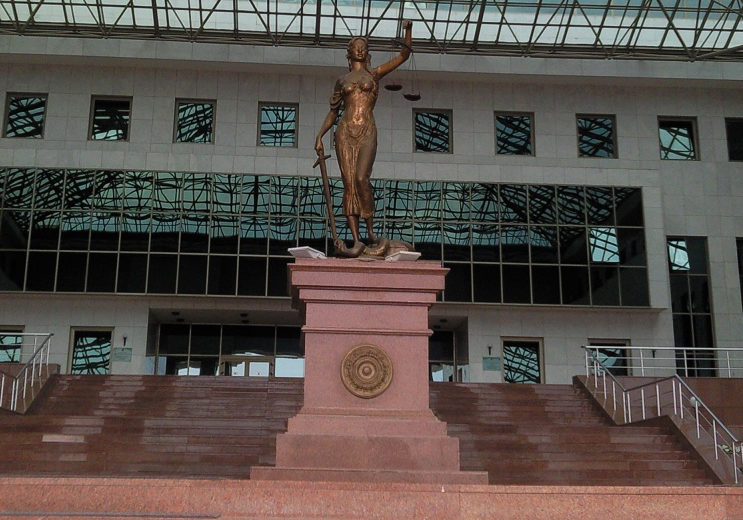
Today, the ICJ observed a hearing in a case concerning Zinaida Mukhortova, a lawyer detained until recently in a psychiatric facility, allegedly for carrying out her professional duties, but released on 1 November.
At the hearing on 2 December, the Karaganda Regional Court confirmed the lawfulness of her detention, upholding the earlier decision of the Balkhash City Court of 20 August 2013, to grant the motion of the Prosecutor’s Office to detain the lawyer.
“The likelihood of her repeated detention for the lawful exercise of her profession has risen following this decision,” Almaza Osmanova, an ICJ observer present at the hearing, commented.
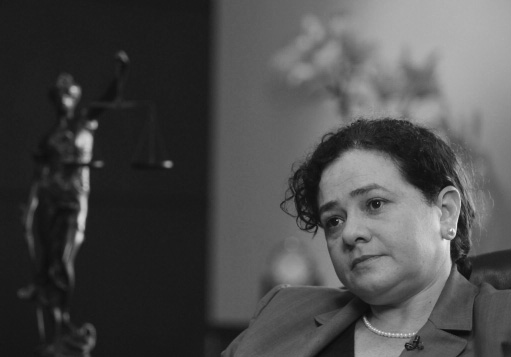
The deputy Head of the Medical Facility in which Zinaida Mukhortova (photo) was detained, Doctor R.R. Iskahakov was present at the hearing and insisted on the lawfulness of her detention.
The ICJ previously reported Doctor Iskahakov’s refusal to release lawyer Mukhortova until all the court proceedings had been completed.
The ICJ trial observation mission consisted of two observers: Almaza Osmanova, a practicing lawyer from Kyrgyzstan and Kayum Yusufov, a practicing lawyer from Tajikistan.
The ICJ has previously made statements following lawyer Mukhortova’s detention and subsequent release from the psychiatric facility:
Kazakhstan: ICJ welcomes release of a lawyer from psychiatric detention
Kazakhstan: psychiatric detention of lawyer must be ended
Contact:
Róisín Pillay, Director, ICJ Europe Programme, roisin.pillay(a)icj.org
Temur Shakirov, LegalAdviser, ICJ Europe Programme, temur.shakirov(a)icj.org

Nov 21, 2013 | Communiqués de presse, Nouvelles, Publications, Rapports
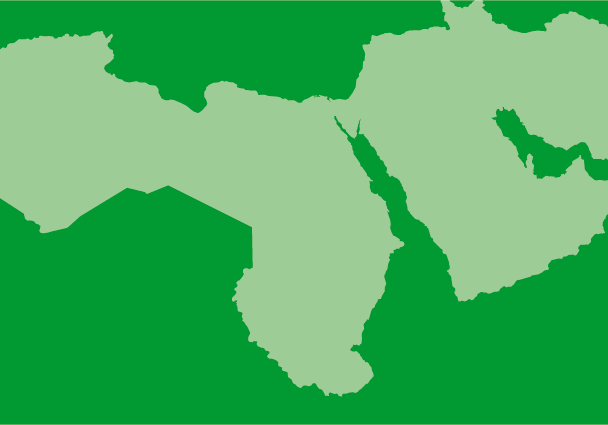
La CIJ a appelé aujourd’hui les autorités marocaines à assurer une réforme globale et significative du pouvoir judiciaire.
Cette déclaration intervient alors que la CIJ vient de conclure une mission de haut niveau au Maroc et de lancer son rapport «Réformer le système judiciaire au Maroc », le 21 Novembre 2013.
La CIJ a déclaré que les réformes devraient viser à mettre fin à toute forme d’influence ou de contrôle abusif du pouvoir exécutif sur les affaires judiciaires.
Elle a appelé au renforcement de l’autorité du Conseil Supérieur du Pouvoir Judiciaire (CSPJ) nouvellement créé, sur tous les aspects relatifs à la carrière des juges et des procureurs.
La CIJ a souligné que le Ministère Public devrait être séparé du pouvoir judicaire et qu’il devrait conduire ses activités de manière objective et impartiale, et en défense des droits de l’homme.
L’organisation a également demandé à ce que la compétence des tribunaux militaires soit limitée au personnel militaire pour manquement à la discipline militaire, et qu’en aucun cas ces tribunaux ne devraient être utilisés pour juger des crimes constituant des violations des droits de l’homme.
Morocco – Réforme judiciaire – News-press release-2013-Fr (Texte complet en PDF)
Maroc – Réformer le système judiciaire-publications-rapport RESUME-2013-fr (Résumé du rapport en PDF)
Nov 21, 2013
The ICJ today called on the Moroccan authorities to ensure comprehensive and meaningful reform of the judiciary.
The statement comes as the ICJ concluded a high-level mission to Morocco and launched its report Reforming the Judiciary in Morocco, on 21 November 2013.
The ICJ said that reforms should aim at putting an end to any form of undue influence or control by the executive over judicial matters. It called for the reinforcement of the authority of the newly established Conseil Supérieur du Pouvoir Judiciaire (CSPJ) over all aspects of the careers of both judges and prosecutors.
The ICJ stressed that the Office of the Public Prosecutor (OPP) should be kept independent of the judiciary and that it must carry out its activities objectively, impartially and in defence of human rights.
The organization also urged that the jurisdiction of military courts be restricted to military personnel for breaches of military discipline, and that by no means should military courts be used to try crimes consisting of human rights violations.
“The ICJ welcomes efforts by the Moroccan authorities to expand the competencies of the CSPJ over matters relating to the career of judges, including their nomination, promotion and disciplinary proceedings,” said Justice Kalthoum Kennou, ICJ Commissioner and judge at the Tunisian Cassation Court. “However, in elaborating the new laws relating to the judiciary, the Moroccan authorities must ensure that the legislation does not undermine, but instead reinforces, the independence of the judiciary in a manner that makes it an effective authority for the fair administration of justice.”
The ICJ emphasized that the new laws should provide clear and objective criteria for the members of the CSPJ who are either elected or appointed by the King and should ensure that the CSPJ has financial and administrative autonomy and plays a meaningful role in budgeting for the judiciary.
The organization also called for the elaboration and adoption of a comprehensive code of judicial ethics, in line with international standards, to serve as basis to ensure judicial accountability in Morocco.
The ICJ said that it considered that the reform of the judicial system in Morocco must include the reform of the OPP.
The Minister of Justice should have no authority over the OPP, including the careers of individual prosecutors. Since prosecutors are part of the judicial corps, guarantees of security of tenure should be extended to prosecutors.
The nature and scope of any power by hierarchical superiors to issue written instructions to prosecutors should be defined in law. Political authorities should be precluded from issuing instructions pertaining to individual cases, such as those aimed at preventing an investigation from proceeding to court.
The ICJ also indicated that meaningful reform of the judiciary must include the military justice system.
“The Moroccan authorities must ensure that civilians are not tried before military courts and that the jurisdiction of these courts is limited to trials of members of the military in cases involving alleged breaches of military discipline,” said Said Benarbia, Senior Legal Adviser for the Middle East and North Africa (MENA) Programme of the ICJ. “Where military courts are used, they must respect all aspects of the right to a fair trial, including the requirement of adequate time and facilities for the preparation of defence, access to materials that the prosecution intends to rely on in court, and the right of appeal of the conviction and sentence by the military court to a higher civilian tribunal.”
Contact:
Said Benarbia, ICJ Senior Legal Adviser of the Middle East and North Africa Programme, tel: 41 22 979 38 17, e-mail: said.benarbia@icj.org
Additional information:
During its mission, the delegation met with: Mr. Mustapha Ramid, Minister of Justice; Mr. Driss Dahak, Secretary General of the Government; Mr. Karim Ghellab, President of the House of Deputies; Mr. Mohamed Cheikh Biadillah, President of the House of Counsellors; Mr. Mustapha Farès, President of the Cassation Court; Mr. Abdelhalim Wahbi, President of the Commission on Justice, Legislation and Human Rights of the House of Deputies. The ICJ also met with representatives of the judiciary, the legal profession and civil society.
The delegation was composed of Kalthoum Kennou, ICJ Commissioner and judge at the Cassation Court in Tunisia, Said Benarbia, Senior Legal Adviser for the MENA Programme of the ICJ and Laura Torre, Programme Officer for the MENA Programme.
Morocco-Reforming the Judiciary-publications-reports-2013 (full text in pdf)
Nov 14, 2013 | News
The International Bar Association’s Human Rights Institute (IBAHRI) and the ICJ urge the Commonwealth Heads of States meeting in Colombo this week to make Sri Lanka accountable to Commonwealth values.
The IBAHRI and the ICJ recall that the Commonwealth Charter, passed in March 2012, sets out 16 core values, which include safeguarding the independence of the judiciary, protecting the rule of law, respecting the separation of powers and promoting democratic rule.
But the two organizations point out numerous examples where these values have not been respected by the Government of Sri Lanka.
The IBAHRI and the ICJ were holding a press conference in Bangkok Thailand today after a high-level IBAHRI delegation was blocked from entering Sri Lanka late last week to attend a conference on the rule of law and independence of the legal profession hosted by the Bar Association of Sri Lanka.
Giving a statement remotely, Gabriela Knaul, UN Special Rapporteur on the Independence of Judges and Lawyers, expressed “serious concerns about acts of reprisals against judges, prosecutors, lawyers and other actors of the judicial system who cooperate, or seek to cooperate, with UN and regional human rights mechanisms.”
“Reprisals against judicial actors and legal professionals are a kind of attack to their institutional and functional independence,” she added.
Earlier this year, the IBAHRI conducted a remote fact-finding mission on the politically motivated impeachment of Chief Justice Banadranayake in January 2013, after being denied entry into Sri Lanka.
The IBAHRI Mission concluded that the Chief Justice’s removal was unlawful, undermined public confidence in the rule of law and threatened to eviscerate the country’s judiciary as an independent guarantor of constitutional rights.
In an open letter signed by 56 eminent jurists and senior judges from around the world, the ICJ also expressed its grave concern over the disregard for international standards on the independence of the judiciary and the removal of judges.
“This weakening of rule of law and independence of the judiciary is accompanied by an equally deteriorating human rights situation,” said Sheila Varadan, ICJ Legal Adviser for South Asia.
The United Nations High Commissioner of Human Rights, Navi Pillay, in her recent visit to Sri Lanka expressed concern over the curtailment or denial of personal freedoms and human rights, the persistent impunity and the failure of rule of law.
“The state of affairs in Sri Lanka sits uneasily with the aspirations set out in the Commonwealth Charter,” said Human Rights Barrister and IBAHRI Sri Lanka Mission Rapporteur, Sadakat Kadri. “The Government of Sri Lanka has spent years undermining the values and principles of the Commonwealth.”
“If the Commonwealth is to remain a relevant and effective international organization, it is paramount that those heads of State who have chosen to attend this week’s summit take measures to make Sri Lanka accountable to the core values and principles of the Commonwealth,” said IBAHRI Senior Programme Lawyer Alex Wilks.
Contact:
Sheila Varadan, ICJ Legal Advisor, South Asia Programme (Bangkok), t: +66857200723; email: sheila.varadan(a)icj.org
Notes:
- The IBAHRI delegation blocked from entering Sri Lanka included UN Special Rapporteur on the Independence of Judges and Lawyers, Ms Gabriela Knaul, former UN Special Rapporteur on the Independence of Judges and Lawyers and ICJ Commissioner Dato’ Param Cumaraswamy, and IBAHRI senior programme lawyer Alex Wilks, had intended to travel to Colombo to attend a conference on the rule of law and independence of the legal profession hosted by the Bar Association of Sri Lanka. IBAHRI Mission Rapporteur Sadakat Kadri was also unable to enter Sri Lanka as he was denied a visa.
- The Bar Association of Sri Lanka with the International Bar Association’s Human Rights Institute had planned a conference for 13 November 2013 on ‘Making Commonwealth values a reality: the rule of law and independence of the legal profession’. The 13 November 2013 conference was cancelled when the Government of Sri Lanka revoked visas for the UN Special Rapporteur and the IBAHRI delegation on 7 November 2013.
- In March 2013, a delegation of the IBAHRI undertook a remote fact-finding mission to investigate the impeachment proceedings of Chief Justice Bandaranayake, the independence of the legal profession and rule of law in Sri Lanka. The mission was conducted remotely following the cancellation of visas by the Government of Sri Lanka for the IBAHRI delegation. A report was released in April 2013 A Crisis of Legitimacy: The Impeachment of Chief Justice Bandaranayake and the Erosion of the Rule of Law in Sri Lanka.
- The ICJ released a report, Authority without Accountability: The crisis of impunity in Sri Lanka in November 2012 documenting the systemic erosion of rule of law and accountability mechanisms in Sri Lanka. The ICJ report described how decades of Emergency rule and legal immunities granted to the President and other government officials weakened the checks and balances in the Sri Lankan government, while political interference has increasingly led to attacks on the independence of the judiciary and rule of law.
Nov 14, 2013 | Events, News
The International Bar Association Human Rights Institute (IBAHRI) and the ICJ urge Commonwealth Heads of States meeting in Colombo this week to make Sri Lanka accountable to Commonwealth values.
The IBAHRI and the ICJ are holding a press conference in Bangkok, Thailand, this morning after a high-level IBAHRI delegation was blocked from entering Sri Lanka late last week.
You can watch the event here: http://www.ustream.tv/recorded/40754120
Further reading:
Sri Lanka-Muttur killings-ICJ-ACF Q&A-briefing paper-2013 (full text in pdf)
ICJ open letter signed by 56 eminent jurists and senior judges from around the world
ICJ report Authority without Accountability: The crisis of impunity in Sri Lanka