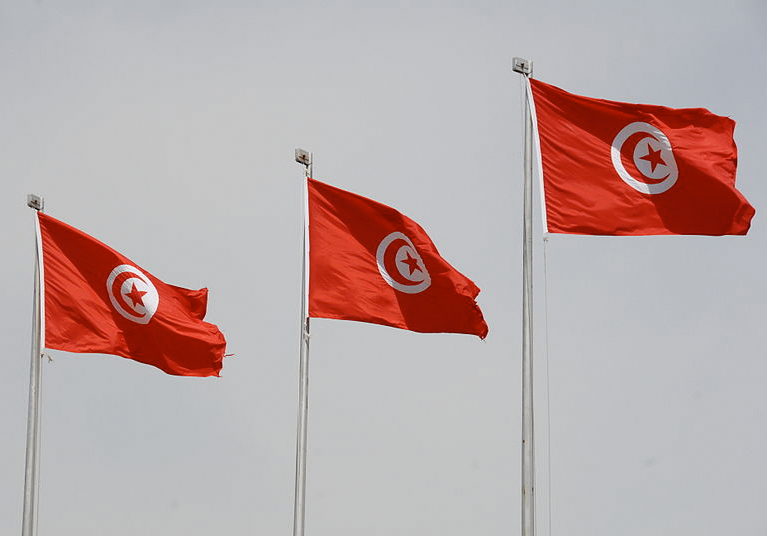
Executive control over judiciary persists in Tunisia
 The ICJ deplores the unilateral decision of the Tunisian Minister of Justice to summarily dismiss over 70 judges.

The ICJ deplores the unilateral decision of the Tunisian Minister of Justice to summarily dismiss over 70 judges.
La Commission Internationale des Juristes (CIJ) déplore la décision unilatérale du Ministre de la justice tunisien concernant la révocation arbitraire de plus de 70 magistrats.
La décision a été prise en l’absence d’une procédure juridictionnelle équitable. Au lieu de fonder la décision sur des éléments probants, et ce, à travers des audiences ouvertes et équitables, la décision semble avoir été prise sur la base d’allégations de corruption et d’allégeance à l’ancien régime.
Les magistrats révoqués ont la possibilité d’attaquer la décision du Ministre devant un tribunal administratif. La CIJ souligne que cette décision fait perdurer et accroit l’influence ainsi que le contrôle effectif que l’exécutif tunisien exerce de longue date sur le pouvoir judiciaire.
« Au lieu de s’efforcer à éradiquer la corruption, les actions du Ministre de la justice portent atteinte à l’indépendance du pouvoir judiciaire en Tunisie et renforcent les anciennes pratiques caractérisées par des ingérences politiques illégales dans les affaires de la justice » a déclaré Saïd Benarbia, Conseiller juridique principal pour le programme Afrique du Nord et Moyen-Orient de la CIJ.
A Saïd Benarbia d’ajouter: « La décision n’assure pas aux magistrats soupçonnés, le respect des garanties fondamentales d’une procédure équitable, notamment le fait de fournir les fondements de la décision, les preuves sur lesquelles elle se fonde ainsi qu’une procédure équitable leur permettant d’attaquer la décision et les preuves utilisées contre eux ».
Les normes internationales exigent que toute procédure disciplinaire, de suspension ou de révocation, à l’encontre d’un magistrat soit menée dans le respect des procédures préexistantes garantissant le droit des magistrats à une audience équitable et transparente ainsi qu’à un examen indépendant. Seul un organe indépendant peut assurer l’équité de ces procédures.
« L’action du Ministre de la justice met en évidence le besoin urgent d’établir un organe provisoire indépendant chargé de superviser les questions en matière de justice dans la période transitionnelle », a ajouté Benarbia.
« Jusqu’à ce qu’une telle autorité ne soit créée, le pouvoir exécutif doit s’abstenir de toute mesure pouvant porter atteinte à l’indépendance du pouvoir judiciaire et à l’Etat de droit en Tunisie », a-t-il conclu.
Pour plus d’information:
Saïd Benarbia, Conseiller juridique principal, Programme Afrique du Nord et Moyen-Orient, CIJ, tél +41 22 979 3817; e-mail: said.benarbia(a)icj.org
Tunisia_PR_12_July-press releases-2012_FR (communiqué de presse complet en PDF)
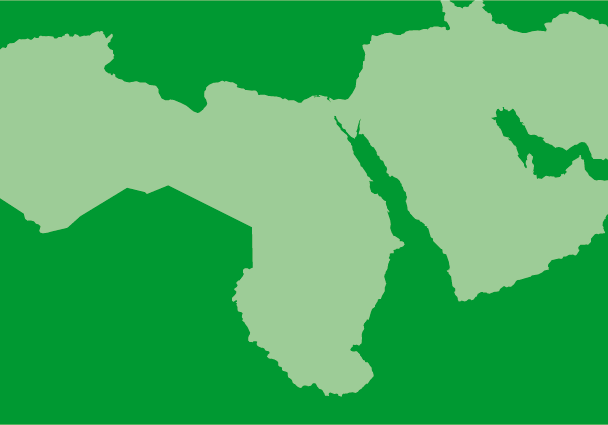
In a position paper published today, the ICJ sets out its concerns about measures taken by the transitional authorities in Egypt, in particular the Supreme Council of Armed Forces (SCAF).
 This paper addresses the deteriorating Rule of Law and human rights situation in Egypt.
Major examples of this situation include the consolidation of the powers of the Supreme Council of Armed Forces (SCAF), free from any civilian oversight, the control of the SCAF over the constitution-making process, the de facto extension of the 30-year state of emergency through the expansion of military power and the military justice system, and the continuation of widespread human rights violations under the rule of the SCAF.
Egypt HR situation Position Paper 2012 (download in English)

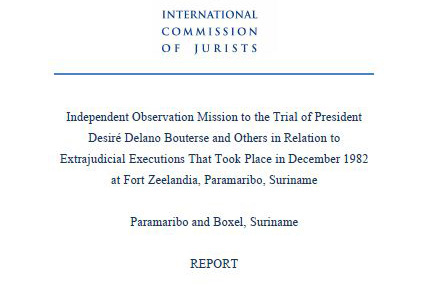 The purpose of the mission, which took place between 8 and 12 May 2012, was to observe the trial of President Bouterse and 24 Others by a Military Court in Boxel, Suriname, and surrounding context.
This is a report from an independent trial observation mission carried out by the International Commission of Jurists (ICJ), based in Geneva, Switzerland. The purpose of the mission, which took place between 8 and 12 May 2012, was to observe the trial of President Bouterse and 24 Others by a Military Court in Boxel, Suriname, and surrounding context.
In accordance with rigorous methods of assessment, the ICJ independent trial observer, a lawyer/academic of British nationality, made an assessment of the social and political context in which the trial has been taking place. Based on numerous interviews and separate, independent sources of information, it gradually became clear that the atmosphere in the country had a certain bearing on the trial. This atmosphere certainly had positive dimensions, but there were also aspects of concern. Following a brief summary of the judgement, the ICJ evaluated the Court’s judgement handed down on 11 May 2012, in order to assess compliance with judicial guarantees of fair trial and due process, in accordance with internationally recognised standards. The ICJ also considered the procedural implications and associated human rights consequences of the judgement itself.
Finally, in light of the ICJ’s assessment of facts, and its legal assessment of the 11 May 2012 judgement, the ICJ offers conclusions, as well as recommendations to the Government of Suriname, the Judiciary, the media and diplomatic delegations.
Suriname-trial Bouterse 1982 executions-trial observation report-2012 (full text, PDF)
 Joint Statement from Legal Experts on Genetic Sex Testing in Sport
 HRC on Iran: the Council must condemn human rights violations by all parties to this conflict
 Lao PDR: Addressing gaps in access to justice for survivors of sexual and gender-based violence
 Libya’s UPR Outcome: ICJ Raises Concerns on Detention Abuses, Women’s Rights, and Migrants