Mar 12, 2020 | Advocacy, Non-legal submissions
At the UN, the ICJ today highlighted the need for Kazakhstan to ensure the independence of the legal profession and the judiciary, in particular by ending the arbitrary disbarment of lawyers.
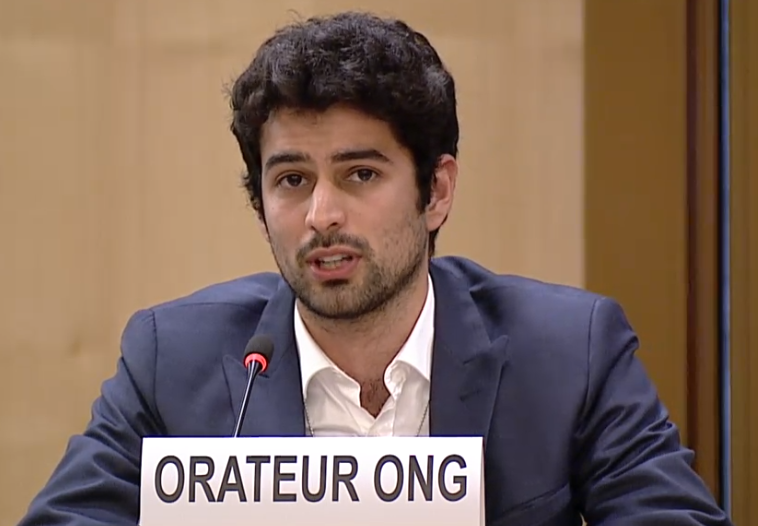
The statement, delivered during the adoption of the outcome of the Universal Periodic Review of Kazakhstan by the Human Rights Council in Geneva. The statement read as follows:
“The International Commission of Jurists (ICJ) welcomes the acceptance by Kazakhstan of the recommendations by Denmark (138.83), France (139.85), Mexico (139.86) and Austria (139.113) to uphold the rule of law and to protect the independence of the legal profession and the judiciary.
The ICJ however regrets that Kazakhstan only noted and did not explicitly support the recommendation by Czechia to “take immediate measures to ensure the effective protection of lawyers, media workers, bloggers and human rights defenders against any form of harassment” (139.114).
Furthermore, based on ICJ research, we regret to report that Kazakhstan’s assertion that the accepted recommendations are “in the process of implementation” (A/HRC/43/10/Add.1, para. 4) is simply not correct.
On the contrary, the ICJ considers that the independence of the legal profession is being actively undermined in the country.
The ICJ expresses particular concern at disbarment proceedings initiated by the Ministry of Justice, including the recent disbarment of Amanzhol Mukhamediarov and Yerlan Gazymzhanov.[1]
Finally, the situation is exacerbated by a Law on Advokatura that does not require the Bar Association’s authorisation to initiate disbarment proceedings.
To actually implement the recommendations accepted by Kazakhstan, ICJ calls on Kazakh authorities to stop all harassment of lawyers through disciplinary proceedings, readmit the lawyers unduly disbarred and reform its Law on Advokatura in line with international standards on independence of the legal profession.”
[1] See ICJ statement at https://www.icj.org/kazakhstan-disbarment-of-erlan-gazymzhanov-and-amanzhol-mukhamediarov-undermines-the-independence-of-the-legal-profession-icj-says/ .

Feb 28, 2020 | Advocacy, Cases, Legal submissions
The ICJ has intervened with an expert opinion to support the board members of the Turkish Medial Association in the appeal against their conviction for hate speech offences. The conviction raises significant concerns for freedom of expression.
The case before the Appeal Court concerns 11 defendants, all members of the Council of the Turkish Medical Association: Mehmet Raşit Tükel, Taner Gören, Sinan Adıyaman, Mehmet Sezai Berber, Selma Güngör, Bülent Nazım Yılmaz, Funda Barlık Obuz, Dursun Yaşar Ulutaş, Ayfer Horasan, Şeyhmus Gökalp and Hande Arpat.
On 3 May 2019, the defendants were convicted at first instance by the Ankara 32 Assize Court for having issued statements opposing the war during Turkey’s Operation Olive Branch in Syria.
The Assize Court concluded that the members of the Council publicly provoked hatred or hostility in one section of the public against another section which has a different characteristic based on social class, race, religion, sect or regional difference, in a way that creates an explicit and imminent danger to public security. The Court sentenced each defendant to two terms of 10 months’ imprisonment for provoking the public to hatred and hostility in two separate statements.
Hande Arpat was additionally convicted of “disseminating propaganda in support of a terrorist organization” to 18 months and 22 days in prison concerning her three Facebook posts.
The ICJ expert opinion presented before the Court of Appeal examines international law standards relevant to the criminalization and prosecution of crimes of expression.
Turkey-AssDoctors-ExpertOpinion-2020-ENG (download the expert opinion in English)
Turkey-AssDoctors-ExpertOpinion-2020-TUR (download the expert opinion in Turkish)
Feb 28, 2020 | News
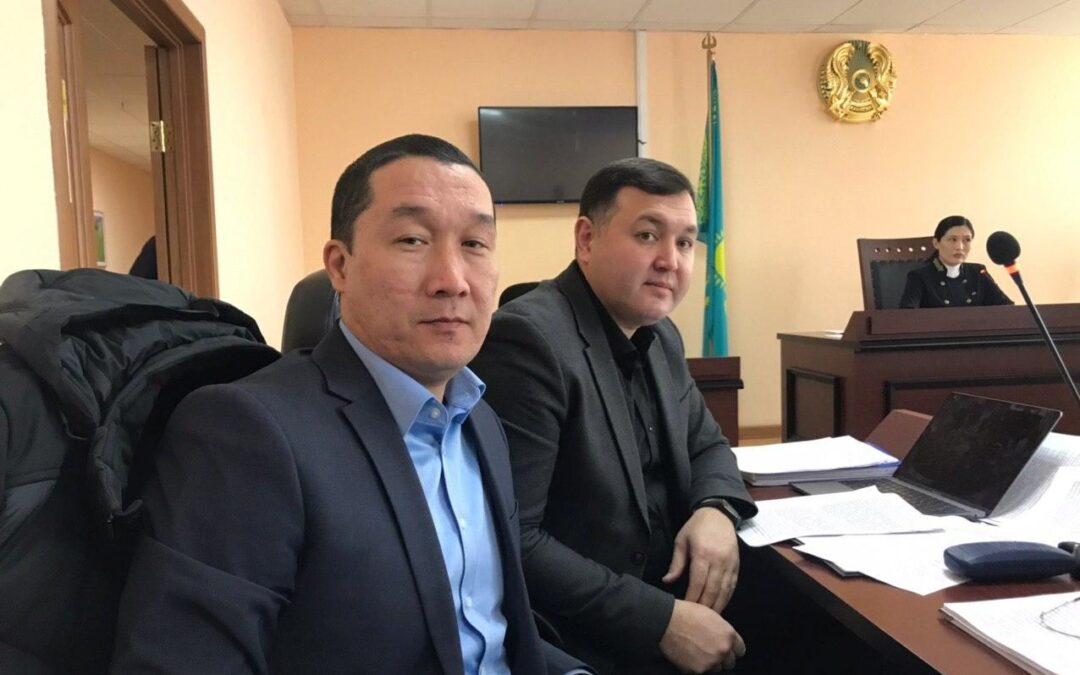
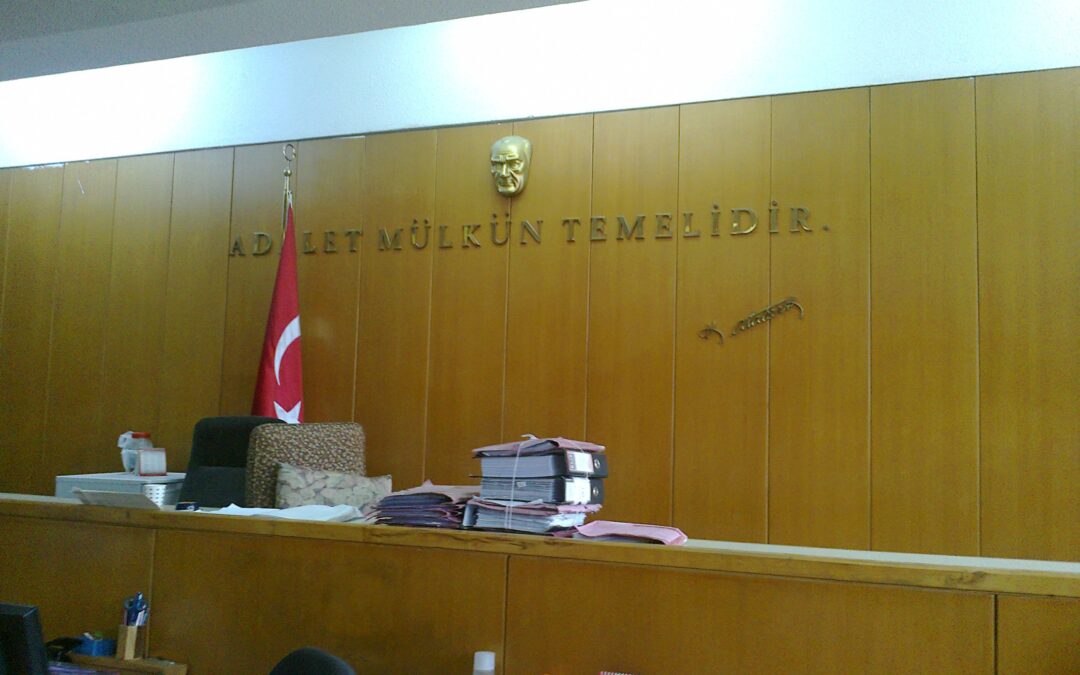
The ICJ expresses concern at the decisions of 26 February of Yesil and Saryarka district courts of Nur-Sultan to disbar two lawyers, Erlan Gazymzhanov and Amanzhol Mukhamediarov, at the request of the Ministry of Justice.
These disbarments are a blow against the ability of lawyers to exercise their profession independently.
The immediate cause for the action was that the lawyers had published clips from a video recording of court proceedings in which the lawyers had acted for the defence, showing the judge behaving in an inappropriate way, on social media. The video clip was published after the proceedings had been concluded.
Following this publication, the judge was disciplined by a specialised judicial body for her behaviour during the court proceedings. At the same time, the judiciary addressed the Ministry of Justice with a request to act against the two lawyers for posting video clips on their social media pages.
The ICJ observed the court proceedings for disbarment of the lawyers in both cases. The court hearings proceeded in an orderly manner. However, the ICJ was concerned that the Press Service of the Supreme Court issued a comment on social media during the hearings that cast doubt on the impartiality of the proceedings. Furthermore, the Presidents of Yesil and Saryarka district courts of Nur-Sultan published identical comments, including the rationale for the decisions of judges that considered the cases. This happened immediately after the court decisions were pronounced to the parties. The oral explanations of decisions by judges presiding in the cases differed from the comments published by the respective presidents of the courts. The proceedings resulted in both lawyers being disbarred.
The ICJ notes with concern that these severe sanctions do not follow from legislation concerning the alleged breaches. The ICJ stresses that the principle of legality requires, among other things, that any measure imposing restrictions on human rights must be applied only as provided for by laws that are expressed clearly and unambiguously. The requirement that a measure be in accordance with law refers not only to the existence of the law but also to the quality of such law, which must be foreseeable, since a norm cannot be regarded as law unless it is formulated with sufficient precision to enable the citizen to regulate his or her conduct: he or she must be able to foresee, to a degree that is reasonable in the circumstances, the consequences which a given action may entail.
Kazakhstan legislation does not contain any prohibition of publishing videos of court hearings online, let alone prescribe disbarment for such action. The only document against which the lawyers acted were the internal rules of the Department for Judicial Administration under the Supreme Court, which do not have the status of law and which neither explicitly nor implicitly suggest disbarment for posting the videos. Neither legislation nor lawyers’ ethical rules contain any penalty for publishing video of court hearings online. Therefore, the ICJ is concerned that the sanction imposed is not adequately prescribed by national law, and as such is unforeseeable and contrary to the principle of legality.
Following the request of the Ministry of Justice to apply a specific sanction against the lawyers –termination of the right to practice law – the courts considered only this sanction. This sanction is imposed for life. Bearing in mind the legal uncertainty as to the nature of the violations and the serious consequences that they entail, this sanction appears to be disproportionate.
Bearing in mind the existence of regular disciplinary proceedings before the National Bar Association that were introduced by the new law on the advokatura in 2018, the ICJ is concerned that these procedures were not utilized in these cases, which were initiated directly before the District Courts. The Ministry of Justice did not address the Bar Association’s disciplinary bodies, which makes a sham of the disciplinary bodies of the legal profession.
“We did not hear any convincing arguments in the proceedings as to why ordinary disciplinary proceedings of the Bar Association, including those related to an alleged breach of lawyers’ ethics, have not been used”, said Temur Shakirov, ICJ Senior Legal Adviser.
“In the circumstances such as these, the role of the Bar Association in assessing the conduct of its member is essential to ensuring independence of the legal profession as required by international law and standards”, Shakirov added.
The ICJ calls on the relevant authorities to restore the licences to practice law of Amanzhol Mukhamediarov and Erlan Gazymzhanov. Furthermore, the role of the Bar Association in various aspects of its independent functioning, including the disciplinary proceedings, especially where lawyers may face a disbarment should be strengthened. To this end, the ICJ calls on the Parliament of Kazakhstan to reconsider the legislative framework and remove the possibility of any executive authority to bypass the Bar Association’s competence to evaluate professional conduct of its members, including any disbarment or other disciplinary proceedings.
Disbarment-of-Mukhamediaov-and-Gazymzhanov-2020-ENG (full PDF document with backgroud information).
Feb 28, 2020 | News
The ICJ and the International Bar Association’s Human Rights Institute (IBAHRI) urge the Turkish Council of Judges and Prosecutors (CJP) to stop their investigation into the three judges of the Istanbul 30th Heavy Penal Court who, on 18 February 2020, acquitted the defendants in the Gezi Park trial due to a lack of evidence.
According to a statement from 30 Turkish bar associations, the sole reason for the investigation was the acquittal in the Gezi Park trial. The Council of Judges and Prosecutors, the body of self-governance of the judiciary, has the power to launch and take disciplinary action against judges, including disciplinary proceedings leading to removal from office.
“The launch of such an investigation is a further sign of the grave decline of the rule of law in Turkey”, said Massimo Frigo, Senior Legal Adviser for the ICJ Europe and Central Asia Programme “The disciplinary proceedings against these judges appear to be a direct interference in their decision-making power and will have a chilling effect on the independence of all members of the judiciary.”
“The role of the Council of Judges and Prosecutors should be to protect the independence of the judiciary – not to be an instrument of control and pressure against individual judges” said Massimo Frigo.
IBAHRI Co-Chair, the Hon Michael Kirby AC CMG, commented: “The IBAHRI and the ICJ jointly welcomed the acquittal of Osman Kavala and the other 15 defendants. Now, we condemn the re-arrest of Mr Kavala, continue to stand with the defendants, and call for Mr Kavala’s immediate release. We implore the Turkish Council of Judges and Prosecutors to reconsider the hugely damaging impact their inspection of the judges will have on the principles of judicial independence and the rights of lawyers, and to cease all action in this respect.”
The launch of this investigation occurred immediately after the acquittals in the Gezi trial, spurred by the vehement public protests by President Erdogan against the verdict.
30 Turkish Bar Associations have issued a statement calling for the resignation of the members of the Council of Judges and Prosecutors and considered this investigation as a violation of the principle of judicial independence under the Turkish Constitution.
Background
The defendants in the Gezi trial – with the exception of those not present in Turkey who will be tried separately – were acquitted on 18 February for lack of evidence. The ICJ and IBAHRI welcomed the acquittal after having observed all hearings of the trial. The very evening of the verdict, one of the defendants, Osman Kavala, was re-arrested on suspicion of “attempting to disrupt the constitutional order” connected to the failed coup attempt of 2016.
Osman Kavala has been in detention since 18 October 2017 pending trial on charges connected to the Gezi Park protests. The Gezi Park protests began in May 2013 as an effort by a group of environmentalists to save a park in central Istanbul from being rezoned, but soon grew into nationwide demonstrations. Police quelled the protest in Taksim Square with the use of tear gas and water cannons.
Contact:
Massimo Frigo, ICJ Senior Legal Adviser – e: massimo.frigo(a)icj.org – t: +41229793805
Feb 10, 2020 | Advocacy, News
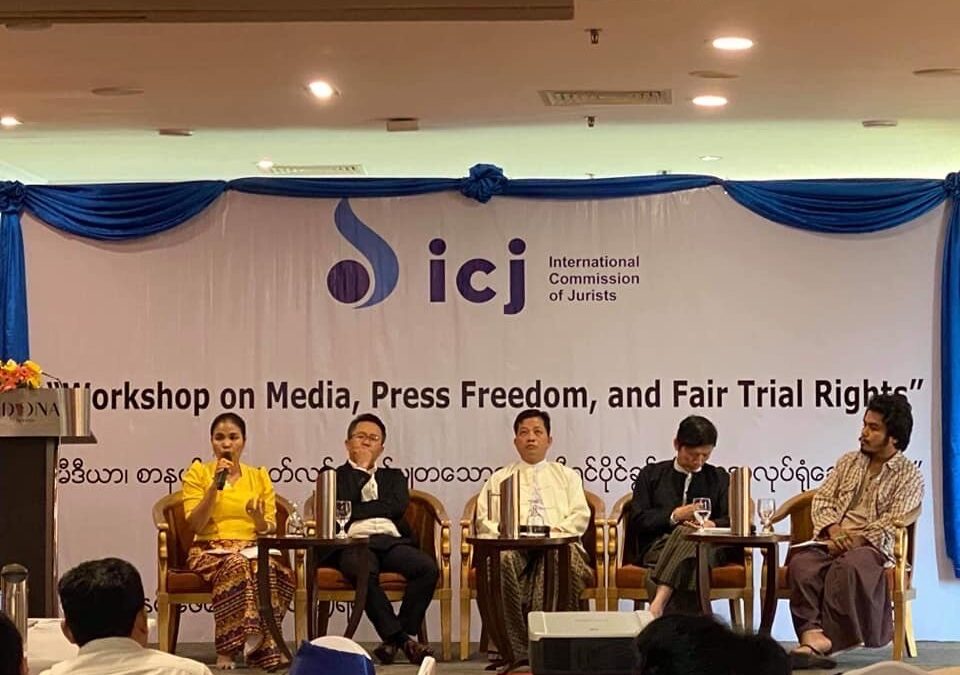
The ICJ conducted a workshop for journalists on fair trial rights and due process on 9 February 2020 in Yangon to help them respond to situations of arrest and prosecution
Some 25 journalists across Myanmar participated in the event, including media representatives from ethnic communities in Shan and Kachin states. Members of nationwide journalism networks, the Myanmar Media Lawyers Network, and the Myanmar Press Council also participated.
The workshop apprised journalists of the guarantees and rights of persons arrested and prosecuted under international human rights law, and the limited protections available under Myanmar law in comparison. It provided a space for participants to collectively identify gaps in journalistic protection. It also intended to foster greater collaboration between journalists and lawyers in safeguarding a free press in Myanmar.
The workshop opened with remarks from Linda van der Horst, head of the political section of the Embassy of the Kingdom of the Netherlands in Myanmar, and Ross Clarke, Team Leader at the ICJ. Both stressed the role of the media in ensuring a robust democracy that adheres to the rule of law, especially in light of the upcoming 2020 national elections. Linda Van der Horst noted that the workshop could also help journalists more deeply understand legal concepts useful for their reporting.
ICJ Associate Legal Adviser Jenny Domino addressed the rights of arrested persons and fair trial guarantees in criminal proceedings under international law. She highlighted the unlawfulness of arresting a journalist as punishment for his work in ensuring that individuals receive information in a free and democratic society. In a comparative context, she discussed the various writs available under Philippine law to protect journalists from unlawful arrests, extralegal killings and enforced disappearances.
ICJ Legal Adviser Hnin Win Aung then discussed Myanmar criminal procedure and the pre-trial rights of criminal defendants. She introduced the writ of habeas corpus remedy under the 2014 Law on the Application for Writs for contesting arbitrary detention. She explained the limitations of this remedy and the practical challenges of litigating in the Myanmar courts.
The presentations were followed by a panel discussion on fair trial rights challenges in Myanmar. The panel was composed of U Myint Kyaw of the Myanmar Press Council, U Brang Mai of Myitkyina Journal, U Myo Aung of Dawei Watch and U Than Zaw Aung of Myanmar Media Lawyers’ Network. The speakers agreed that there is no equality before the law and pushed for greater advocacy on judicial independence and impartiality.
To conclude the workshop, the participants shared their thoughts on how lawyers and the ICJ could help local media moving forward. The participants suggested a human rights analysis of how fair trial rights are undermined in practice by various actors in Myanmar’s criminal justice system. They also expressed their interest to work more closely with lawyers towards better reporting of current events.
The workshop marks the ICJ’s effort to support journalists and empower persons from minority groups towards greater participation in Myanmar’s democratic transition.
Contact
Jenny Domino, ICJ Associate Legal Adviser, e: jenny.domino(a)icj.org
Hnin Win Aung, ICJ Legal Adviser, e: hninwin.aung(a)icj.org
Related material
Strategic Litigation Handbook for Myanmar
Briefing Paper, Citizenship Law and Human Rights in Myanmar
Event, ICJ hosts workshop with civil society on freedom of religion or belief