Feb 4, 2019 | News
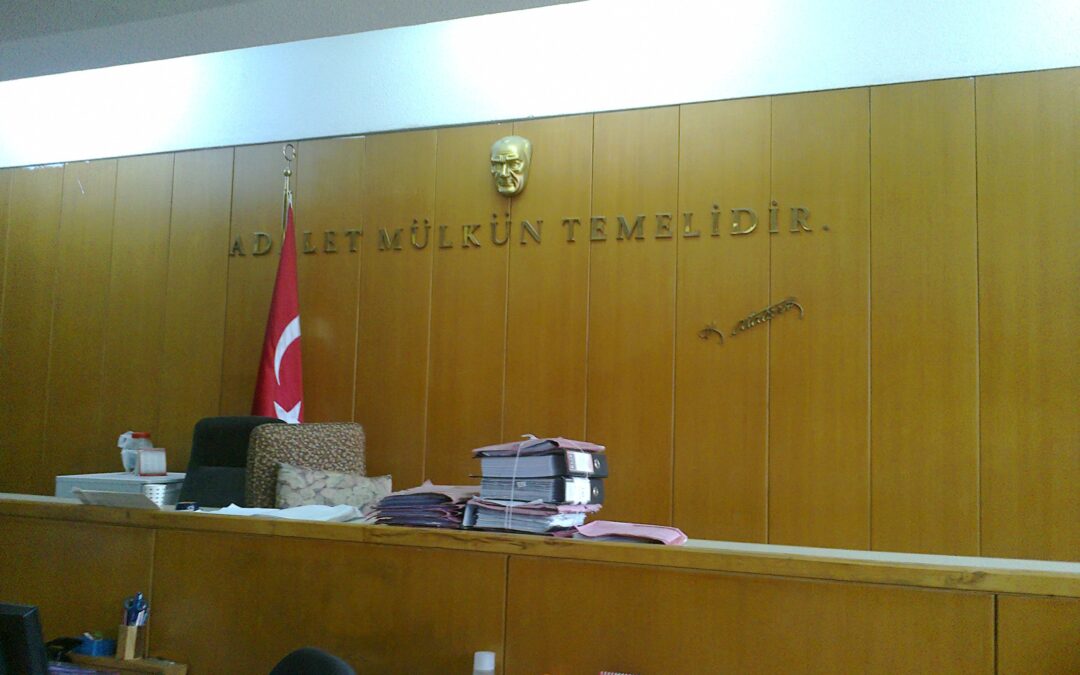
The ICJ is concerned that the dismissal of 17 judges and prosecutors by Turkey’s Council of Judges and Prosecutors on 10 January, for alleged membership of or connections with the “Fetullahist Terrorist Organisation” (FETÖ) did not respect their right to a fair trial.
The decision by the Council of Judges and Prosecutors (CJP) is particularly problematic because it lacks any reasoning on the individual situation of each judge and prosecutor.
The ICJ points out that international law provides that judges may be dismissed only through a fair hearing before an independent authority. The lack of individual reasoning in dismissal decisions strikes at the heart of the right to a fair hearing.
Furthermore, the ICJ recalls its conclusions in the 2018 report Justice Suspended that, within the current constitutional framework, the Council of Judges and Prosecutors (CJP) is not provided with the guarantees necessary to ensure its institutional independence.
Despite the state of emergency having been lifted since last July 2018, extraordinary powers given to the Council of Judges and Prosecutors to dismiss judges and prosecutors during the State of Emergency were extended for 3 years by Law no. 7145. It is unacceptable in a State governed by the rule of law that judges and prosecutors – whatever charges may be against them – be dismissed without respect for the right to a fair procedure, in disregard of international standards.
Considering that the Council of State has not delivered a single decision about dismissed judges and prosecutors during the state of emergency, in more than two years now, it seems likely that it would take at least two years before the recent decision of the CJP is reviewed by an independent judicial authority. Until then, absent further action by the CJP, the reasons for the dismissals will not be known by the purged judges and prosecutors, or by the general public.
The ICJ calls on the CJP to revoke its order and re-examine the cases under the ordinary dismissal procedures and on the Turkish Government and Parliament to modify the constitutional rules on the CJP to ensure its full independence.
Finally, the ICJ expresses concern at the conviction of the former head of the judges’ organisation YARSAV, Mr Murat Arslan, for alleged membership of FETÖ. There are credible reports of violations of the right to a fair trial in the proceedings, including four changes of judges during the proceedings, often without reasons given and without re-examination of witnesses, significant limitations to the defence access to evidence before trial and use of witnesses with undisclosed identity. The ICJ considers that these allegations of violations of the right to a fair trial should be thoroughly re-examined in appeal before an independent court and in full respect of Mr Arslan’s fair trial rights.
Background
On 10 January, the Council of Judges and Prosecutors made use for the first time of special powers to dismiss judges and prosecutors without complying with the ordinary procedure, invoking extraordinary powers enacted by Law No 7145 of 31.07.2018. This legislation inserted into ordinary law several powers that had previously existed under the state of emergency legislation.
One of the amendments made by Law No 7145 of 31.07.2018 was to the Decree Law No 375 dated 1989. A Temporary Article (Article 35) was added to the Decree. On the basis of this article, the General Assembly of the Constitutional Court, the Presidency Councils of Court of Appeal, the Council of State, the General Assembly of the Council of Judges and Prosecutors, a Commission set up by the Ministry of National Security, and the Presidency of the Court of Audit, were each authorised to take dismissal decisions for public officials/judges and prosecutors under their mandate for three years from the date of the endorsement of the law No 7145.
Based on this amendment, on 10 January 2019 the Council of Judges and Prosecutors took its first decision (Decision No. 2019/1) by dismissing 17 judges and prosecutors (6 Public prosecutors, 3 Members of Administrative Court, 7 judges of of Tax Court) based on the allegation of membership to FETÖ.
International law and standards provide that disciplinary proceedings should be conducted by an independent authority or a court with all the guarantees of a fair trial and provide the judge with the right to challenge the decision and sanction. Disciplinary sanctions should be proportionate.
The UN Basic Principles on the independence of the judiciary set out international standards for discipline, suspension and removal of judges, including in order to ensure impartiality and independence of courts and tribunals as required by international law (including the International Covenant on Civil and Political Rights and the European Convention on Human Rights). The Basic Principles state that a:
“charge or complaint made against a judge in his/her judicial and professional capacity shall be processed expeditiously and fairly under an appropriate procedure. The judge shall have the right to a fair hearing. The examination of the matter at its initial stage shall be kept confidential, unless otherwise requested by the judge. …
The Consultative Council of European Judges (CCJE) adds that “a Head of State, Minister of Justice or any other representative of political authorities cannot take part in the disciplinary body.”
Contact
Massimo Frigo, ICJ Senior Legal Adviser for the Europe and Central Asia Programme, t: +41 22 979 3805, e: massimo.frigo(a)icj.org

Jan 16, 2019
The trial of civilians by military courts is a glaring surrender of human rights and fundamental freedoms, found the ICJ in its Briefing Paper Military Injustice in Pakistan released today.
The Pakistani Government must not extend the tenure of military courts to try civilians for terrorism-related offences, the ICJ said.
“Military trials of civilians have been a disaster for human rights in Pakistan,” said Frederick Rawski, ICJ’s Asia Director.
“As a recent judgment of the Peshawar High Court has confirmed, proceedings in these tribunals are secret, opaque, and violate the right to a fair trial before an independent and impartial tribunal,” he added.
In the briefing paper, the ICJ has documented serious fair trials violations in the operation of military courts, including: denial of the right to counsel of choice; failure to disclose the charges against the accused; denial of a public hearing; failure to give convicts copies of a judgment with evidence and reasons for the verdict; and a very high number of convictions – more than 97 per cent – based on “confessions” without adequate safeguards against torture and ill treatment.
The ICJ has also demonstrated how military courts are being used to give legal cover to the practice of enforced disappearances.
The use of military courts to try civilians is inconsistent with international standards, the ICJ recalled.
According to the military, in the four years since military courts were empowered to try terrorism-related offences, they have convicted at least 641 people. Some 345 people have been sentenced to death and 296 people have been given prison sentences. Only five people have been acquitted. At least 56 people have been hanged.
An earlier law giving military courts authority to try civilians will lapse on 30 March 2019. Last week, the Cabinet approved a proposal to extend the tenure of military courts for another two years. The Government is currently in consultation with opposition parties to get consensus on the extension.
“Extending the tenure of military courts is an attempt to deflect attention from the real issue: the Government’s failure to enact reforms to strengthen the criminal justice system during the four years military courts have been in operation,” said Rawski.
“The Government must account for its failure to deliver on the promise of delivering justice for the victims of terrorism and other abuses in Pakistan instead of once again extending the “exceptional” use of military courts for civilian trials,” he added.
The ICJ fears that repeated extensions risk making the practice effectively permanent.
If the Government decides to table legislation to extend the tenure of military courts, the Parliament must take a stand in defense of the rights of all people in Pakistan, instead of once again extending a discredited and abusive process, the ICJ says.
Contact
Frederick Rawski (Bangkok), ICJ Asia Pacific Regional Director, e: frederick.rawski(a)icj.org
Reema Omer, ICJ International Legal Advisor (South Asia) t: +447889565691; e: reema.omer(a)icj.org
Additional Information
The National Assembly and Senate of Pakistan passed the 21st amendment to the Constitution in January 2015, authorizing military courts to try civilians for terrorism-related offences for a period of two years. The 21st amendment lapsed on 6 January 2017.
Despite earlier promises that military courts were only temporary and “exceptional”, after the expiration of the 21st Amendment, Parliament enacted on 30 March 2017 the 23rd Amendment and amendments to the Army Act to renew military courts’ jurisdiction over civilians. The amendments were given retrospective effect from 7 January 2017, and were due to lapse two years after their date of “commencement”.
According to the law ministry, the expanded jurisdiction of military courts will lapse on 30 March 2019. (Earlier reports had suggested the amendments expired on Jan 6, 2019 — two years after the date of “operation” of the 23rd Amendment.)
Pakistan-military courts-Advocacy-Analysis brief-2019-ENG (full briefing paper in PDF)
Dec 20, 2018 | News
The ICJ today called on Hungarian President Áder János not to sign the Law on the Administrative Courts but to send it back to the Parliament for further review and discussion. In particular, the law should be re-considered in light of international standards as well as the forthcoming reasoned opinion of the Venice Commission, the ICJ said.
On 12 December, the Hungarian Parliament adopted, in a highly contested process, the Law on the Administrative Courts (T/3353). The vote took place despite the fact that an opinion of the Council of Europe Venice Commission on the new law is still awaited.
The administrative courts will have significant competencies in matters of public interest concerning the action of the executive and other public institutions. They will have jurisdiction over “administrative disputes” as well as other issues transferred to their jurisdiction by law (Article 1(3)).
The ICJ is concerned at the significant powers conferred on the executive over the proposed Administrative Courts, in particular the Minister of Justice’s powers in the appointment of administrative judges (Article 72(2)) as well as the powers of the Minister of Justice and of the Parliament in regard to the annual budget of these courts. Under the new law, judges of the administrative courts would be appointed by the Minister of Justice on the advice of a newly-established National Administrative Judicial Council, with the Minister having a discretion to reject the first-ranked nominee of the Council. In a context where the independence of the Hungarian judiciary is already being eroded, this role of the executive raises significant concerns regarding the independence of the new courts.
The new law comes at a time when measures put in place by the Hungarian government since 2011 have led to a severe deterioration of the rule of law and human rights, by weakening Constitutional rights protection, limiting judicial independence, suppressing independent media, civil society and academic institutions, and imposing arbitrary laws that violate the human rights of marginalized sections of society.
The ICJ recalls that judicial independence and the separation of powers are the bedrock of the rule of law. International law, including the International Covenant on Civil and Political Rights and the European Convention on Human Rights, and other international standards such as the United Nations Basic Principles on the Independence of the Judiciary, reflect the fundamental role of an independent judiciary in protecting human rights and the rule of law.

Dec 19, 2018 | News
According to information published in the Official Gazette, the government of Guatemala has ordered that eleven more officials and two family relatives from the CICIG leave the country within 72 hours from the time of issuing the notification. However, no official communication using the usual diplomatic channels has yet been sent to the CICIG.
In September 2018, the head of the CICIG, Commissioner Ivan Velasquez, was banned from re-entering the country and the government stated it would not renew the CICIG mandate after September 2019.
Ramon Cadena, the ICJ Director for Central America, stated: “The ICJ considers this new measure is designed to hinder criminal investigations against high-level government officials accused of corruption.”
The CICIG acts as a special prosecutor in serious corruption and other criminal cases and carries out investigations to identify responsible parties. The persons who have been asked to leave the country are the lawyers, police and prosecutors who are investigating important corruption cases, such as the ‘The Line’ case, in which the former President and Vice-President have been charged and other cases including those within the National Police.
Ramon Cadena continued: “It cannot escape anyone’s attention that one of the CICIG investigators who has been asked to leave the country was the person who is responsible for the corruption case involving the General Property Registry, that allegedly implicates both the son and brother of President Jimmy Morales”.
This new measure by the government seriously affects the rule of law and constitutes a flagrant violation of article 10 (4) of the agreement establishing the CICIG signed between Guatemala and the UN, which states:
“The Government agrees to provide to CICIG and its personnel the security necessary for the effective completion of CICIG’s activities throughout Guatemala, and to protect the personnel of CICIG, whether national or international, from abuse, threats, reprisals or acts of intimidations, in virtue of their status as personnel of, or their work for CICIG.”
Cadena added: “It is deeply regrettable that it is precisely the CICIG staff acting in high-impact cases who are being targeted by these measures because of their work to combat corruption and impunity. It is clear that the government is seeking to divert the CICIG from its path.”
Furthermore, according to the UN Basic Principles on the Role of Lawyers, No 16: “Governments shall ensure that lawyers: a) are able to perform all of their professional functions without intimidation, hindrance, harassment or improper interference… “ Cadena continued, “The ICJ is deeply concerned that several CICIG personnel affected by these measures are lawyers and members of the Guatemalan Bar Association. Their work is being hindered and the Guatemalan Bar Association should take action to defend its members.”
“Guatemala should comply with international human rights law and ensure that acts of corruption that impact human rights are fairly and impartially investigated and prosecuted. The presence of the CICIG contributes to ensuring that Guatemala complies with its international obligations” he added.
Cadena concluded by stating: “With these arbitrary measures, the Constitutional order of Guatemala and its democratic institutions are undermined. The Guatemalan State should ensure effective measures are taken against corruption, consistent with its international human rights and other obligations. The CICIG is one of the most successful examples of work to end corruption and impunity. The Guatemalan authorities should support the CICIG instead of hindering its work and obstructing justice.”

Dec 19, 2018 | Comunicados de prensa, Noticias
Una nueva acción se inicia en contra de la Comisión Internacional contra la Impunidad en Guatemala (CICIG). En este caso, se ordena el abandono del país de once funcionarios de dicha comisión, en un lapso de setenta y dos horas, a partir de la notificación respectiva. La Comisión Internacional de Juristas (CIJ) considera que este acto va dirigido específicamente a afectar los procesos penales que se siguen por actos de corrupción en contra de funcionarios de alto nivel.
La CICIG actúa como querellante adhesivo de diferentes procesos por casos de corrupción y otros delitos o bien realizan investigaciones para identificar a posibles responsables. A las y los abogados, policías o investigadores que participan en estos procesos (Caso La Línea, Caso relacionados con corrupción en la Policía Nacional Civil, Caso Comisiones Paralelas y otros igualmente importantes) son precisamente a quienes se les está intentando expulsar del país.
Ramón Cadena, Director de la CIJ para Centroamérica expresó al respecto: “Llama poderosamente la atención que uno de los investigadores de la CICIG que está siendo afectado con esta medida es el investigador legal a cargo del caso de corrupción en el Registro General de la Propiedad, en el que están siendo procesados el hijo y hermano del Presidente de la República.”
Este nuevo acto gubernamental afecta seriamente la justicia y el Estado de Derecho. Constituye además, una violación flagrante del artículo 10 numeral 4. del Convenio firmado entre el Estado de Guatemala y la Organización de las Naciones Unidas para el establecimiento de la Comisión Internacional contra la Impunidad en Guatemala, que contempla el compromiso del Gobierno de Guatemala en los términos siguientes:
“Velar por que ningún personal de la CICIG, sea personal nacional o internacional, sea de modo alguno objeto de abusos, amenazas, represalias o intimidaciones, en virtud de su estatus de personal de la CICIG o por el desempeño de su trabajo como personal de la CICIG.”
“Lamentamos mucho que sea precisamente a los funcionarios de la CICIG que actúan como querellantes adhesivos en casos de alto impacto, a quienes se les esté imponiendo un castigo por el desempeño de sus funciones en la lucha contra la corrupción e impunidad. Está claro que las autoridades del Gobierno de Guatemala, siguen haciendo todo lo posible para apartar a la CICIG de su camino”, expresó Cadena.
A esto hay que agregar que la función de la abogacía está siendo afectada. De esta manera, se está obstaculizando el trabajo de abogados debidamente colegiados y por lo tanto, los Principios Básicos de la ONU sobre la función de los abogados, también están siendo violados. Según el principio número 16 literal a): “Los gobiernos garantizarán que los abogados: a) puedan desempeñar todas sus funciones profesionales sin intimidaciones, obstáculos, acosos o interferencias indebidas…”
Cadena afirmó: “La CIJ expresa su profunda preocupación por el hecho de que varios de estos funcionarios son abogados y que actúan como querellantes en los casos de alto impacto que apoya CICIG. El Colegio de Abogados de Guatemala debería actuar en defensa de sus agremiados.”
“Por otro lado, el Estado de Guatemala debe cumplir con los enunciados del derecho internacional de los derechos humanos y debe investigar y castigar casos de corrupción. La presencia de la CICIG en el país contribuye a que el Estado de Guatemala cumpla con sus obligaciones internacionales”, Cadena agregó.
El Director de la CIJ para Centroamérica concluyó afirmando: “Con estas medidas arbitrarias se está causando una alteración del orden constitucional en Guatemala, que afecta gravemente el orden democrático. Como Estado, Guatemala debe asegurar que se tome medidas efectivas para combatir la corrupción, consistentes con sus obligaciones internacionales en relación a los derechos humanos entre otras obligaciones. La CICIG es una de las experiencias más exitosas de combate contra la corrupción en el mundo; por ello, las autoridades del Estado de Guatemala deberían apoyarla, en vez de obstaculizar su trabajo y de esa forma, obstruir la justicia.”

![Smoke rises after an Israeli air strike on the village of Taybeh in southern Lebanon [Source: Al Jazeera]](https://www.icj.org/wp-content/uploads/2026/03/Screenshot-2026-03-20-at-15.56.24-300x200.png)