Oct 27, 2017 | News
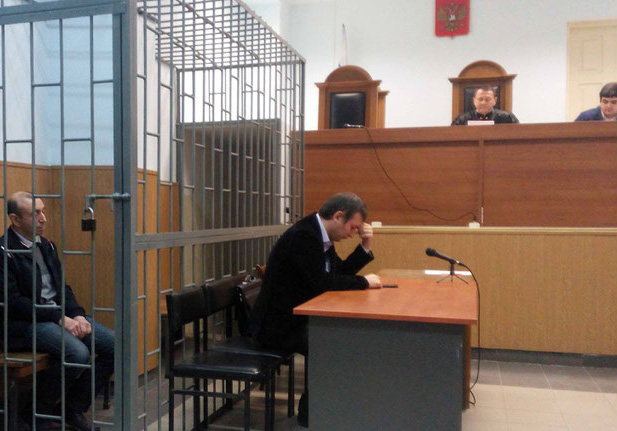
Today, the ICJ expressed concern at the allegations of harassment of lawyer Shamil Magomedov following an acquittal of his client Sulntankhan Ibragimov, who had been accused of murder.
The allegations should be investigated and authorities must make clear to law enforcement officials that such intimidation and harassment is prohibited, the ICJ said.
Yesterday, the lawyer alleged that on 19 October, while he was in Moscow, a law enforcement officer visited his home in Dagestan and questioned his family members about his whereabouts and “why he complained so much to law enforcement bodies”.
The lawyer believes this is related to the acquittal of his client, Sulntankhan Ibragimov, in whose case a decision had been delivered three days before.
When the matter was raised in court, Prosecutor Magomed Aliyev claimed the law enforcement officer’s visit was routine.
The ICJ considers that in the circumstances, the visit to and questioning by a law enforcement officer of a lawyer’s family about his professional activities could only reasonably be understood as a form of intimidation or harassment.
International standards, such as the UN Basic Principles on the Role of Lawyers, provide that governments must ensure that lawyers “are able to perform all of their professional functions without intimidation, hindrance, harassment or improper interference” and “shall not suffer, or be threatened with, prosecution or administrative, economic or other sanctions for any action taken in accordance with recognized professional duties, standards and ethics.”
The ICJ calls on the relevant prosecutorial and law enforcement authorities to make clear to all their officials that all intimidation and harassment of lawyers, including by visiting and questioning a lawyer’s family about the lawyer’s protected professional activities, is prohibited.
Background
Shamil Magomedov, a lawyer from Dagestan, defended Sultankhan Ibragimov in a case where he was charged with the muder of Alisultan Omarov, a Greco-Roman wrestling coach, in 2015 and the murder in 2016 of Nazim Gadjiev, the leader of the “Sadval” movement.
On 16 October, the jury trial found Sultankhan Ibragimov not guilty on all accounts.
Russia-Shamil Magomedov statement-News-web stories-2017-RUS (story in Russian, PDF)

Oct 24, 2017 | News
Today the ICJ expressed its grave concern at the arrest and arbitrary detention of 13 Tanzanian human rights defenders and lawyers on charges that are incompatible with international legal obligations binding on Tanzania. The ICJ has called for their immediate release.
On 17 October 2017 13 human rights defenders, some of whom are lawyers, were arrested and detained in Tanzania after participating in a legal consultation aimed at considering legal challenges to the Tanzanian government’s ban on drop-in centres serving people at risk of HIV and a ban on the importation of water-based lubricants that are an essential HIV prevention tool.
Those 13 human rights defenders are all affiliated with the Initiative for Strategic Litigation in Southern Africa (ISLA) and Tanzanian organisation Community Health Services and Advocacy (CHESA).
Though they have not been charged, they appear to be under investigation for promoting homosexuality and in terms of section 154 of the Penal Code, which prohibits having ‘carnal knowledge of any person against the order of nature’.
To date 12 of the 13 remain in custody. After initially being granted bail by the Tanzanian police services, their bail was revoked without specified reason on 20 October 2017 and the 13 continue to face the real threat of criminal prosecution.
Instead of releasing the detained on bail, on 24 October the Tanzanian police services approached a Tanzanian court seeking an order granting them permission to perform ‘medical tests’ in the form of ‘forced anal tests’.
The police sought to perform these tests on the nine men who remain in detention. These invasive and demeaning tests appear to have been aimed at obtaining evidence for their criminal prosecution for performing sexual acts with other men.
If carried out non-consensually such exams violate the prohibition against torture and cruel, inhuman or degrading treatment.
The 13 charged under archaic colonial-era criminal laws that prohibit ‘carnal knowledge against the order of nature’, and which criminalize consensual sexual conduct between consenting males a sentence of ‘imprisonment for life and … for a term of not less than thirty years’, in contravention of international standards.
The laws, which are inherently abusive under any circumstance, do not even appear to be in any way applicable the 13 persons who were meeting for purposes of HIV prevention and promoting the right to health and the right to life.
The ICJ is concerned that arrests have been undertaken in contravention of rights protected under the Tanzanian Constitution and international law, including the International Covenant on Civil and Political Rights and the African Charter on Human and Peoples Rights, treaties to which Tanzania is party.
The protected rights include freedom of expression, the right to liberty, including freedom from arbitrary deprivation of liberty and the right to equal protection of the law; and the right to non-discrimination.
If they are carried out, any ‘forced anal tests’ would violate the right to be free from torture and cruel, inhuman or degrading treatment or punishment.
In addition, the ICJ has previously denounced such tests as evidentially and medically worthless.
Tanzanian authorities also appear to be attempting to use this prosecution to clamp down on the activities of civil society organizations.
The registration of CHESA has been suspended in what appears to be an attempt to halt its operations.
This amounts to a violation of the right to freedom of association, which is protected by the Tanzanian Constitution, the African Charter and the International Covenant on Civil and Political Rights.
The ICJ urges the authorities to drop the charges against these 13 human rights defenders. Pending revocation or dismissal of the charges, the 12 remaining detainees should in any event be immediately released.
The ICJ condemns the attempts of the Tanzanian police services to perform forced anal tests on male detainees, which constitute ill-treatment under international law, and urges the authorities to immediately desist from this course of action.
Contact:
Arnold Tsunga, ICJ Director of the Africa Regional Programme, t: +27716405926, e: arnold.tsunga(a)icj.org
Tanzania-Statement illegal detention-News-Web Stories-2017-ENG (full statement with additional information, in PDF)
Oct 16, 2017 | News
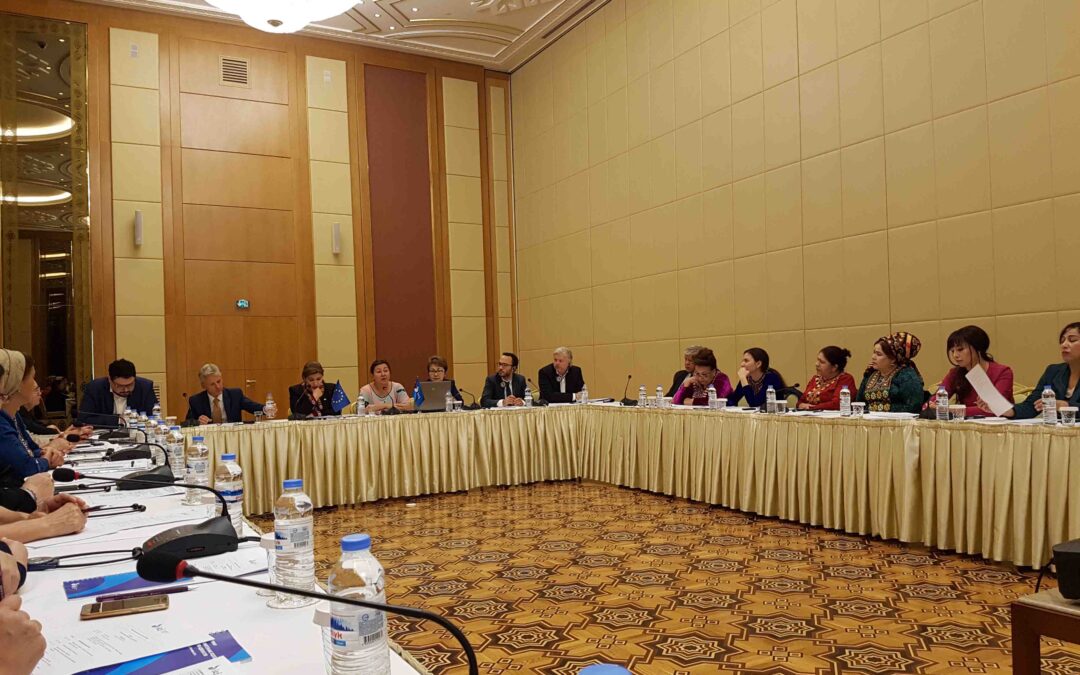
Today, the ICJ holds a seminar in Turkmenistan, on “Comparative perspectives on the role of lawyers”.
The event organized in Ashgabat, with support of the EU Liaison Office in Turkmenistan, provides an important opportunity to discuss the questions of organization of an independent legal profession and the ethics of lawyers in the countries of the EU and Central Asia.
“Along with judges and prosecutors, lawyers are key participants in the administration of justice. Ensuring fair trial rights is intrinsically linked with the right to legal assistance by lawyers who are able to perform their duties independently and with full respect of profession’s ethical standards,” said Temur Shakirov, ICJ Europe Programme Legal Adviser.
“To achieve this they organize themselves through associations of lawyers,” he added.
The workshop takes a comparative approach and looks into the role of lawyers in several jurisdictions, including the organisation of the legal profession as well as the professional standards for lawyers in Germany, Switzerland, Kazakhstan and Uzbekistan.
The speakers will also discuss international standards on the role of lawyers and their ethics.
Gulnora Ishankhanova, an ICJ Commissioner, will represent the ICJ along with other experts, including senior lawyers from the ICJ network.
They will present comparative national perspectives on the role of lawyers in their respective countries, placing them in the context of global and regional standards.
Representatives of lawyers’ associations in Turkmenistan will present the experience of Turkmenistan.

Sep 22, 2017 | Advocacy, Non-legal submissions
Addressing the UN Human Rights Council, the ICJ today urged Thailand to end criminal proceedings against lawyer Sirikan “June” Charoensiri, that are based on her professional activities as a human rights defender and lawyer.
The statement came during general debate at the Human Rights Council on, among other things, the report compiling cases of individual complaints that have been raised by the Special Procedures (independent experts) appointed by the Council. The statement read as follows:
“Among the many cases covered by the Communications Report of Special Procedures (A/HRC/36/25) is that of Thailand lawyer and human rights defender, Sirikan “June” Charoensiri. She was charged with sedition and other offences for actions taken, in her professional role, to protect human rights. With other lawyers, she had observed and provided legal assistance to participants in a peaceful protest.
In April, four Special Rapporteurs sent a joint communication (AL THA 2/2017) to Thailand about her case, and the related issues of restrictions on fundamental freedoms put in place following the military coup of May 2014, and prosecution of civilians in military courts.
Thailand’s response to the communication (No.52101/483) attempts to justify the charges against her by, among other things, appearing to associate her with the persons to which she and her colleagues were providing legal aid.
Principle 18 of the UN Basic Principles on the Role of Lawyers states that, “lawyers shall not be identified with their clients or their clients’ causes as a result of discharging their functions.”
The International Commission of Jurists considers that the case against Ms Charoensiri is incompatible with these and other international human rights standards. The ICJ calls upon Thailand ensure the legal proceedings against Ms Charoensiri are ended, and that measures are taken to end and prevent similar cases against other human rights defenders in the country.”
Exercising its right of reply to the statement, the delegation of Thailand, while appearing to accept that Ms Charoensiri is a human rights defender and lawyer, asserted that she had not been charged in her capacity as a lawyer or human rights defender, but due to the possibility that she was a principal or co-perpetrator of an offence, which the delegation said was based on unspecified information from the Royal Thai Police. The delegation affirmed that the Thai government attaches high priority to the protection of human rights defenders, and referred to several initiatives the delegation said were currently being prepared in this regard.
More detail from ICJ about the case is available by clicking here.
Details of the Special Procedures’ action on the case is available in the database of communications, by clicking here.

Sep 14, 2017 | Advocacy
In a joint statement released today, the ICJ joins several other organisations in calling on the Supreme Court of the Maldives to rescind the indefinite suspension of 56 lawyers.
The lawyers had signed a petition to the Supreme Court calling for the independence and reform of the judiciary.
The statement, made jointly with Maldivian Democracy Network, Front Line Defenders, Transparency International and FORUM-ASIA, can be downloaded here: Maldives-Advocacy-Lawyers-2017

![Smoke rises after an Israeli air strike on the village of Taybeh in southern Lebanon [Source: Al Jazeera]](https://www.icj.org/wp-content/uploads/2026/03/Screenshot-2026-03-20-at-15.56.24-300x200.png)