Jun 15, 2021 | Human Rights Council, News, Work with the UN
To the Permanent Representatives of Member and Observer States of the United Nations Human Rights Council,
Excellencies,
We, the undersigned Lebanese and international organizations, individuals, survivors, and families of the victims are writing to request your support in the establishment of an international, independent, and impartial investigative mission, such as a one-year fact-finding mission, into the Beirut port explosion of August 4, 2020. We urge you to support this initiative by adopting a resolution establishing such a mission at the Human Rights Council.
هذه الرسالة متاحة باللغة العربية أيضاً
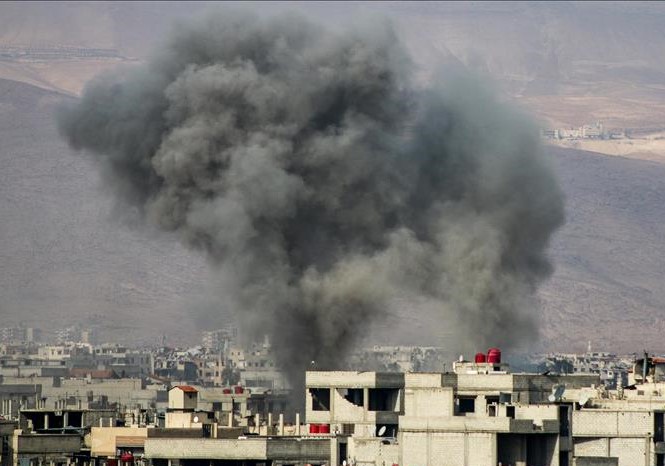
On August 4, 2020, one of the largest non-nuclear explosions in history decimated the port and damaged over half the city. The Beirut port explosion killed 217 people, including nationals of Lebanon, Syria, Egypt, Bangladesh, Philippines, Pakistan, the Netherlands, Canada, Germany, France, Australia, and the United States. It wounded 7,000 people, of whom 150 acquired a physical disability, caused untold psychological harm, and damaged 77,000 apartments, forcibly displacing over 300,000 people. At least three children between the ages of two and 15 lost their lives. Thirty-one children required hospitalization, 1,000 children were injured, and 80,000 children were left without a home. The explosion affected 163 public and private schools and rendered half of Beirut’s healthcare centers nonfunctional, and it impacted 56% of the private businesses in Beirut. According to the World Bank, the explosion caused an estimated US$3.8-4.6 billion in material damage.
The right to life is an inalienable and autonomous right, enshrined in the International Covenant on Civil and Political Rights (ICCPR) (article 6), which Lebanon ratified in 1972. The Human Rights Committee, which interprets the ICCPR, has stated that states must respect and ensure the right to life against deprivations caused by persons or entities, even if their conduct is not attributable to the state. The Committee further states that the deprivation of life involves an “intentional or otherwise foreseeable and preventable life-terminating harm or injury, caused by an act or omission.” States are required to enact a “protective legal framework which includes criminal prohibitions on all manifestations of violence…that are likely to result in a deprivation of life, such as intentional and negligent homicide.”
The facts as currently known suggest that the storage of more than 2,700 tons of ammonium nitrate alongside other flammable or explosive materials, such as fireworks, in a poorly secured hangar in the middle of a busy commercial and residential area of a densely populated capital city likely created an unreasonable risk to life.
Since the explosion, a number of official documents were leaked to the press, including official correspondence and court documents that indicate customs, port, judicial, and government officials as well as military and security authorities had been warned about the dangerous stockpile of potentially explosive chemicals at the port on multiple occasions since 2013.
Further, the Human Rights Committee General Comment No. 36 on article 6 states: “The duty to protect by law the right to life also requires States parties to organize all State organs and governance structures through which public authority is exercised in a manner consistent with the need to respect and ensure the right to life, including by establishing by law adequate institutions and procedures for preventing deprivation of life, investigating and prosecuting potential cases of unlawful deprivation of life, meting out punishment and providing full reparation.” The investigations into violations of the right to life must be “independent, impartial, prompt, thorough, effective, credible, and transparent,” and they should explore “the legal responsibility of superior officials with regard to violations of the right to life committed by their subordinates.”
The impact and aftermath of the explosion also likely violated Lebanon’s international human rights obligations to guarantee the rights to education and to an adequate standard of living, including the rights to food, housing, health, and property. More notably, Lebanon can only uphold its obligation to provide effective remedy to the victims on the basis of a credible, effective, and impartial investigation whose findings would then be the basis for any effective remedy plan.
In August, 30 UN experts publicly laid out benchmarks, based on international human rights standards, for a credible inquiry into the August 4, 2020, blast at Beirut’s port, noting that it should be “protected from undue influence,” “integrate a gender lens,” “grant victims and their relatives effective access to the investigative process,” and “be given a strong and broad mandate to effectively probe any systemic failures of the Lebanese authorities.”
The domestic investigation into the Beirut blast has failed to meet those international standards. The ten months since the blast have been marked by the authorities’ obstruction, evasion, and delay. Human Rights Watch, Amnesty International, Legal Action Worldwide, Legal Agenda, and the International Commission of Jurists have documented a range of procedural and systemic flaws in the domestic investigation that render it incapable of credibly delivering justice, including flagrant political interference, immunity for high-level political officials, lack of respect for fair trial standards, and due process violations.
Victims of the blast and their relatives have been vocal in calling for an international investigation, expressing their lack of faith in domestic mechanisms. They claim that the steps taken by the Lebanese authorities so far are wholly inadequate as they rely on flawed processes that are neither independent nor impartial. This raises serious concerns regarding the Lebanese authorities’ ability and willingness to guarantee victims’ rights to truth, justice, and remedy, considering the decades-long culture of impunity in the country and the scale of the tragedy.
As we approach the one-year anniversary of the explosion, the case for such an international investigation has only strengthened. The Human Rights Council has the opportunity to assist Lebanon to meet its human rights obligations by conducting an investigative or fact-finding mission into the blast to identify whether conduct by the state caused or contributed to the unlawful deaths, and what steps need to be taken to ensure an effective remedy to victims.
The independent investigative mission should identify human rights violations arising from the Lebanese state’s failure to protect the right to life, in particular whether there were:
- Failures in the obligation to protect the right to life that led to the explosion at Beirut’s port on August 4, 2020, including failures to ensure the safe storage or removal of a large quantity of highly combustible and potentially explosive material;
- Failures in the investigation of the blast that would constitute a violation of the right to remedy pursuant to the rights to life.
The independent investigative mission should report on the human rights violated by the explosion, failures by the Lebanese authorities, and make recommendations to Lebanon and the international community on steps that are needed both to remedy the violations and to ensure that these do not occur in the future.
The Beirut blast was not an isolated or idiosyncratic incident. In the weeks following the explosion, two fires broke out at the port in scenes reminiscent of the fire that resulted in the Beirut blast, terrorizing the public. In February 2021, a German firm tasked with removing tons of hazardous chemicals left in Beirut’s port for decades warned that what they found amounted to “a second Beirut bomb.” If these substances caught fire, Beirut would have been “wiped out”, the interim port chief said.
It is time for the Human Rights Council to step in, heeding the calls of the families of the victims and the Lebanese people for accountability, the rule of law, and protection of human rights. The Beirut blast was a tragedy of historic proportions, arising from failure to protect the most basic of rights – the right to life – and its impact will be felt for far longer than it takes to physically rebuild the city. The truth of what happened on August 4, 2020, is a cornerstone in redressing and rebuilding after the devastation of that day.
The thousands of individuals who have had their lives upended and the hundreds of thousands of individuals who have seen their capital city disfigured in a most irrevocable way deserve nothing less.
List of signatories:
Organizations:
Access Center for Human Rights (Wousoul)
Accountability Now
ALEF – Act for Human Rights
Amnesty International
Anti-Racism Movement
Arab NGO Network for Development
Arab Reform Initiative
Basmeh & Zeitooneh
Baytna
Cairo Institute for Human Rights Studies (CIHRS)
Centre d’accès pour les droits de l’homme (ACHR)
Committee of the Families of the Kidnapped and Disappeared in Lebanon
Dawlaty
Gherbal Initiative
Gulf Centre for Human Rights
Helem
Human Life Foundation for Development and Relief (Yemen)
Human Rights Research League
Human Rights Solidarity (HRS)-Geneva
Human Rights Watch (HRW)
Human Rights Without Frontiers (HRWF)
Impunity Watch
International Commission of Jurists
Justice and Equality for Lebanon
Justice for Lebanon
Khaddit Beirut
Kulluna Irada
Lebanese-Swiss Association
Legal Action Worldwide
Legal Agenda
Liqaa Teshrin
Mada Network
Media Association for Peace (MAP)
Meghterbin Mejtemiin (United Diaspora)
Mwatana for Human Rights
National Youth for Lebanon Movement
PAX (Netherlands)
Peace Track Initiative
Project on Middle East Democracy (POMED)
Refugees=Partners Project
Samir Kassir Foundation
SEEDS for Legal Initiatives
Syrian Center for Media and Freedom of Expression – SCM
The Alternative Press Syndicate Group
The Foundation for Human Rights and Freedoms and Humanitarian Relief (IHH)
The International Center for Transitional Justice
The Lebanese Center for Human Rights (CLDH)
The Lebanese Diaspora Network (TLDN)
Tunisian League of Human Rights defense (LTDH)
UMAM Documentation & Research
Individuals:
Christophe Abi-Nassif – Lebanon Program Director, Middle East Institute
Nasser Saidi – President Nasser Saidi & Associates; Former Lebanese Minister of Economy & Industry
Randa Slim – Senior Fellow and Director of the Conflict Resolution and Track II Dialogues Program at the Middle East Institute
Survivors and Families of the Victims:
Alexandre Ibrahimcha, lost his mother Marion Hochar Ibrahimcha
Anthony, Chadia, Ava and Uma Naoum
Antoine Kassab, lost his father
Aya Arze Salloum
Carine Farran Sacy
Carine Tohme
Carine Zaatar
Carole Akiki
Cecilia and Pierre Assouad
Cedric el Adm, lost his sister
Charbel Moarbes
Charles Nehme, lost his father
Cybele Asmar lost her aunt Diane Dib
Fouad Rahme, lost his father
Georges Zaarour, lost his brother
Jean-Marc Matta
Jihad Nehme
Joanna Dagher Hayek
Karine Makhlouf, lost her mother
Karine Mattar
Laura Khoury
Lyna Comaty
Mireille el Khoury, lost her son
Myrna Mezher Helou, lost her mother
Nadine Khazen, lost her mother
Nicolas and Vera Fayad
Nicolas Dahan
Olga Kavran
Patrice Cannan, lost his brother
Patricia Haddad, lost her mother
Paul and Tracy Naggear, lost their daughter Alexandra Naggear
Reina Sfeir
Rénié Jreissati
Rima Malek
Rony Mecattaf
Sara Jaafar
Sarah Copland, lost her son Isaac Oehlers
Tania Daou Alam, lost her husband
Tony Najm, lost his mother
Vartan Papazian, lost his daughter-in-law
Vicky Zwein
Zeina Sfeir
Families of the following firefighters:
Charbel Hetty
Charbel Karam
Elie Khouzamy
Joe Akiki
Joe Andoun
Joe bou Saab
Joe Noun
Joseph Merhy
Joseph Roukoz
Misal Hawwa
Najib Hetty
Ralph Mellehy
Ramy Kaaky
Sahar Fares
Contact:
Said Benarbia, Director of the ICJ’s Middle East and North Africa programme, email: said.benarbia@icj.org phone number: +41 79 878 35 46
Asser Khattab, Research and Communications Officer at the ICJ’s Middle East and North Africa programme, email: Asser.khattab(a)icj.org
Mar 29, 2021 | Editorial, Incidencia, Noticias
Por Tim Fish Hodgson (Asesor Legal en derechos económicos, sociales y culturales de la Comisión Internacional de Juristas) y Rossella De Falco (Oficial de Programa sobre el derecho a la salud de la Iniciativa Global para los Derechos Económicos, Sociales y Culturales).
Históricamente, las pandemias han sido catalizadoras importantes de cambio social. En palabras del historiador sobre pandemias, Frank Snowden, “las pandemias son una categoría de enfermedad que parecen sostener un espejo en el que se puede ver quiénes somos los seres humanos en realidad”. Por el momento, mirarse en ese espejo sigue siendo una experiencia lamentablemente desagradable.
Los órganos de los tratados y los procedimientos especiales de las Naciones Unidas, la Organización Mundial de la Salud (OMS), el Programa Conjunto de las Naciones Unidas sobre el VIH/Sida (ONUSIDA) y numerosas organizaciones locales, regionales e internacionales de derechos humanos han producido múltiples declaraciones, resoluciones e informes que lamentan los impactos de la COVID-19 en los derechos humanos, en casi todos los aspectos de la vida, para casi todas las personas del mundo. El último documento relevante que se ha expedido sobre este tema es una resolución adoptada por el Consejo de Derechos Humanos. Esta resolución hace referencia a “Asegurar el acceso equitativo, asequible, oportuno y universal de todos los países a las vacunas para hacer frente a la pandemia de enfermedad por coronavirus (COVID-19)”. La resolución fue adoptada el 23 de marzo de 2021.
Entre las normas y estándares de derechos humanos que guían los análisis sobre los efectos de la COVID-19, se debe resaltar el derecho de toda persona al disfrute del más alto nivel posible de salud física y mental. Este derecho se encuentra consagrado en el artículo 12 del Pacto Internacional de Derechos Económicos, Sociales y Culturales (PIDESC), que tiene 171 Estados Parte. El derecho a la salud, en los términos que está consagrado en el PIDESC, impone a los Estados la obligación de tomar todas las medidas necesarias para garantizar “la prevención y el tratamiento de las enfermedades epidémicas, endémicas, profesionales y de otra índole”. Adicionalmente, respecto a el acceso a medicinas, el artículo 15 del PIDESC establece el derecho de todas las personas de “gozar de los beneficios del progreso científico y de sus aplicaciones”.
A pesar de estas obligaciones legales, a finales de febrero de 2021, el Secretario General de las Naciones Unidas, António Guterres, se sintió obligado a señalar el surgimiento de “una pandemia de violaciones y abusos a los derechos humanos a raíz de la COVID-19”, que incluye, pero se extiende más allá de las violaciones del derecho a la salud. El impacto de la COVID-19 en los derechos humanos ha, y continúa siendo, omnipresente. La gravedad de la situación ha sido perfectamente capturada en las palabras de la activista trans de Indonesia, Mama Yuli, quien al ser preguntada por una periodista sobre su situación y la de otros afirmó que era “como vivir como personas que mueren lentamente”.
Vacunas para unos pocos, pero ¿qué pasa con la mayoría?
Resulta decepcionante que, en lugar de ser un símbolo de esperanza de la luz al final del túnel de la pandemia, la vacuna de la COVID-19 se ha convertido rápidamente en otra clara ilustración de la pandemia paralela de violaciones y abusos a los derechos humanos, descrita por Guterres. El desastroso estado de la producción y distribución de la vacuna COVID-19 en todo el mundo – incluso dentro de países donde las vacunas ya están disponibles– es ahora a menudo descrito por muchos activistas, incluyendo de manera significativa la campaña de “Vacunas para la Gente” (People’s Vaccine campaign), como “nacionalismo de vacunas” y vacunas de lucro que ha producido un “apartheid de vacunas”.
Lo anterior significa, desde una perspectiva de derechos humanos, que los Estados a menudo han arreglado sus propios asuntos de una manera que es perjudicial para el acceso a las vacunas en otros países. Esto, a pesar de las obligaciones legales extraterritoriales de los Estados de, al menos, evitar acciones que previsiblemente resultarían en el menoscabo de los derechos humanos de las personas por fuera de sus territorios.
Es importante enfatizar que solo han pasado unos cuatro meses desde que comenzaron las primeras campañas de vacunación masiva en diciembre de 2020. Al momento en que este artículo se escribe, se habían vacunado aproximadamente 450 millones de personas en todo el mundo. No obstante, mientras que en muchas naciones africanas, por ejemplo, no han administrado una sola dosis, en América del Norte se han administrado 23 dosis de la vacuna COVID-19 por cada 100 personas. En el caso de Europa, la cifra es 13/100. La cifra disminuye drásticamente en el Sur global con 6.4/100 en América del Sur; 3.8/100 en Asia; 0.7/100 en Oceanía y apenas 0.6/100 en África.
Vacunas, obligaciones estatales y responsabilidades empresariales
La distribución inadecuada y desigual de las vacunas tiene diversas causas.
La primera causa es la naturaleza generalmente disfuncional del sistema de salud en todo el mundo. Lo cual se debe a, lo que el Comité de Derechos Económicos, Sociales y Culturales (Comité DESC), en su primera declaración sobre COVID-19 de abril de 2020, describió como “decenios de inversión insuficiente en los servicios de salud pública y otros programas sociales”. Las increíbles desigualdades causadas por la privatización de los servicios, instalaciones y bienes de salud, en ausencia de una regulación suficiente, están bien documentadas, tanto en el Norte Global como en el Sur Global.
La segunda causa son los obstáculos para acceder a la vacuna que han sido creados y mantenidos por los Estados, de manera individual o colectiva, a través de los regímenes de propiedad intelectual. Esto no se debe a la falta de lineamientos o mecanismos legales para garantizar la aplicación flexible de las protecciones de la propiedad intelectual a favor de la protección de la salud pública y la realización del derecho a la salud. Sobre este punto, en particular, hay que mencionar el Acuerdo sobre los Aspectos de los Derechos de Propiedad Intelectual relacionados con el Comercio (Acuerdo ADPIC o, en inglés, TRIPS agreement), un acuerdo legal internacional celebrado por miembros de la Organización Mundial del Comercio (OMC) que establece estándares mínimos para la protección de los derechos de propiedad intelectual.
Los Estados están explícitamente autorizados para interpretar las protecciones de los derechos de propiedad intelectual “a la luz del objeto y fin del” Acuerdo ADPIC. Por lo tanto, los Estados conservan el derecho de “conceder licencias obligatorias y la libertad de determinar las bases sobre las cuales se conceden tales licencias” en el contexto específico de emergencias de salud pública. Esta no es la primera vez que una epidemia ha requerido que se realicen acuerdos flexibles para garantizar un acceso rápido, universal, asequible y adecuado a medicamentos y vacunas vitales para salvar vidas.
Es por eso que, la gran mayoría de países y un número abrumador de actores de la sociedad civil han apoyado el requerimiento de Sudáfrica y de India para que la OMC emita una exención temporal (waiver) en la aplicación de los derechos de propiedad intelectual para “los diagnósticos, aspectos terapéuticos y vacunas” de la COVID-19. Este requerimiento ha sido formalmente apoyado por distintos expertos independientes de los procedimientos especiales del Consejo de Derechos Humanos. De igual manera, el 12 de marzo de 2021, a través de una declaración, el requerimiento recibió el respaldo enfático del Comité DESC. Adicionalmente, se debe mencionar que ya existen precedentes en la expedición de exenciones temporales sobre derechos de propiedad intelectual. Por ejemplo, la OMC ha aplicado una excepción temporal hasta 2033, para al menos los países menos desarrollados, que los exceptúa de aplicar las reglas de propiedad intelectual sobre productos farmacéuticos y datos clínicos.
Decepcionantemente, no se había secado la tinta de la declaración del Comité DESC, cuando, ignorando explícitamente todas estas recomendaciones, la excepción temporal fue bloqueada por una coalición de las naciones más ricas, muchas de las cuales ya tienen un acceso sustancial y avanzado a las vacunas. Es importante destacar que las recomendaciones del Comité DESC no se formularon por motivos políticos, sino como una manera de cumplir con la obligación establecida en el PIDESC de que “la producción y distribución de vacunas debe ser organizada y apoyada por la cooperación y la asistencia internacional”.
La reciente resolución del Consejo de Derechos Humanos, que fue liderada por Ecuador y el movimiento de Estados no alineados, brinda alguna esperanza de que se altere el actual curso de colisión hacia el desastre. La resolución, que pide el acceso a las vacunas sea “equitativo, asequible, oportuno y universal para todos los países”, reafirma el acceso a las vacunas como un derecho humano protegido y reconoce abiertamente la “asignación y distribución desigual entre países”.
La resolución procede a llamar a todos los Estados, individual y colectivamente, para que se “eliminen los obstáculos injustificados que restringen la exportación de las vacunas contra la COVID-19” y para que “faciliten el comercio, la adquisición, el acceso y la distribución de las vacunas contra la COVID-19” para todos.
Sin embargo, a pesar de las protestas de las organizaciones de la sociedad civil, que participaron en las deliberaciones sobre la resolución, esta solo reafirma el derecho de los Estados a utilizar las flexibilidades del Acuerdo ADPIC, en lugar de respaldar tales medidas como una buena práctica para cumplir las obligaciones de los Estados en materia de derechos humanos. En ese sentido, la resolución adopta un enfoque tibio, en tal vez, la cuestión más apremiante para garantizar el acceso a las vacunas. Este enfoque sigue los principios del comercio internacional, mientras que, irónicamente, ignora los estándares de derechos humanos, que debería considerar por ser una resolución emanada del Consejo de Derechos humanos. Como consecuencia, el enfoque de la resolución en la cuestión apremiante del Acuerdo ADPIC es inconsistente con la perspectiva de derechos humanos, que si tiene el resto de la resolución. Así las cosas, sorprendentemente, la resolución se queda corta y ni siquiera llega a insistir en que los Estados cumplan con sus obligaciones internacionales de derechos humanos establecidas desde hace mucho tiempo.
La resolución tampoco, inexplicablemente, aborda las responsabilidades corporativas, incluidas las de las empresas farmacéuticas, de respetar el derecho a la salud en términos de los Principios Rectores de las Naciones Unidas sobre Empresas y Derechos Humanos, así como el deber correspondiente de los Estados de proteger el derecho a la salud mediante la adopción de medidas regulatorias adecuadas.
La tercera causa, que se encuentra conecta a todo lo anterior, es el fracaso general de los Estados de cumplir de manera plena y adecuada sus obligaciones en materia de derechos humanos en el contexto de las respuestas que han dado a la pandemia de la COVID-19. La redacción sutil pero importante del ejercicio de las flexibilidades del Acuerdo ADPIC como un “derecho de los Estados”, en vez de una forma óptima de cumplir una obligación, expone que existe una asincronía. Específicamente, la manera en cómo los encargados de la formulación de políticas y los asesores jurídicos de los Estados ven y comprenden los derechos humanos, no se alinea con las obligaciones que tienen los Estados en materia de derechos humanos. Obligaciones que, por lo demás, los Estados han asumido de manera voluntaria al convertirse en parte de tratados como el PIDESC.
Un momento crítico: no tiene que ser de esta manera
Como predijo el perspicaz trabajo de Snowden, la pandemia de la COVID-19 representa un momento crítico en la historia de la humanidad. A los Estados, colectiva e individualmente, se les presenta una oportunidad única para sentar un precedente y comenzar a abordar seriamente las causas fundamentales de la desigualdad y la pobreza que prevalecen en todo el mundo.
Tomar la decisión correcta y adoptar una posición moral sobre la importancia del acceso a las vacunas COVID-19 es tanto práctica y simbólicamente importante para que estos esfuerzos tengan éxito. Las vacunas deben ser aceptadas y reconocidas como un bien mundial de salud pública y derechos humanos. Las empresas privadas tampoco deben obstaculizar el acceso equitativo y no discriminatorio a las vacunas para todas las personas.
Para que esto suceda, se requiere un liderazgo decidido de las instituciones internacionales de derechos humanos como el Consejo de Derechos Humanos, la Asamblea General de las Naciones Unidas y la OMC. Desafortunadamente, en la actualidad, no se ha hecho lo suficiente y la politiquería y el interés privado continúan prevaleciendo sobre los principios y el bien público. Hasta que esto cambie, muchas personas en todo el mundo seguirán existiendo, “viviendo como personas que mueren lentamente”. No tiene que ser de esta manera.
Mar 29, 2021 | Advocacy, News
On 25 March 2021, the ICJ filed two submissions to the UN Human Rights Council Working Group on the Universal Periodic Review (UPR) ahead of the review of Thailand’s human rights record in November 2021.
For this particular review cycle, the ICJ made two joint UPR submissions to the Human Rights Council.
In the joint submission by ICJ and Thai Lawyers for Human Rights (TLHR), the organizations provided information and analysis to assist the Working Group on the UPR to make recommendations addressing various human rights concerns that arise as a result of Thailand’s failure to guarantee, properly or at all, a number of civil and political rights, including with respect to:
- Constitution and Legal Framework: concerning the 2017 Constitution that continues to give effect to some repressive orders issued by the military junta after the 2014 coup d’état, the Emergency Decree, the Martial Law, and the Internal Security Act;
- Freedom of Expression and Assembly: concerning the use of laws that are not human rights compliant and, as such, arbitrarily restrict the rights to freedom of expression, association and peaceful assembly, in the context of the Thai government’s response to the pro-democracy protests and, purportedly, to COVID-19; and
- Right to Life, Freedom from Torture and Enforced Disappearance: concerning the resumption of death penalty, the failure to undertake prompt, thorough and impartial investigations, and to ensure accountability of those responsible for the commission of torture, other ill-treatment and enforced disappearance, and the failure, to date, to enact domestic legislation criminalizing torture, other ill-treatment and enforced disappearance.
In the second, joint submission by ICJ, ENLAWTHAI Foundation and Land Watch Thai, the organizations provided information and analysis to assist the Working Group to make recommendations addressing various human rights concerns that arise as a result of Thailand’s failure to guarantee, properly or at all, a number of economic, social and cultural rights, including with respect to:
- Human Rights Defenders: concerning threats and other human rights violations against human rights defenders, and the restrictions on civil society space and on the ability to raise issues that the government deems as criticism of its conduct or that it otherwise disfavours;
- Constitution and Legal Framework: concerning the continuing detrimental impact of the legal framework imposed since the 2014 coup d’état on economic, social and cultural rights;
- Community Consultation: concerning the lack of participatory mechanisms and consultations, as well as limited access to information, for affected individuals and communities in the execution of economic activities that adversely impact local communities’ economic, social and cultural rights;
- Land and Housing: concerning issues relating to access to land and adequate housing, reports of large-scale evictions without appropriate procedural protections as required by international law, and the denial of the traditional rights of indigenous peoples to their ancestral lands and natural resources; and
- Environment: concerning the widespread and well-documented detrimental impacts of hazardous and industrial wastes on the environment, the lack of adequate legal protections for the right to health and the environment, and the effectiveness of the environmental impact assessment process set out under Thai laws.
The ICJ further called upon the Human Rights Council and the Working Group on the Universal Periodic Review to recommend that Thailand should take various measures to immediately cease all aforementioned human rights violations; ensure adequate legal protection against such violations; ensure the rights to access to justice and effective remedies for victims of such violations; and ensure that steps be taken to prevent any future violations.
Download
UPR Submission 1 (PDF)
UPR Submission 2 (PDF)
Mar 26, 2021 | News
In a joint communication to five United Nations Special Procedures, the ICJ and its partners urged the mandate holders to call on the Tunisian authorities to immediately stop hampering the transitional justice process.
The organizations expressed their concern at the ongoing attempts to undermine the transitional justice process and accountability efforts for past gross human rights violations.
“The Tunisian transitional justice process has been under serious attack since its inception in 2013. Today, the ICJ and its partners are urging the United Nations Special Procedures to take urgent action to deter such attacks, demand justice for the victims and secure accountability for the perpetrators,” said the Director of ICJ’s Middle East and North Africa Programme, Said Benarbia.
The joint communication highlights the following areas of concern:
- The recent political initiatives to dismantle the transitional justice process;
- The incessant attacks against the Truth and Dignity Commission (Instance Verité et Dignité, IVD) and its 2018 final report’s findings;
- The lack of support to the Specialized Criminal Chambers (SCC) and the numerous obstacles that risk to severely impair access to justice and effective remedies for victims of gross human rights violations.
The communication is addressed to the following United Nations Special Procedures:
- The Special Rapporteur on the promotion of truth, justice, reparation and guarantees of non-recurrence;
- The Special Rapporteur on torture and other cruel, inhuman or degrading treatment or punishment;
- The Special Rapporteur on the independence of judges and lawyers;
- The Working Group on Arbitrary Detention; and
- The Working Group on Enforced or Involuntary Disappearances.
The communication was submitted jointly by the ICJ along with:
- The World Organisation Against Torture (OMCT)
- The Ligue tunisienne des droits de l’homme (LTDH)
- The Forum Tunisien pour les Droits Economiques et Sociaux (FTDES)
- Avocats Sans Frontières (ASF)
- The Association of Tunisian Magistrates (AMT)
- Al Bawsla
- International Alert
- The Association KARAMA
- The Association INSAF pour les anciens militaires
- No Peace Without Justice
- The Organisation Contre la Torture en Tunisie (OCTT)
- The Organisation Dhekra we Wafa, pour le martyr de la liberté Nabil Barakati
- The Coalition Tunisienne pour la Dignité et la Réhabilitation
- The Association Tunisienne pour la Défense des Libertés Individuelles
- The Association des Femmes Tunisiennes pour la Recherche sur le Développement
- The Association Internationale pour le Soutien aux Prisonniers Politiques
- The Réseau tunisien de la justice transitionnelle
Contact
Valentina Cadelo, Legal Adviser, ICJ Middle East and North Africa Programme, e: valentina.cadelo(a)icj.org
Asser Khattab, Research and Communications’ Officer, ICJ Middle East and North Africa Programme, e: asser.khattab(a)icj.org
Download
Tunisia-Special-Procedures-Joint-Submission-2021 (PDF, in French)
Mar 23, 2021 | Advocacy, News, Op-eds
[TOC]By Tim Fish Hodgson, Legal Adviser on Economic, Social and Cultural Rights at the International Commission of Jurists and Rossella De Falco, Programme Officer on the Right to Health at Global Initiative on Economic, Social and Cultural Rights.
Historically pandemics have often catalyzed significant social change. As historian of epidemics Frank Snowden puts it: “epidemics are a category of disease that seem to hold up the mirror to human beings as to who we really are”. At the moment gazing in that mirror remains a regrettably unpleasant experience.
United Nations human rights Treaty Body Mechanisms and Special Procedures, the World Health Organization (WHO), UNAIDS and numerous local, regional and international human rights organizations have produced reams of statements, resolutions and reports bemoaning the human right impacts of COVID-19 and almost every single aspect of the lives of almost all people around the world. The latest being the UN Human Rights Council Resolution adopted today by consensus on “Ensuring equitable, affordable, timely and universal access for all countries to vaccines in response to the coronavirus disease (COVID-19) pandemic”.
Key amongst the human rights law and standards underpinning these analyses is the protection of the right to the highest attainable standard of health, which, certainly for the 171 States Parties to the International Covenant on Economic, Social and Cultural Rights places an obligation on States to take all necessary measures to ensure “the prevention, treatment and control of epidemic, endemic, occupational and other diseases”, and, in the context of access to medicines the right to “enjoy the benefits of scientific progress and its applications”.
Despite these legal obligations, in late February, the UN Secretary General António Guterres felt compelled to highlight the rise of a “pandemic of human rights abuses in the wake of COVID-19”, including, but extending beyond violations of the right to health. The impact of COVID-19 on human rights has, and continues to be, sufficiently ubiquitous that an Indonesian transwoman activist Mama Yuli perhaps captured it best when telling a journalist that she and others in her position were “living like people who die slowly”.
Vaccines for the few, but what about the many?
Disappointingly, however, instead of a symbol of hope of a light at the end of the Coronavirus tunnel, the COVID-19 vaccine has fast become yet another pronounced illustration of the parallel pandemic of human rights abuses described by Guterres. The disastrous state of COVID-19 vaccine production and distribution throughout the world – and even within particular countries where vaccines are available – is now often described by many activists, including significantly the People’s Vaccine campaign, as “vaccine nationalism” and profiteering which has produced a “vaccine apartheid”.
What this means, in human rights language, is that States have often arranged their own affairs in a way that is detrimental to access to vaccines in other countries in spite of their extraterritorial legal obligations to, at very least, avoid their actions that would foreseeably result in the impairment of the human rights of people outside their own territories.
It is worth emphasizing that it has still been only some four months since the first mass vaccination campaigns began in December 2020. At the time of writing, approximately 450 million people had been vaccinated worldwide, while many African nations, for example, had yet to administer a single dose. While in North America 23 COVID-19 vaccine doses have been administered per 100 hundred people, with the number standing at 13/100 in Europe, the ratio decreases dramatically in the Global South with 6.4/100 in South America, 3.8/100 in Asia, 0.7/100 in Oceania and a mere 0.6/100 in Africa.
Vaccines, State Obligations and Corporate Responsibilities
The inadequate and inequitable distribution of vaccines has a variety of causes.
First, is the generally dysfunctional nature of the global health system due to what the UN Committee on Economic, Social and Cultural Rights described in its first statement on COVID-19 as early as April 2020 as “decades of underinvestment in public health services and other social programmes”. The incredible inequities caused by privatization of healthcare services, facilities and goods in the absence of sufficient regulation is well-documented, both in the Global North and the Global South.
Second, are the obstacles to vaccine access created and maintained by States, singly but collectively in the form of intellectual property rights regimes. This is not for a lack of guidance or legal mechanisms to ensure the flexible application of intellectual property protections in favour of the protection of public health and the realization of the right to health. The TRIPS agreement is an international legal agreement concluded by members of the World Trade Organization which sets minimum standards for intellectual property rights protections.
States are specifically permitted to interpret intellectual property rights protections “in the light of the object and purpose of” TRIPS and States therefore retain “the right to grant compulsory licences and the freedom to determine the grounds upon which such licences are granted” in the specific context of public health emergencies. Nor is it the first time that epidemics have necessitated the engagement of flexible arrangements to ensure expeditious, universal, affordable and adequate access to life saving medications and vaccines.
This is why the majority of States and an overwhelming majority of civil society actors have supported South Africa and India’s request that the WTO issue a “waiver” of the application of intellectual property rights for COVID-19 “diagnostics, therapeutics and vaccines”. This request has also been formally supported by a number of independent experts of the UN Human Rights Council of UN Special Procedures, and recently received the emphatic endorsement of the UN Committee on Economic, Social and Cultural Rights. There is already precedent for such TRIPS waivers, with the WTO having already applied a waiver until 2033, for example, for least-developed countries (LDCs), which are exempted from applying intellectual property rules on pharmaceutical products and clinical data.
Disappointingly, however, the ink had barely dried on the issuing of the CESCR’s statement, when, plainly disregarding all of these recommendations, the waiver was blocked by a coalition of wealthier nations, many of whom already have substantial and advanced vaccine access. Importantly, the CESCR’s recommendations were not just made on vague policy grounds, but as the best way to fulfill States’ clear legal obligation in ICESCR that, “production and distribution of vaccines must be organized and supported by international cooperation and assistance”.
The recently adopted Resolution of the UN Human Rights Council, led by Ecuador and States of the Non-Aligned Movement and adopted on 23 March 2021 provides some hope of the alteration of this existing collision course with disaster. The resolution, which calls for “equitable, affordable, timely, and universal access by all countries”, reaffirms vaccine access as a protected human right and openly acknowledges “unequal allocation and distribution among countries”.
The resolution proceeds to call on all States, individually and collectively, to “remove unjustified obstacles restricting exports of COVID-19 vaccines” and to “facilitate the trade, acquisition, access and distribution of COVID-19 vaccines” for all.
However, despite the protestations of civil society organizations involved in deliberations about the resolution, the resolution only restates the right for States to utilize TRIPS flexibilities, as opposed to endorsing such measures as a best practice for realizing State human rights obligations. This tepid approach (which follows principles of international trade while, ironically given the resolution emanates from the Human Rights Council, ignoring human rights standards) to perhaps the pressing issue relating to vaccine access is inconsistent with the Resolution’s otherwise firm grounding of vaccine access in human rights. It therefore remarkably even falls short of insisting that States comply with their own long-established international human rights obligations.
The resolution also inexplicably fails to address corporate responsibilities, including those of pharmaceutical companies, to respect the right to health in terms of the UN Guiding Principles on Business and Human Rights, and States’ corresponding duty to protect the right to health through adopting adequate regulatory measures.
Third, and connected to the above, is the general failure of States to fully and adequately centre their human rights obligations in the broader context of COVID-19 responses worldwide. The subtle but important phrasing of the exercise of TRIPS flexibilities as a “right of States” rather than as one of the optimal ways of fulfilling an obligation, exposes the degree to which the attitudes by State policy makers and legal advisors towards and understanding of human rights are out of sync with the obligations that they have willingly assumed by becoming party to treaties like the ICESCR.
A Critical Moment: it does not have to be this way
As Snowden’s insightful work predicted, the COVID-19 pandemic represents a critical moment in human history. States, collectively and individually, are presented with a unique opportunity to set a precedent and begin to seriously address the root causes of inequality and poverty which are prevalent across the world.
Making the right decision and taking a moral stand on the importance of access to COVID-19 vaccines is both practically and symbolically important if these efforts are to succeed. Vaccines must be accepted and acknowledged as global public health goods and human rights. Private companies too should not stand in the way of equitable and non-discriminatory vaccine access for all people.
For this to happen, bold leadership is required from international human rights institutions such as the UN Human Rights Council, the UN General Assembly and the WTO. Unfortunately, at present, not enough has been done and politicking and private interest continue to trump principle and public good. Until this changes, many people around the world will continue to exist, “living like people who are dying slowly”. It does not have to be this way.