Dear President von der Leyen,
We are writing to you three years after the signing of the EU-Tunisia Memorandum of Understanding (MoU) on 16 July 2023, to encourage you to show principled leadership and initiate a reset of an EU approach that has failed to uphold human rights and freedom of the press principles in Tunisia and to reprioritize human rights in EU relations with the Tunisian government.
Since the MoU was signed, we have witnessed a sharp deterioration of the human rights situation and freedom of the press in Tunisia, including a clear crackdown on dissent, the undermining of judicial independence, the criminalisation of civil society organisations, and violations of the rights of asylum seekers and migrants, including racially targeted arrests, arbitrary detention, violent and reckless interceptions, torture and ill treatment, including rape and other sexual violence and collective expulsions.
Despite this, the EU has uncritically focused on the implementation of some aspects of the MoU, in particular migration control. This has come at the expense of prioritising the rule of law and human rights in its engagement with Tunisia, with EU institutions and representatives remaining largely silent in the face of the growing repression, while only highlighting the “success” of the MoU based on the significant reduction in irregular sea arrivals of people from Tunisia since 2024. At the same time, the EU has continued to pursue increased migration cooperation with Tunisia, with limited transparency and without effective human rights safeguards and monitoring, despite documented grave and widespread human rights violations against migrants and asylum seekers and the criminalisation of civil society groups providing them with essential assistance – even recently adding Tunisia to the EU list of so-called “safe countries of origin.” While we note that new internal guidance and procedures have been developed to respond to reports of human rights violations in partner countries, these remain limited, mired in opacity, and do not appear to have led to any changes to the cooperation with Tunisia in practice.
The EU’s stance has exposed that its stated human rights commitments clearly do not translate into practice. This approach to cooperation – which was presented as a “blueprint” for similar agreements in the MENA region – has enabled the rise of repression and an authoritarian drift in Tunisia, while failing to ensure that asylum seekers have access to international protection or that refugee and migrants’ rights are fully respected.
Additionally, the Tunisian authorities have demonstrated a continued lack of engagement with the EU and an increasingly confrontational attitude towards its institutions, including the last-minute cancellation of a long-awaited Association Council in October 2025 and the last-minute postponement of the visit of a European Parliament delegation in February 2026.
The upcoming three-year mark of the MoU is therefore a critical moment to change course and make clear that future relations with Tunisia should be tied to measurable human rights progress and fulfilment.
A principled defense of human rights in foreign policy is enshrined in the Treaty on the European Union, but it is also in the interest of the EU to ensure that its political partners respect the rights of all individuals under their jurisdiction, including against repression and arbitrary detention.
In light of the above and of the current human rights situation in Tunisia, we call upon you to:
● Engage in a review of the EU’s approach towards Tunisia since the signing of the July 2023 MoU and a thorough evaluation of whether the MoU has supported or undermined the EU’s efforts for the protection and promotion of human rights in the country and to tackle the increased repressive environment in Tunisia since the MoU signing;
● Use public diplomacy to condemn the crackdown on civil society, dissent, and free speech, calling out the most pressing human rights concerns, especially when they relate to EU cooperation on migration control, and pressing both publicly and privately for the release of detained lawyers, politicians, journalists, and activists;
● Ensure that cooperation with Tunisia—including via European and international financial institutions in which the EU and Member States have a voice—is more consistently and strictly linked to respect for human rights and urge Tunisia to respect and protect human rights, with explicit benchmarks on judicial independence, freedoms of expression and association, non-discrimination, and refugee and migrant rights;
● In line with the 2024 reports of the European Ombudsman and the European Court of Auditors, ensure that no EU funding, capacity-building or other support for border management is disbursed to entities that commit human rights violations against migrants or asylum seekers in the country. Any cooperation on migration must place human rights at the centre and involve clear human rights benchmarks, genuine and transparent due diligence, ex-ante, ongoing, and ex-post human rights risk assessments and other safeguards, and effective independent and public monitoring of the impact of EU’s cooperation on rights and the context of abuses in which such cooperation takes place, to ensure that no EU funds or material support contribute to or perpetuate human rights violations. This should include clear and publicly accessible criteria for monitoring compliance, as well as defined thresholds and procedures for the suspension or termination of funding linked to human rights violations and transparent procedures to report violations and respond to them.
We remain available to provide any further information or to discuss our concerns detailed above.
Yours sincerely,
Amnesty International
Avocats Sans Frontières
Committee to Protect Journalists
International Commission of Jurists
EuroMed Rights
Human Rights Watch
ANNEX: BRIEFING NOTE ON KEY ASPECTS OF THE HUMAN RIGHTS SITUATION IN TUNISIA
Since the signing of the MoU in July 2023, Tunisian authorities have escalated their crackdown on dissent and sentenced scores of people in politically motivated cases, including prominent opposition figures, lawyers, and activists, to long prison terms on vague charges, making arbitrary detention a cornerstone of its repressive policy.
On 27 November 2025, a Tunis Appeal Court sentenced 34 defendants, including prominent activists Chaima Issa, Ayachi Hammami, and Ahmed Nejib Chebbi, in the politically motivated “Conspiracy Case” to between 5 and 45 years in prison. The appeal in cassation is pending.
Opposition leaders, including Abir Moussi, leader of the Free Destourian Party, and Rached Ghannouchi, former president of the Ennahda party, have been sentenced to long prison sentences on arbitrary grounds. On 3 June, Ghannouchi was sentenced once again to life in prison on terrorism-related charges.
At least three journalists, Mourad Zeghidi, Borhen Bsaises, and Zied el-Heni remain imprisoned. Lawyer and media commentator Sonia Dahmani, released after 18 months in prison on 27 November, on the day a European Parliament resolution was adopted on her case, continues to face abusive charges and risks re-arrest. Two other journalists, Ghassan Ben Khelifa and Khaoula Boukrim, were sentenced to two and four years in prison consecutively. Authorities intensified political pressure on newsrooms, shut down the National Authority for Access to Information, and tightening legislation, including through Decree-Law 54 of 2022 on Cybercrime that has imposed fear and self-censorship.
Since July 2021, Tunisian authorities have systematically undermined judicial independence through executive interference, the dissolution of key judicial oversight bodies, arbitrary dismissals of judges and prosecutors, and measures concentrating power in the President’s hands. These actions compromised fair trial guarantees and made Tunisia’s judiciary a key tool of repression.
Civil society in Tunisia is under attack. People working for non-governmental organizations and members of associations, in particular those providing aid to asylum seekers and refugees and combating racism, face harassment and arbitrary detention in retaliation for their work. In May 2026, a Tunis appeals court confirmed the convictions and two-year prison sentence of two employees of the Tunisian Council for Refugees who spent 18 months in pre-trial detention. In April, authorities suspended the Tunisian League for Human Rights, a leading and historic group, joining the list of at least 25 organizations arbitrarily suspended since July 2025 as part of a campaign to dismantle civil society. Although later lifted, the suspension order issued against Avocats Sans Frontières on 5 May 2026 disrupted its legal assistance and human rights monitoring activities. The authorities’ targeting of human rights groups and legal aid providers has undermined essential support for victims of human rights violations.
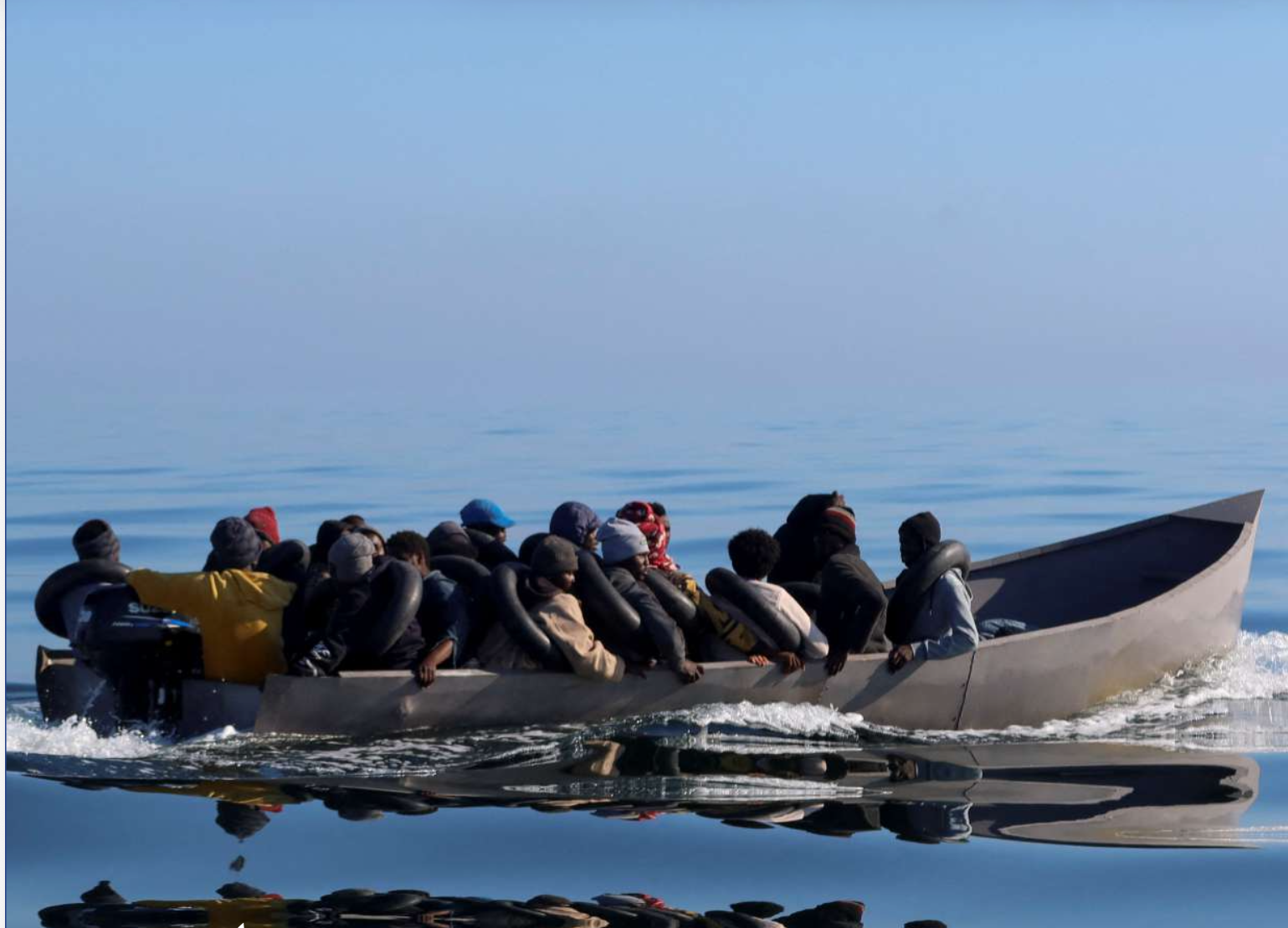
Migrants, asylum seekers, and refugees in Tunisia continue to face widespread and serious violations by security forces, including arbitrary and racially targeted arrests and detention, reckless and violent sea interceptions, collective expulsions to the borders with Algeria and Libya amounting to refoulement, and torture and other ill-treatment, including rape and other sexual violence and forced evictions using unnecessary and excessive violence. Security measures and anti-migrant rhetoric have considerably restricted refugees’ and migrants’ access to health, education, transportation, work, and housing while civil society support is now criminalized. Tunisia lacks a national asylum system and applications procedures managed by UNHCR have been suspended since June 2024 at the request of the authorities.