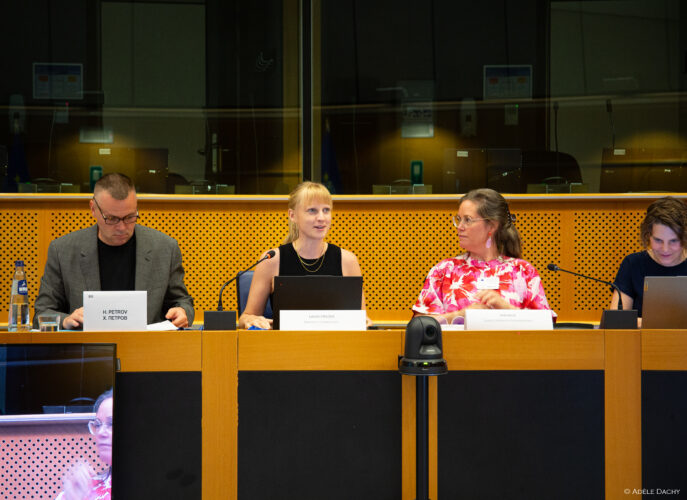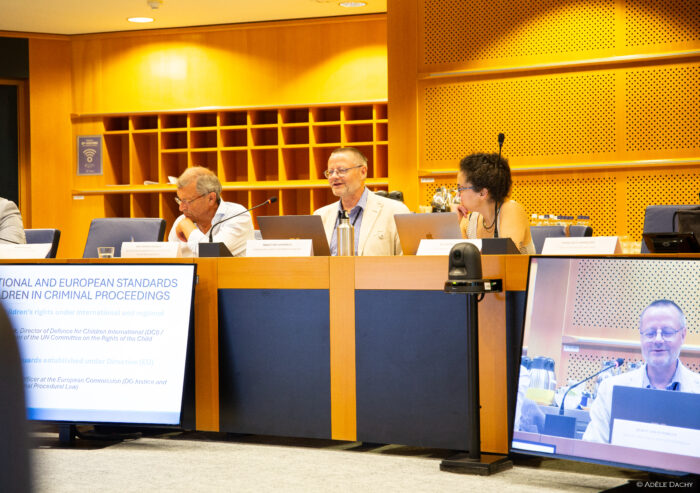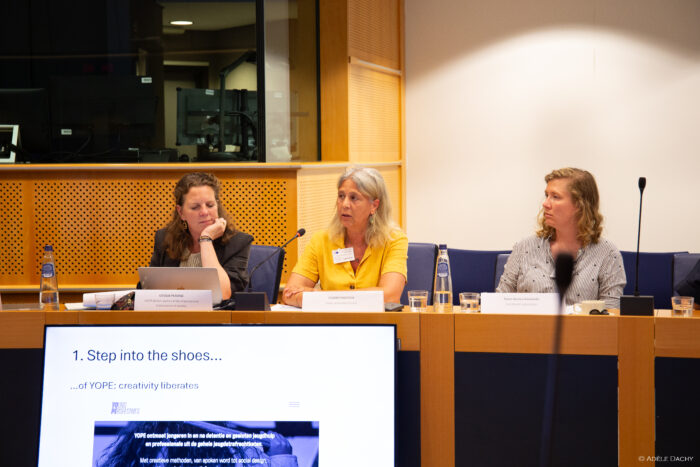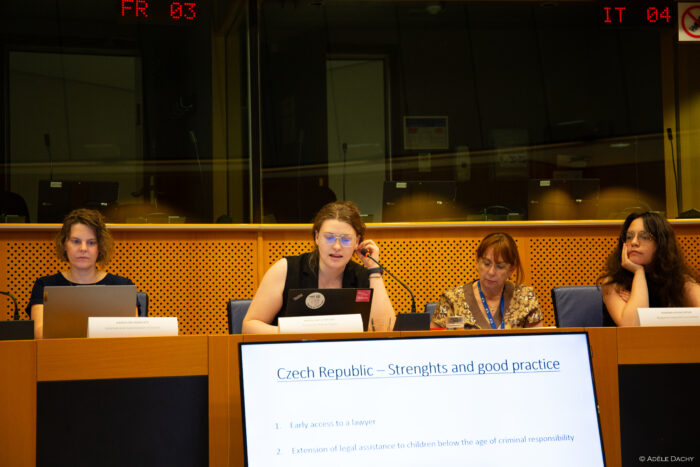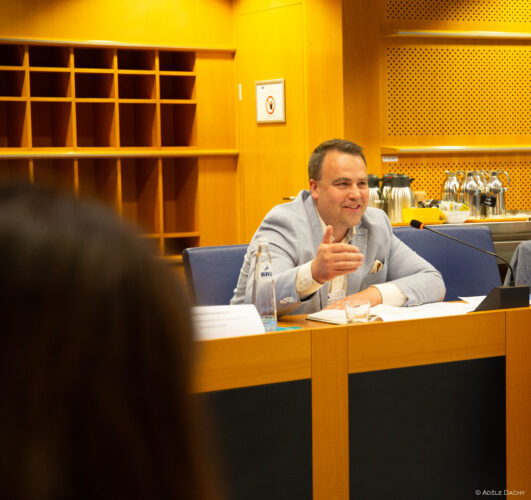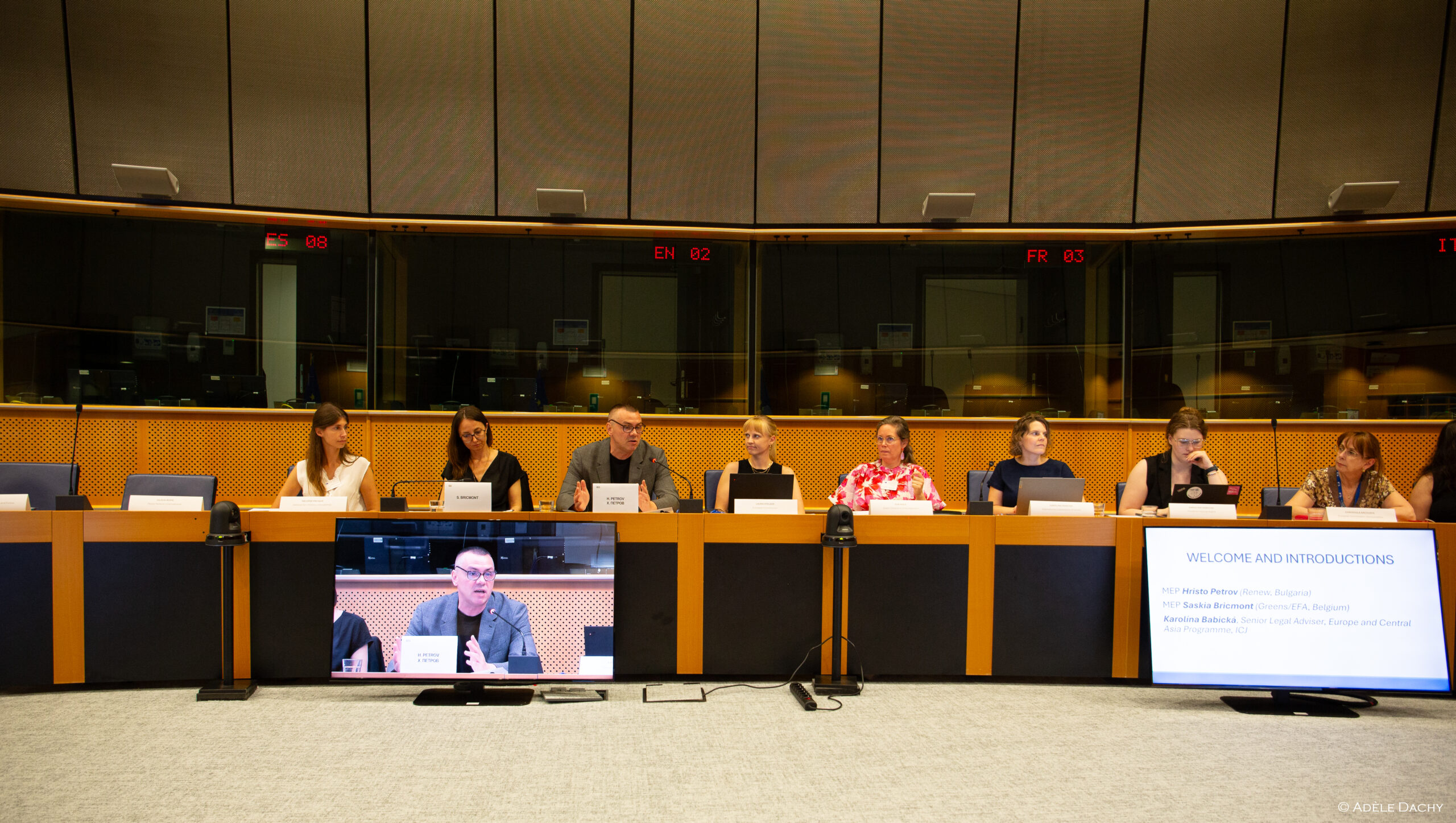
Children suspected or accused of an offence in the European Union (EU) are entitled to specific procedural safeguards: the right to information, the right to be assisted by a lawyer, the right to an individual assessment, and safeguards on any deprivation of liberty. In practice these guarantees are applied unevenly, and some children are dealt with outside the criminal process altogether, with fewer protections and, in some cases, deprivation of liberty. These shortfalls were the focus of an event the International Commission of Jurists (ICJ) held on 23 June at the European Parliament, with support from Members of the European Parliament.
The event brought together EU policymakers and representatives from the European Parliament and European Commission, alongside international children’s rights experts, justice professionals, civil society actors, and project partners to exchange views and reflect on the implementation of procedural safeguards for children suspected or accused in criminal proceedings across the EU, with a particular focus on Belgium, Bulgaria, the Czech Republic, the Netherlands, Poland, and Slovakia.
Contributions from the European Commission and a member of the United Nations (UN) Committee on the Rights of the Child underscored that these guarantees are grounded in international human rights law and standards, particularly the UN Convention on the Rights of the Child, which requires that children be treated with dignity and that their best interests be a primary consideration.
National practitioners and experts pointed to structural issues affecting justice systems across EU Member States, such as the concerning use of child protection or family law measures in situations that are criminal in nature, which can in practice lead to deprivation of liberty, lack of specialized child justice and children’s rights professionals, and insufficient child-friendly communication. Particular attention was drawn to the systemic inequalities and discrimination that compound the disadvantages children face. Children from marginalized backgrounds, including those affected by poverty, migration, or social exclusion, face heightened risks of rights violations and unequal treatment within justice systems.
Discussions drew upon findings from exchanges between national practitioners. Participants identified a range of persistent gaps in the implementation of EU Directive 2016/800 procedural safeguards.
Participants emphasized that improving access to justice for children requires both legal and societal reforms, as well as sustained cooperation between EU institutions, national authorities and civil society.
You can find the agenda here.
Background
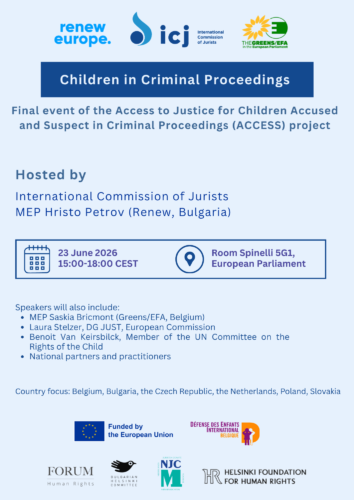
The event was organized as the final event of the Access to Justice for Children Accused and Suspect in Criminal Proceedings (ACCESS) project. It brought together key stakeholders to present and discuss the project’s main outcomes.
These included the final report, Safeguarding the rights of child suspects and accused in criminal proceedings: Compendium of Good practices, as well as a set of child‑friendly Frequently Asked Questions (FAQs) designed to help children understand their rights in criminal proceedings. The FAQs have been adapted to national contexts in Belgium, Bulgaria, the Czech Republic, the Netherlands, Poland, and Slovakia.
The event built on a series of activities carried out throughout the project. In particular, it drew on insights from a Transnational Exchange Roundtable held in Brussels in March 2025, as well as follow-up online workshops with different professional groups, including lawyers, judges, prosecutors and law enforcement personnel, and social workers and probation officers.
These exchanges, involving professionals from the six countries, provided a platform to share experiences and explore key challenges, with a view to strengthening the protection of children suspected or accused in criminal proceedings.
The ACCESS project aimed to foster EU-wide effective and non-discriminatory access to justice for children in criminal proceedings, and respect for children’s procedural rights amongst legal and other professionals. The project was implemented by the ICJ in partnership with NJCM (the Dutch section of the International Commission of Jurists), Forum for Human Rights in Czechia and Slovakia, Helsinki Foundation for Human Rights in Poland, Bulgarian Helsinki Committee, and Defence for Children International – Belgium.