Mar 20, 2020 | News
The ICJ condemned the execution today of four men who were convicted of raping and murdering a 23-year-old student in December 2012.
The ICJ denounced the executions, and urged the Indian Government to abolish the death penalty. It called on the Government to introduce systemic changes to the legal system that would deter violence and improve access to justice for women.
“State-sanctioned executions are little more than public theatre that risk celebrating and perpetuating violence at the expense of the rule of law,” said Frederick Rawski, ICJ Asia-Pacific Director. “As heinous as these crimes were, the imposition of the death penalty – the deterrent effect of which has been widely debunked – does nothing to improve the lives of women.”
According to senior lawyer Vrinda Grover, a renowned Indian human rights defender, “In 2013, the criminal laws were amended; however seven years later the graph of rapes has not diminished.”
Instead of compelling the state to invest in plugging the gaps in the investigation, prosecution and adjudication of sexual crimes and formulating victim oriented processes, the clamour for execution of the convicts has hijacked the discourse. Seven years later, the power of the state to extinguish life stands entrenched, while women and girls in India continue to struggle to live a life of freedom, safety and dignity, as equal persons, ” said Vrinda Grover.
The UN Human Rights Committee has stated that “[t]he death penalty cannot be reconciled with full respect for the right to life, and abolition of the death penalty is both desirable and necessary for the enhancement of human dignity and progressive development of human rights.”
The ICJ opposes capital punishment in all cases without exception as a violation of right to life and to freedom from cruel, inhuman or degrading punishment.
The ICJ called upon the Indian Government to join the large majority of States and take immediate steps to end the practice of capital punishment, as prescribed by repeated United Nations General Assembly Resolutions.
To download the full statement with background information, click here.
Contact
Maitreyi Gupta, ICJ India Legal Adviser, t: +91 77 560 28369 e: maitreyi.gupta(a)icj.org
Frederick Rawski, ICJ Asia-Pacific Director, t: +66 64 478 1121; e: frederick.rawski(a)icj.org
Read Also
ICJ, Press Release, September 2013 – India: Executing perpetrators of Delhi Gang Rape Case ‘counterproductive to preventing sexual violence’
Mar 15, 2020
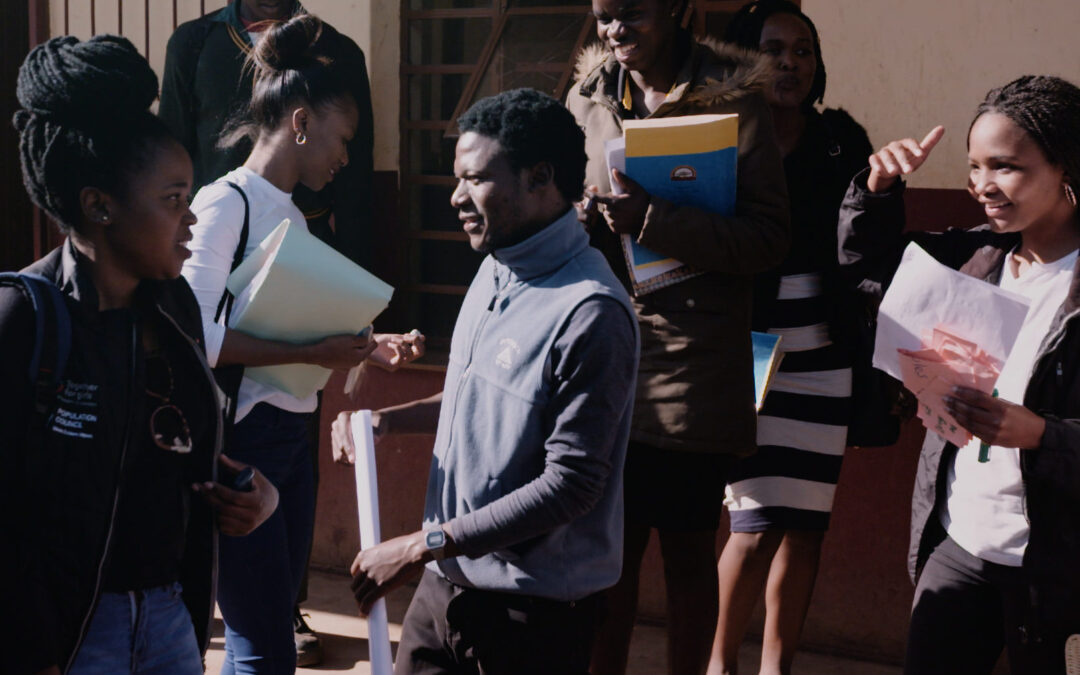
The briefing paper Access to Challenges faced by Victims and Survivors of Sexual and Gender-Based Violence in Eswatini comes in the wake of the 2018 adoption of the country’s Sexual Offences and Domestic Violence (SODV) Act.
This law followed years of advocacy from civil society and women’s human rights organizations in the Kingdom. It is a landmark piece of legislation aimed at ending sexual and gender-based violence (SGBV) in the country.
However, the effective investigation and prosecution of SGBV crimes presents complex challenges to the justice system in Eswatini.
It will take more than the passage of a new law to protect women in Eswatini and strengthen access to justice for women and girls in the country.
Gender stereotypes and gender bias, sometimes based on traditional, religious and cultural norms continue to permeate the justice system, preventing women and girls from effectively accessing justice for SGBV.
Download
Eswatini-SGBV Report-Advocacy-Analysis brief-2020-ENG (full paper, in PDF)
Mar 8, 2020 | News
The ICJ commemorates International Women’s Day by calling on States all over the world to take decisive steps to abolish or amend laws, policies and practices that discriminate against women and girls, including those belonging to Sexual Orientation, Gender Identity and Expression and Sex Characteristics (SOGIESC) minorities.
“All over the world, we are facing increasing attacks on the rule of law, which intensify existing inequalities resulting in compounded and intersecting forms of discrimination against women and girls, especially women from SOGIESC minorities,” said Emerlynne Gil, ICJ’s global focal point on gender.
The ICJ also calls on frontline justice actors, such as judges, lawyers and law enforcement officers, to take proactive steps in eliminating gender discriminatory practices in their work to further enhance access to justice for women.
Such action includes an open and inclusive discourse on regressive interpretations of religious and customary laws that discriminate against women.
The ICJ also urges States to acknowledge the diverse voices of women in this discourse, including those of women who belong to SOGIESC minorities.
“Women and girls, including those from SOGIESC minorities, are at a heightened risk of human rights abuses, most especially because a greater number among them is now living in poverty and is unable to access information about their rights, as well as justice for the violations they suffer,” added Emerlynne Gil.
.International Women’s Day is a symbolic acknowledgement of women’s struggle for gender equality in all spheres of life.
While celebrating the recognition of women’s legal rights and entitlements, the ICJ also notes with deep concern the growing trend around the world to push back on these advances in a manner that fundamentally violates the rights of women.
In 2019, the ICJ adopted the Tunis Declaration on Reinforcing the Rule of Law and Human Rights (Tunis Declaration), wherein it highlighted how “culture, tradition, or religion are being used to justify laws, policies, and practices that discriminate against women and girls”.
The proliferation of these discriminatory laws, policies and practices “come at a time when there is growing inequality, accelerating climate change, conflict, and large-scale displacement of people.”
Upholding cultural practices is often invoked as a convenient excuse to justify the continued existence of laws, policies, and practices that discriminate against women and girls, including those belonging to SOGIESC minorities.
While the ICJ affirms the importance of respecting cultural rights, these must be exercised in a manner consistent with core rule of law principles of non-discrimination, equality and equal protection of the law.
The ICJ notes that claims of cultural preservation are often based upon harmful gender stereotypes and deeply problematic patriarchal norms and attitudes that undergird the sanctification of discriminatory cultural, religious, traditional, and customary norms.
In the Tunis Declaration, the ICJ recognized “the persistent, deep entrenchment of patriarchal culture that perpetuates gender stereotypes in many national and international institutions, including those of the legal profession and judiciary.”
Harmful gender stereotypes, in turn, severely hamper women from enjoying their human rights and from equal access to justice, including for crimes of sexual and gender-based violence perpetrated against them.
Contact
Emerlynne Gil, ICJ Senior International Legal Adviser, email: emerlynne.gil(a)icj.org
Feb 25, 2020 | Advocacy, Non-legal submissions
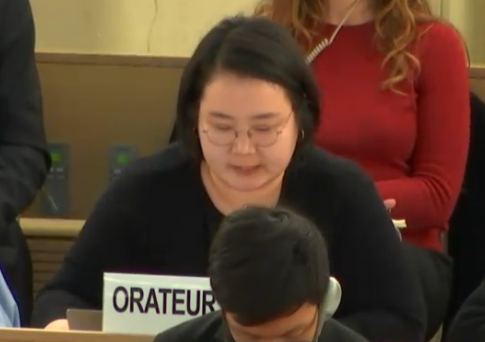
The ICJ today spoke at the UN Human Rights Council in Geneva, highlighting issues of access to justice for women in the context of religious and customary law.
The statement, delivered during a High Level Panel discussion commemorating the twenty-fifth anniversary of the Beijing Declaration and Platform for Action adopted at the Fourth World Conference on Women, read as follows:
“The International Commission of Jurists (ICJ) welcomes this opportunity to celebrate the progress made in the implementation of the Beijing Declaration and Platform for Action 25 years after its adoption and to address the remaining challenges to gender equality and women’s empowerment.
We have indeed seen an expansion in many countries of women’s legal entitlements and protection of their rights. However, there is also a growing trend to push these advances back and violate women’s human rights, invoking as justification religion, tradition, culture, and custom. This came out clearly when ICJ, UN Women and the OHCHR hosted a consultation for the UN Special Rapporteur on freedom of religion or belief last year, where women human rights defenders from all over Asia raised concerns about the resurgence of intersecting forms of discrimination by religion and culture based on patriarchal attitudes. They specifically narrated how women and girls were denied their sexual and reproductive rights.
Recalling the vision of the Beijing Declaration and Platform for Action, we reiterate the obligation of States not to invoke, “any custom, tradition or religious consideration”, to avoid their obligations to combat gender-based violence and discrimination against women. The Human Rights Committee also provides that “State parties should ensure that traditional, historical, religious or cultural attitudes are not used to justify violations of women’s right to equality before the law and to equal enjoyment of [ICCPR] rights[1].”
We therefore urge the Council to foster an open and inclusive discourse with Member States on the regressive interpretations of religious and customary laws that discriminate against women, and to acknowledge the voices and the diversity of women in that process. We urge States to ensure the full implementation of the human rights of women as an inalienable part of all fundamental freedoms.”
[1] Para 5, CCPR/C/21/Rev.1/Add.10
Jan 18, 2020 | Advocacy, News
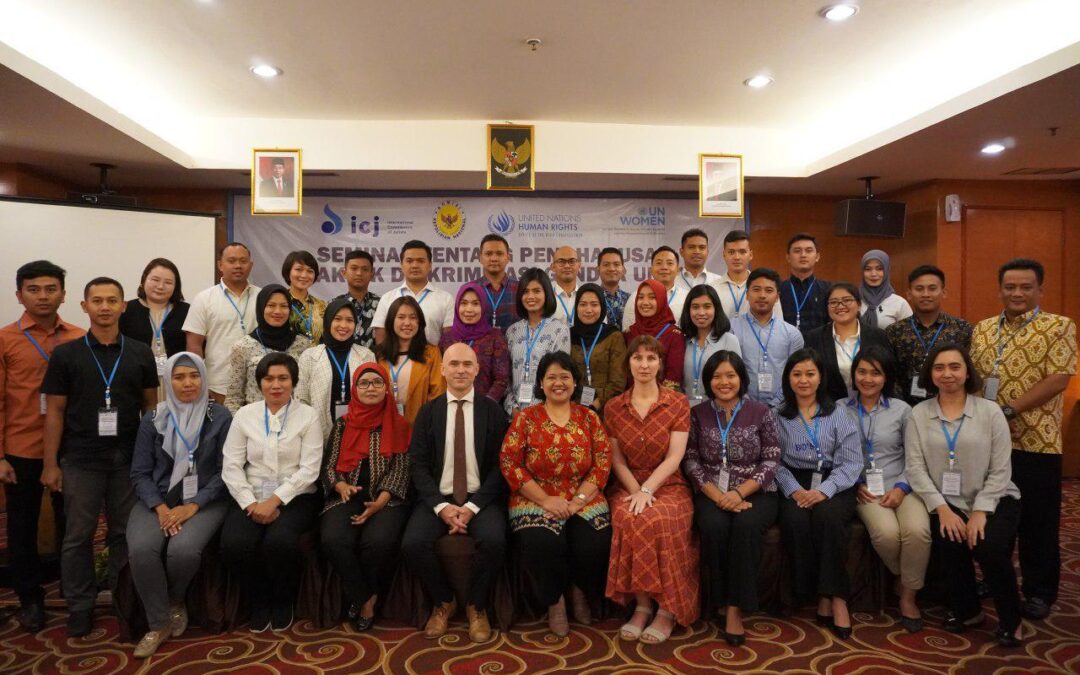
From 16 to 17 January 2020, the ICJ, in collaboration with the National Police Commission (KOMPOLNAS), UN Women, and the Office of the United Nations High Commissioner for Human Rights (OHCHR) organized a Seminar on Eliminating Gender Discriminatory Practices for the Police.
It was held in Bogor, Indonesia and gathered 30 law enforcement officers from Indonesian provinces that are reported to have the highest rate of incidents of violence against women.
Frederick Rawski, ICJ’s Asia and the Pacific Regional Director, stressed to participants that, “Police officers are the first point of contact for women who try to access justice for violations committed against them. It is important therefore for these officers to be well-trained on gender sensitivity and women’s human rights.”
“Only 40 percent of women speak out on violence, and only 10 percent of these report to the police because they are often blamed for the violence they experience or humiliated by those who should protect them,” added Ms. Doreen Buettner, Programme Specialist on Access to Justice of UN Women.
Indonesia is a State Party to the Convention on Elimination of All Forms of Discrimination Against Women (CEDAW), having ratified it on 13 September 1984. It has established a gender mainstreaming mechanism under Presidential Instruction No. 9 of 2000 on Gender Mainstreaming in National Development, which obliges all government representatives and agencies, including the police, to mainstream gender in their work in order to eliminate gender-based discrimination.
Ms. Poengky Indarti, Commissioner from the National Police Commission (KOMPOLNAS), stressed that “Gender-responsive police training should not a one-time thing, we need to institutionalize the training for it to be sustainable.”
At the seminar, the discussions were aimed at strengthening the understanding of the members of police officers on women’s human rights, and the importance of eliminating gender stereotyping in their work to enhance access to justice for women.
Ms. Siti Aminah, Commissioner of the National Commission of Violence Against Women in Indonesia (Komnas Perempuan) and Professor Meg Garvin, Executive Director of the National Crime Victim Law Institute (NCVLI) and Clinical Professor of Law at the Lewis & Clark Law School facilitated discussions on common gender stereotypes in Indonesia and strategies, protocols and good practice relating to all aspects of responses to incidents of violence against women.
Contact
Ruth Panjaitan, National Legal Advisor for Indonesia, International Commission of Jurists, e: ruthstephani.panjaitan(a)icj.org
Resources
To access pictures from the event, click here.