May 30, 2022 | Events, News
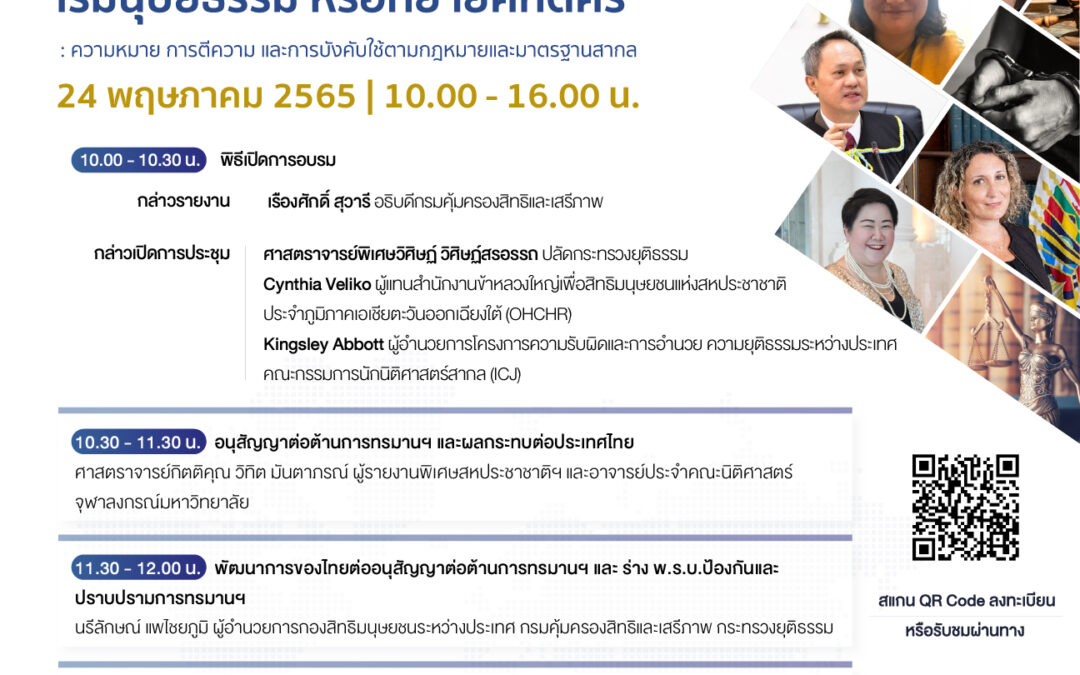
Thailand must act to minimize torture and cruel, inhumane and degrading treatment by passing a draft law before the Senate that would criminalize such violations, international experts and Thai human rights defenders urged at a workshop co-hosted on 24 May in Bangkok by the International Commission of Jurists (“ICJ”), Thailand’s Ministry of Justice and the United Nations Office of the High Commissioner for Human Rights (OHCHR).
Apr 22, 2020 | News
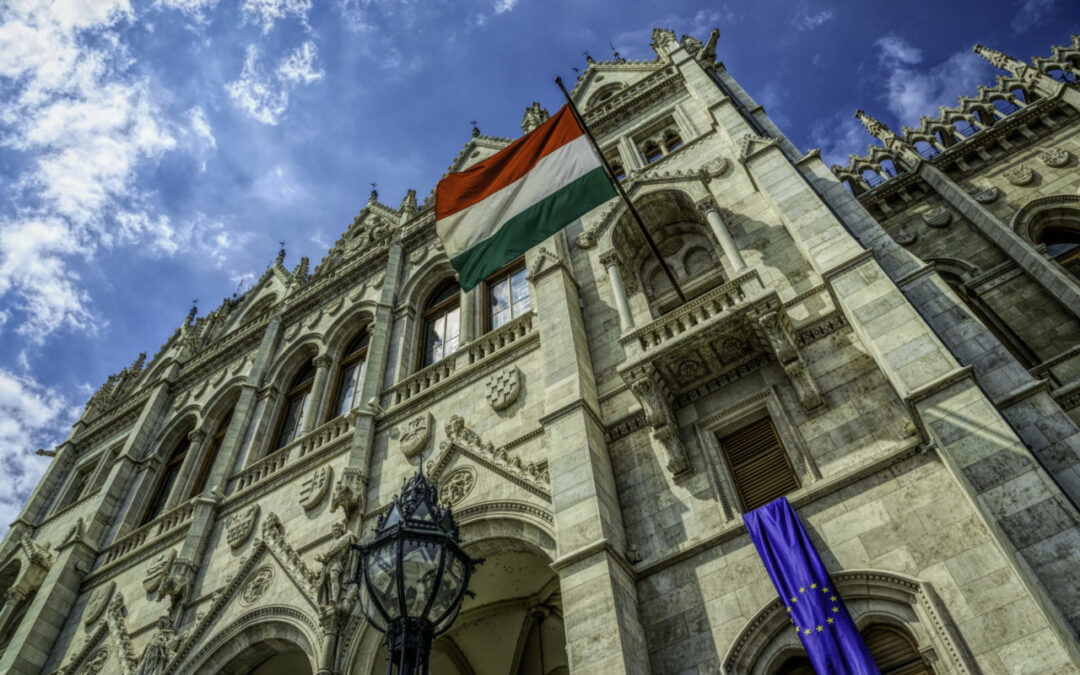
In a joint letter to EU Member States, the ICJ and other human rights NGOs have urged them to recognize the grave implications for human rights and the rule of law, of the Hungarian government’s recent emergency measures.
Ahead of the Council of the EU videoconference of EU Affairs Ministers to discuss the response to COVID-19, Amnesty International, International Federation for Human Rights (FIDH), Human Rights Watch, the ICJ, Open Society European Policy Institute and Reporters Without Borders (RSF) urged the Council to take immediate steps to protect the principles enshrined in Article 2 of the Treaty on European Union (TEU), and the rights enshrined in the EU Charter of Fundamental Rights. This is particularly needed in light of the already deteriorated state of the rule of law and human rights in Hungary, which warranted the activation, in September 2018, of the procedure laid down in Article 7.1 TEU.
The organisations urged the member states of the European Union to:
- include in the agenda of the upcoming session of the EU General Affairs Council an Article 7.1 TEU hearing on the situation in Hungary, including recent developments in relation to the COVID-19 outbreak, and address to the government of Hungary, as a matter of urgency, concrete recommendations to safeguard respect for the rule of law and human rights in the country, that the Hungarian government must implement by a set deadline;
- commit to assessing the implementation of the recommendations in a timely manner in order to reach a determination under Article 7.1 TEU and, should conditions warrant it, move forward under Article 7.2 TEU.
- ensure enhanced monitoring of the Hungarian government’s use of EU funding, including funds aimed at supporting member states during the public health crisis.
The organisations urged both the Council and the Commission to cooperate with each other, and with the European Parliament and national parliaments, to ensure a coordinated, consistent and effective response to the situation.
The full letter is available here: CSO Letter to GAC -rule of law in Hungary April 2020

Dec 10, 2019 | News
Today’s decision from the European Court of Human Rights in the case of Turkish human rights defender Osman Kavala must be immediately complied with by releasing him from detention, the International Bar Association Human Rights Institute (IBAHRI) and the ICJ said today.
In the case of Kavala v Turkey, the European Court of Human Rights held that the detention of Mr Kavala, in connection with his role in the Gezi Park protests of 2013, violated the right to liberty (Article 5.1) and the right to a speedy judicial review of detention (Article 5.4) under the European Convention on Human Rights (ECHR). The Court also found that his detention involves a restriction on rights for an improper purpose (Article 18). As a consequence of these findings, the Court specifically held that ‘the government must take every measure to put an end to the applicant’s detention and to secure his immediate release’.
The Turkish government has a legal obligation to comply with the judgment of the European Court of Human Rights. The IBAHRI and ICJ urge the authorities to abide by their obligations under the ECHR by immediately releasing Mr Kavala.
Mr Kavala has been in detention since 18 October 2017 pending trial on charges connected to the Gezi Park protests. The Gezi Park protests began in May 2013 as an effort by a group of environmentalists to save a park in central Istanbul from being rezoned, but soon grew into nationwide demonstrations. Police quelled the protest in Taksim Square with the use of tear gas and water cannons.
Mr Kavala’s trial, along with 15 other defendants, is ongoing before Istanbul 30th Assize Court. The defendants are charged under Article 312 of the Turkish Criminal Code (an attempt to overthrow the Turkish government or an attempt to prevent it from fulfilling its duties), Article 151 (damage to property), Article 152 (qualified damage to property), Article 174 (possession or exchange of hazardous substances without permission), Article 153 (damaging places of worship and cemeteries), Article 149 (qualified robbery), Article 86 (intentional injury), crimes under the Law on Firearms, Knives and Other Tools no. 6136, and crimes under the Law on Protection of Cultural and Natural Assets no. 2863.
The IBAHRI and the ICJ have jointly sent international observers to attend all hearings of the trial. The organisations will jointly release a trial observation report upon conclusion of the trial.
Contact:
Róisín Pillay, Director, Europe and Central Asia Programme, t: +32 2 734 84 46 ; e: roisin.pillay(a)icj.org
Aug 30, 2019 | News
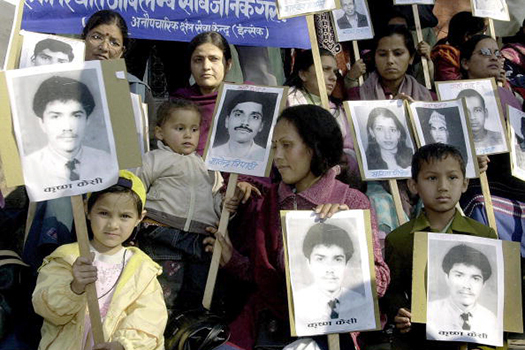
On the occasion of the International Day of the Victims of Enforced Disappearances, Advocacy Forum-Nepal, the Terai Human Rights Defenders Alliance (THRD), and the ICJ voiced their concern about the Government’s failure to provide justice for the victims of the country’s decade-long armed conflict, including victims of enforced disappearance.
The organizations also remembered the victims of enforced disappearances in Nepal and recognized the unceasing efforts of victims and their families and others advocating and campaigning for truth and justice for serious human rights violations in Nepal for over a decade.
Nepal faced a protracted internal armed conflict from 1996 to 2006. In the decade-long conflict, serious human rights violations and abuses were committed by both sides: the Government, including the Royal Nepal Army; and the Communist Party of Nepal (Maoist). Approximately 1,300 people were “disappeared” during the conflict. The fate of many of “disappeared” is yet to be known.
The Comprehensive Peace Agreement (CPA) put an end to the conflict on 21 November 2006, with both sides agreeing to hold perpetrators of human rights violations and abuses accountable and provide access to effective remedies and reparation to victims, including a commitment to publicize the fate or whereabouts of “disappeared”. However, nearly 13 years after the signing of the Comprehensive Peace Agreement in November 2006, these promises remain unfulfilled.
The Truth and Reconciliation Commission and Commission on Investigation of Disappeared Persons, both established in February 2015, have failed to resolve the many thousands of complaints brought to them by victims and their families, and have yet to publicize their findings. Furthermore, in 2015, the Supreme Court ruled the 2014 Act creating the legal framework for the Commissions to be unconstitutional, due in part to the inclusion of provisions that could be used to grant amnesty to perpetrators. In February 2019, the tenure of the commissions was extended to 2020, but the terms of the commissioners expired on 13 April 2019. As of August 2019, no formal replacements had been announced, though a committee to recommend appointments has been established. The ICJ and other organizations have called for a suspension of the current appointment process until amendments to the legal framework are made, and a more consultative and transparent process is initiated.
Nepal has also enacted a new Penal Code, with effect from August 2018. For the first time, the Penal Code recognized enforced disappearance as a distinct crime. While the intent behind this measure is commendable, the law does not meet Nepal’s obligations concerning crimes under international law. In particular, the definition of enforced disappearance falls short of international standards; the crime of enforced disappearance is not absolutely prohibited; provisions related to superior and command responsibility are inadequate; and the penalties for enforced disappearance are inconsistent with international standards. The provisions will apply retroactively to the more than 1,300 conflict era cases.
The organizations urged the Government of Nepal to:
- Amend the 2014 Transitional Justice Act to ensure it is consistent with international human rights standards and Supreme Court rulings, including removing amnesty for perpetrators;
- Revise the criminal code to bring it in line with international standards. At the minimum, this should include:
- amending the definition of enforced disappearances to bring it in line with Nepal’s international obligations and the Convention on the Protection of All Persons from Enforced Disappearance (CED)
- revising the penalty provisions in the Criminal Code Bill to comply with relevant provisions of the CED and other international law and standards
- removing the statute of limitations for enforced disappearance cases
- Ratify International Convention for the Protection of All Persons from Enforced Disappearances;
- Publicize the findings of the CIEDP; and
- Ensure that in Nepal’s legal system, the victims of enforced disappearance, including family members of “disappeared” persons, have the right to obtain reparation and prompt, fair and adequate compensation; and they can effectively exercise that right in practice.
Contact:
For the ICJ: Frederick Rawski, ICJ Asia-Pacific Director, t: +66 64 478 1121; e: frederick.rawski(a)icj.org
Background:
The International Day of the Victims of Enforced Disappearances falls on 30 August every year. Nepal is bound by international legal obligations under the International Covenant on Civil and Political Rights (ICCPR) and Convention against Torture and Other Cruel, Inhuman or Degrading Treatment or Punishment (CAT) – both of which it has acceded to – to investigate, prosecute, punish and provide remedies and reparation for the crimes of torture, other acts of ill-treatment, and enforced disappearance.
Nepal-International Day Enforced Disappearances-Press releases-2019-NEP (Story in Nepali)
Oct 2, 2017 | News
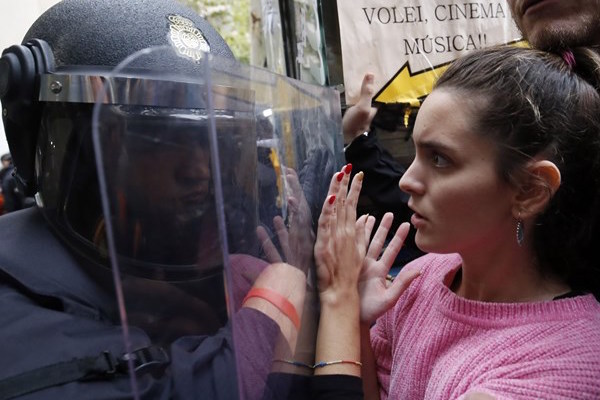
The ICJ today expressed concern at the apparently unlawful violence surrounding yesterday’s referendum in Catalonia, as Catalan authorities sought to hold a vote on the independence of the region. The Spanish Constitutional Court had ruled that the referendum was illegal.
The ICJ calls on all parties concerned to resolve the current crisis in accordance with international human rights law and in the framework of the rule of law.
The ICJ is particularly concerned at allegations of excessive use of force during police operations aimed at enforcing court orders to prevent the referendum being held.
International human rights obligations binding on Spain require that any use of force by agents of the State must be no more than is strictly necessary in the circumstances to meet a grave threat .
All aspects of police operations, including their planning and co-ordination, and the training, guidance and orders given to police officers on the ground, must be designed to minimize the use of physical force.
The ICJ calls for a thorough, prompt and independent investigation into the violence surrounding the referendum, and for those responsible for acts of violence in violation of human rights to be brought to justice.
Background
Spain has obligations to respect the right to life and the right to physical integrity of any person under its jurisdiction under articles 6 and 7 of the International Covenant on Civil and Political Rights, and articles 2, 3 and 8 of the European Convention on Human Rights.
Standards in this regard are re-enforced by the UN Code of Conduct for Law Enforcement Officials and the UN Basic Principles on the Use of Force and Firearms by Law Enforcement Officials.
Positive obligations under these provisions require that allegations of lethal or potentially lethal force, or force that could amount to cruel inhuman or degrading treatment or torture, be the subject of investigation that is independent and impartial, thorough and prompt.
The violence surrounding the referendum on Catalonia’s independence reportedly resulted in injuries to at least 844 civilians and 33 police offices.
Contacts:
Róisín Pillay, ICJ Europe Programme Director, t: +32 2 734 84 46 ; e: roisin.pillay(a)icj.org
Massimo Frigo, ICJ Senior Legal Adviser, t: +41 22 979 3805 ; e: massimo.frigo(a)icj.org