Sep 17, 2018 | Artículos, Noticias
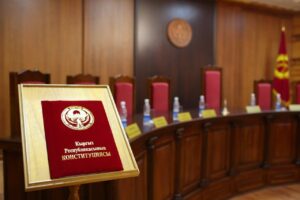
La Corte de Constitucionalidad hizo pública ayer 16 de septiembre, su decisión de ordenar permitir el ingreso al país, del comisionado de la Comisión Internacional contra la Impunidad (CICIG), Iván Velásquez.
La CIJ celebra dicha decisión, ya que permitirá continuar el trabajo de la CICIG y de esta forma la decisión de la Corte de Constitucionalidad, logrará remover uno de los obstáculos más apremiantes, impuestos por el propio Presidente de la República, para el cumplimiento de las obligaciones internacionales del Estado de Guatemala, contenidas en el Acuerdo Internacional de Derechos Humanos que crea dicha comisión.
Con respecto a los recursos de amparo que buscan dejar sin efecto la decisión del Presidente de la República de no prorrogar el mandato de la CICIG, la Corte de Constitucionalidad (CC) decidió no otorgar el amparo provisional y, por lo tanto, los procesos deberán continuar hasta su resolución final.
Para el efecto, la CIJ insta a la Corte de Constitucionalidad, a respetar los plazos legales y resolver finalmente los recursos de amparo, conforme los principios, costumbre internacional y normas del Derecho Internacional de los Derechos Humanos.
La CIJ reitera que el no prorrogar el mandato de la CICIG, también podría causar un grave daño a la justicia y ser un obstáculo definitivo para el cumplimiento de las obligaciones internacionales del Estado de Guatemala, de combatir la impunidad.
Con respecto al diálogo que deberá continuar para resolver las diferencias, según el artículo 12 del Acuerdo Internacional de Derechos Humanos citado, la CIJ considera que es necesario incorporar a dicho diálogo, al Procurador de los Derechos Humanos y a la Sociedad Civil organizada, que fueron precisamente quienes propusieron la creación de tan importante comisión.
Uno de los puntos fundamentales a analizar entre todos los actores involucrados, entre otros temas, es si las entidades estatales nacionales ya están suficientemente fortalecidas y capacitadas para continuar la lucha contra la impunidad, sin el apoyo de la CICIG.
La CIJ considera que para seguir impulsando acciones eficientes en la lucha contra la corrupción e impunidad, es de vital importancia suspender los efectos de la decisión gubernamental, de no prorrogar el mandato de la CICIG.
De esta forma, se dará mayor confianza y viabilidad al diálogo entre todas las partes sobre el futuro de la CICIG; además, de esta forma se protegerán los derechos de la población guatemalteca.
Ramón Cadena, Director de la Comisión Internacional de Juristas para Centroamérica expresó: “Falta revertir la decisión del Presidente Jimmy Morales de no prorrogar el mandato de la CICIG. De esta forma, quedarán removidos todos los obstáculos impuestos a la CICIG y se contribuirá al fortalecimiento del Estado de Derecho en el país.”

Sep 17, 2018 | News
On 16 September, the Constitutional Court made public its decision to order that the Commissioner of the International Commission against Impunity (CICIG) Iván Velásquez be permitted to re-enter the country.
For more than a decade, the UN-backed CICIG has helped investigate high-profile officials for corruption.
Under the tenure of head commissioner Ivan Velasquez, the CICIG has helped Guatemalan prosecutors investigate and prosecute many high-level politicians, judges and government officials, including former president Otto Perez Molina and members of his cabinet.
Elected in 2015, current President Jimmy Morales initially supported the CICIG but he himself and other family members have become subjects of investigations into illegal campaign financing. They deny all charges.
President Morales declared on 31 August that he would not renew the mandate of the CICIG which is due to expire in September 2019 and then proceeded to ban Commissioner Velasquez from re-entering the country.
This decision sparked a number of protests including legal challenges in the Constitutional Court.
“The decision by the Constitutional Court should permit the CICIG to continue its work. It removes one of the greatest obstacles, imposed by order of Guatemalan President Jimmy Morales himself, to the fulfilment of Guatemala’s international obligations, as enshrined in the International Accord on Human Rights which created the Commission,” said Ramon Cadena, ICJ Director for Central America.
With respect to the amparo lawsuits which sought an injunction to reverse the the decision of the President Morales not to renew the mandate of the CICIG, the Constitutional Court declined to order provisional measures and therefore these legal proceedings will continue until they are determined in court.
“The ICJ urges the Constitutional Court to respect the legal time limits and to make a final decision on the lawsuit, in compliance with international human rights law and standards.
If the mandate of the CICIG were not renewed, it would seriously affect access to justice and constitute a major obstacle to the fulfilment of Guatemala’s international obligation to combat impunity,” Ramon Cadena added.
Sep 17, 2018 | Advocacy, Non-legal submissions
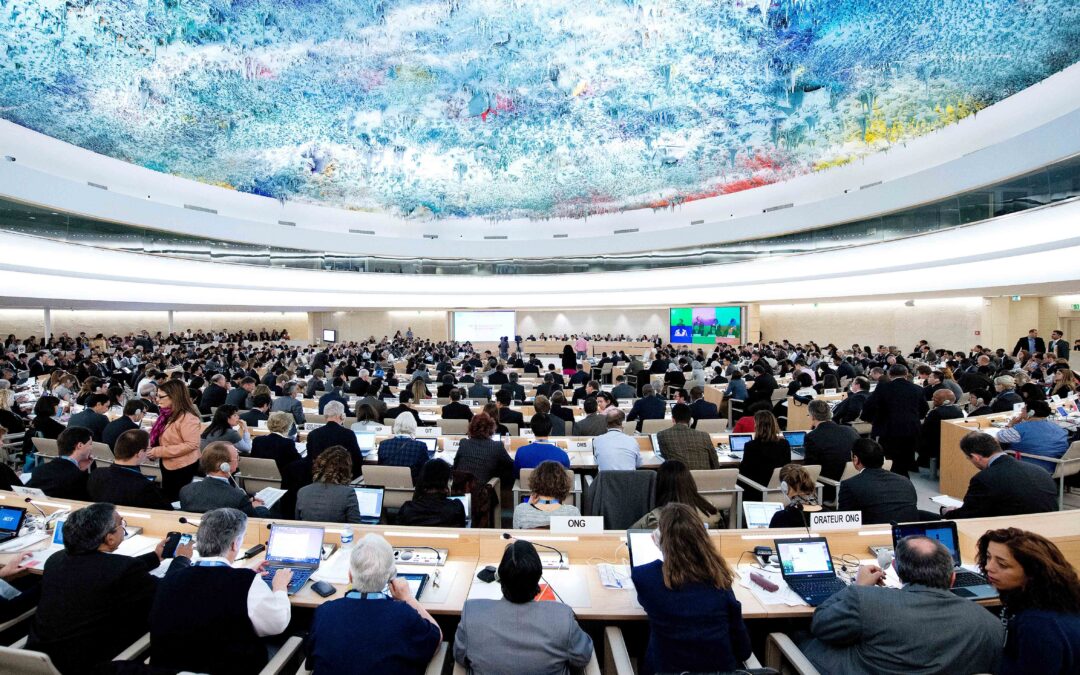
Today at the UN Human Rights Council, the ICJ emphasised the importance of effective investigations capable of leading to truth and justice, highlighting recent developments in Manipur, India as an example.
The statement read as follows:
“Justice processes in situations of conflict or transition require fighting impunity and re-establishing public trust.[1] An example is the new prospects for justice in relation to 1528 alleged extrajudicial killings cases in Manipur, India, which would make an important contribution to a transition out of the long-standing conflict.
In July 2016, in response to a petition filed on behalf of the victims, the Indian Supreme Court stated that “there is no concept of absolute immunity from trial…”,[2] opening the door to ending impunity. As of August 2018, the Central Bureau of Investigation has registered 29 complaints against security forces.[3] Recent reports suggest that the Government is also considering amending the Armed Forces Special Powers Act (AFSPA) to remove or restrict existing overbroad authorizations for use of lethal force.[4]
These are welcome developments. However, concerns remain, as the investigation status of the majority of the cases is unknown. Two UN Special Rapporteurs in July 2018 also affirmed that justice must be done in all cases.[5]
The ICJ calls on India to ensure independent, impartial and thorough investigations into all cases in Manipur, amend AFSPA, and to uphold the right to truth of victims and society about acts committed and the identity of perpetrators, in line with its international and national legal obligations, including as a party to the International Covenant on Civil and Political Rights.”
[1] Report of the Special Rapporteur on the promotion of truth, justice, reparation and guarantees of non-recurrence, A/HRC/39/53 (25 July, 2018), http://www.undocs.org/A/HRC/39/53.
[2] Para 163, Extra Judicial Execution Victim Families Association (EEVFAM) & Anr. v. Union of India & Anr. Writ Petition (Criminal) No. 129/2012.
[3] TNN, “Army Major named in FIR for killing 12-yr-old in fake Manipur encounter”, Times of India, August 3, 2018, https://timesofindia.indiatimes.com/city/imphal/army-major-named-in-fir-for-killing-12-yr-old-in-fake-manipur-encounter/articleshow/65252258.cms.
[4] “In AFSPA, Government Considering Crucial Changes”, NDTV, September 13, 2018, available at https://www.ndtv.com/india-news/in-afspa-government-considering-crucial-change-sources-1915706.
[5] Special Rapporteur on extrajudicial, summary or arbitrary executions and Special Rapporteur on the situation of human rights defenders, “India: UN experts call for urgent progress in investigation of hundreds of ‘fake encounter’ killings” (4 July 2018), https://www.ohchr.org/en/NewsEvents/Pages/DisplayNews.aspx?NewsID=23323&LangID=E .

Sep 14, 2018
La CIJ a publié son rapport annuel 2017 (disponible uniquement en anglais), qui offre un résumé concis du travail effectué par la CIJ au cours de l’année écoulée.
Pendant plus de 60 ans, la CIJ a joué un rôle prépondérant dans la promotion de l’état de droit et de sa mise en œuvre au niveau international et national, et a travaillé sans relâche pour lutter contre les injustices à travers le monde.
Bien que des progrès notables aient été réalisés au fil des ans, nous sommes malheureusement dans une période de régression, confrontés à de nouveaux défis qui ne proviennent pas d’un clivage Est/Ouest ou Nord/Sud, mais plutôt problème d’ordre mondial et endémique.
La CIJ l’a cependant déjà constaté auparavant. Après les attentats terroristes du 11 septembre, de nombreux états, y compris des démocraties libérales, ont adopté des mesures antiterroristes qui menaçaient l’essentiel du cadre international des droits de l’Homme mis en place depuis la seconde guerre mondiale, affirmant que le respect des droits de l’Homme n’était plus adéquat.
La CIJ a réagi à cette crise en créant un panel de juristes éminents, dont le rapport identifiait clairement les enjeux, réaffirmant la valeur des droits de l’Homme et formulant des recommandations claires aux Etats sur la manière de concevoir des projets antiterroristes respectueux des droits fondamentaux.
Aujourd’hui, le concept de l’état de droit lui-même est attaqué et la CIJ, comme par le passé, relève ce défi en réaffirmant les valeurs et principes fondamentaux du droit relatif aux droits de l’Homme, et en cherchant à surmonter les propos dommageables qui prétendent que le système n’est plus pertinent pour les individus.
Bien que la CIJ reconnaisse que le système de droits est confronté à des défis, nous restons fermement attachés à renforcer la protection des droits grâce à des cadres internationaux éprouvés.
En 2017, la CIJ a abordé des éléments clés de l’état de droit, notamment l’indépendance du pouvoir judiciaire, qui constitue une garantie fondamentale pour la protection des droits et de la responsabilité.
Nous avons continué d’œuvrer à notre vision d’un monde où chacun puisse exercer ses droits en travaillant avec et au nom des groupes les plus marginalisés, notamment les habitants déplacés de l’État de Rakhine, les enfants migrants et les communautés autochtones.
Nous avons continué à lutter contre la culture de l’impunité et pour garantir la responsabilité dans des endroits tels que le Cambodge, le Myanmar, le Népal, le Tadjikistan et la Tunisie.
Il est important de noter que la CIJ a déjà connu quelques succès dans ce travail, notamment dans ses efforts pour plaider contre la proposition faite par l’Afrique du Sud de se retirer de la Cour pénale internationale.
L’année dernière, la CIJ a aussi organisé un forum sur les systèmes de justice coutumiers et traditionnels et dénoncé l’incapacité des états à rendre des comptes sur les opérations de restitution.
Elle a été activement impliquée dans des questions telles que l’accès à la justice pour les femmes, préconisé des réformes nationales, travaillé avec des systèmes judiciaires nationaux, dispensé des formations aux juristes et aux défenseurs des droits de l’Homme, et continué à dénoncer les violations flagrantes des normes internationales, telles que le recours à des tribunaux militaires pour juger des civils.
Les remises en question actuelles en matière de droits de l’Homme et notamment du cadre juridique international qui les soutient sont en effet très graves.
La CIJ, par son expérience et ses actes, est particulièrement qualifiée pour relever le défi mais cela exigera que nous réaffirmions vigoureusement notre vision d’un état de droit respectueux de la dignité et des droits de l’Homme de chacun.
Télécharger
Universal-ICJ Annual Report 2017-Publications-Reports-Annual Report-2018-ENG (rapport complet en PDF, uniquement disponible en anglais)

Sep 14, 2018
The ICJ has issued its Annual Report 2017, which offers a concise summary of the work carried out by the ICJ over the past year.
For over 60 years, the ICJ has played a preeminent role in promoting the rule of law and its implementation internationally and domestically and has worked tirelessly to fight injustices around the globe.
While notable progress has been made over the years, sadly we are now in a period of regression, facing new challenges that are neither East/West nor North/South in origin but are rather global and endemic.
The ICJ, however, has seen this before. After the 9/11 terrorist attacks, many States, including some liberal democracies, adopted counter-terrorism measures that threatened the very core of the international human rights framework put in place since the Second World War, claiming that observance of human rights was no longer convenient.
The ICJ responded to that crisis by establishing an Eminent Jurists Panel whose report clearly identified the issues, reaffirmed the value of human rights and set out clear recommendations to States on how to craft counter-terrorism initiatives that respect basic rights.
Today the concept of the rule of law itself is under attack, and the ICJ, as in the past, is meeting this challenge head on by reasserting core values and principles of human rights law and by seeking to overcome harmful narratives that claim that the system is no longer relevant to individuals.
While the ICJ recognizes the rights system is beset by challenges, we remain deeply committed to enhancing rights protections through tried and tested international frameworks.
The ICJ has had an active 2017 addressing key elements of the rule of law, including the independence of the judiciary, which provides a fundamental safeguard for rights protections and accountability.
We have continued to work towards our vision of a world where everyone is able to exercise her/his rights by working with and on behalf of the most marginalized groups, including displaced inhabitants of the Rakhine state, migrant children and indigenous communities.
We continued to strive against cultures of impunity and ensuring accountability in places such as Cambodia, Myanmar, Nepal, Tajikistan and Tunisia.
Importantly, the ICJ has already had some successes in this work, such as in the ICJ led efforts to advocate against South Africa’s proposed withdrawal from the International Criminal Court.
Last year, the ICJ also convened a forum on customary and traditional justice systems, reported on the failure of States to ensure accountability for renditions operations, actively engaged at the UN on issues such as women’s access to justice, advocated for national reforms, worked with domestic justice systems, provided training for jurists and rights defenders, and continued to denounce clear violations of international norms, such as the use of military courts to try civilians.
The current challenges to human rights and the international legal framework supporting them are grave indeed.
The ICJ by experience and deeds is uniquely qualified to meet these challenges but this will require us to vigorously reaffirm our vision of a rule of law that upholds the dignity and human rights of every person.
Download
Universal-ICJ Annual Report 2017-Publications-Reports-Annual Report-2018-ENG (full report in PDF)